


21 Apr 2023
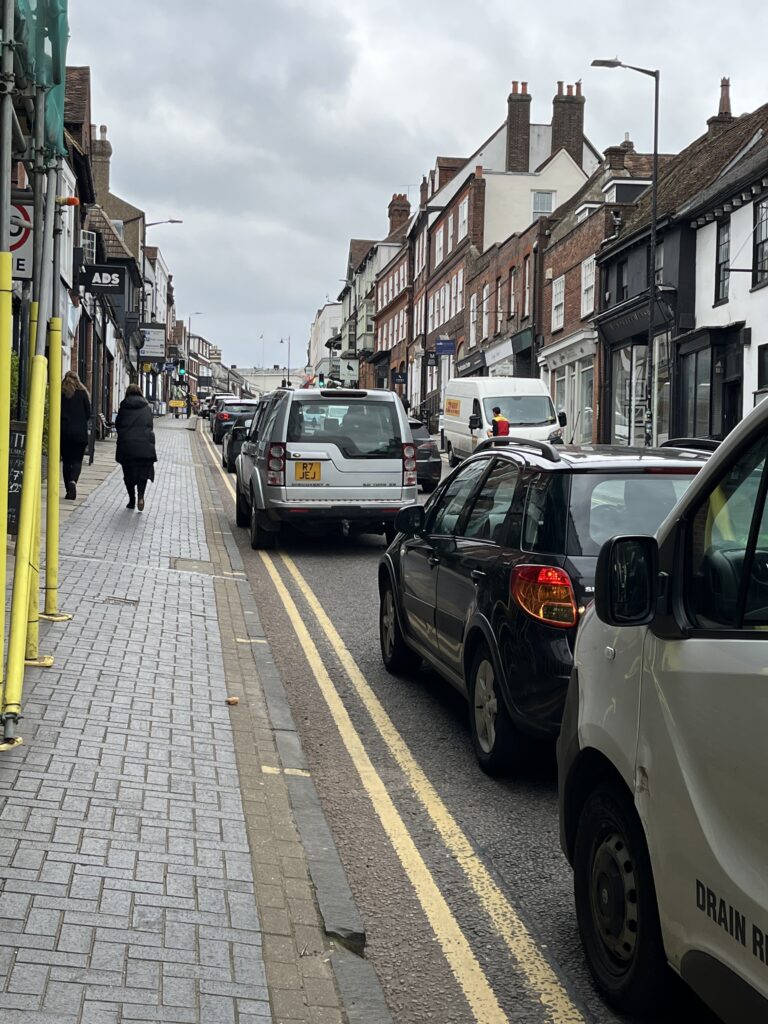
Make no mistake, getting around St Albans district by car is proving increasingly frustrating, a situation compounded by city centre closures and extensive road works – but is there a quick-win solution or are we looking at years of academic studies and traffic management schemes?
One man who thinks there are a number of initiatives which could be taken pretty swiftly to tackle traffic across the district is independent transport expert Stephen Joseph, a visiting professor at Hertfordshire University’s Smart Mobility Unit who has lived in St Albans for the past 30 years.
In the wake of a recent article in the St Albans Times looking at the impact of the weekend closures of High Street and George Street, we were contacted by non-political community group Look! St Albans to raise awareness of a presentation Mr Joseph which made to their members and is now online.
He suggested some immediate ways forward that can start to reduce traffic across the district, based on projects elsewhere in Hertfordshire and other counties, and talked about links with planning policies, through his involvement with the Transport for New Homes project.
“Getting about in St Albans and district can be really annoying,” he said. “There are a lot of traffic jams, the buses are confusing and it’s difficult to know where they run from and to, plus they cost a lot and mostly disappear after 7pm; cycling feels dangerous because there aren’t protected routes; a lot of people walk but the main roads are sometimes difficult to cross; and some new housing developments are quite car based.
“All of this makes the district feel quite car dependent…”
This dependency on cars, he stressed, had wider implications: “Air pollution from vehicles is wider and worse than previously thought; health impacts from less physical activity; road traffic dominates streets and landscapes; road casualties; those without cars are locked out of society, with loneliness and isolation on the rise; and above all there is climate change.
“So far, most debate has been about St Albans city centre changes, closing the High Street etc, but without other action such measures will just move traffic around into other streets, and won’t reduce carbon emissions or pollution either.
“So there is a need to consider action on traffic across the city and in the rest of the district.”
He suggested working with employers to move to net zero commuting, including promoting car sharing, rewards for sustainable travel and pool bikes.
Other proposals included car clubs as an alternative to extra cars, replacing short car journeys with walking or cycling, and even e-bikes and pedal bike hire.
Better public transport was also key, with a need to prioritise bus services in traffic, improved standards, upgrades to the bus infrastructure, and smarter use of data and real-time information.
He also called for links between land use and transport, especially in building new homes, to avoid residents relying on cars for the majority of their journeys, and a lack of green space and trees due to the need to provide roads and car parking spaces.
Mr Joseph highlighted the implications for new housing in Hertfordshire: “100,000 car-based homes will make congestion and pollution a lot worse. High quality public transport must be at the centre of any development, not an afterthought.
“The design of developments and surrounding roads should prioritise walking and cycling, and there should be local services and facilities that people can walk or cycle to.”
Managing traffic and available roadspace was also crucial to his vision.
“If alternatives to single-occupancy car use are to be encouraged, they have to be given priority on the roads.
“Outside of the city centre, there needs to be a linked-up walking network, with signage, traffic lights and better crossings, and a proper network of cycle routes and cycle parking will involve taking some roadspace away from cars, including some on-street parking.”
Under Mr Joseph’s solutions St Albans should be moving towards:
• Less car-based development
• Better public transport
• Making cycling a real option
• Making walking safe and pleasant
• Shared cars not single occupancy
• Using new technology to make transport work.
As a result of these measures he feels transport in St Albans can be better and greener, but we all have a part to play in the process of change.
“Some of this stuff is factually very easy to do and it starts the process of getting out of the jams in St Albans. My feeling is that there are opportunities now to apply some of the projects which are working successfully in other places to St Albans and making the most of those.
“If we just carry on doing what we’re doing at the moment, and having more and more larger vehicles running around St Albans, the place will jam up. If we add to that lots of car-based housing developments the place really will jam up! So actually we do have to change things, and I think politicians of all parties in Hertfordshire and St Albans know this.
“There is, for example, a 7.5t lorry ban through St Albans, but it’s impossible for anybody to enforce it because the powers aren’t there. You need the police to do it and they’ve got other things to do, and similarly there is a consultation out on pavement parking.
“Many people have asked me how to deal with the reluctance by local politicians to restrict car use in St Albans, I think it’s possible to give people a package of measures that make a difference.
“One of the things I’ve said about St Albans is that it does have a high level of walking and we should make more of that and build on it, putting in more crossings for example. Just as an example, at the north end of St Peter’s churchyard there is a point where you could put a crossing in to cross St Peter’s Street, and there are lots of people who run across there to get to Grange Street and so on. So there are walking routes there, they’re just not joined up properly.”
He also suggested introducing a ‘St Albans card’ as an incentive for people tapping-in and out on public transport to access attractions and discounts.
“”My message is that it is possible to improve transport in St Albans, starting with making what we’ve got work better; you have to start a process whereby people feel that something other than a lot of traffic congestion is being done in St Albans.
“We need to look at the whole of the city and not just the city centre, because otherwise we’ll just displace traffic elsewhere, and we need to manage a decent demand for car traffic around the whole of St Albans.
“There are places around the district where you can do much better things.”
You can see Stephen Joseph’s full presentation here: https://www.youtube.com/watch?v=3KOHUI658mg. Stephen and his colleagues at the university are developing new ideas for tackling transport outside the big cities, which have been neglected by transport policy-makers in the past.
