31 Dec 2024
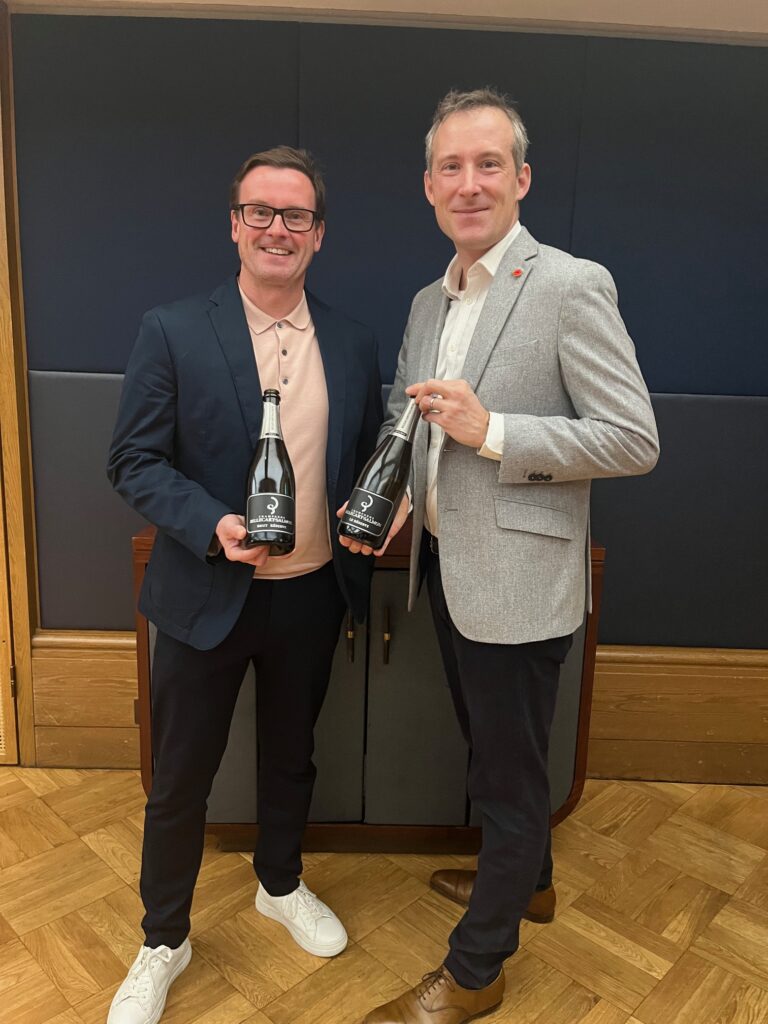
Mathieu Billecart doesn’t tell you he’s going to be making changes, he makes the changes and then tells you. And that’s very much what he did when I met him for an exclusive masterclass at 67 Pall Mall, in London. In its unwavering pursuit of excellence, Masion Billecart-Salmon has taken yet another step forward in the pursuit of quality and precision of its blends. From the vineyard to the cellars, Billecart-Salmon finds itself visually reformed following a five-year re-assessment of the Brut Reserve, led by the House’s Tasting Committee.
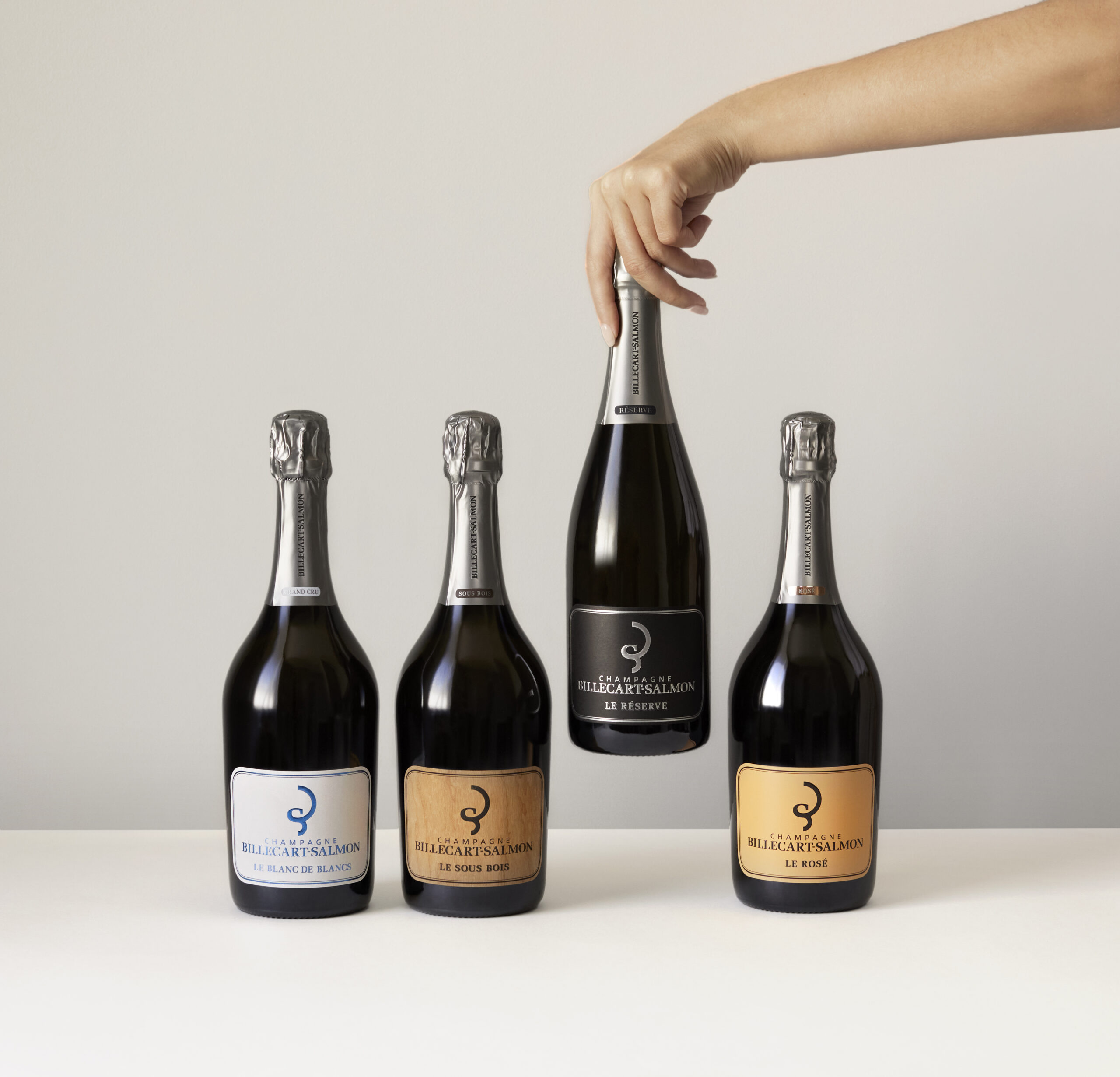
Essentially, Mathieu has replaced the traditional Champagne pyramid of quality and prestige and replaced it with four pillars of savoir-faire – Traditional Blend, Rose, Blanc de Blancs and Barrel Vinification. There’s no entry wine, none of them superior to each other, however distinctly different in style and taste.
As a result of this enhancement, the vintage and Brut Nature wines have been removed from the range, whilst a new wine ‘Inspiration 1818’ has been added – likened to the second wine concept in Bordeaux, or the European Championships, versus the Olympics. It acts as a solution to good base wines which aren’t premium enough to make it into the four Savoir-faire classification and will be circa 10 per cent of production.
Mathieu started work at Billecart from the 2018 harvest and his decisions start to show from 2019. From 2016 to 2020, the time on lees has been gradually increased, dosage has been reduced and oak vinification has been increased too.
The Brut Reserve cuvee is now named Le Reserve, seeing greater depth and finesse from its 2020 base, with some enhancements which are also replicated across the House’s entire range of non-vintage wines.
First thing to note is the extended ageing on lees, increasing from an average of 30 months to 50 months (as its disgorged throughout the year, some will be 46 months, others will be 55 months).
There’s been a complete reset on where the Meunier grapes are selected from with an exclusive focus on Damery, Venteuil, Leuvrigny, Festigny, from the Vallée de la Marne.
Then there’s the more refined approach to dosage, enhancing the purity and expression of the terroir by lowering the dosage over time.
The dosage was 9g/l in 2016 and now 3g/l (extra Brut) from 2020. But as Mathieu explained “not all grapes are made equal. I don’t wake up in the morning thinking about dosage, I think about the finished product in the bottle, so whether its 3g, 2g or 5g, it’s about the taste”.
More depth has been given to the wine as the reserve wine solera becomes older and older, now with 15 different vintages in the bottle (compared to 11 in 2016), a natural evolution. And the proportion of perpetual wine in bottle has seen a big step up from just under 10 per cent in 2016, to 35 per cent in 2020.
A larger proportion of wines are now vinified in barrels, adding richness and density (8 per cent which is twice as much as there was in 2016).
During the masterclass we tasted the evolution of these changes, from Brut Reserve 2016, 2018, 2019 base wines, followed by the Le Reserve 2020 base wine.
One of the constants has been the composition of 40 per cent Meunier, 30 per cent Pinot Noir and 30 per cent Chardonnay, give or take the odd percentage variation.
“Le Reserve, is the more affordable Champagne in the range, not because its inferior, but the costs to produce are less, like the pork chop is less than the scallop.”
Eliminating an entry level wine is a long-term investment, and one that probably only a family owned, and family run house is prepared to do and in the case of Billecart, they’re doing this without passing on a significant price increase to their loyal consumers.
But all these changes are still focused on ‘drinkability’ – how quickly you want to take the next sip from the glass.
There is more precision, a clearer line of sight from farm to through to the glass. Le Reserve has more depth, character, levels of flavours, more complexity, and a stronger backbone than the Brut Reserve.
Every bottle has its own ‘My Origin” code so you can check exact disgorgement date. Like having someone’s blood DNA. They ship six months after disgorgement date and allow post disgorgement ageing to take place in your home cellar.
The decision to use malolactic fermentation (Malo) is very much taken by observing tank by tank and checking the levels of acidity, looking at a given parcel and nature’s influence in a given year. Right now, for 2024, acidity is very high, so they are likely to trigger malolactic fermentation.
True to its heritage, the House has extended part of this approach to the entire range of non-vintage cuvees, specifically Le Rose, Le Blanc de Blancs, and Le Sous Bois.
Now with significantly reduced dosage, these wines stand out for their purity and distinctiveness.
Drawing from its rich history and strong partnership with top restaurants, luxury hotels, and independent wine shops, the House continues to push the boundaries of its craft to offer Champagne of unmatched quality.
I’ll be celebrating New Year’s Eve with one of the last few remaining Jeroboams of Billecart- Salmon Brut Reserve, why open four bottles when you can just open one!