16 May 2024
Coming face-to-face with a suspected serial poisoner might be the career-defining anecdote which most solicitors would dine out on for years to come, but for Peter Goodman it is just one of many fascinating stories from his time in law.
A former President of St Albans Chamber of Commerce and one-time celebrity manager, Peter spent 35 years in commercial law – including around 15 years at local firm SA Law – but was also heavily involved in the world of motorsport, advising teams and drivers for many years.

Most recently, he appeared in the Amazon Prime documentary Murder in a Teacup by Woodcut Media, which charted the notorious career of serial killer Graham Young, who used thallium to murder two people at the John Hadland Laboratories in Bovingdon in 1971, and his stepmother Molly Young some years before when he was just 15.
Meeting for lunch at the George Street Canteen, Peter regaled me with his vivid recollections of Young from over half a century ago, when he was working for Pickworths solicitors.

“I remember various bits. I remember his performance in the trial, which was very impressive, I think that’s the simplest way of putting it, the way he outclassed one of the top QCs in the land.
“I mean, he clearly knew what was happening in the trial, he knew procedure, an he obviously knew the chemicals that he was using better than anybody else.
“But the great moment was where he persuaded, through very, very clever use of words, to get the lawyer prosecuting him to say he’d never met a serial poisoner, when he was actually talking to one at that particular moment.
“Everybody admired it, and regardless of the rights and wrongs of the guy and everything else, that was an exceptional moment because this guy was top, top dollars as a QC. He really was the best, and to turn it around… I didn’t see it coming at all. But that is what you’re supposed to do as a trial lawyer. You get some idiots who have no idea what they’re doing who shout at people and say, ‘You didn’t say that, did you?’, but that never ever works. You’ve just got to ask a clever series of questions until they have no option but to say yes, and that’s what he did here. It was great.”
Peter is reluctant to describe Young as either a sociopath or psychopath: “The trouble with labels is I have never come across orheard of anybody like him, and don’t imagine I will ever again. In his head he was behaving in a completely rational manner, totally sensible, and all that was missing was a total lack of empathy for human beings, whereas to me when I hear the words sociopath and psychopath, I hear it almost as an explanation for appallingly violent behaviour or that sort of thing.
“This was just a scientist at work, and certainly in terms of the chemicals he was using, he was unique in British history. He had his idols from the past, who he mentioned to me a few times, but I’m not sure they ever did as much harm as he did, and it was so strange because he genuinely liked the people he hurt.
“I mean, I was so lucky I never came across him outside of jail.”

Young died from heart failure in HMP Pankhurst in August 1990, aged just 42, and for many years it was assumed he was the victim of an attack by another prisoner, but Murder in a Teacup actually has another theory that he took his own life.
“You know, being logical, that probably does make more sense than him being bumped off.
“But the story definitely is there that he was poisoning people with stuff in the tea when he was in Broadmoor as a teenager. And it’s hard to imagine he’d just stop work because he was in a proper prison, rather than a mental hospital. I genuinely don’t think so, and that’s why when I first heard the news he was dead, I thought, that’s easy, he’s been killed, but now it doesn’t look like it, and that’s a bit of a mystery to me.”
When Peter first met Young in prison to represent him, the suspect offered him a boiled sweet, which the cocky young lawyer decided to accept, a story he has told many times.
But in fact, there is a detail he has not previously revealed: “The true story, perhaps the reason it’s not as scary as I’ve tried to make it sound, is that it was a sweet called Spangles. They’re individually packed in paper, as well as being in the tube, and I reckoned it would have been difficult to have got poison into the Spangle, but he could have smeared it on the outside quite honestly.
“Whether that would have been enough to do me serious harm I don’t know!”
Surely Peter’s role was to get him off the murder charges, so why would he poison him?
“Yeah, and his dad’s role was to provide him with a home and food. And that didn’t stop him. His stepmother’s role was to do the same, his sister’s role was to support him, and Bob Egle’s role was to mentor him etc etc. So it really is the people he’s closest to and he owes most to that he’s been trying to kill.”
So when did Peter realise he’d lost the case?
“Probably as soon as I heard about the diary.”
Police had discovered Young’s detailed diary, which included details of the doses of thallium he had administered to each person – identified by their initials – the effects, and whether he was going to allow them to live or die.
“Quite frankly, take away the diary, there’s a lot of circumstantial evidence, but no direct evidence he actually did it. There were occasions where people were with him, when it was just the two of them, like when he makes Jethro Batt a drink for the only time and he’s sick after that. As a defence solicitor my job was to go and see a suspect in prison and go through the statements which seem to suggest he is guilty and ask for his explanation of them, so it’s a process.
“But Young hadn’t actually admitted it – and we’re talking here of the days when the police didn’t even make notes unless required to have signed statements of admission – there was no real evidence of any admission in this particular case, it was circumstantial because of his possession of chemicals that were used to kill people, and you and I now know there’s evidence he’d done it before, but of course nobody knew that then.”
There are weird parallels between the lives of Graham Young and Peter Goodman which the latter couldn’t help noticing.
“It was completely bizarre because he’d just come out of Broadmoor – he was two years older than me – and I’d come out of boarding school. We were both extremely well read, I had an English A-level and obviously he didn’t have any A-levels but he knew English literature really, really well, and that’s a side of him that never, ever gets mentioned. The whole thing was a very strange experience.
“It’s totally weird looking back on it when it’s that long ago and I’m just a bit player, frankly!
“With the Senna case, the trial was only 27 years ago, but at least I was in charge, and I’ve still got all my files and everything, so that’s a lot easier for me to talk about.”
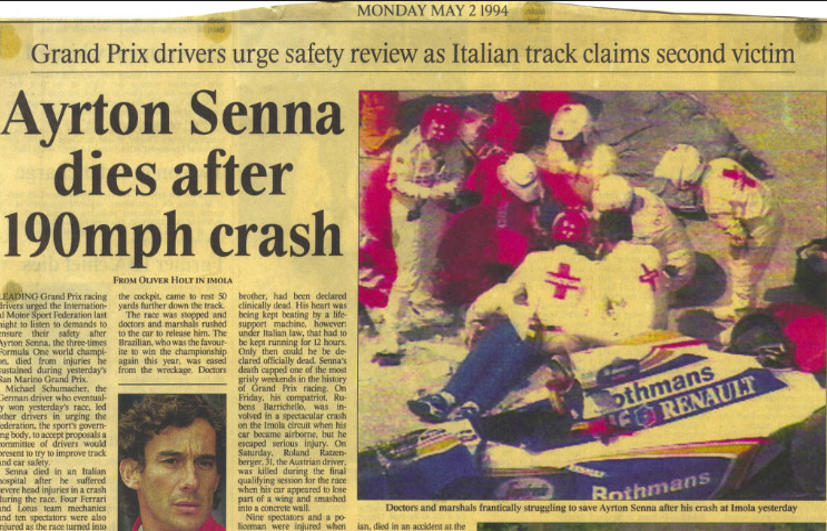
At 2.17pm on May 1 1994, while competing in the San Marino Grand Prix, three times F1 World Champion racing driver Ayrton Senna left the track and collided with a concrete retaining wall at about 145mph. His death was to throw the world of motor sport into turmoil after key Williams team members were investigated and charged with manslaughter.
Peter was their lawyer, having moved away from criminal law into the field of Formula One, which included negotiating and writing driving contracts for six different World Champions.
“I remember seeing what happened and rushing out to my wife who was in the garden, saying, ‘I think my life is about to change’, and it absolutely, totally changed my life.
“I’d been the Williams team’s lawyer for eight years at that point, and I had drafted and co-signed the Senna contract, which had taken us three years to get to that point, so, I was very much right in the middle of it before all that started.
“I never thought I’d be doing any more criminal trials at that point in my life, I was a full-on sports lawyer. I definitely think that Williams were fortunate that their lawyer also happened to be an experienced criminal lawyer.
“I remember my first advice was to keep all of your documentation, preserve everything, but they didn’t and much of it got lost or thrown away!”
It was to take some time before Peter’s advice was taken on board.
“Right at the beginning, I think they saw me as an outsider.
“Let’s remember this was before anyone’s been charged. The accident happened on a Sunday, Monday was a bank holiday, and I was at the factory at 8 o’clock on Tuesday morning and I basically stayed there for the rest of the week.
“I was mostly talking with [team principal and founder] Frank Williams and with the guy who became our friendly Italian lawyer as opposed to the one who conducted the trial for us.
“I was really keen to get in on the nitty-gritty but they totally excluded me from their engineering discussions.
“At that point, honestly, I don’t think they ever guessed there’d be criminal proceedings. and obviously all that changed as time went on.
“As soon as the criminal charges came along, they were much more free and open with me,” he explained.
He said the Williams team’s reaction to the proceedings was above all one of surprise. “The driver who died on the Saturday, Roland Ratzenberger, was a much more likely case for prosecution, but I don’t think either of them were manslaughter cases, they were just accidents.”
The consequences of a guilty verdict would have proved devastating for the sport as well a the team: “We know that several Formula One chiefs said if it was a guilty verdict they would not be racing in Italy again. That was made very, very clear. Formula One was definitely at risk at that point, so that was an added responsibility involved in the case. It wasn’t just my people, it was Italy, Ferrari and Formula One and all the rest of it was at risk.
“The really, really strange thing for me about the case was how in Italy, nobody could understand why we were pleading not guilty.
“I remember the case got remarkably little publicity in the UK compared to what it seemed to get in the rest of the world. The attitude in the UK was why are you even bothering to charge them it’s clearly an accident therefore we’re not interested, it’s a farce, it can only end in a not guilty verdict. So the two countries were absolutely diametrically opposed.”
Could there have been jail sentences if there had been a guilty verdict? “Yes, in theory. In practice, I think not. But yes, the power was definitely there. It’s not some special form of protected manslaughter, it’s the formal manslaughter for which in the UK the maximum punishment is life in prison.”
But he said he was quietly confident of exonerating his clients, despite problems with Williams’ Italian lawyer, who didn’t seem to understand the case.
“The prosecutor’s case was all about how, after the accident, Senna’s steering column seemed to be broken.
“Senna’s car didn’t turn round the corner: QED, steering column broke, accident, death, manslaughter.
“But we had evidence that the steering column was still attached right up to the moment of impact, through electronic signals coming from it. The whole of the Italian prosecutor’s case seemed to be based upon whether or not the steering column was suitably put together, was it fit for purpose, blah, blah, blah, blah, blah, and to me this was utterly and completely irrelevant.
“As I remember saying to someone after my first meeting with the lawyer, it could have been made of chocolate, it really doesn’t matter, because if it didn’t break, it didn’t cause the accident, so it doesn’t matter what it’s made of.
“But that attitude carried on right the way through from when I first met him, which was probably November 1996, to probably October 1997, when my wonderful Italian engineer basically got a hold of the guy, sat with him for three days, went through everything in complete detail and explained it, so when the moment came for him to give his final speech, he was brilliant.
“But up to that point, he just didn’t get it at all. He was concentrating totally on the quality of the steering column, which in my mind, had no causal effect at all.”
Fortunately the language barrier did not prove to be a problem: “During the days of the trial, I had this Italian university student who had English parents, who basically sat with his mouth in my ear and translated everything that was being said. He did a wonderful, wonderful job, that lad. And number two, when I had conferences with the lawyer, his number two was a woman who spoke perfect English and she was able to translate everything that was going on when I was in conference.”
An attempt by parties who should have been on the same side to effectively lay the blame on each other also caused problems at the start of the court case.
“The issue here was that the circuit was prosecuted as well as the car manufacturers [Williams], and for the first half of the trial, the prosecutor just sat back and watched the two defendants attack each other. I couldn’t believe my eyes. It was absolute nonsense.
“In the summer holidays I called all the other lawyers over to England for a meeting with Frank Williams and told them ‘Look we’ve got to stop attacking each other’, and from that point on, the prosecutor couldn’t prove this case and eventually all the parties were found not guilty. So that was my main contribution.”
He said nothing changed after the result: “A couple of years later [in 2000], a marshal was killed at the Monza Grand Prix by a Ferrari car of all things. and Ferrari actually hired me as a consultant to advise them on how to behave in the result of death in a motorsports accident in Italy. I don’t think the prosecutor was silly enough to think he could make political capital out of prosecuting Ferrari in Italy so that was just brushed over but that was a potential one, definitely.”
Victory meant less work for Peter with Williams as they had to hire a full-time in-house lawyer, although he did help them win an appeal four years after the main trial.
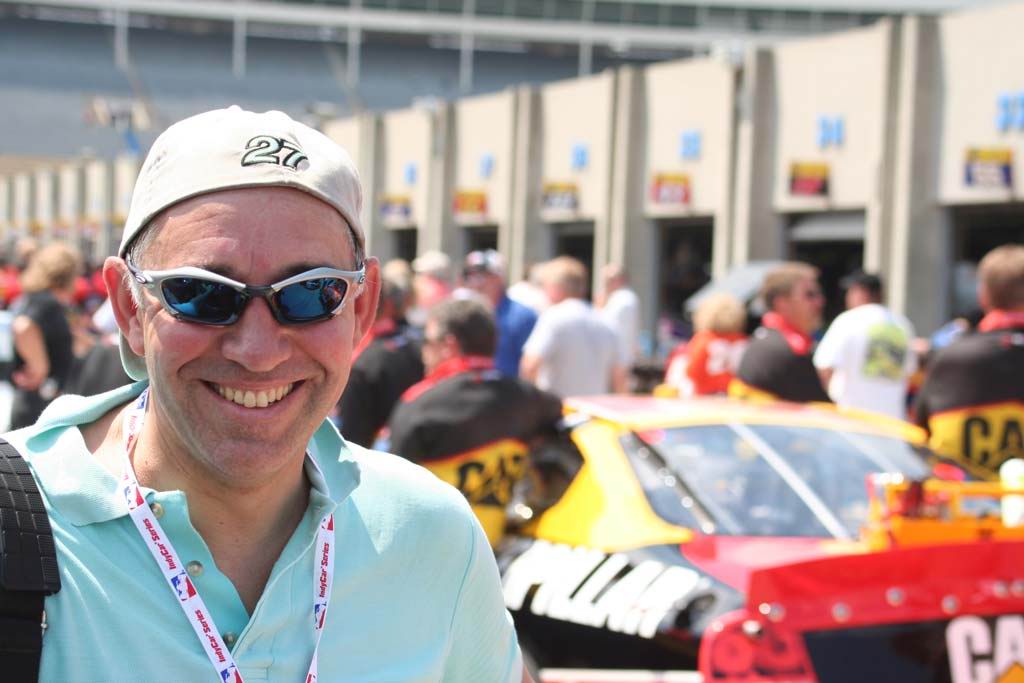
He has plenty of other stories about his motorsports work though: “Doing contract negotiations with Nigel Mansell was always really interesting. He seemed to like me and he invited me down to his golf club near Torquay as he felt that if he could persuade me that he needed to be in the Williams car the next season, I could then persuade Frank. I mean, quite honestly, no, the world doesn’t operate like that.
“People used to mock him a bit, which is totally unfair because of what the man achieved from absolutely nothing, but he kind of didn’t fit in with everybody else. You kept hearing rude comments about him which I defended as much as I could until I went to this event with him at his golf club. Sitting down to dinner was him, me and probably eight of his acolytes and they were all totally po-faced about any suggestion that Nigel was anything other than the greatest driver of all time. Really, really funny.”
The conversation moves away from serial killers and motorsport to drug smugglers in the form of the infamous Howard Marks, known as “Mr Nice” after buying a passport from convicted murderer Donald Nice, who was found not guilty of his role in importing 16 tons of cannabis (then worth £15m) into Scotland in 1980.
“A little bit later in my career I came across Mr Nice. I didn’t defend him, but I did defend his main co-defendant in the first half of the proceedings. Because I think in memory only two people got off, which was him and my guy, who were alleged to be the two main organisers.
“Somehow or other they persuaded the jury they weren’t guilty. They had one of those so-called old-style committals up in London and that was really, really interesting because he was behaving like a prima donna.
“It was a shame really that his co-defendant’s original lawyers took over the case from us because I think they’d represented him before. We were the local lot called in, but the judge wouldn’t let him change lawyers until after the committal, so we had about three months on the case which was truly amazing.
“The thing I’ll always remember about him, is when he was being questioned by police after being arrested he started off by saying ‘No comment’ in response to the questions, but after he’d done this about 15 times, he said to the police, ‘Look, I’m not going to say no comment anymore, I’m just going to say blip’. There then followed about 20 pages of evidence with ‘blip’ as the sole answer, and that’s something I’ve never seen before either!”
In 1999 Peter went to work as a sports and celebrity manager for West End-based media company CSS Stellar Sports, specialising in motorsports but also working for well-known celebrities in entertainment, TV, music and books. There was a lot of travel, glitz and glamour, but Peter found the role was not intellectually challenging enough.
“I guess the highlight of that was probably working with Richard Burns, England’s only ever World Rally Champion, which was great. But it wasn’t my sort of work, it was too much about, how can I get profiles in the news? How can I build up images? Really not my stuff, so in the end I kind of had to admit defeat, went back to law and joined Schillings.”
The Soho-based firm’s clients at the time included Naomi Campbell, helping her win a landmark privacy case against Piers Morgan’s Daily Mirror in 2004, Kate Winslet and various other A-listers, and Peter was again involved in contract negotiation.
“It was an interesting time of my life, because I got to meet some really good people, you know, Hugh Grant and Liz Hurley and people like that, so that was very, very nice, but in terms of work, I had little to do with them.”
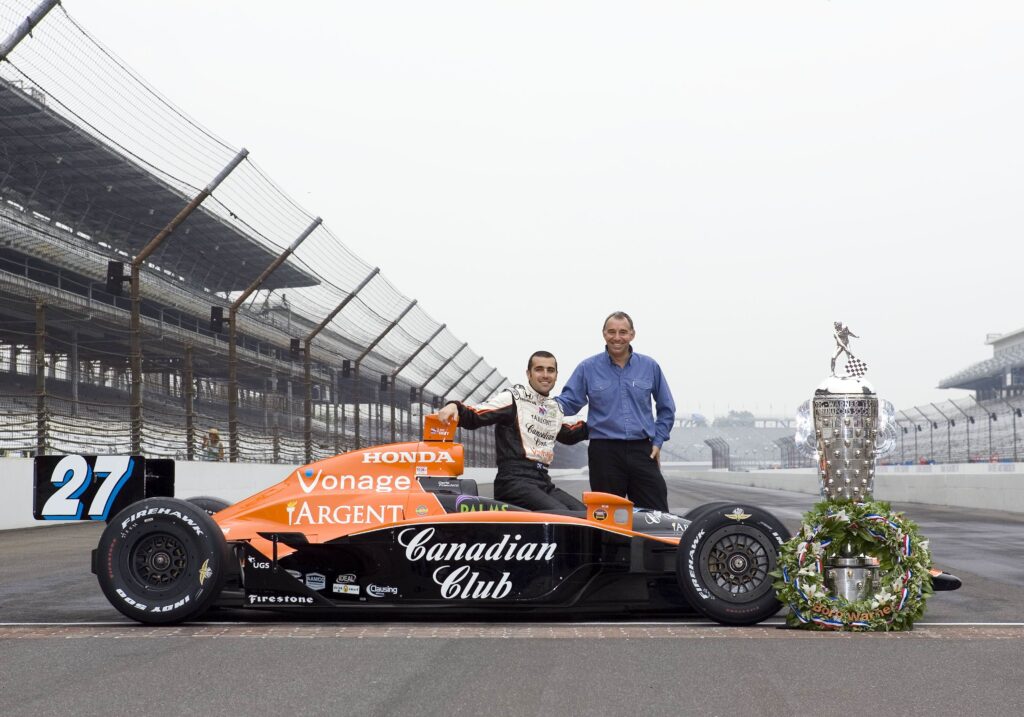
At the same time he was building up a business representing young motorsports drivers looking to make their mark in the Indy 500.
“It came about because of a lovely Brazilian guy who I represented in Formula 3 called Gil de Ferran. Like so many of these people, you get to Formula 3, but unless you’re a superstar you basically can’t get into Formula 1 because it’s just too expensive.
“He got the chance of a place in America in their IndyCar championship, and made a great success out of it.”
De Ferran was the 2000 and 2001 Champ Car (IndyCar) champion driving for Team Penske and the winner of the 2003 Indianapolis 500.
“Just after Gil moved to the USA I met a Scottish guy, Dario Franchitti, who was in exactly the same situation. He did well in Formula 3, couldn’t get promoted, did a quick stint for Mercedes and then moved to the States.”
Franchitti went on to win the IndyCar Series Drivers’ Championship in 2007, 2009, 2010 and 2011and the Indianapolis 500 in 2007, 2010 and 2012.
“Then the third one I met was Dan Wheldon, who was very, very, very brilliant, probably the most talented out of all of them. But I think they felt he was a bit flawed, so he never got a chance in Formula One and he went over to the States largely, at my suggestion.
“I was just representing them as a lawyer, giving them advice all the time because they were my friends and I had so much more knowledge than they did about what was going on with all this stuff. I was absolutely delighted about their careers. Dan sadly died in a big crash in Las Vegas in 2011 and since then I’ve had very little involvement with motorsport. I’m certainly not interested in cold Sunday afternoons at Silverstone anymore. I’ve done all that. I don’t need to do that anymore.”
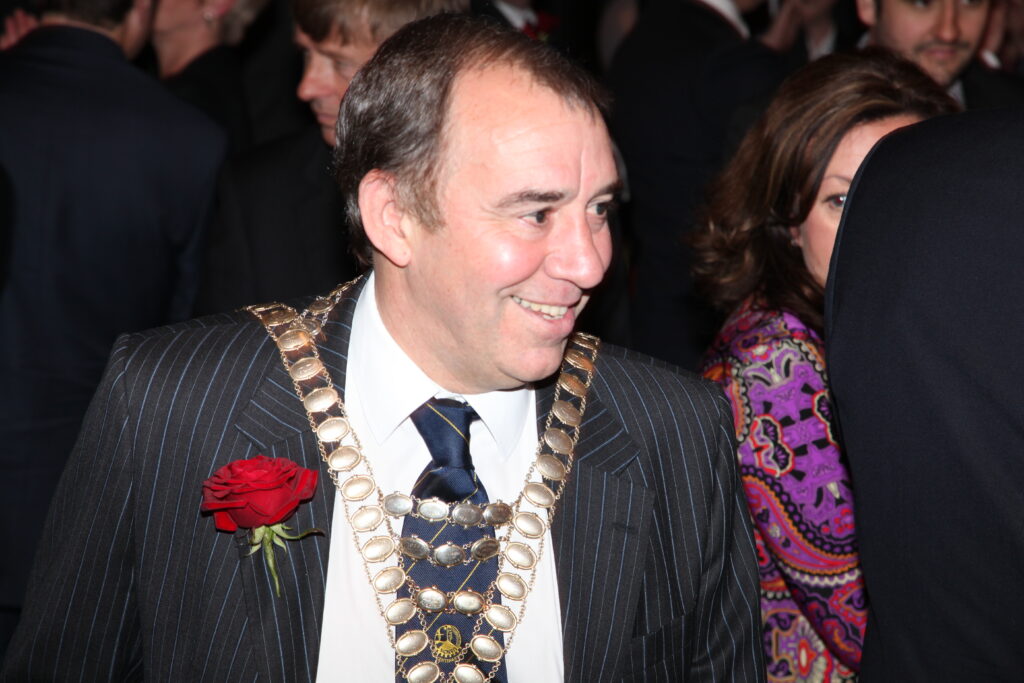
Coming to St Albans and SA Law must have been a change of pace then?
“It’s been a bit of a change, but you know, I learned early on in my career that I like a good deal. I like to negotiate and get a deal done, and the skills I picked up from being a trial lawyer have been incredibly useful in commercial negotiations.
“It is all down to asking the right questions in the right order, so as to persuade your opposition to come to exactly the conclusion you want them to come to. So to me, although it’s also been different I suppose, it’s all been very similar, and I finished off as a corporate lawyer doing more of the same deals and negotiations.”
Peter first came to St Albans in 1968 after a childhood spent somewhat on the move: “Having lived in three continents, six countries and 15 different addresses up to the age of 17 and a half, I got to St Albans and I’ve been here ever since.
“I’m really grateful to this place. That’s why I’ve got involved in so many voluntary roles – the St Albans Enterprise Agency (STANTA), the Chamber of Commerce, Grow Chiswell Green community garden – just to give a bit back, because I really love the place. My latest exploit is volunteering at the Cathedral, helping the team when there are events on.”
One last story from your career to leave our readers on then Peter?
“I worked with Damon Hill, and we had a meeting with the police during the early part of the Senna trial. I can’t actually really remember why the prosecution would be wanting to spend a day with us, maybe taking some statements, I truly don’t remember, because of course, Damon wasn’t a defendant, so it could have been for a witness statement.
“I just remember us getting later and later and later, and then somebody looking at their watch and saying, ‘Hey we’re late, we’ve missed the last plane!’ and the police said, ‘Oh no you haven’t, we’ve held it, it’s waiting for you’.
“We then get into our hire car which Damon was driving and this lovely police officer couldn’t believe his luck at racing Damon Hill through the streets of Bologna to get to the airport.
“It was really dangerous! A lot of tyre squealing going on and all that sort of thing, but it was absolutely all for show!”