


03 Aug 2023
Modern policing in St Albans is no longer simply about coppers slapping the cuffs on criminals, but has seen a more proactive approach to law enforcement, with the emphasis on protecting vulnerable members of society from becoming victims of crime or embroiled in offending themselves.
St Albans Acting Chief Inspector Ady Lysak said his officers try to determine the reason behind people being vulnerable to crime, and then act to tackle these causes first.
“To give you an example, he’s being picked on, she’s being picked on, because they’re vulnerable. Why? Is it a drug habit? Is it that they need their meds? Is it a housing issue? Is it a location issue? You’ve got to take the environmental factors into account as well. Everything that’s impacting on that individual.
“I always wish for that one thing that fixes every problem, but we don’t have it, so that’s why we rely heavily on our partners to do what they can to support individuals, and within the Constabulary the different departments we have with expert knowledge on how we manage a situation.
“So if there’s a drug line going in there we have a department that can assist with that, we can get [SADC] housing department to go in to see if they’ve got everything they need, we can put an Adult Care Referral in for mental health issues to see if they’re getting the right care, whether they need to go into supported housing.…”
But this proactive response also requires the support of the public in reporting offences to the police as and when they occur.
“A lot of the work we do, and I’m talking about knives, bullying, domestic abuse, sexual offences, people need educating and being told this is not right, this is not OK, and report it.
“If you talk about a rape, most people picture a stranger off the street, but it’s not, it’s someone you know, someone you’ve just met, someone you’ve been out with – something happens and the law is very clear when the offence occurs. But people are scared to report it, and us educating them and saying ‘we will believe you, we will support you’ is key. But because they’ve been a victim of crime they’re vulnerable.”
The St Albans Times was invited to meet with Act Ch Insp Lysak and Safer Neighbourhood Inspector Paul Caro to discuss policing priorities in the district, and find out what action is being taken in relation to specific issues.

Insp Caro reiterated their renewed focus: “We try to get upstream of problems, rather than too much focus on the reactive. Can we stop something happening in the first place? The overarching reason why we’re here is to keep people safe, and it’s right and proper that our increased emphasis is on the vulnerable.”
Act Ch Insp Lysak added: “We want to prevent crime. If people see something we want them to report it, and report it when it happens.
“That is the key message. We are reliant on the public, but people fear repercussions. In my experience, obstruction of justice and witness intimidation does sometimes happen, but it’s usually with organised crime and more serious offences.
“We’ve also measured victim dissatisfaction and why our members of the public and communities are dissatisfied with what we do. One of the reasons is feedback, so if they’ve called in to report something now they get a call back later saying this is what has happened. People are really responding well to that.”

One of the biggest successes of recent years was Operation Luge, which culminated in the jailing of four teenagers for a series of serious knife point offences aimed at exerting their authority over drug operations being run in St Albans.
Teams from St Albans, including intervention, the Local Crime Unit and Community Safety Unit and the Safer Neighbourhood Team drew on additional county resources to tackle an unprecedented increase in violence alongside partner agencies including SADC and the youth offending team.
But the convictions required a follow-up response to tackle the fallout from the case and prevent the vacuum being filled by another drug operation, including cuckooing, where the premises of vulnerable individuals are used by gangs to peddle drugs.
Act Ch Insp Lysak explained: “We worked with the Met and took out a number of drug lines to make sure another one didn’t pop up. You go into fifth gear, the job hasn’t finished and new people come up the ranks so it’s also about identifying those.
“Part of the wider scope is identifying vulnerability and flagging premises where you have vulnerable individuals. What happens then is the community safety unit – which is part of Paul’s Neighbourhood Team – go in and put closure orders in, we ensure adult referrals are made to those individuals, a bit of target hardening at the addresses to prevent further incidents from happening.
“It’s very difficult because they are taken advantage of. Whenever someone says ‘problem’ I always like a bit of definition and clarification. We’ve had the highest increase of flagged addresses for cuckooing in the county and because we’re aware of the problem we’re addressing it more readily.
“It’s not an increase in cuckooed premises, it’s an increase in us flagging them and identifying them, and then putting in more wraparound care for those individuals.
“But we, the police, are nearly exclusively reliant on members of the public. They need to tell us, they need to talk to us, they need to report it. I don’t want people complaining on social media about an issue that’s not been reported to the police. It’s just not helpful.
“Every morning we sit down with a detective inspector and detective sergeant and review crimes along with a centralised intelligence desk, a vulnerability desk and drugs desk. If we see duplicate crimes we know we’ve got a problem.
“What I don’t want to see are repeat victims because if being a victim of crime once is bad enough, being it twice has a greater impact on an individual. That is something I desperately need – people to report it. The means I would always suggest are online or through Crimestoppers.”
Insp Caro added: “We do work very closely with our partners on cuckooing, because we get information through mental health services, the fire brigade, social services, and we’ve got a really good working relationship with the Community Protection Team at SADC. We can get preventative things in place like support, and we have done closure orders or partial closure orders, which don’t render that vulnerable person homeless but make it illegal for other people to go in.”
So what are the red flags which people should be aware of when it comes to cuckooing?
“Regular activity at the address. People coming and going who aren’t recognised,” said Insp Caro.
Act Ch Insp Lysak added: “I try not to use the stereotypes, but a typical sign of cuckooing would be a social housing residence, single occupancy, comings and goings throughout the night and usually reports of cars at all hours of the night. Sometimes it leads to anti-social behaviour or crime. Sometimes the victims come forward and say ‘I need help’, but less often than we want to.”

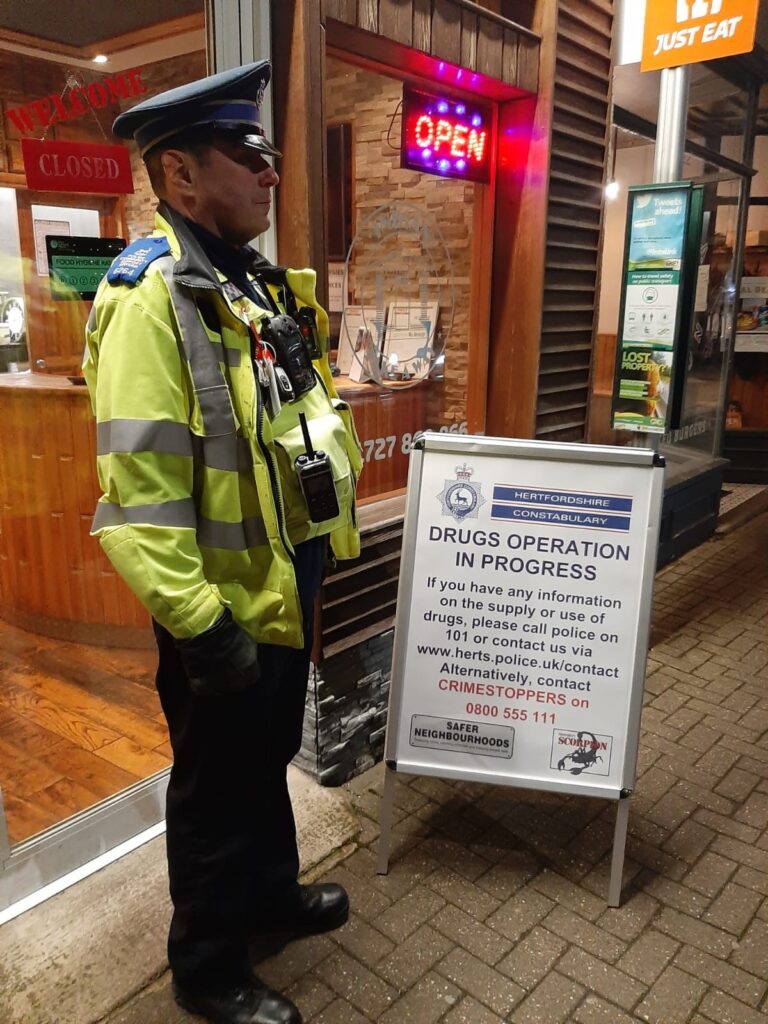
St Albans has a team who target any issues in the district under the umbrella title of Operation Scorpion, supporting officers with offences like vehicle crime and ‘dipping’ or pickpocketing.
There had been an increased emphasis on dipping in the city centre, but Insp Caro has some positive news on this issue: “We’ve had some great arrests, some really good work with our partners: the businesses, the banks, using CCTV from St Albans district council.
“We recovered a substantial amount of money, and there’s been a general reduction in that sort of offending by 45 per cent, so we’re really delighted with it.”Act Ch Insp Lysak said the Scorpion team are also working on preventing potential grooming: “At the moment they’re targeting a group that appear to be up and coming, those signs of minor crime, minor dealing. We work with the Child and Young Persons Team and when they identify someone potentially being groomed, they’ll engage with them and put them on programmes. Not for rehabilitation but for education to get them to engage, get them doing something that’s away from the negative aspect of the social groups around them.”
Insp Caro said his team regularly visit local schools, working with youngsters staff have identified, doing assemblies, and liaising with the Schools and Gangs Team at police headquarters on events and awareness.
“We part-funded GAV sessions (Growing Against Violence) which is an outside agency that also went into schools to deliver their sessions, and they were really positively received. Although we don’t have dedicated schools officers if a school is within an officer’s ward then they do have that dedicated police presence.”
This is just one of the initiatives the Safer Neighbourhood team are involved in. Others included Operation Sceptre, which despite being a national week of action sees local activities focusing on the message of Lives Not Knives.
Insp Caro explained some of what is involved: “We do sweeps down the Alban Way making sure there are no weapons stashed anywhere, we visit charity shops to get any knives out there off the street, previously we’ve had knife amnesty bins. We have to make sure businesses are doing what we need them to be doing from a preventative point of view we use cadets for test-purchasing to make sure knives are not being sold to under-18s. The good news is that all of our local businesses passed that test.”
Recent years have seen the reputation of the UK’s police force as a whole damaged by the actions of a small group of individuals who have used their power for personal gain, including the likes of serial rapist David Karrick and murderer Wayne Couzens and to a lesser extent Jamie Lewis and Deniz Jaffer, who shared photos of two murdered sisters on WhatsApp.
Have these offences impacted on how the police are perceived locally?
Insp Caro replied: “Our public are hugely supportive of us on the whole, but I think that as a police service it would be naïve to think there had been no impact on trust and confidence with what’s happened nationally.”
Act Ch Insp Lysak said he strives for St Albans police to create a positive impression: “I aim for us to be seen as excellent and I would hope our efforts are perceived to be working in the right direction. We’re trying to protect people and keep them safe, that’s what I want people to think we’re doing.”
On the back of Sarah Everard’s murder, and Carrick’s rape of a woman in St Albans’ Premier Inn after meeting her for a date in a city pub, the safety of women has once again been pushed to the top of the police agenda both nationally and at local level.
Ch Insp Lysak explained the Herts-wide control strategy, which identifies the constabulary’s priorities for the year, has vulnerability at the very top, specifically violence against women and girls: “We have a plan in St Albans as to how we manage that. Violence against women and girls is such a wide scope because it includes a wide range of offending. The statistics don’t always paint the right picture of what is happening and what is being done.
“I can tell you that work is going on to identify vulnerabilities in the nighttime economy but I can’t go into details as that’s a proactive operation to prevent further offences from happening and identifying those people who are putting others at risk.
“We directed the Safer Neighbourhood team to go out and educate some of the nighttime economy locations and services like buses, taxis, bouncers on how to identify vulnerability and find individuals under coercive control.
“Not only the females but children at risk – why is that 13-year-old getting a cab at two in the morning, why does individual with no means suddenly have some cash to get a taxi when it’s antithetical to his way of life? If you create awareness that’s a good thing. Every day we as a constabulary and St Albans review all the violent offences because that’s a problem, and ensure those are being progressed as best we can do to ensure everything is being done the best for the victim.”
