28 Jul 2026
History buffs will have to wait years until they see the fruits of a high-profile archaeological dig at a 16th century St Albans pub – but it should be worth the wait.
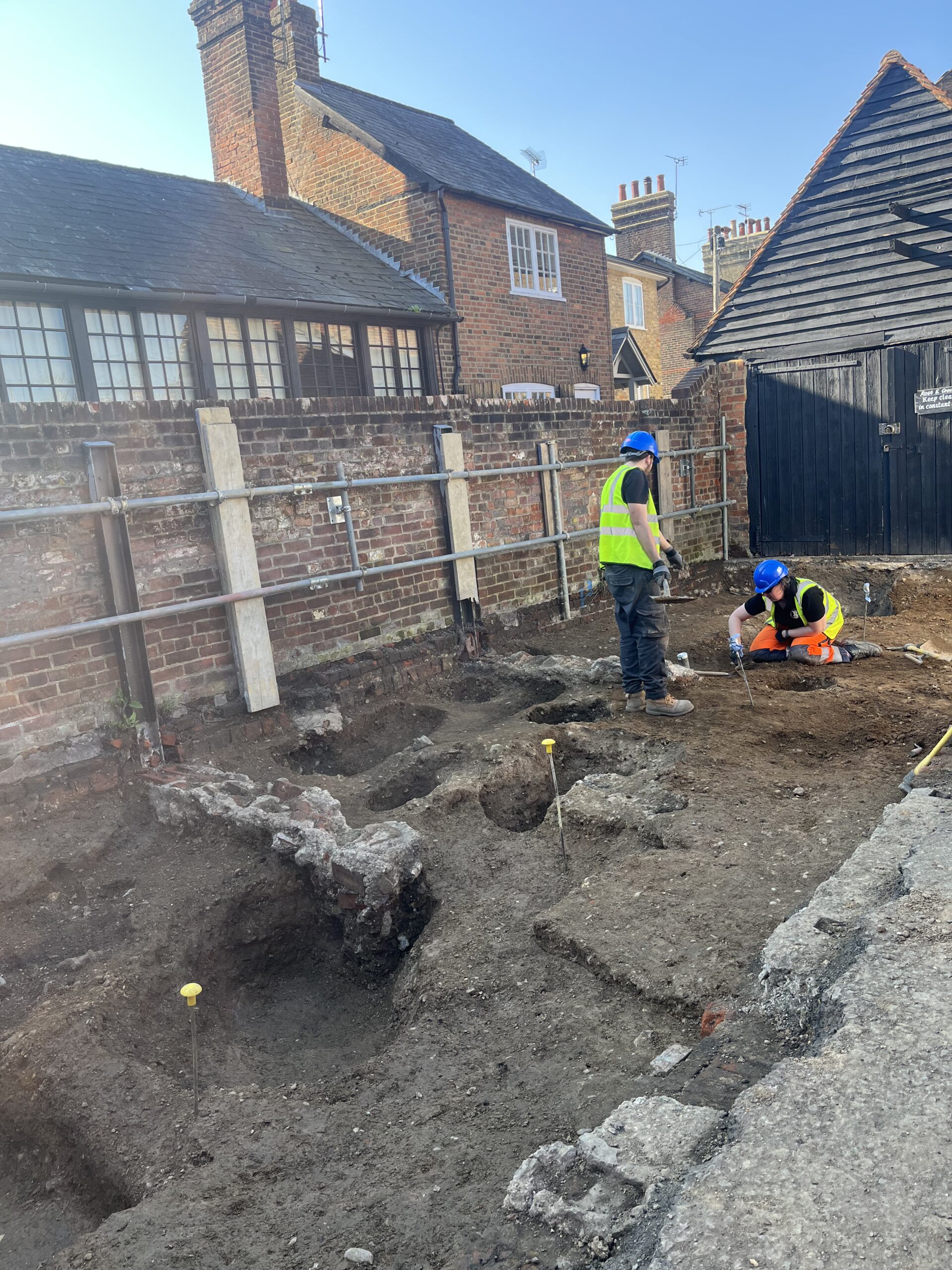
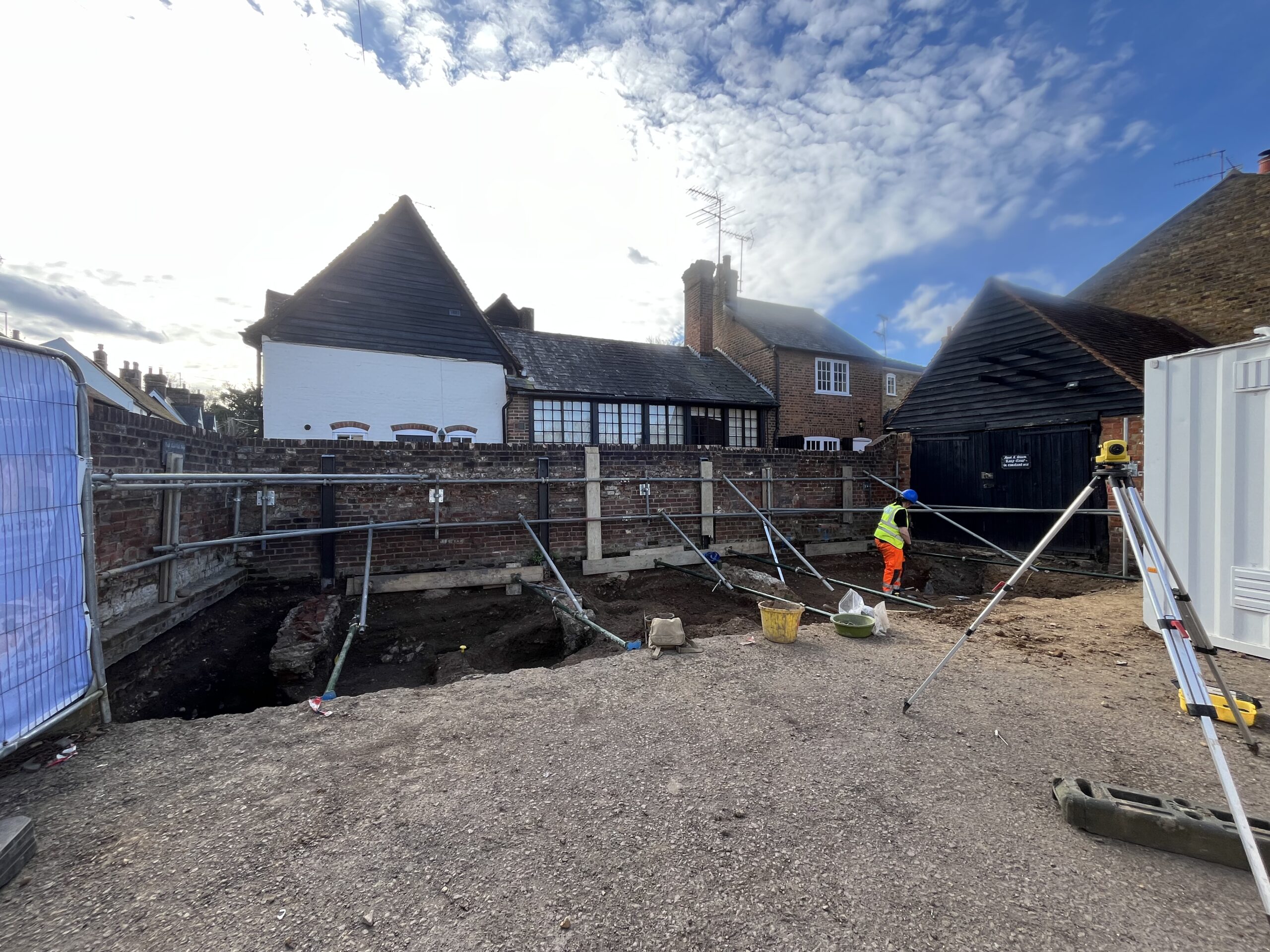
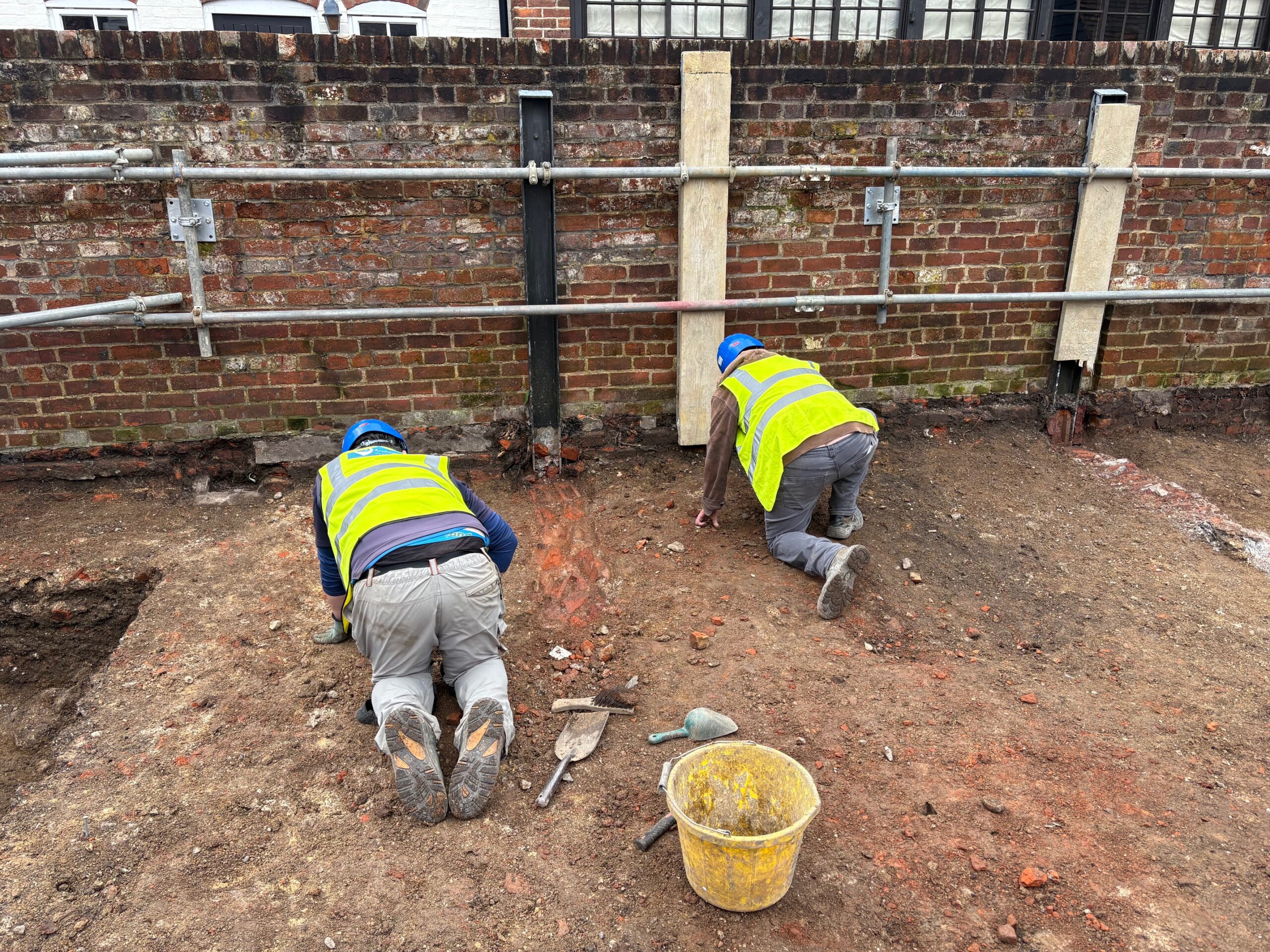
Earlier this year, a team from DRP Archaeology and Verulamium Museum – with guidance from Place Services and Historic England – returned to the Rose and Crown in St Michael’s village for a major excavation project ahead of the pub’s redevelopment.
The pub closed in February 2020, just before the pandemic, and the new owner is determined to bring it back to its former glory.
This was because the Rose and Crown is located within the Roman city of Verulamium – itself built over a major Iron Age settlement, which evolved into St Michael’s village during the Anglo-Saxon period, and has centuries of archaeology beneath our feet.
Although a public dig was not stipulated as a requirement of the investigation, it was considered to offer a fantastic opportunity to engage the public in the project and offer a fascinating insight into modern archaeology.
Over the course of four weeks, the dig was visited by approximately 2,600 school students, and a further 1,500 members of the public at weekends, who had the unusual opportunity to see firsthand how an excavation is carried out.
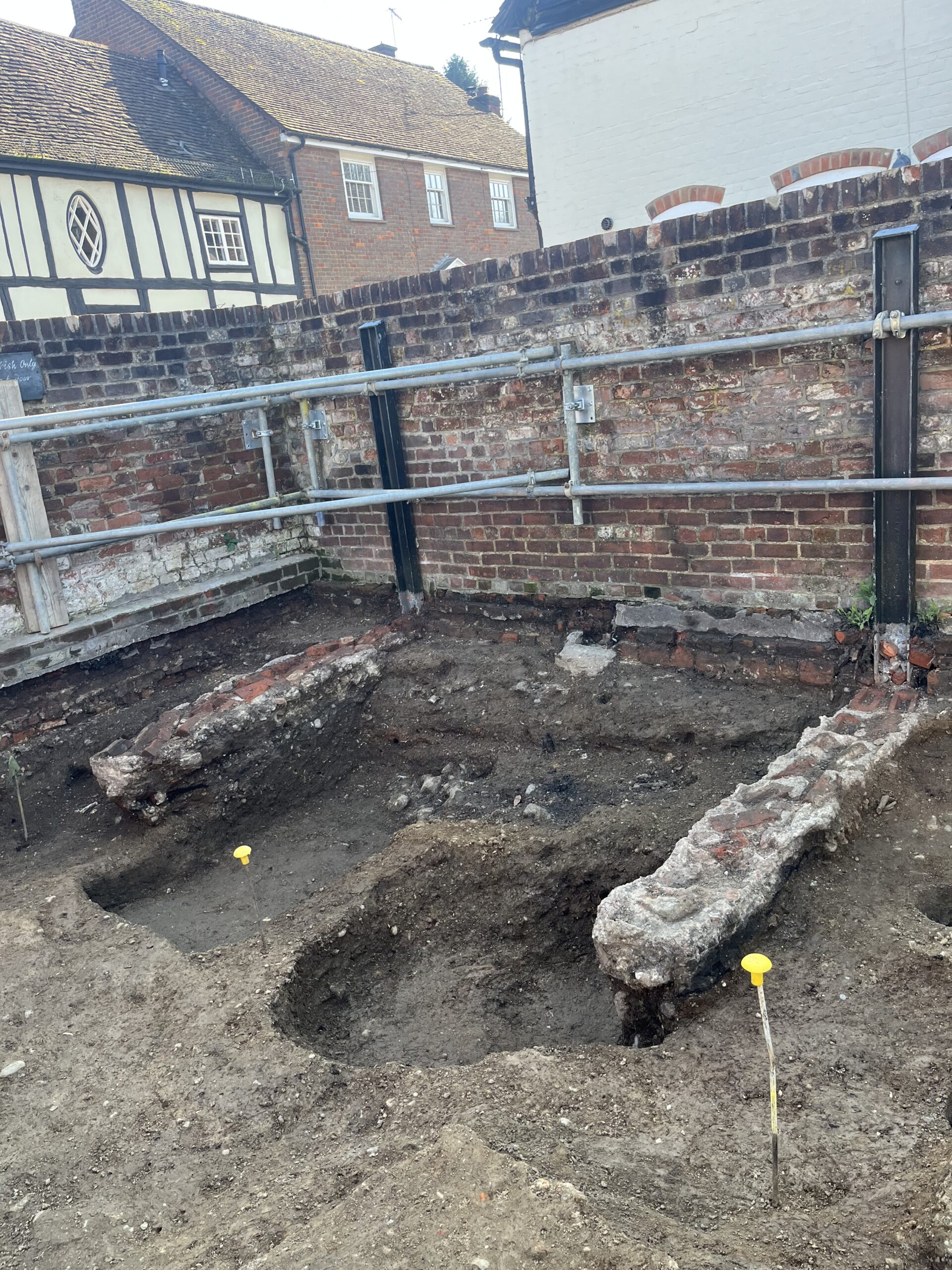
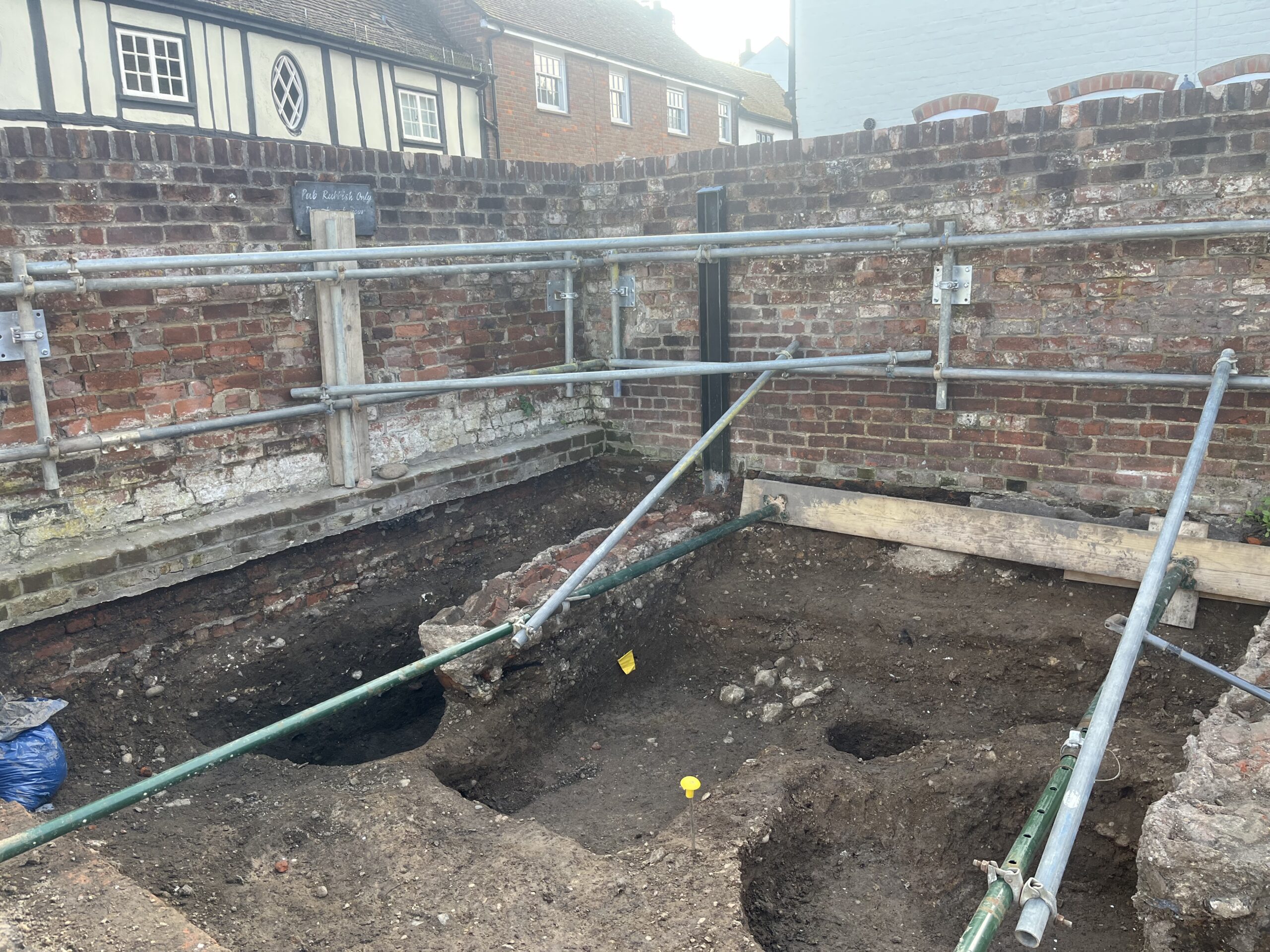
During the course of the dig, archaeologists discovered evidence of the forges which used to line adjacent Blacksmith’s Lane, with a blackened deposit full of iron slag shedding new light on the past of the surrounding area.
They also found a series of post holes which suggested a timber structure predating the blacksmithing, and may have been an outside lean-to, a stable, or a tollhouse, and painted Roman wall plaster which suggested there may have been a townhouse on the site.
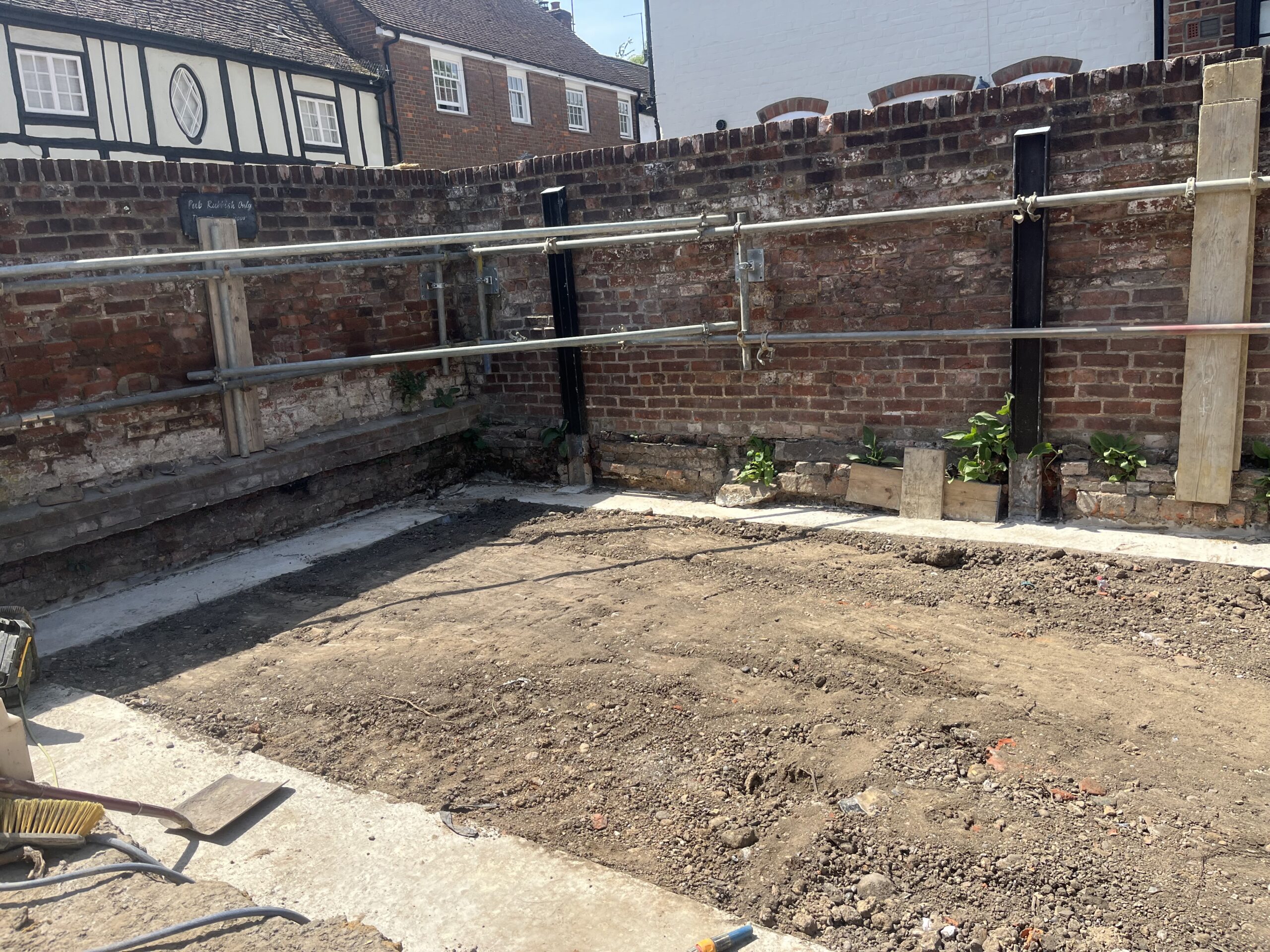
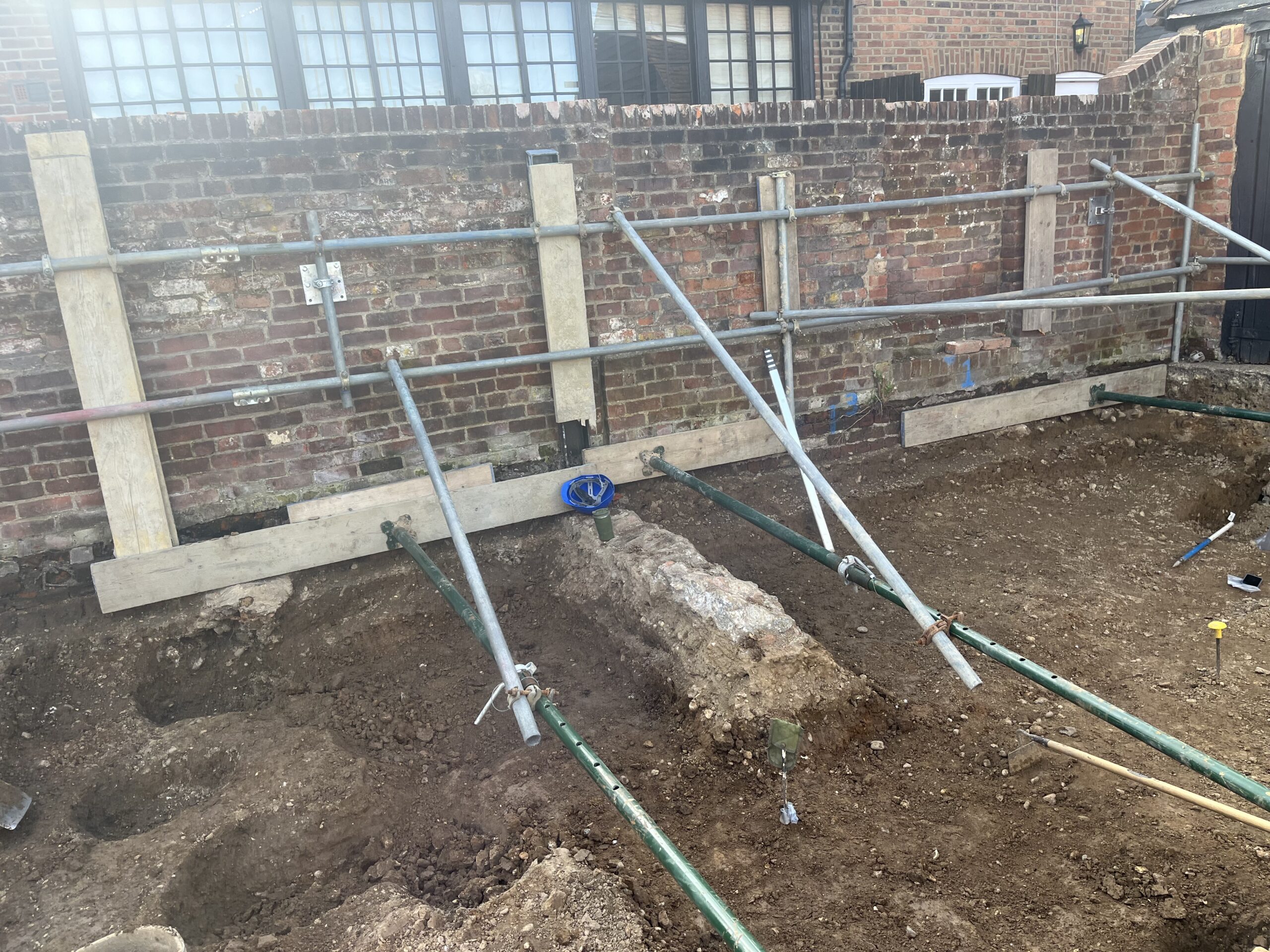
The dig has now been filled back in as the redevelopment of the pub continues, but work on cleaning, conserving and cataloguing the various finds uncovered beneath the soil will be carrying on for a long time to come.
Archaeologist Tom Lucas, who is responsible for developing, maintaining and advancing the knowledge of archaeology for St Albans Museums, has been our guide since the project started, and is now able to offer a broader perspective on what has been revealed.
“When you were last here we’d seen the medieval layers, we’d seen the smithing – which was awesome – and had then come down to lots of mixed deposits, pits and infilling materials, which was the natural end of the site.
“That layer is probably just above intact archaeology, and the new building on the site essentially floats above what is known archaeologically, and what’s below it.
“Once they reached that depth and removed all the archaeology, they cleared the work with the district’s archaeological advisor to ensure they met the planning conditions for the project, and then that’s it for the excavation.
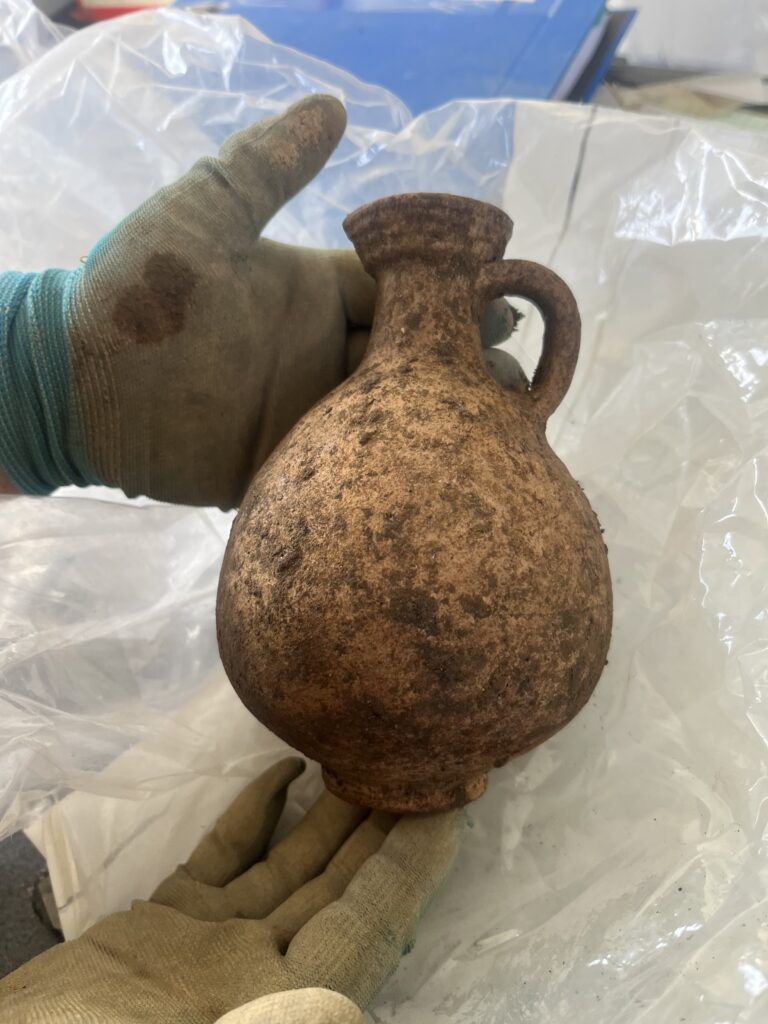
“But post-excavation is often at least as big as the main project, and that’s what’s happening now. We’ve got loads of painted wall plaster, loads of tesserae, but also individual pieces that tell you a lot about the people who would have been inside there.
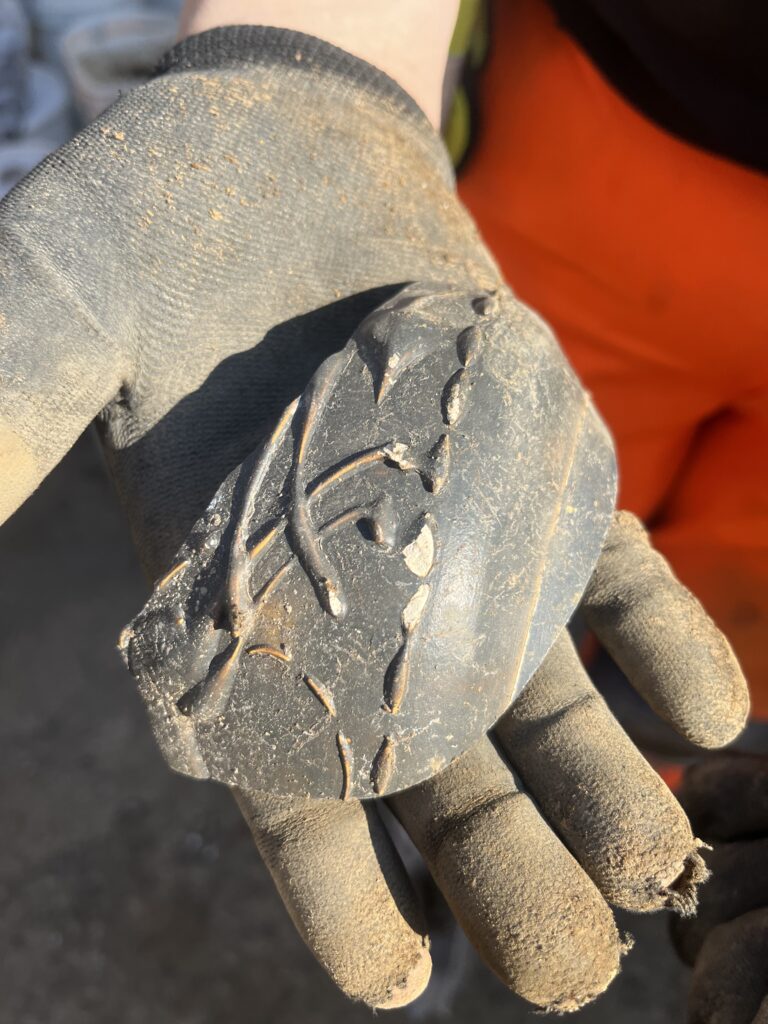
“We found lovely little bone hair pins, some of them really intricately carved, and they’re starting to be conserved at the museum now by our volunteer conservator, which is when you really start to see the detail.
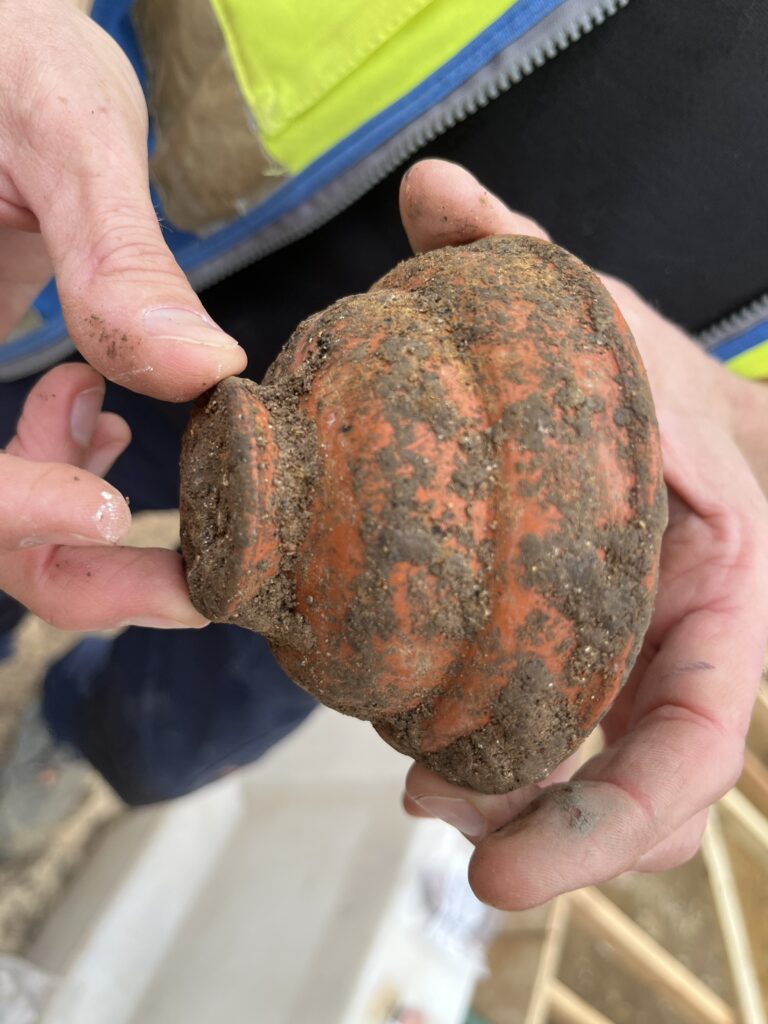
“There were some little bits of pottery that have really lovely motifs. One in particular had two gladiators on it. I mean, it’s just a fragment as itt’s very rare that you get a full vessel.
“There’s a little belt buckle that we thought was earlier, but as it turns out, was probably from the medieval or later medieval period, and again, that’s going through conservation now.”
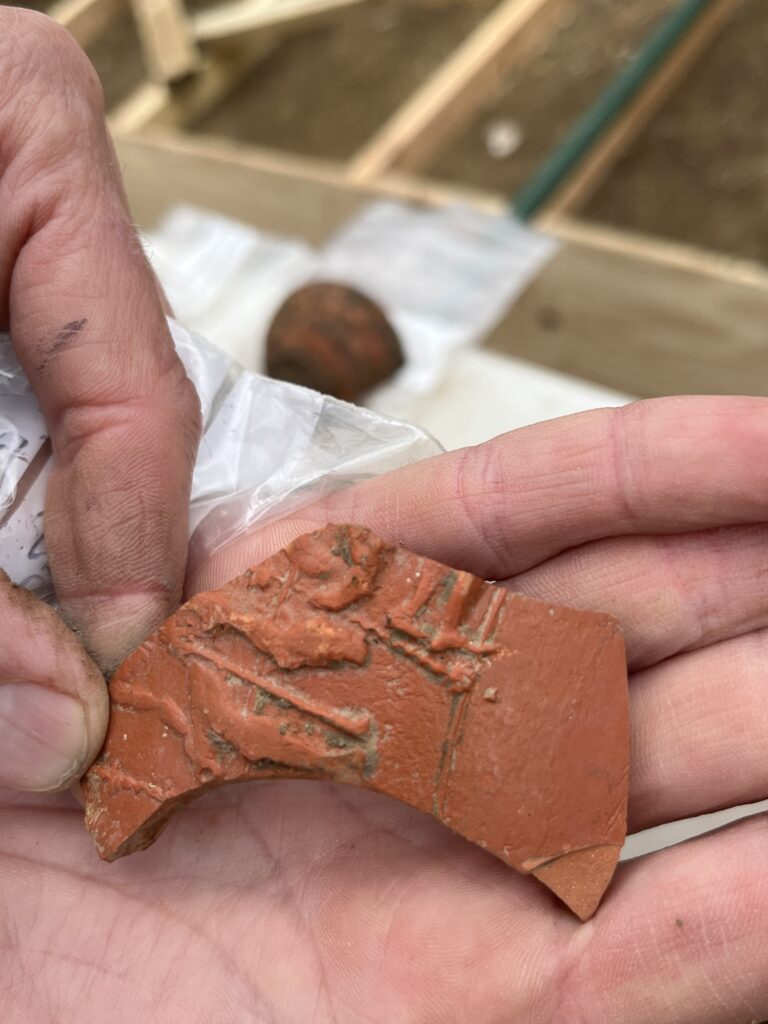
surfaces of which had been decorated with the design on the inside of the mould. Samian pottery was not glazed; its glossy appearance is due to the presence of particular minerals found in veins of clay in France and Spain. Samian vessels usually include the name of the factory owner pressed into the centre of the vessel interior. These have been extensively studied and as a result vessels with stamps can be dated quite accurately.
All of the small finds are initially processed by museum volunteers.
“We’re doing a lot of washing, which is great as there’s lots of public engagement, with people physically touching the artifacts, and really loving it because they’ve never seen that stuff before. You know, this item is 2,000 years old. It’s epic even if it’s just a fragment.
“You can explain to them what pot it came from, what that means about what sort of house it came from, and give them all these ideas about its use and origins.
“When that’s done it’s all going to be sent away for analysis by different specialists and they’ll start compiling their individual reports.
“Eventually it all comes back to DRP Archaeology and they have to produce a final report. Once the analysis is complete and the final report written, the finds will come to the museum.”
Apart from the archaeology, the project has also been about the public engagement: “You know, the photos of thousands of people coming, the schools really loving it, the feedback they’ve given, the press coverage that we’ve had, all just shows there is a huge appetite for archaeology.”
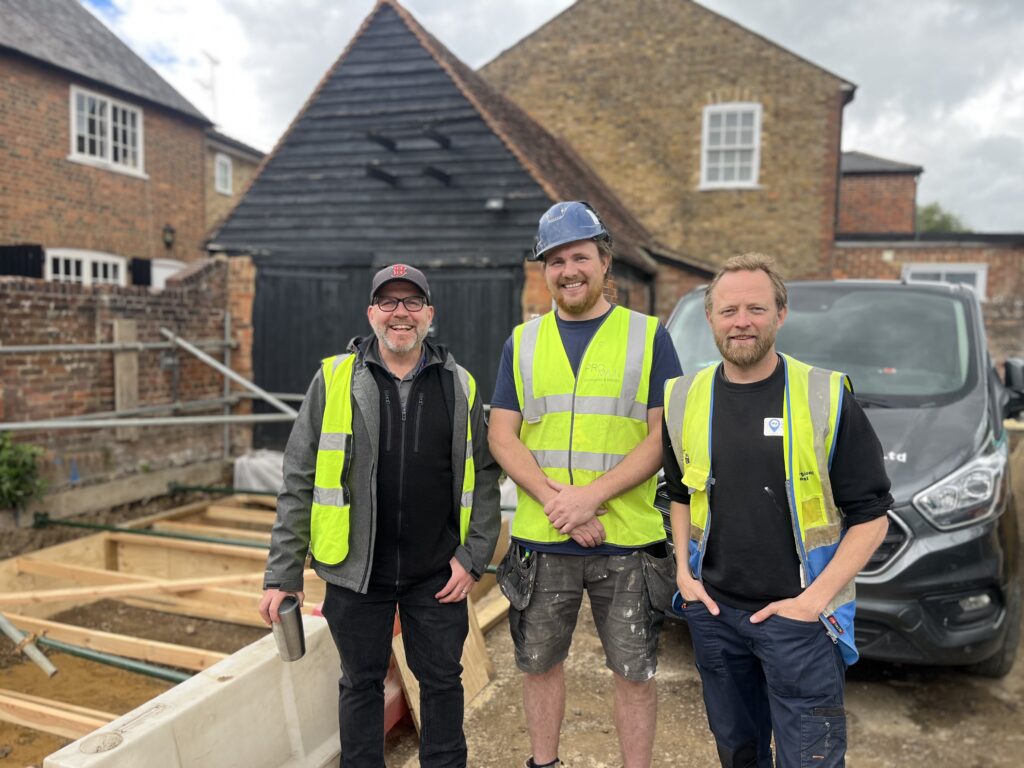
Johnny Noble from Promain Construction and Interiors is project managing the redevelopment.
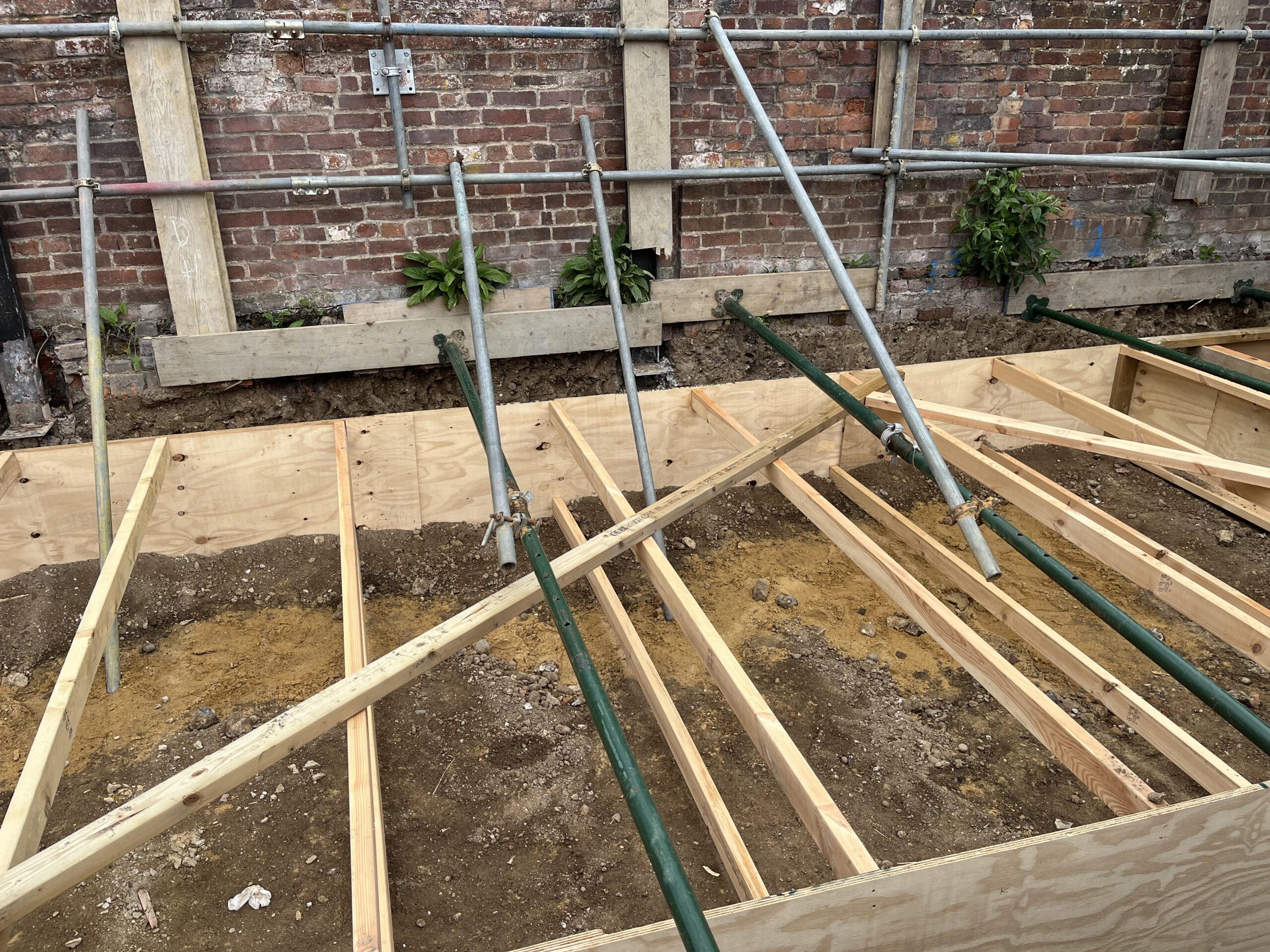
Because of the archaeological finds, the project now involves floating an office building in the car park instead of driving metal piles into the ground, which could have damaged what lay beneath the surface.
“We reworked the design to avoid disturbing any lower archaeology,” Johnny explained. “Originally I was decided that piling would be the route that would be least disruptive, but once we found out what was under the ground it was decided that actually drilling a series of holes through it was probably going to do more damage.
“There’s this balance between contractor and archaeology, and everyone’s trying to do the right thing and cause the least damage with a development, and it’s worked out great on this project.”
He said the local community have shown a huge interest in the site, and neighbours are happy that it will be remaining a pub for many years to come.
With the dig now over, is Tom coming away with a different insight into the site?
“We could make grand pronouncements and say, the Roman wall was definitely here and this or that is related to that, but without actually seeing the wall you’re taking a bit of a leap.
“So that’s when you do the fine work. We start looking at the deposits and date them to the right period. The wall was built in 260AD, which is quite late in the Roman period, so if we get loads of material dating way, way, earlier than that, then we can’t necessarily put them together.
“It’s part of the process where you go through every object to determine what period the material comes from. That’s why those Samian ware stamps are amazing.”
Samian pottery is the fine tableware of Roman Britain, which comes from the Gaulish area [France] and was distributed across the whole Roman Empire. Some fragments found at the Rose and Crown included the maker’s stamp, which provides pure dating evidence.
“You get a stamp on the bottom of Samian ware and it’ll tell you the factory it came from, the name of the person who did it, so you can date that really nicely. It’s that finer detail that will happen over the next year or two, and it’s a long, long, process.
“It’s tempting to say, well, we definitely got this, definitely got that, but in reality, so much comes out when you actually get into the finer detail.”
He had one final comment on the dig: “It’s been amazing. For me, it was about seeing the people – the locals loving it, the school kids connecting archaeology to what they’re seeing in the museum. They can go in there and see a mosaic, but actually showing them physically how it gets out of the ground and the way we’re doing archaeology today really lit up a few eyes.”