14 Feb 2025
The owners of an award-winning St Albans hair salon are fighting a fresh appeal to open up a blocked doorway and link their adjacent properties.
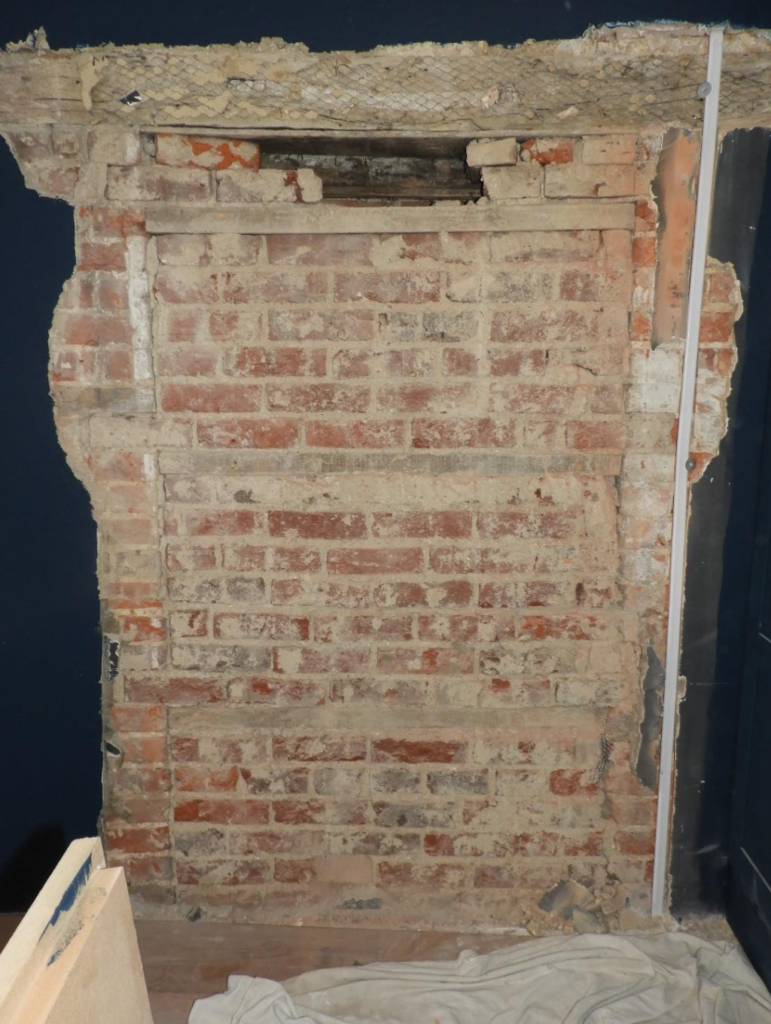
Marc and Sophie Trinder, directors of Trinder Hair Salon in George Street, are desperate to restore the door which once connected numbers 21-22 so customers using their waiting room don’t have to go outside to enter the salon.
But because the buildings are Grade II listed and within the Conservation Area, their initial applications have been rejected by St Albans district council on the grounds that it would damage the buildings.
In a statement, SADC said: ‘The proposed development, by reason of the loss of historic fabric from its original location and the disruption to the historic plan form of the buildings would result in less than substantial harm to the special historic and architectural interest of the buildings. The harm caused would not be outweighed by public benefits.”
The application has now gone to appeal, with comments welcome until the end of February, at which time a final decision will be made by Planning Inspector Bridie Campbell-Birch.
The Trinders have promised to do everything in their power to ensure reopening the doorway does not damage either property.
Marc said: “We have invested a huge amount of money in carefully renovating both properties respectfully and we’ve been very clear in our first and second applications that we will limit any damage to the building. We simply want to take out bricks which have been inserted to block up a pre-existing opening. We plan to store those bricks even though they aren’t original bricks so they can be reused when we eventually vacate the property.
“We absolutely love George Street with its abundance of independent businesses and we feel it is the right location for our business in the historic quarter of St Albans.
“The thought of potentially having to relocate our business to bigger premises outside the city centre is less than ideal as we have invested so much into building it up over the last eight years. It’s essentially stopping us from expanding our thriving salon, which is providing local job opportunities and apprenticeships. so it’s become less about any damage to the building, but more about preventing future growth.
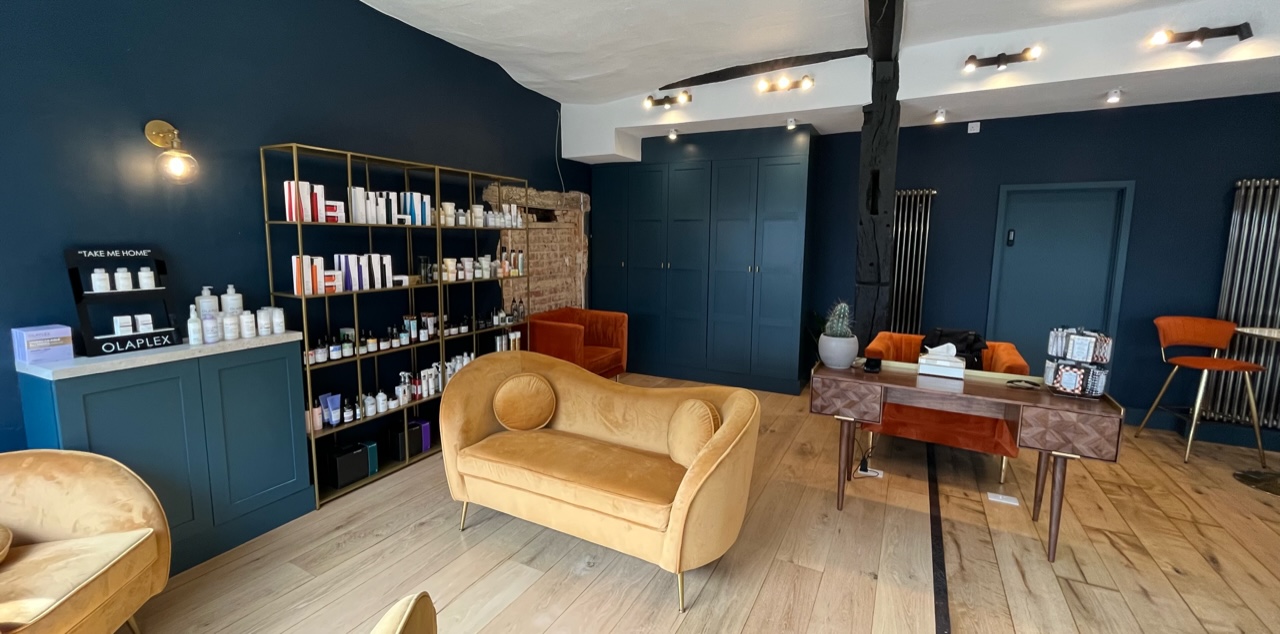
“We have a team of 20 and approximately 700 clients a month visiting the business and they all arrive in one shop to check in, go round to the other shop to use the toilet, then back to the check-in area, then leave that area to come back to the salon to have their service, to then go back to the other shop to pay.
“Reopening the doorway would make the whole client experience more seamless and stop the frustration of people constantly in and out of both shops – constantly carrying refreshments on trays between the two shops is also less than ideal.
“The connection will maximise the working space in both shops, so having a connection between the two shops will enable us to provide hairdressing services in 22 George Street which will then enable us to continually employ and train more apprentices in the future to grow our team further.”
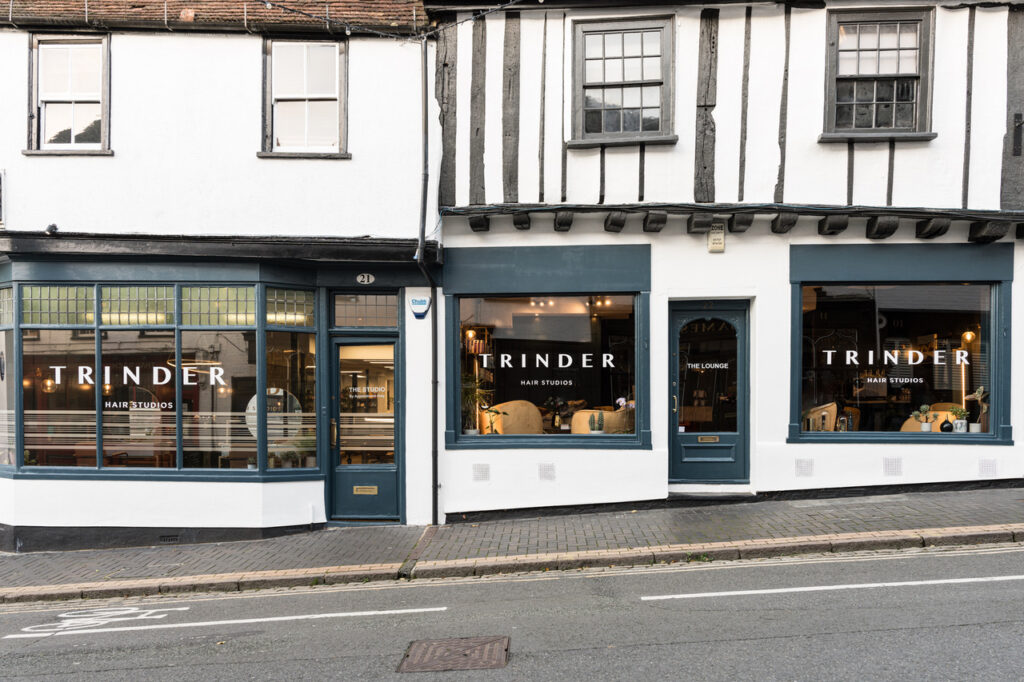
Professor Tim Boatswain, President of St Albans Civic Society and chair of St Albans Blue Plaques, became involved in the Trinders’ campaign after the installation of a plaque commemorating “Orchid King” Frederick Sander, whose first shop was at 21 George Street.
He wrote a report in favour of the door being reinstated based on JT Smith’s 1988 report on the buildings, as held by the St Albans and Hertfordshire Architectural and Archaeological Society (SAHAAS).
He said: “I was surprised that SADC rejected Trinder’s application to reopen a blocked doorway between 21-22, as it is difficult to see this would ‘harm’ the listed building, given there was a previous time when there was internal access between the two buildings.
“The infill materials of the blocked doorway suggest 20th century work but I am not an expert on brickwork so I couldn’t precisely date when the doorway was filled in.
“Number 22 currently has modern floor decking (probably put in when it was a furniture shop), concealing potential level differences between the two properties. Given the lower ground floor level of 21 compared to 22, steps likely provided access between the two properties.
“If there was internal access between the two buildings this would be of ‘public benefit’ for customers, as they would not have to go outside and risk the elements when they moved from the waiting room to the salon,” he added.
Historic research undertaken by members of SAHAAS also suggests that one of the past uses of both buildings was as a general store and furniture dealers, and were likely to have needed the entire floor space.
Their landlord Ray Davey of Romeland Hill, who owns 22 George Street, wrote to SADC in support of the application: “We ask for common sense to prevail.
“Please approve this application to link their two shops and allow Marc and Sophie to continue to grow their business and create more job opportunities in St Albans.”
Written representations on the appeal need to be made by March 11 and sent to https://acp.planninginspectorate.gov.uk using the reference APP/B1930/Y/24/3358005 or by writing to Bridie Campbell-Birch, The Planning Inspectorate, Temple Quay House, 2 The Square, Bristol, BS1 6PN.