18 Jun 2026
The Company of Ten present a gripping adaptation of Paula Hawkins’ best-seller, and Lesley Cowland was there to watch…
The Girl on the Train has been adapted as a play by Rachel Wagstaff and Duncan Able from the book by Paula Hawkins. Rachel Watson, the girl on the train, has had traumas in her life which have driven her to alcohol and resulted in losing her job.
To give her some normality she still takes the train every day, which often stops at the signal close to her old home where her divorced husband, Tom Watson, still lives with his new wife, Anna and their child.
Three doors down reside another couple who she often sees on their balcony; Scott and Megan Hipwell, and Rachel has built up a love story around them.
Sadly this story comes to an end when Megan disappears and somehow Rachel has been near to the place she was last seen. Over the course of this psychological thriller, Rachel plays a large part in trying to work out who is responsible for Megan’s disappearance and how, in her alcoholic state, she came to be involved.
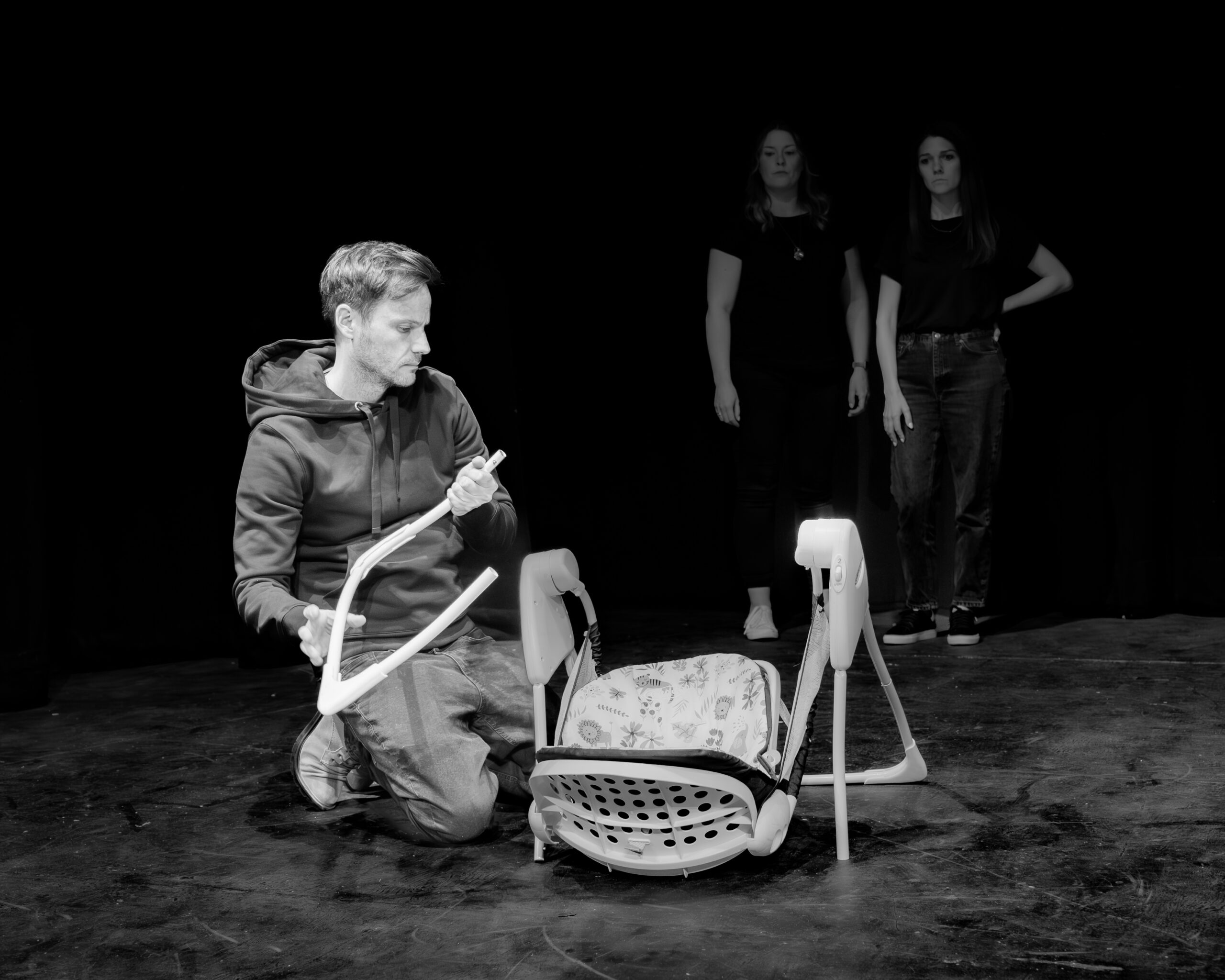
When director Maureen Bukht, explained that her set design needed a revolving stage she was delighted to be told that the Abbey Theatre had two! These revolves were perfect for the setting of this complex play and to make the scene changes fluid and efficient. The revolves, set either side of the stage, become the different rooms inhabited by the characters with enough props for the audience to recognise the location and the ability to use the stage to expand the acting space. One section also provided a dark backdrop for the flashbacks of Megan’s life and interaction with other people which plots the background for the story.
Obviously there has to be a train and a four poster raised platform with a chair, placed at the back of the stage works extremely well, so Rachel is able to move from her flat to her old neighbourhood.
Keona Donn the set designer has done an excellent job, especially as she has come from the film industry and this is her first time working in a theatre.
Rachel, played by Lily Blaisdell Hamilton, convincingly flips from confusion, loss of memory and despair to sudden moments of clarity as she is constantly trying to put the pieces of the jigsaw together. Her scenes with DI Gaskill (Tom Bukht) were particularly poignant as she talks about how she had become an alcoholic and lost so much. Scott Hipwell, (Roger Barlett) gave a believable performance of the worried husband, first frustrated and distressed, and later bewildered and angry.
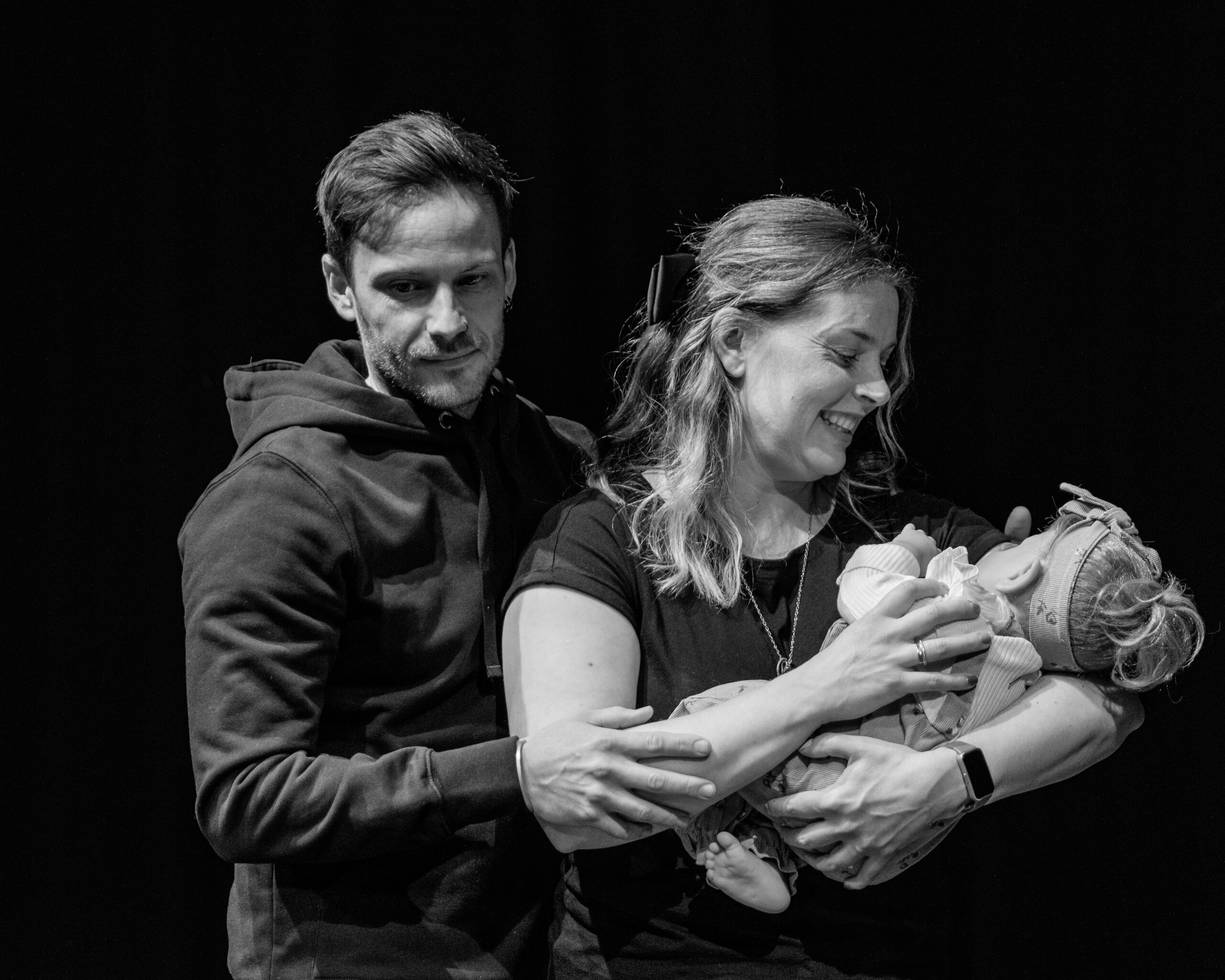
Tom Watson, (Jon Gavaghan) on the surface was kind, caring and considerate to his passive wife Anna (Katy Jane Meehan), but there was a well-executed edginess and menace to his interactions with Rachel, his ex-wife. Megan Hipwell is a difficult role to play as making frequent, small appearances in flashbacks it is hard to deliver a convincing character. Zara Radford did an excellent job and when Megan has a scene with her counsellor Kamal Adbic (Alex Shaw), recounting her teenage years she became a full-bodied person.
The casting of the nine characters was excellent and it was evident that they worked well together and were very comfortable in their roles.
There are a lot of threads to this play and it is a slow burner for that reason. Rachel carries the story, but all the characters interweave with each other in many different ways. The audience is constantly learning about the connections and how the past impinges on the present.
Maureen Bukht loves the book, and although she has seen the film she didn’t find it as good, and was very pleased to find that it had been adapted for the stage. So this was a labour of love for her and she has done a superb job. Maureen is justifiably proud of the production and said it has been “hard work, but a joy and the cast have worked so well together”.
In order not to give any spoilers I have had to be careful not to pass on too much information. I recommend you get your tickets and come and see this intriguing and suspenseful play, you will not be disappointed – the end is certainly very unexpected.