03 Feb 2024
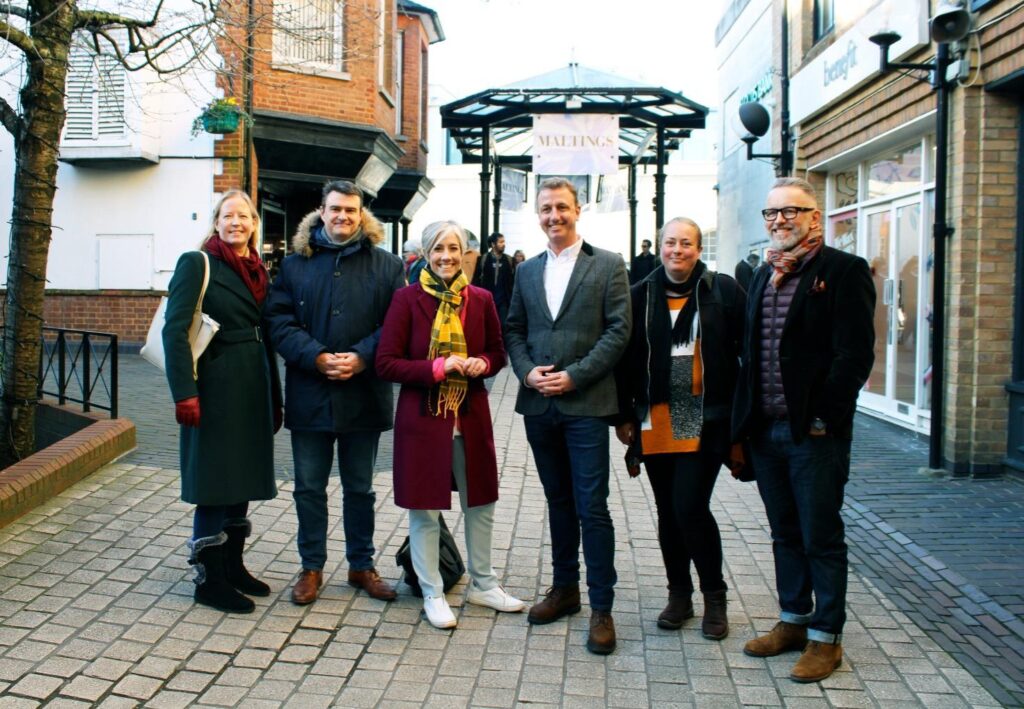
It’s been 20 years since award-winning entrepreneur and town centre investor Mark Robinson has visited St Albans, and he freely admits to being blown away by the changes wrought in that time.
He has spent the last five of those chairing the High Streets Task Force, an alliance of experts working to redefine these areas by providing guidance, tools and skills to local communities, partnerships and councils.
“I’ve been here a long time before. My business actually owned the lovely listed building in the middle that used to be Laura Ashley’s and is now Anthropologie, and I haven’t been back since.
“The High Street Task Force was a five-year project which is now coming to an end, and we’re preparing a sort of end of term report for the government about what’s gone well, what’s not gone so well, and what might case. So I’m spending a bit of time outside my day job, visiting places and listening.
“One of the reasons it’s particularly interesting coming to St Albans is that the High Street Task Force is very much about levelling up, and although it’s often seen through that lens I think it’s really important that we don’t ignore places that might be seen as not needing levelling up, because what I’ve certainly heard today is that a lot of the challenges that businesses on our high streets have are national.
“So when we think about solutions, we can’t forget that it’s about levelling everywhere up together and really understanding what’s going on across the whole country, not just these places which have been left behind.”
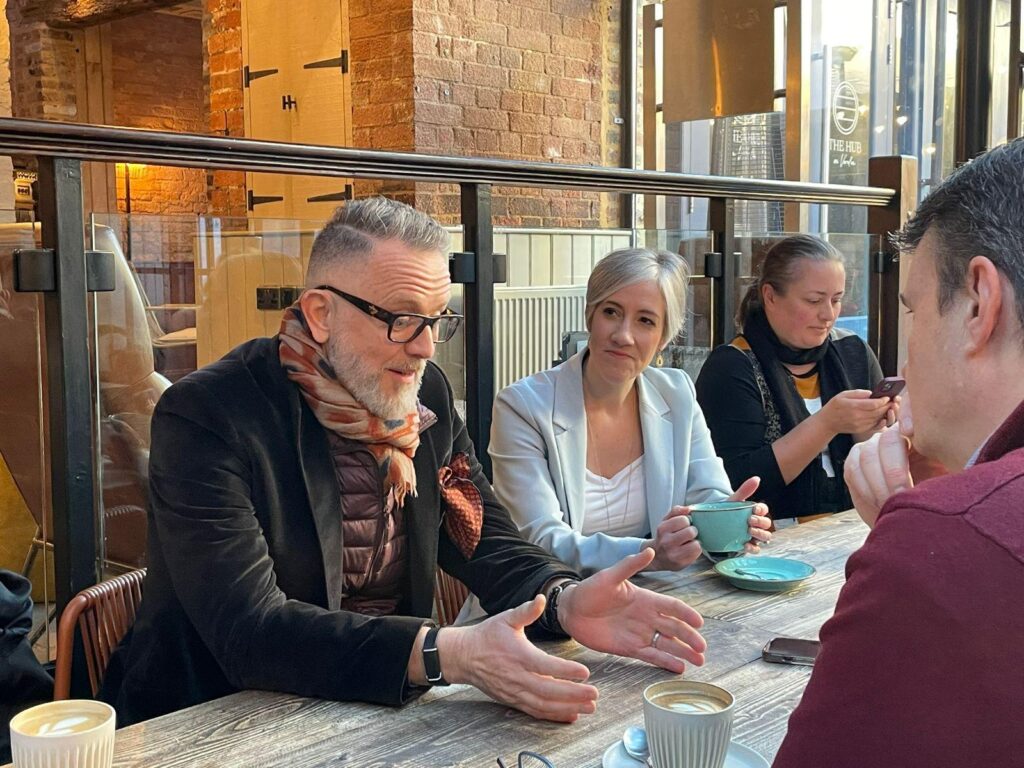
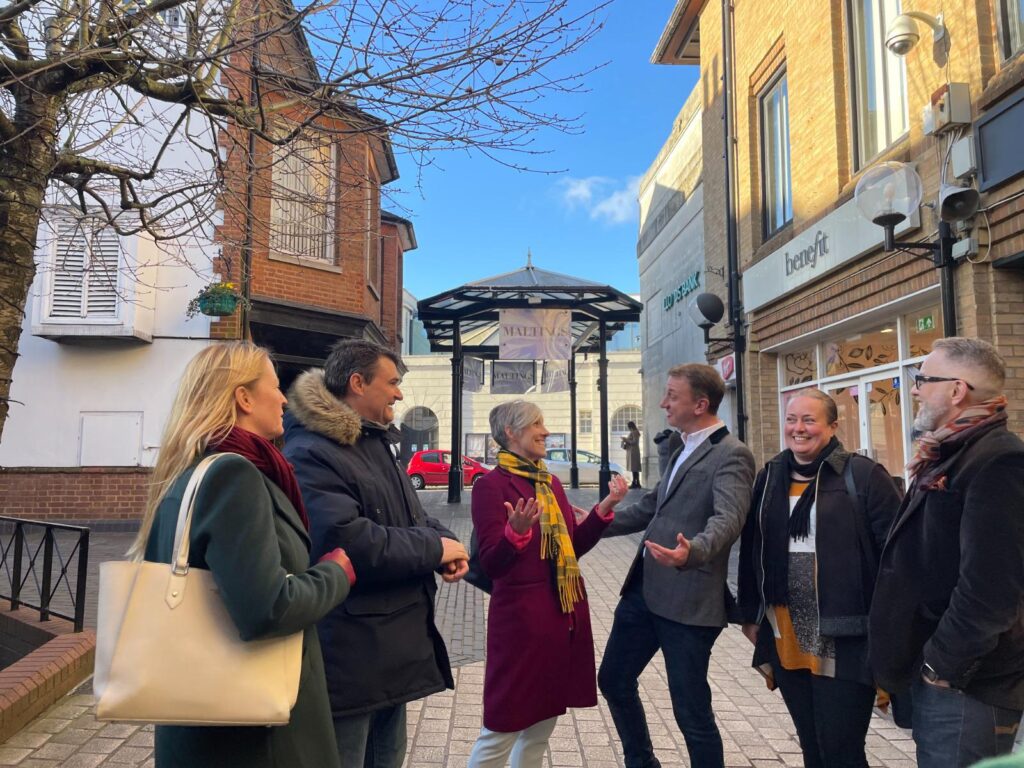
We’re sitting down for a round table discussion at The Hub in Verulam Road, joined by MP Daisy Cooper and district councillors Helen Campbell, Jacqui Taylor and Giles Fry, and once coffees, teas and other beverages have been distributed accordingly, the conversation moves onto business rates.
Mark explained: “This is a reoccurring theme which disappointingly hasn’t really been addressed. Hopefully it might be addressed post-General Election, when whoever is in power will have more time to think about it properly, and certainly a number of parties are advocating for the abolition of business rates, which personally is something I’d advocate for as well.
“I think rents are an issue. It is a challenge. People always think that their local town centre has gone backwards. Nobody in the world thinks their town centre is better than it was 10 years ago. Definitely not 20 years ago. And actually, being honest, having been here 20 years ago, when I owned that shop, I think it’s holding up pretty damn well compared to most places.
“So it is thriving, but when places are doing well, obviously rental inflation can be a challenge. We’re not set up in the UK for success because we shouldn’t be judging the value of a shop based upon what the person next door pays.
“That’s tied up with a thing called the Landlord and Tenant Act. And to be fair, it is a current policy that is being reviewed by the Law Society. I think that has to change because it gets in the way of entrepreneurialism and enterprise.
Politicians of all flavours are in favour of enterprise and initiative, and when you’re hamstrung by the legal system, that’s not helpful.
“It’s very broken, because it doesn’t work for landlord investors, and it doesn’t work for tenants either, so everybody wants to change it, apart from the lawyers, who make loads of money. We should have a system like they have in continental Europe, where if you want to sign a lease on a property, it’s seven pages. If you want to sign a lease on a place like this, it’s 60 odd pages. Then you have the license to alter, then you have a deed of assignment and it would cost you £10,000 and probably take four to six months to negotiate. You need to get rid of that. I’m hoping it’s one of those things post-election that whichever government’s in place will accelerate because it’s a break on enterprise.”
One of the key issues which the St Albans Times has been campaigning to tackle over the past year is the issue of absent landlords, who often leave commercial properties empty for months or years at a time.
Mark said: “It’s a massive problem across the UK. I think it’s something the government needs to do more work on. There’s not many landlords who are so evil they deliberately keep properties vacant to ruin town centres, but it’s negligent landlords, people who just don’t even know what they own. They tend not to be foreign, because foreign multinationals don’t own little shops on high streets, but it’s quite often family trusts, people with a big SIP [Share Incentive Plan] portfolio, little prop-cos.
“And those people, we’ve really got to learn to understand who they are, engage with them better, and actually give them a carrot to bring their property into use, but also maybe have more of a stick.”
Cllr Giles Fry, who owns The Snug in St Albans and other operations across Herts, added: “From my side with hospitality, the way a lot of the pubco-leases operate, they have a rent review every five years. Because of the fragility of the economy and the speed at which it changes, you only really get a time to challenge that rent every fifth year, which means for the operators it’s very, very difficult. That rent is also tied on an annual basis to RPI.
“So because of the economy and the way it’s been managed with such high inflation it means in all my six properties I’ve undergone double digit rent increases annually for the last two years on top of the utility costs and the rest of the supply cost issues.
“Rents are really brutal in hospitality and it’s another example of where rent and taxation between them almost kill businesses and you’ve only got a five-year period to stand back and watch until something tangible has to happen.”
Mark responded: “Have you heard of high street rental auctions? This is a really interesting current government policy that was actually in Jeremy Corbyn’s manifesto, so it’s strange how these policies can percolate around and then pop up again. Basically it’s a bill that’s been through Parliament, in the Levelling-Up Act, and local authorities,
if there’s a vacant property that is causing a problem, and the landlord’s refusing to let it, they can effectively compel them to let that shop to somebody.”
“It’s like the leasing version of compulsory purchasing,” said Daisy.
“Yes!” Mark exclaimed. “That’s why she’s a politician! That’s a nice way of putting it. I do know that DLUHC (Department for Levelling Up, Housing and Communities) are really keen to have some testbeds and pilots and have raised some additional funding, so if you had one or two properties on the high street here that have been long-term vacant that you know you could let tomorrow to an interesting, exciting, local independent the district council now has the means.”
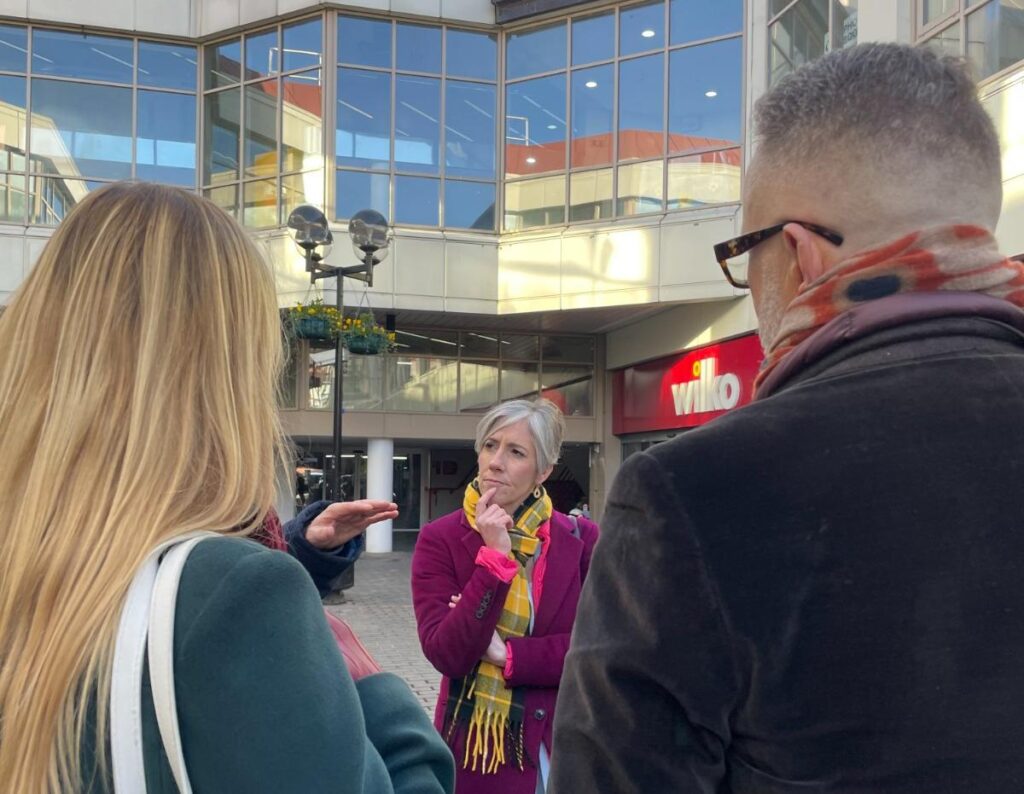
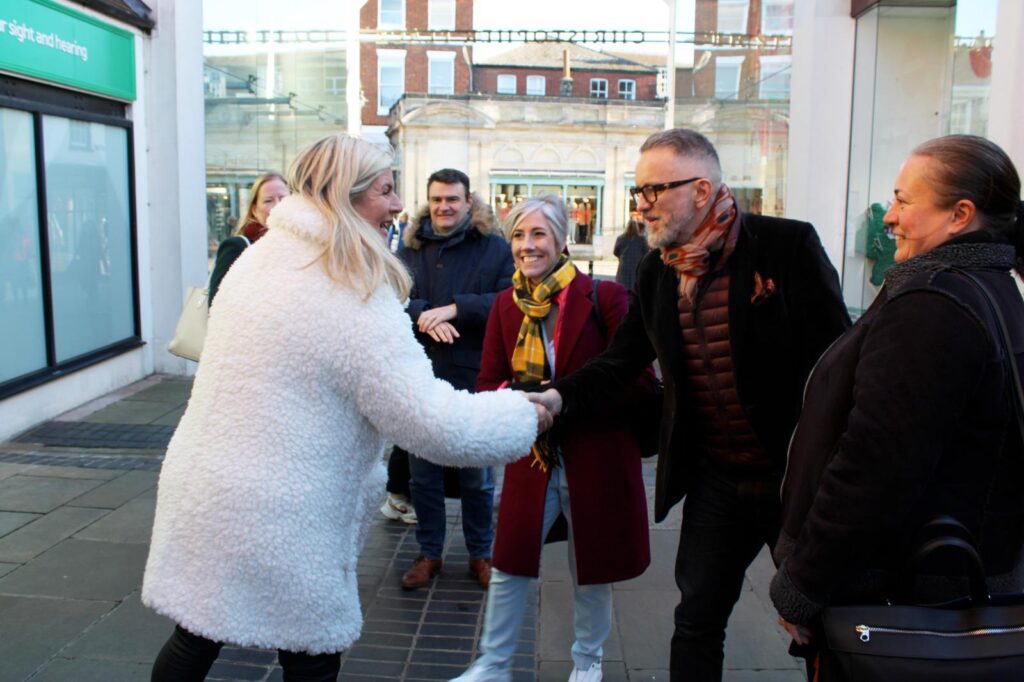
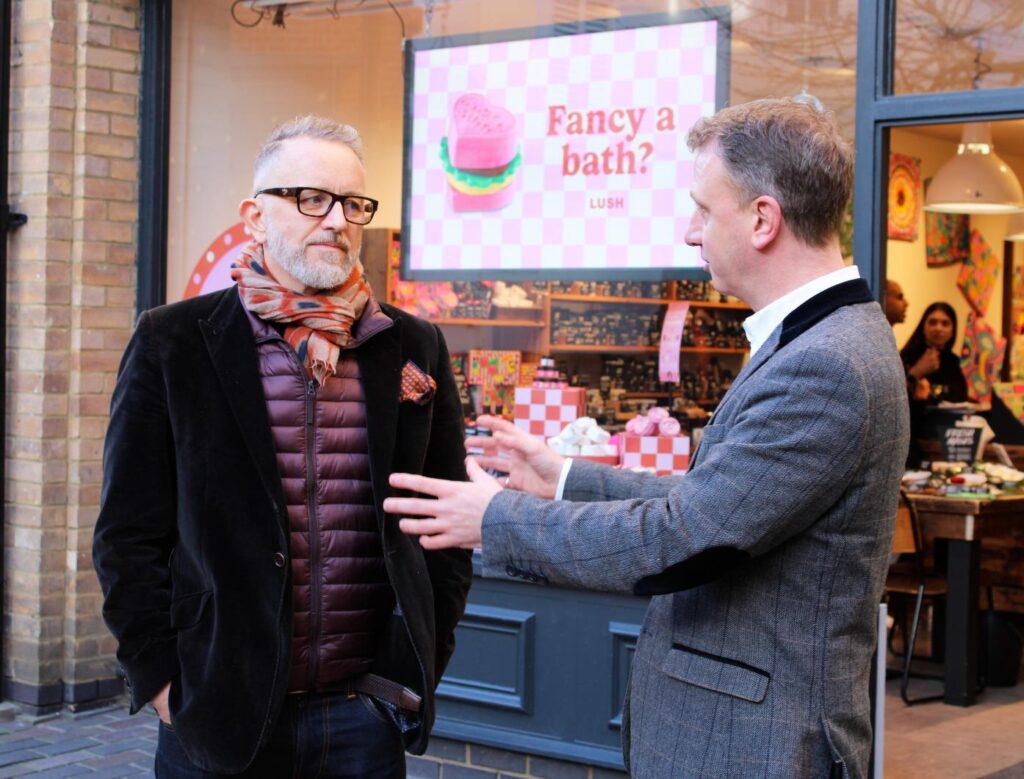
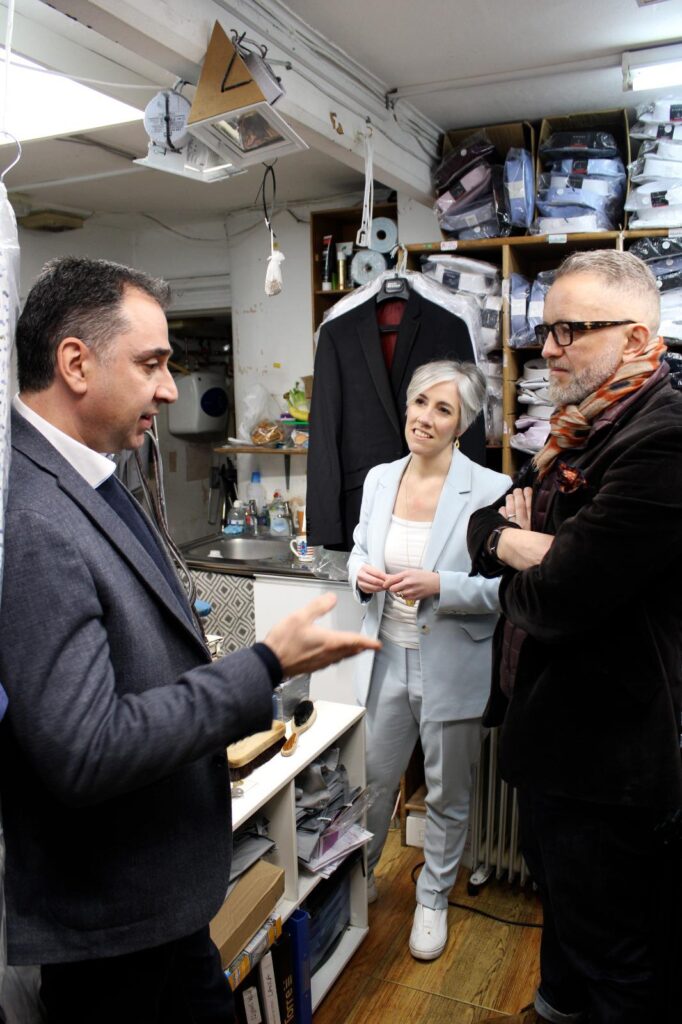
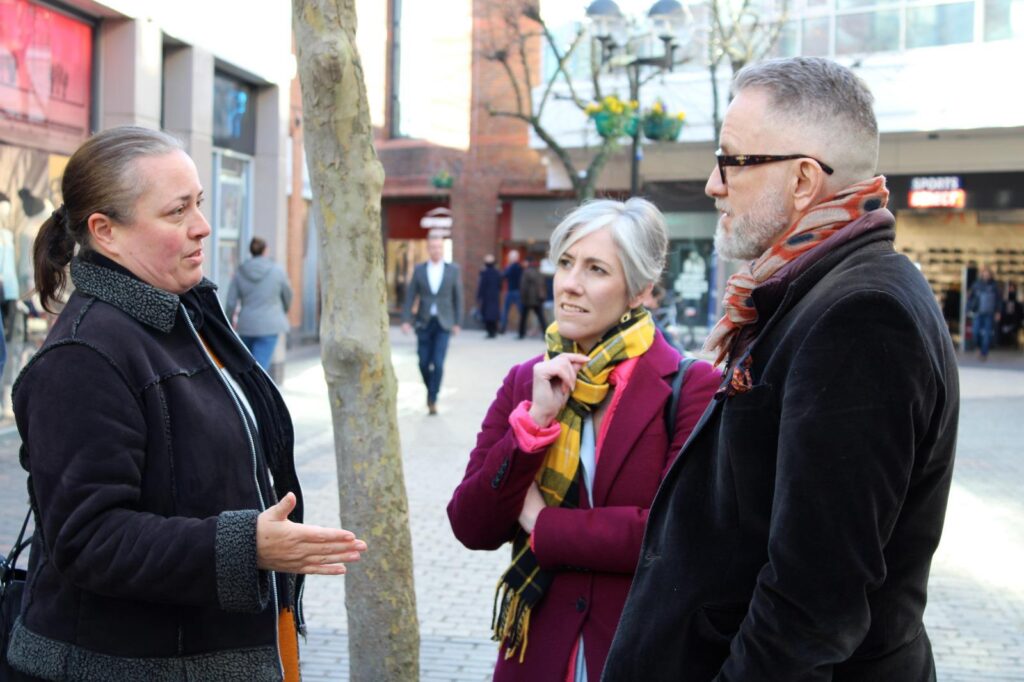
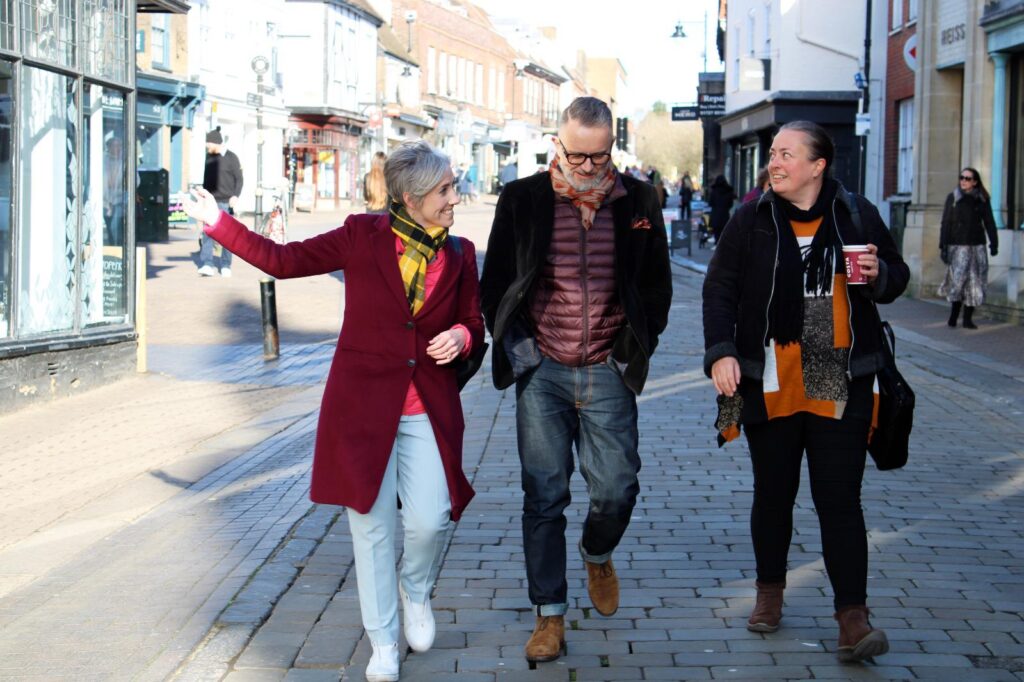
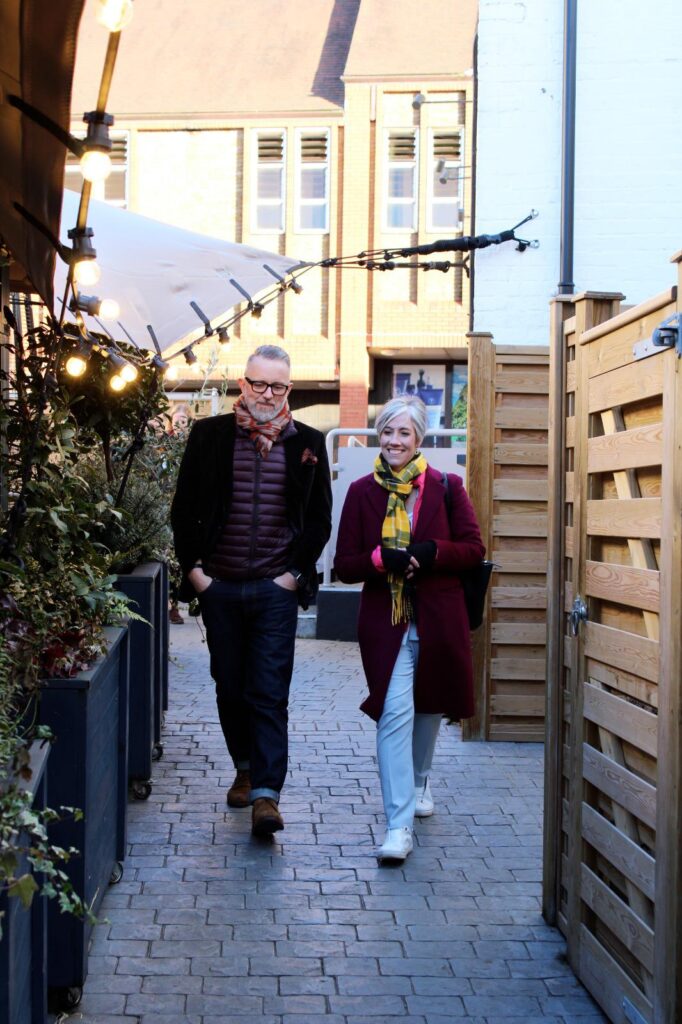
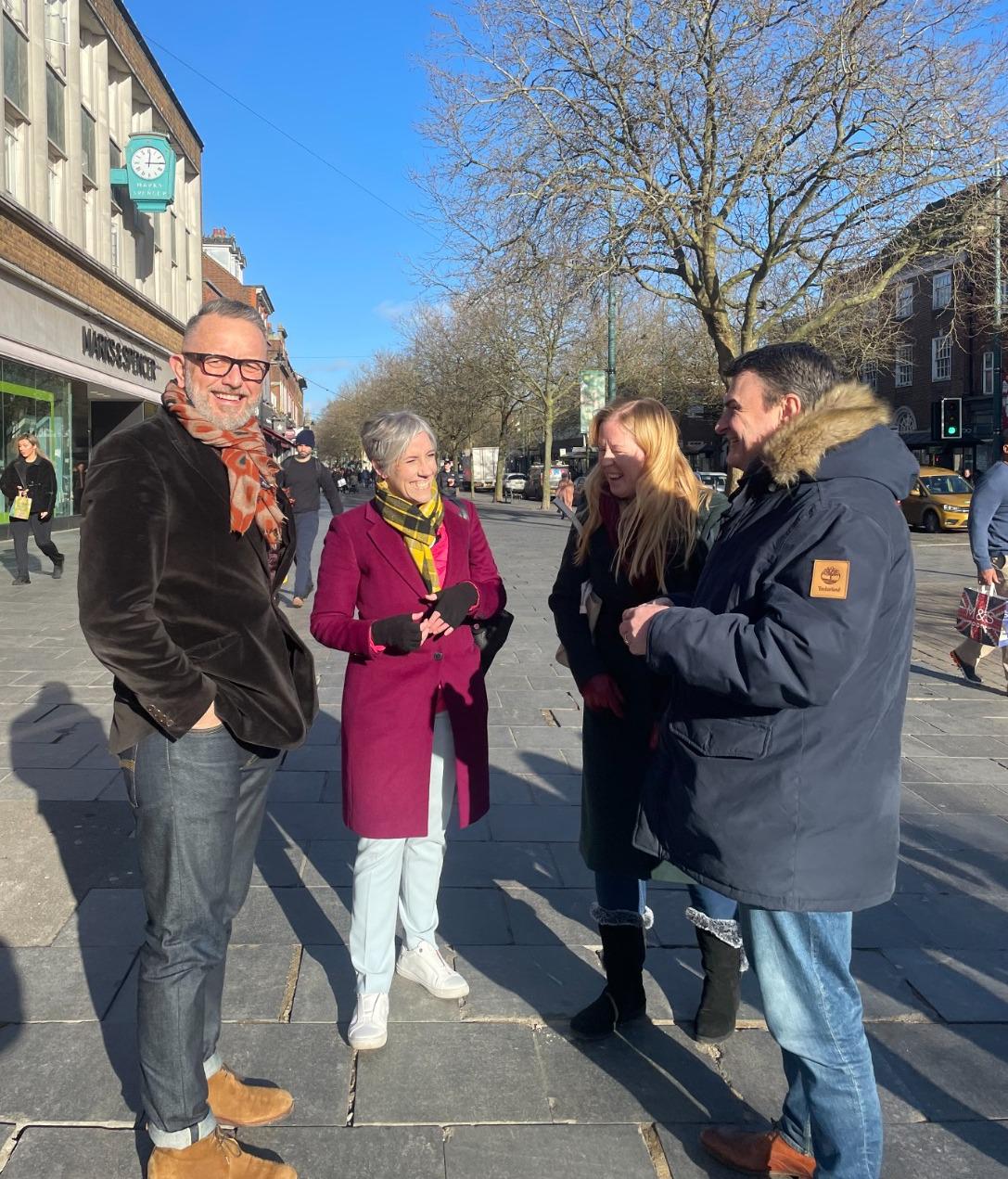
Daisy elaborated on their earlier activities: “One of the really interesting things we’ve been doing today, is we’ve been to meet a number of different businesses. Some very new businesses that have not been open even a year, some more established, some of the oldest businesses in St Albans, and we’ve been talking to the managers of both The Maltings and Christopher Place as well.
“What’s clear is there’s a huge amount of innovation in St Albans, there’s a lot of people wanting to open up businesses, there are new businesses coming in, the challenge is that when they start a new business, it’s actually that kind of dead weight of business rates and rent that means that the entrepreneurial spirit just can’t actually, can’t survive it.“It’s really dynamic and I think even some of the empty shops we have today, they’re filling up. Any and almost all the empty spaces in The Maltings and Christopher Place have got people wanting to fill them. But the challenge is that when they get these start-ups, they come in and it’s just those real dead weight costs.”
Mark agreed: “It’s taxes you have to pay straight away whether you’re successful or not.
“Some rents are staggered, so it gives you a year to find your feet, which is great for the landlord and great for the tenants. But the taxation system kicks in the very first day you sign the document, let alone trade, so it can be quite inhibiting.”
Daisy again: “What we see in St Albans is the fact that we’ve got so many independent shops. Lots of high streets are just clone towns, and here we don’t, but it’s harder for independents to actually manage those costs.”
Mark said: “If you’re talking about innovation, this beautiful space we’re in now is brilliantly innovative. I’ve travelled the UK and there’s not many places like this building that I can think of.
“It’s a real asset. It’s a community asset, it’s a business asset. It’s the essence of what modern thriving high streets should be about.
“I mean the experiential high street is absolutely key, but it’s so much more than that. We created these retail monocultures where retail users drove every other use in the town centre. One of the great things about coming to St Albans is actually seeing the other uses that are already in the city centre.
“I think that’s one of the reasons why it’s doing so well. So in The Maltings you’ve got the library, you’ve got people living above the shopping centre, you’ve got offices, you need this mix of uses.
“We judged the success of our town centres purely in retail terms, and that became a problem, so when was retail no longer the thriving industry it once was because of the internet and out-of-town shopping and supermarkets, town centres and high streets had nowhere else to go.
“I think it’s very clear that St Albans always had something else, a bit more about it, which has made it easier and more flexible and more sustainable to bring back in other uses as well.
“I think there’s always more you can bring into a town centre. More people living in town centres has got to be a good thing. We talk about something I’m personally very passionate about is the provision of health and well-being services in town centres, where they’re more accessible, where people come to a place to feel better. That’s what high streets should be all about.”
Daisy agreed: “There’s also a huge amount of research that shows that actually having health services, your GP, your dentist, on the high street, or very close to the high street, brings people into a town. One of my big frustrations that I’ve been campaigning on recently is around the fact that Treasury rules are so outdated that it’s actually going to price-out some health centres from city centres and from population centres, whether that’s in the middle of a city, whether it’s in the middle of a town or wherever it is. What you might end up with then is that the health services that people need are going to go to the fringes of a population centre, which is actually bad for health outcomes and really bad for the high street.
“Because when you think about it you know you want your health centres to be somewhere where the vast majority of people can reach them most easily. You also ideally want people to be able to walk and cycle to their health services so they’re having to drive everywhere.”
One of the other issues which has been raised with the St Albans Times is customer service and how it can be very hit and miss, even though getting customers into a retail outlet for face-to-face contact is arguably their raison d’etre. It’s physical retail’s USP. That physicality, that intimacy, the touch, the feel of products, building a connection with staff. That’s the strength of the high street which we’ve got to cherish and promote.”
When Woolworth’s and BHS both left St Albans, there was a big push for a Primark, a Debenhams, a John Lewis, none of which ever emerged, and Mark believes the city centre was actually saved by not having one of these big department stores.
“The way we drove retail growth in town centres was by justifying development by anchoring places with department stores, but 85 per cent of department stores in the UK have closed now. If you are one of those towns which spent all their wealth attracting John Lewis or Debenhams there, and they paid these businesses £10, 20, 30m to be in their town but they’re not there anymore. The whole town is no longer fit for purpose and those are the places which have the really ingrained challenges that you just don’t see here. So resisting that urge when consumerism was so rampant has held St Albans in really good stead.
“Even when the high street was doing well it never changed. It was still the same fascias above the same shops in 300 different places, and I think if you are curating the perfect town you deliberately curate a place that has changeability as that keeps people coming back. Maybe that’s something to guard against in St Albans, if it becomes so successful you don’t have room for the pop-ups and independents to have a go, that would be a challenge.
“I’d say the mix and the variety of occupiers you have here, most places would die for.”
Daisy concurred: “What you can see in St Albans is the balance. We’ve got some of the high street brands – Oliver Bonas, everyone’s really excited that Wilco’s is coming back, there’s Boots – but we love that they’re interspersed with these different great independent shops, and also the pop-up shops as well, like Darlish and the Christmas shop in Christopher Place. It’s actually a microcosm of St Albans, it’s a really lovely mix.”
Helen Campbell, who is chair of SADC public realm committee, with responsibility for areas including museums, public open spaces and parks, sports and leisure contracts, agreed: “I think the city is agile and it reacts to people’s desires. I think it’s forward looking. When I moved here over 20 years ago, I thought I was going to be living somewhere that was quite staid and quite static. St Albans is not like that at all. I don’t ever feel that and it surprises me a lot every day.
“Some of the events that we have, some of the events that we’ve got going on in our parks, the events that we have in the high street, when you go to the Christmas Cracker or to the Food and Drink Festival, what really surprises me is the demographic of people, the variety of people and the ages of people. I look around and I see people in their 20s who are coming here, it’s brilliant and that’s what we want.
“I think the independent side of retail is very definitely one of our strong points. It’s what makes it memorable. Like you said, people come here and it’s not homogenous with other places, it’s not somewhere they are just going to forget, they’re going to come back. As a council, we try to do everything we can to support businesses, because we don’t want to get in their way, we don’t want to do things that are going to make their lives harder because they’ve got enough challenges, we’ve heard about all of those.
“Things like the local music scene here is just massive as well, and that’s not necessarily something that people would expect in a cathedral city like this. We’re not just a cathedral city. That is part of our identity but there’s a whole lot else.”
Jacqui Taylor added: “The Cathedral itself is fascinating because they’re doing light displays, they’re doing cinema screenings, they’re doing projections, they’re doing yoga. It’s extraordinary that they’re using the Cathedral almost as an event space, but very much in a way that uses the kind of grandeur and sort of mysticism that they come from.”
So what town or city in the UK would Mark say had his ideal blend of retail, experience and tourism?
“I don’t know, to be honest I’m a bit blown away by St Albans today. I hate being asked that question at the best of times. I’m not just saying this, but if you were going to invent a mock-up of a thriving place, it wouldn’t from a retail opportunity look a lot different from St Albans. I think we have talked about the need for more homes, that’s prevalent everywhere, I think active travel can always boost places as long as you do it in a consensual way, so you don’t alienate some businesses and the provision of health and making sure that everything is at the heart of the community so people can access it easily. They’re the only additional levers I think you need to pull here.”