


30 May 2025
There are still more questions than answers hanging over plans to build more than 1,000 new homes on Green Belt land to the north of the city.
The St Albans Times has extensively covered the proposed Woollam and Cala developments for the past few years, but despite countless stories on the schemes, it still remains unclear how certain concerns are to be mitigated.
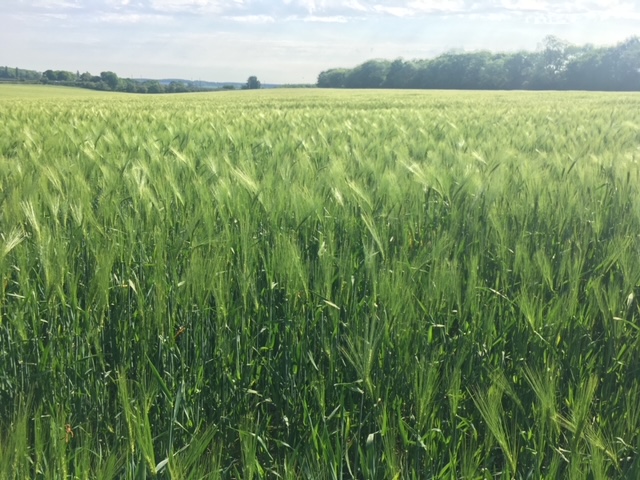
The proposals are for approximately 1,100 homes behind the Texaco garage on the Harpenden Road and stretching all the way to the railway line. The area is owned by a number of different groups – including St Albans School – and is an area of high quality agricultural land, containing a principal chalk aquifer and wildflower meadows.
There are two main applications for the area.
The first is for Woollam Park, land off Sandridgebury Lane between the railway and the Harpenden Road. This is for a development of approximately 1,000 new dwellings to include market housing, affordable housing and specialist accommodation for elderly persons, plus community facilities including a two-form entry primary school and neighbourhood centre, replacement playing fields and associated green infrastructure and access.
The second, by Cala Homes, is for land to the rear of 112-156B Harpenden Road, and would provide a residential development of 150 homes.
Gee Smedley, spokesperson for campaign group CLASH said there are four unmet – and in their view – unmanageable issues with delivering North St Albans as development land, none of which have been resolved.
These are Green Belt (not grey belt) use, flood risk, highways impact, and the ecological impact on Heartwood Forest and surrounding areas.
She said: “This area has always been a test case for the council when making planning decisions, but now the current Government is weakening Green Belt protection and SADC’s Local Plan has done nothing to protect the historic setting of our unique city.”
Gee highlighted perceived flaws in the first application: “Woollam Park is reliant on inclusion within the Local Plan, to try to secure development within Green Belt, but during the recent hearings in front of Planning Inspectors, they made it clear that they will be looking for significant modifications before the Plan can progress.
“We strongly suggest that one of those modifications are the removal of North St Albans from the site selection process because it fails to deliver sustainable development by not delivering the necessary mitigation on highways, flood risk impact and ecological protections.
“St Albans School development representatives also say they are working with Hertfordshire County Council to deliver highways solutions.
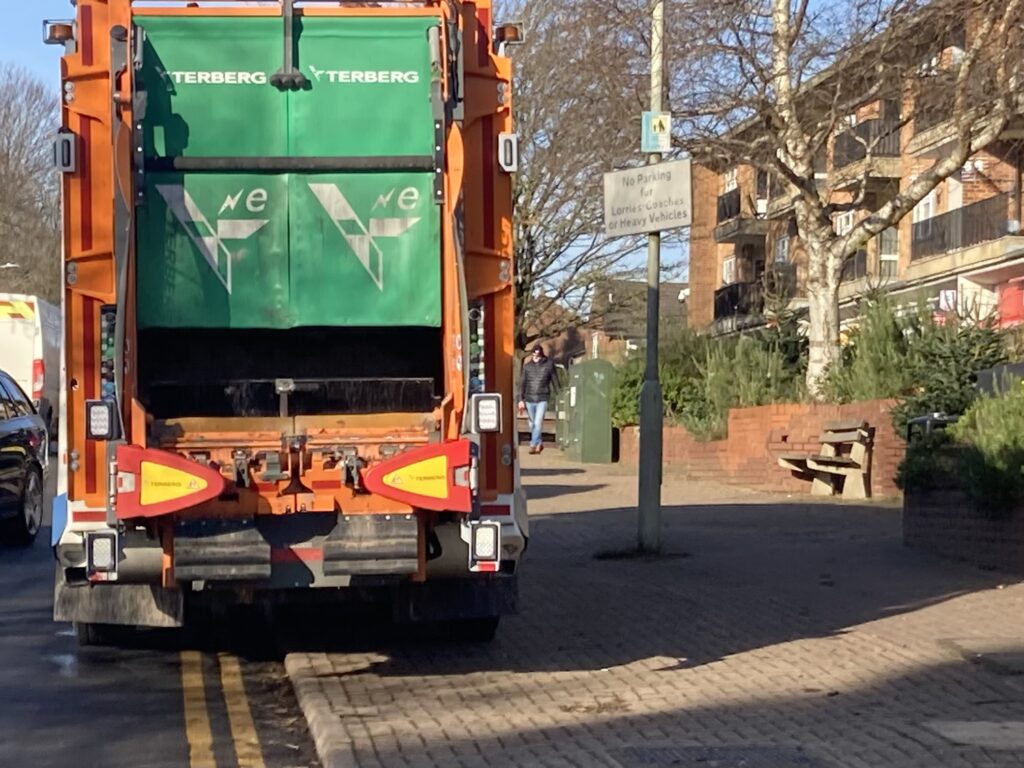
“To date, there are no sustainable and safe cycle lanes and there is no commitment to enhancing pedestrian safety in New Greens as it continues to be used as a rat run from very high volumes of traffic on the A1081.
“All the highways in the area are considered as school routes, with three secondary schools and three primary schools in close proximity to the A1081 – so what will be the true net impact of 1,000 extra properties in the area? Will St Albans School do away with its school buses and recommend its own pupils cycle the straight line between the western edge of Woollam Park and St Albans School city centre campus along the A1081 in peak traffic?
“To save any more time and money on all sides, the application should be withdrawn immediately.”
With regards to the Cala Homes scheme, the campaign group are waiting to see when a reserved matters application will go to SADC’s development management committee – having been withdrawn twice.
Housebuilding on the site will be taking place either side of a flood flow path – the route water takes overland when drainage systems are overwhelmed – with the developer installing a water pumping station to tackle any potential problems with flooding.
This means flood water will be pumped into the sewer system, potentially causing overflow into our rare chalk streams and causing catastrophic environmental damage, and also risking neighbouring properties.
Pumping stations are not permitted in new development as a standard flood defence because they are not deemed sustainable under the new National Planning Policy Framework, but council officers are permitted to waive these rules under what is known as ‘planning judgement’, which means the demand for housing is sufficient to overlook the restrictions.
Gee said: “Cala have come forward with a plan to financially compensate for the ecological loss on the site under the biodiversity net gain scheme.
“This goes against the Nature Recovery Plan for the district which seeks to deliver increased biodiversity within the district.
“Cala have also come back with a second application to remove the condition related to flood management. The Cala consultant has made it clear that complying with the regulation laid down for the design of the sustainable drainage system would mean there is not adequate space for access to the site. We have made a strong objection to both matters.”

Meanwhile, a petition opposing the Woollam Park development because of its impact on the neighbouring New Greens estate has already received more than 2,000 signatures.
It was organised by local campaigner Damian Gaskin, who said: “While the petition has drawn public attention, it has also been misunderstood. It does not oppose housebuilding. Rather, it highlights the growing pressure on a community whose infrastructure -though once adequate – has been left to deteriorate, with no safe pedestrian crossings despite heavy use by children walking to local schools.
“This raises wider questions. Is the residential estate of New Greens – with its narrow roads and limited access – being quietly repurposed as a relief valve for the Government-predicted increase in traffic around the Ancient Briton crossroads?
“Rather than provide the infrastructure to handle the extra traffic, is the burden being shifted to an area already experiencing long-term neglect? The facts suggest a pattern that deserves closer scrutiny – and a conversation about what kind of planning truly serves the public interest.
“I understand the urgent need for housing in St Albans. Like many, I’ve experienced how difficult it is to find a secure home here. After moving from Manchester in 2010 with two small children, I spent over £100,000 on rent before finally managing to buy a home. Now, as my sons reach adulthood, they face the same challenges – one recently told me he doubted he’d ever afford a home, here or anywhere else in the UK.
“This petition is not about resisting new homes. It is about a planning process that appears to overlook established communities and fails to address their very real concerns. A previous petition with over 1,200 signatures called for safe crossings for children, yet none of the promised actions from the county council have been implemented.
“At the same time, proposals that may bring thousands more cars through our residential streets proceed without clarity on how families are expected to cope with the consequences.
“Neither Hertfordshire County Council nor St Albans district council have publicly addressed the traffic impact the Woollam and Cala developments will have on New Greens. Government transport modelling (Trip Rate Information Computer System – TRICS) indicates that up to 4,000 additional vehicles per day could be directed through our estate once the new homes are occupied. With only two roads into the area and just one main exit, New Greens risks becoming a default cut-through for satnavs, Waze, and Google Maps when Harpenden Road becomes congested – which is every weekday morning and afternoon.
“This will place further pressure on already overstretched residential streets, increase risks for pedestrians and cyclists, and make daily journeys to school even more hazardous for children.
“These concerns are not rooted in opposition to housing – they are grounded in a call for responsible planning that recognises and mitigates real risks to public safety.
“Planning gain through Section 106 payments is designed to support infrastructure in the communities affected by development. Yet residents are rightly sceptical: ten months after the sale of public green space at Oysterfields, a promised playground has yet to appear.
“Meanwhile, councils receive ongoing payments from developers, raising questions about transparency and priorities.
“St Albans School, which stands to gain up to £75 million from the sale of Green Belt farmland, and the developer Hallam, selling 1,050 houses at an average of £1.5 million per house net a cool £1.3 billion, will be the primary financial beneficiaries.
“By contrast, New Greens – a community already organising its own litter picks, using containers for changing rooms, repairing signage, and calling repeatedly for pedestrian crossings – continues to wait for basic safety measures.
“We ask, will any of this private profit benefit local state school pupils, SEND provision, or community safety? Or will it come at the cost of children weaving through streams of buses, cars, and HGVs on roads never designed for such traffic?
“Local councillors must ensure New Greens is not treated as a traffic pressure valve. Infrastructure investment must match the scale of development proposed. We invite the Head of St Albans School, senior leaders at developers Hallam, and council representatives to cycle with Cllr Juliet Voissey and the children of the Batchwood Bike Bus – both now and again in September – to see firsthand the journey children face every day.”
We asked Hallam Developments to answer the following questions:
What measures are in place to provide safe and sustainable active travel highways improvements?
What will be done to prevent the impact of a further 4,000 cars a day on the surrounding road network, particularly New Greens?
How are they mitigating against the risk of flooding?
Is disposing of high quality farmland good for the UK’s future food security?
What measures will be taken to protect Heartwood Forest from the impact of this development?
To date they have failed to answer any of these, preferring to issue a generic statement which we have chosen not to publish as it says nothing of consequence.
To sign the petition visit: https://bit.ly/StopSchoolDestroyingGreenbelt
To see Damian’s videos highlighting the dangers of the ‘sustainable travel routes’ visit: https://bit.ly/NotSafeCyclePaths
Object to the Woollam Park development by emailing planningcomments@stalbans.gov.uk using the reference 5/2024/2271 and focusing on one of the following key issues: highways, flooding, Green Belt, Heartwood.
