31 Aug 2024
Have you made the effort to look up? Earlier this year, the St Albans Times examined some of the remarkable architectural features visible in our street-scene above the immediate eyeline, many of which reflect on the rich history of our city and district.
This article proved so popular that we will be continuing to look up (and indeed down!) at more unusual additions to our buildings and landscape, both in St Albans and further afield.
As with the previous piece, we are grateful for the prior research carried out by various individuals and organisations, whose background information has made this possible.
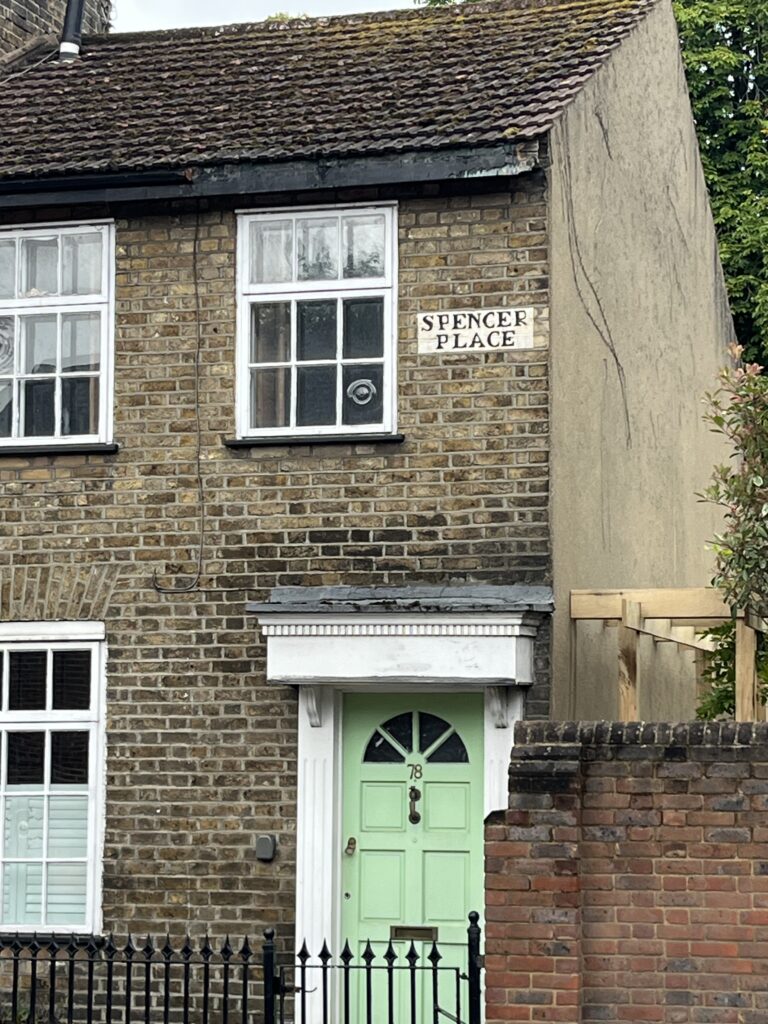
Spencer Place, a row of cottages on Holywell Hill, might be confused with the street of the same name in Sandridge. However, it isn’t an official designation, and actually dates back to the 19th century, commemorating the former owner of the land on which the cottages are built.
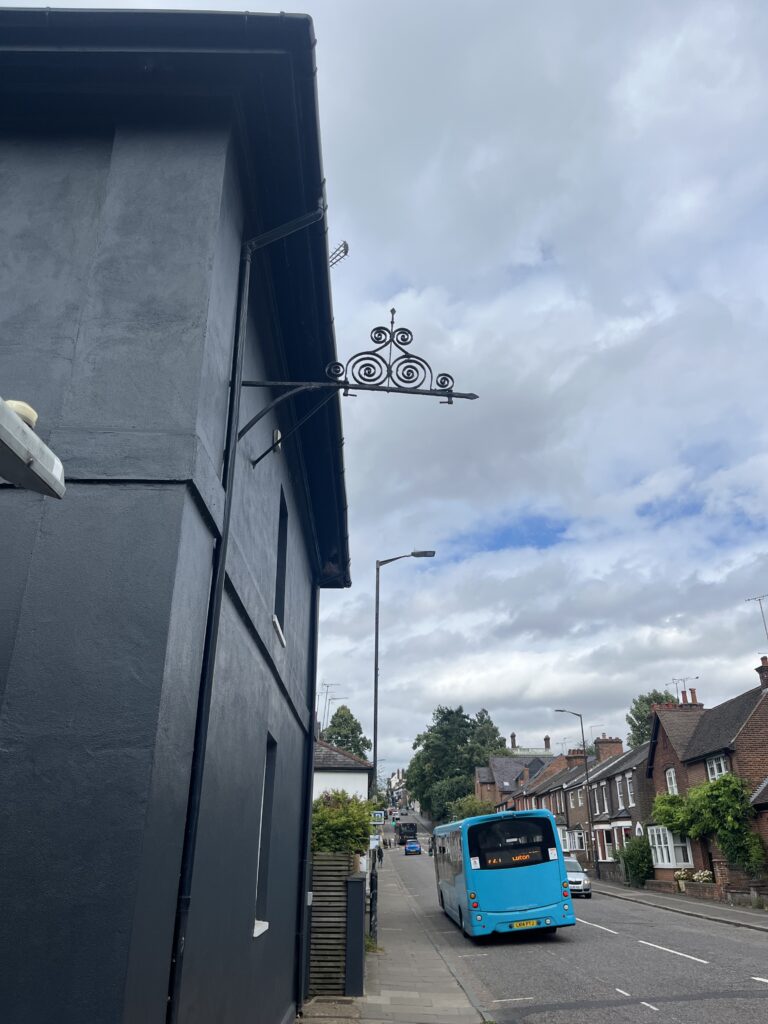
Just down the road is the one-time Duke of Marlborough pub at 110 Holywell Hill, now in residential use, although the brackets for its sign can still be seen if you look.
Researcher Ian Capper, writing about Holywell Hill on the Geograph.org.uk website (https://www.geograph.org.uk/photo/2739496), explains: “To the right of the present road at a point opposite the top end of the row of cottages, once stood Holywell House, a Tudor mansion the extension of whose gardens in the late 17th century led to the diversion of the original straight route of Holywell Hill to the west, to follow the route of what is now Grove Road, the start of which can be seen in front of the pub and the end of which is beyond the cottages.
“From 1684, the house was owned by John Churchill, later first Duke of Marlborough, who had come into its ownership following his marriage to Sarah Jennings. The Duke died in 1722, leaving Sarah as sole owner, who then in 1744 passed it to her grandson, John Spencer, who in turn passed it to his son, another John, who later became the first Earl Spencer of Althorp (from whom Lady Diana Spencer was descended).
“The family stopped using the house in the early 19th century (although retaining ownership of various lands in and around St Albans, with road names such as Jennings Road, Althorp Road, Marlborough Road and Spencer Mews maintaining the connection). The house was demolished in 1837, and this enabled the corporation of St Albans to reinstate the direct route up Holywell Hill. The name of the pub and the former name of the cottages both commemorate the former owners of the estate.”
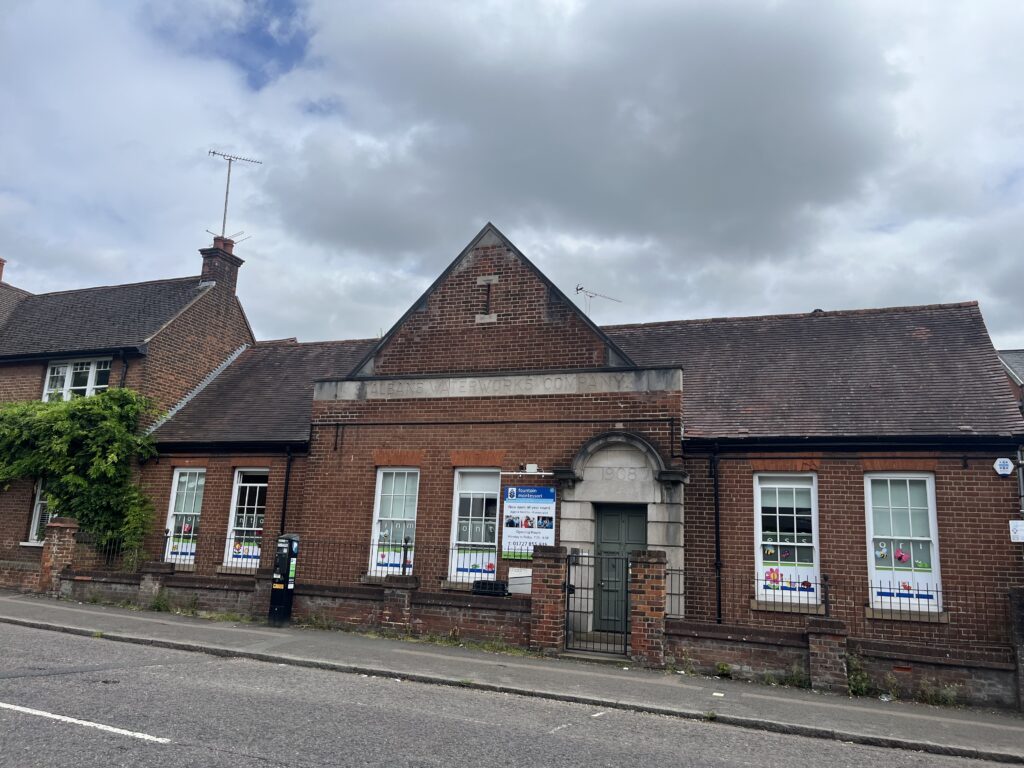
Also visible down Holywell Hill, on the other side of the road, is evidence of the old St Albans Waterworks building, which dates from 1908 but is now occupied by Fountain Montessori nursery.
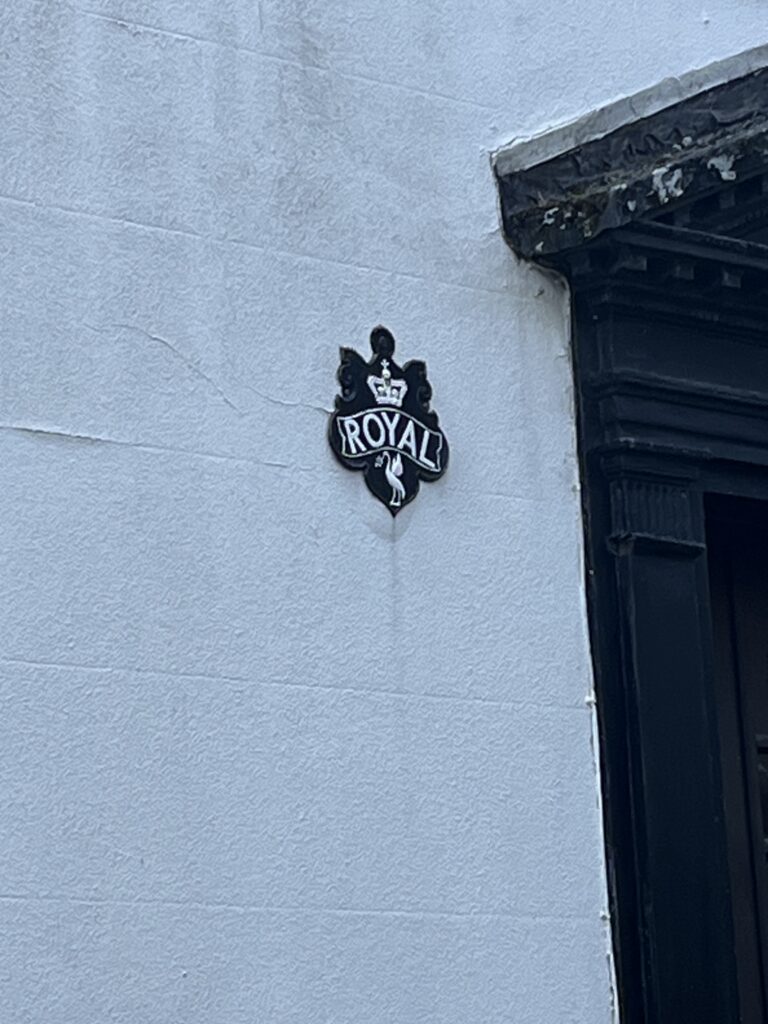
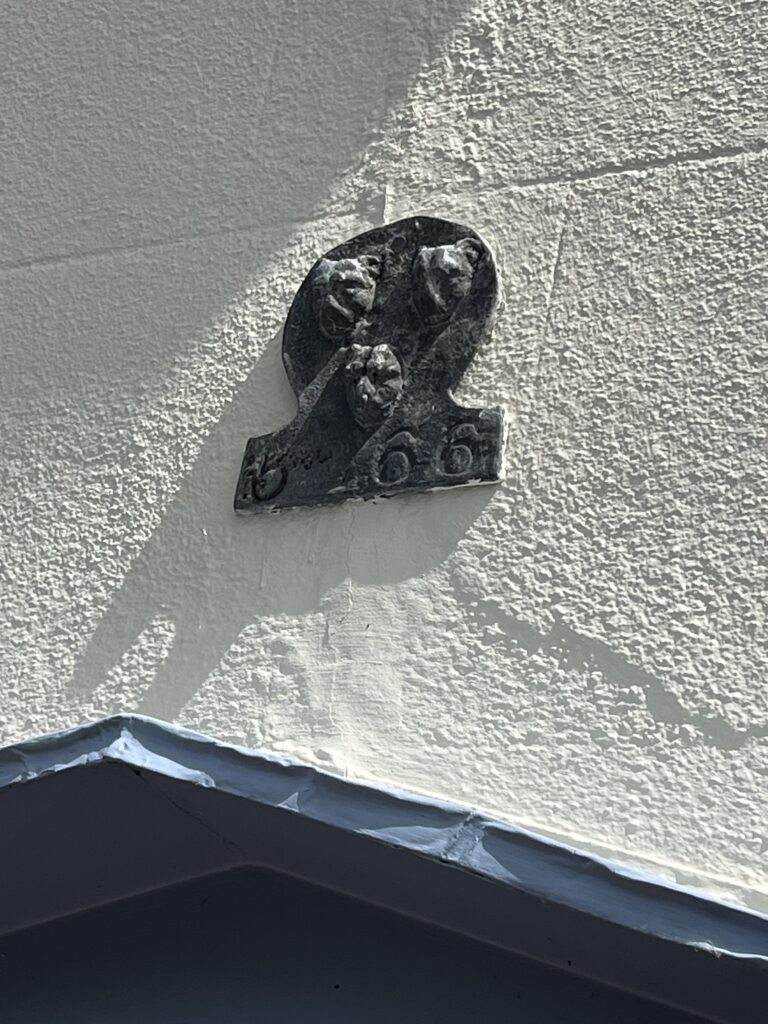
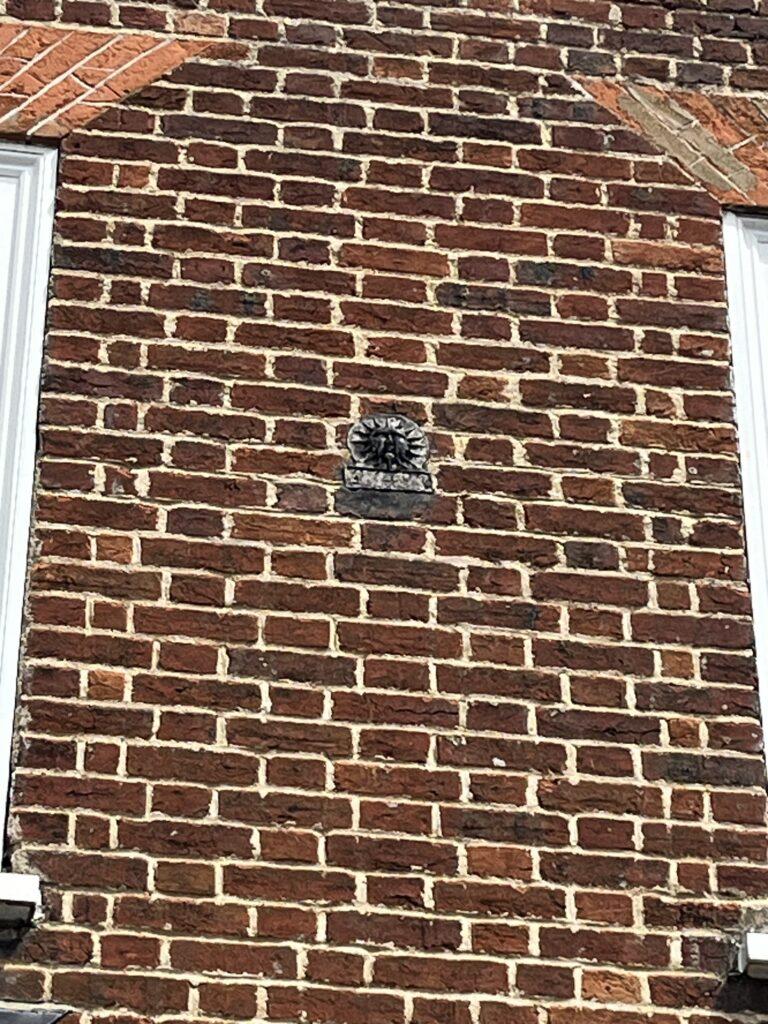
Walking down Fishpool Street reveals more examples of fire insurance plaques (as highlighted in French Row in our first feature), although not all are thought to be originals. During the 18th and 19th century St Albans’ fire engine was not publicly financed, and as a commercial enterprise, the fire brigade required payment for putting out a fire. Insurance companies provided plaques for installation on buildings to show they were covered, and each company had its own design of plaque.
James Gaffney from St Albans Guides talks about the Fishpool Street plaques as part of their walk down the road, and said: “The sun design is Sun Alliance insurance as we know them now. There are similar ones on No 100 and 98. The three bears or three leopards with a policy number on it is thought to be Guardian Insurance and the royal badge is Royal Insurance.
“They are not all authentic to the buildings, and apparently the three bears/leopards was bought by the owner/occupier.”
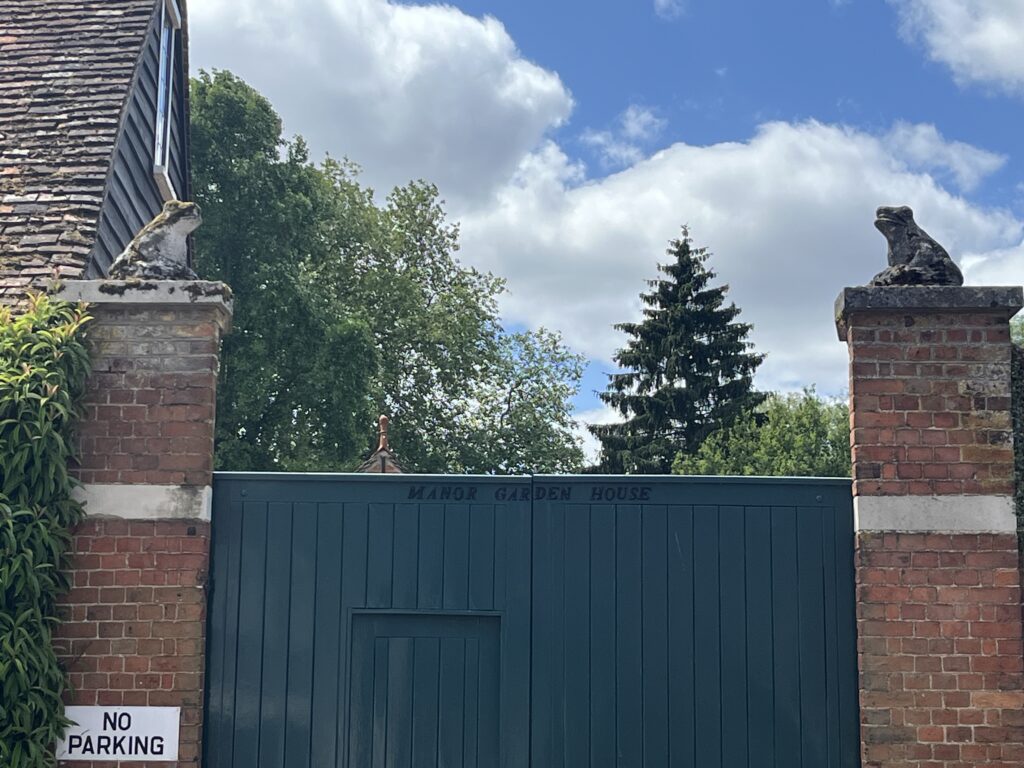
Also down Fishpool Street is Manor Garden House, with its unusual frog statues either side of the gate. The house itself dates back to Tudor times, is Grade II listed and was at one time The Angel Inn, rumoured to be a favourite haunt of Charles II. At one time it was owned by renowned painter Charles Kennedy, whose studio was located in the front bedroom.
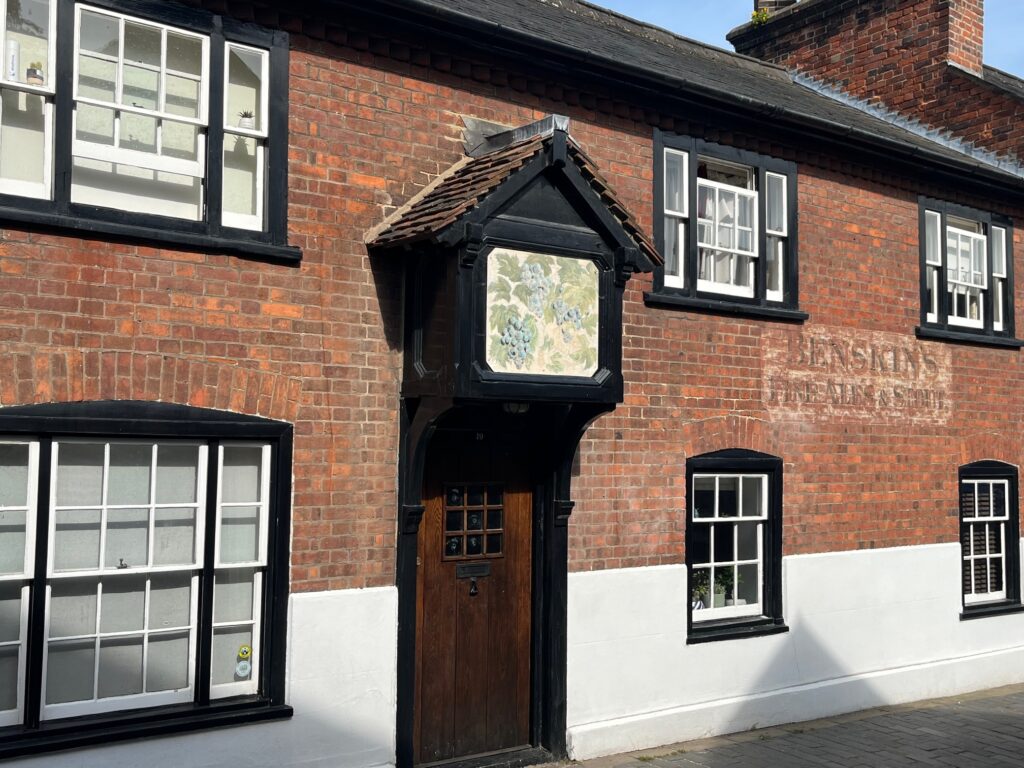
Once situated at 19 Spicer Street, The Vine pub was established by Richard Raynshaw, serjeant-at-arms to Henry VIII.
The building still features bunches of grapes above the door, and a faded sign for Benskins Ales & Stout, despite closing as a pub in 1932. Based in Watford, Benskins was Hertfordshire’s biggest brewery until its acquisition by Ind Coope in 1957.
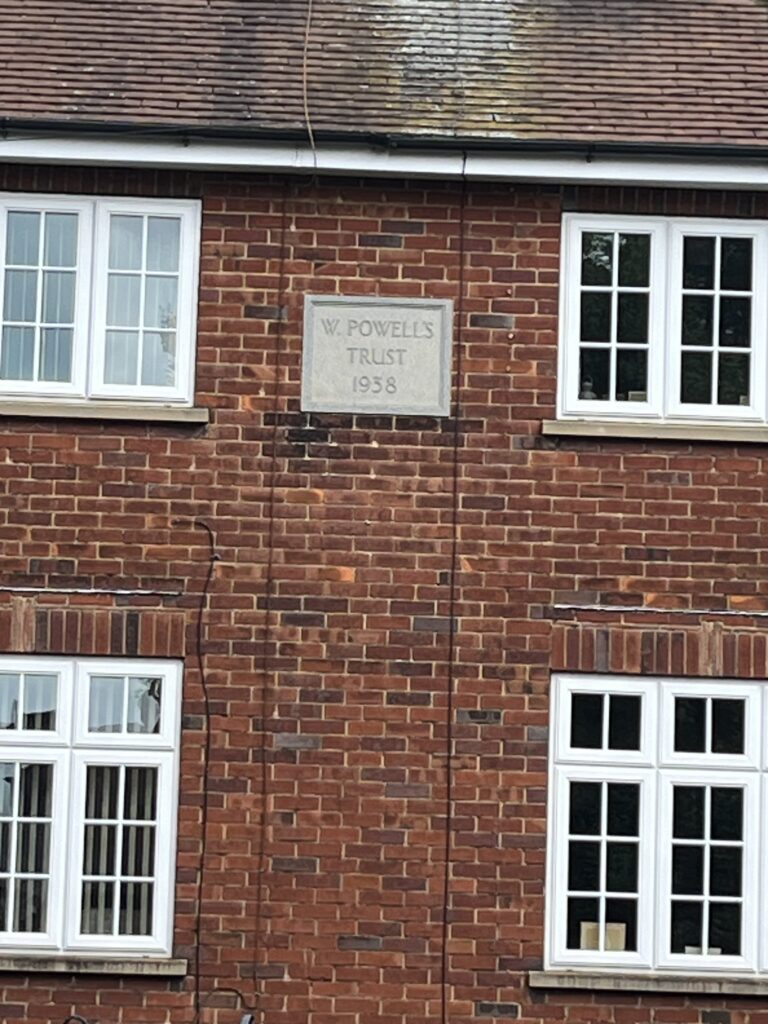
In Dickens Close, just off Normandy Road, are two semi-detached almshouses bearing the datestone ‘W Powell’s Trust 1938’. William Powell’s charity supports persons in need, hardship or distress, of good character, resident in the city and district of St Albans.
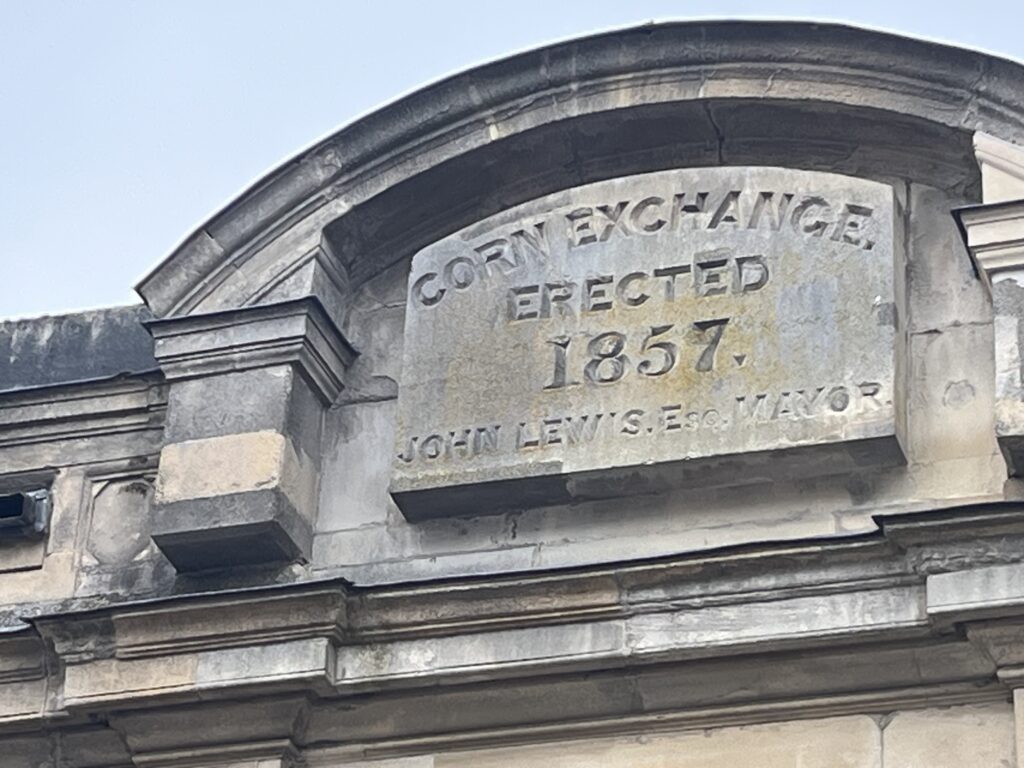
Before we move on from St Albans, echoes of one of the most famous city landmarks can be seen above Reiss and Kings Hill jewellers, where there is an inscription reading: ‘Corn Exchange erected 1857. John Lewis Esq. Mayor’.
It was designed by James Murray, later of Pugin & Murray, following a competition and built by Joseph Briggs. Its opening on September 23 1857 was marked by a dinner attended by more than 100 landowners, tenant farmers and townsfolk.
It became a meeting place for the local Baptist Church from 1880, and was also used for concerts, exhibitions, dinners, balls and even meetings of the local temperance movement.
In 1924 it was let for retail use, with the conversion work causing significant damage to the original Italianate frontage. This was restored in the mid-1990s.
Thanks to Christine Bain and Lin Keen for the detailed research on the Corn Exchange’s history they conducted as part of St Albans Museums’ Talking Buildings project.
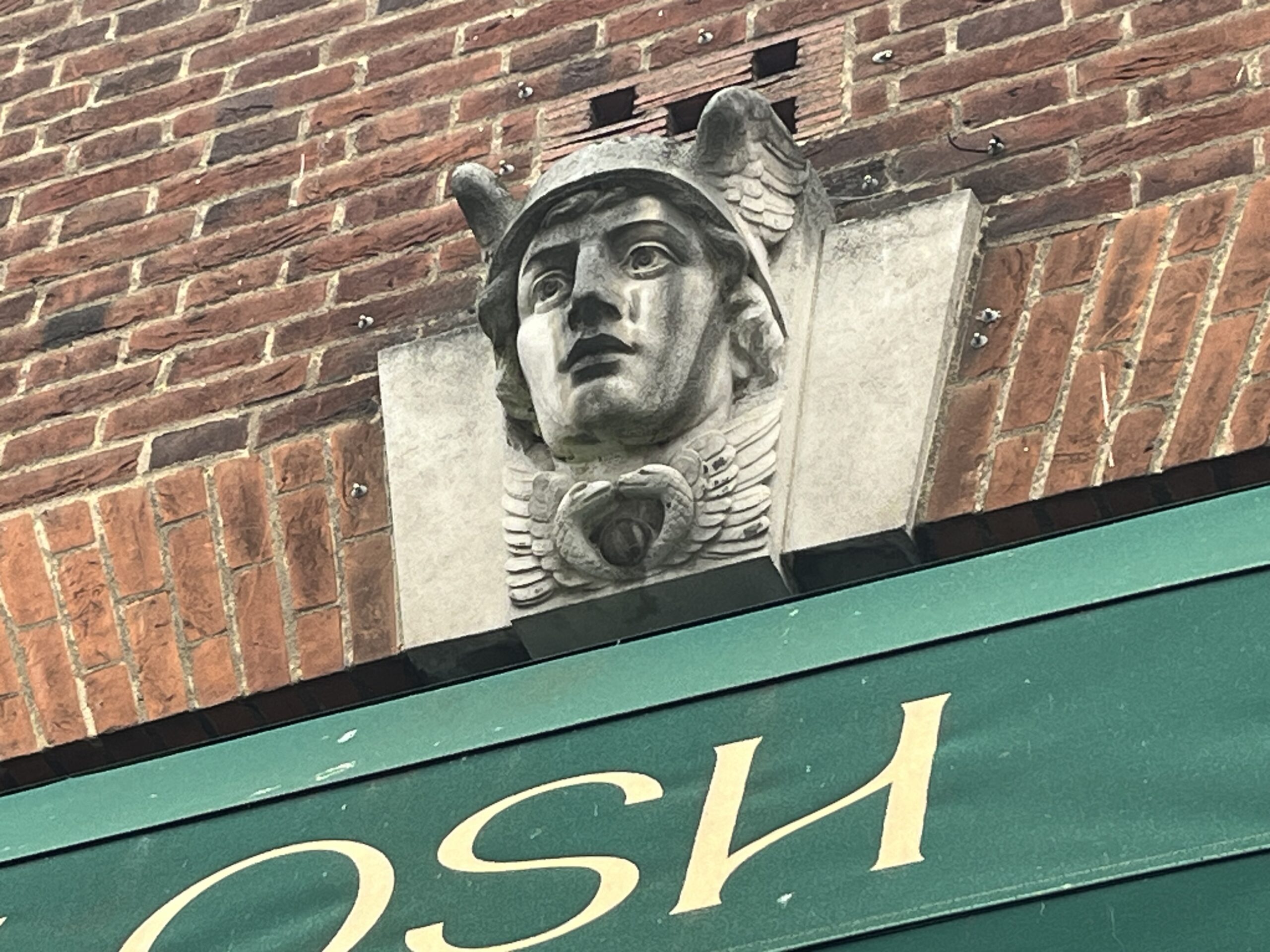
Meanwhile, in neighbouring Harpenden, high above street level on the former Post Office in Station Road can be seen sculpted heads of Hermes, the messenger of the gods.
According to Harpenden History Society, they were carved by Charles Giddings (1870-1946), a Hertfordshire sculptor who worked on many projects, including the reredos of Ripon Cathedral, the sculpture gallery at Woburn Abbey, the Liverpool Cotton Exchange and the scales on the Royal Courts of Justice.
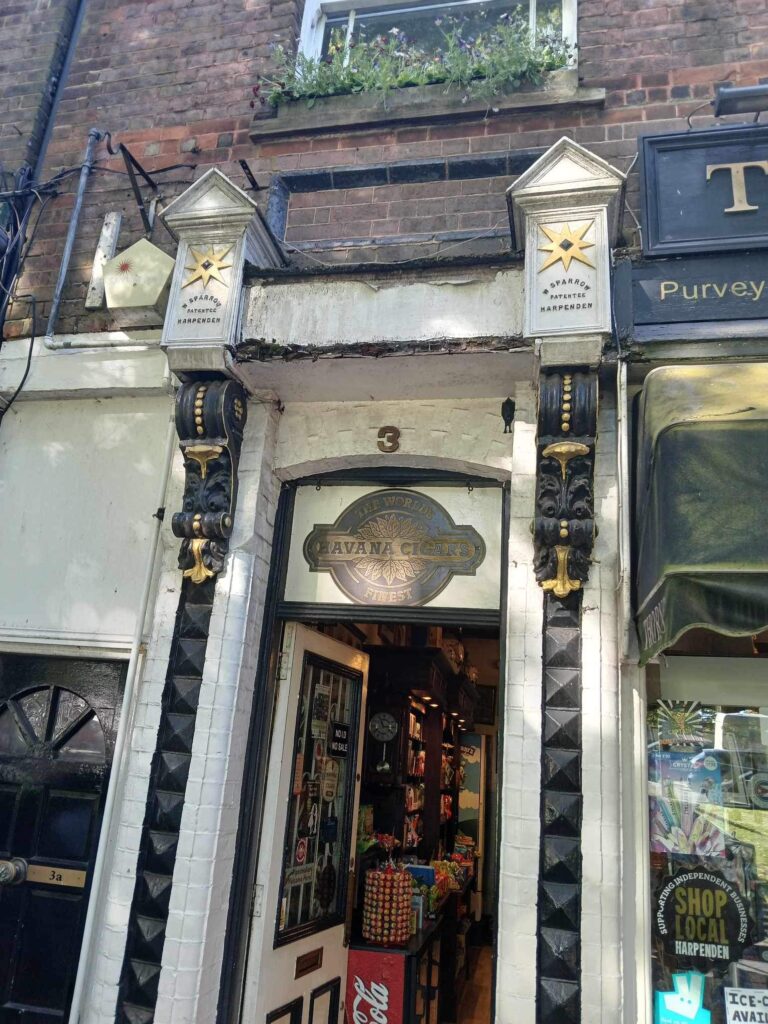
The Society also shed light on the corbels seen above Thorns at 3 High Street. The repainting of the shopfront in the spring of 2017 revealed ‘W Sparrow, Patentee, Harpenden’ either side of the door.
Harpenden resident William Sparrow was apparently granted a patent for gas-lit shop-front illumination in 1888. His most important installations were for shops in Liverpool Street Station. Although the fascia of Thorns has been altered, the apertures for light-fittings survive.
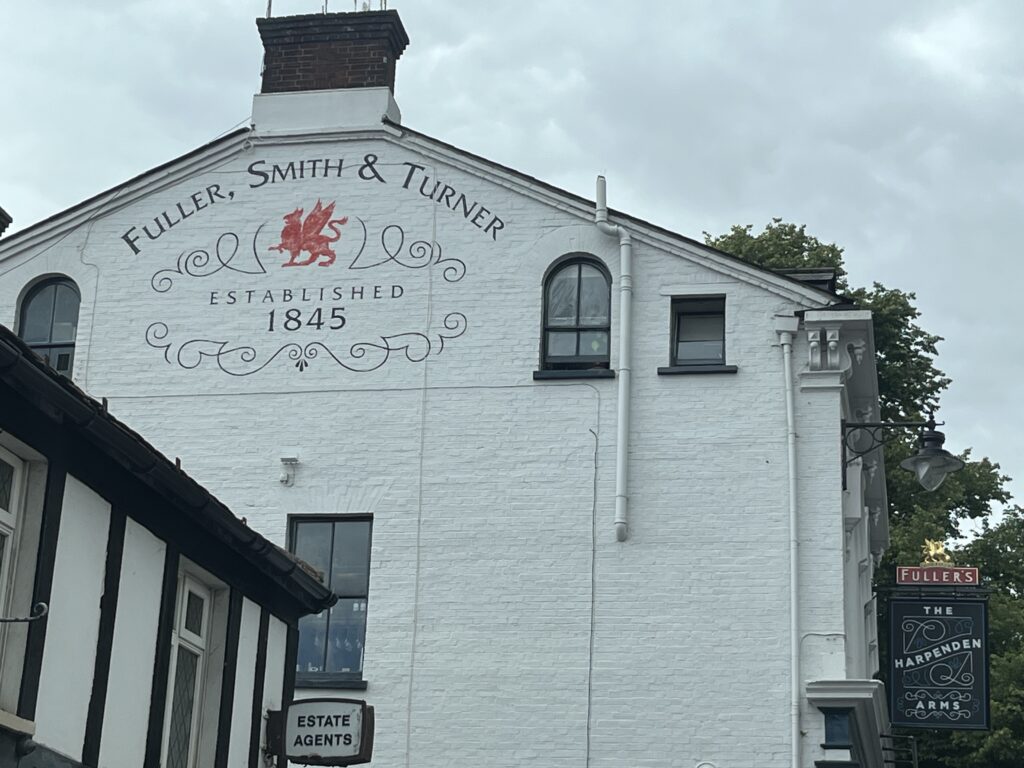
Newly painted to the rear of The Harpenden Arms is the legend ‘Fuller, Smith & Turner, established 1845’, referring to the pub operator commonly known as Fuller’s. The date refers to when founder John Fuller’s son, John Bird Fuller, was joined by Henry Smith from the Romford Brewery of Ind & Smith and his brother-in-law, head brewer John Turner, thereby forming Fuller, Smith & Turner.
We’ll be back with another Look Up! feature soon, and are also in the process of compiling a Look Down! If you have any suggestions for inclusions, please get in touch.
Photos by Matt Adams and Alex Assadian