


24 Apr 2023
A group which has sought to protect St Albans heritage for future generations for over 175 years has once again entered the fray.
St Albans and Hertfordshire Architectural and Archaeological Society (SAHAAS) has played its part in preventing the demolition of the Clock Tower, helping to preserve the three churches of St Michael’s, St
Peter’s and St Stephen’s, the Cathedral, the Abbey Gatehouse, and the building in Market Place known as The Three Gables (now occupied by Anthropologie).
It also instigated the precursor of the Blue Plaques St Albans Scheme, as well as contributing to years of archaeological research in our city – Roman and otherwise.
This week the society, which has more than 670 members, has taken the bold step of publicising an ‘At Risk’ Register highlighting many of our landmarks which may be damaged or lost for future generations unless better care is taken of them.
Society President Dr John Morewood explained: “St Albans has an unrivalled heritage of which everyone is very proud.
“Much is talked about encouraging tourists into our city and district and indeed there are oases – the de Havilland Mosquito Museum; Fishpool and George Streets; the parks and commons in Harpenden, Redbourn and St Albans; St Albans Cathedral; and Wheathampstead village for example.
“But there are other sites which, quite frankly, cannot be attractive to visitors.
“They may be poorly explained, poorly preserved, or simply unknown. There may be a whole range of reasons or excuses for the situation but quite simply action needs to be taken.
“The aim of the register is not to pass censure. Its aim is to get something done so we can remove the item from the list and secure it for the enjoyment of current and future generations.”
Here are six of the sites that appear on the Register, in no particular order. More will appear in subsequent editions of the St Albans Times.

Lee House, Sopwell (sometimes referred to as ‘Sopwell Nunnery’, pictured above)
The remains of a Tudor Grade II listed building, the home of the most important military engineer in Tudor times: Sir Richard Lee.
Reason for appearing on the St Albans and District Heritage at Risk Register: Poorly looked-after building, with no information available to help visitors understand what they are seeing.
On the National Heritage at Risk Register for the last two years with the national body Historic England of the opinion that nothing will ever be done to make improvements. The subject of a previous article in the St Albans Times, it has the potential to feature on a Tudor St Albans trail and have living history events and Shakespearean productions in its grounds.
What is needed in our opinion:
- Implementation of Historic England’s recommendations re preservation.
- Installation of interpretative panels.
- Be embraced by Sopwell residents as a community asset.
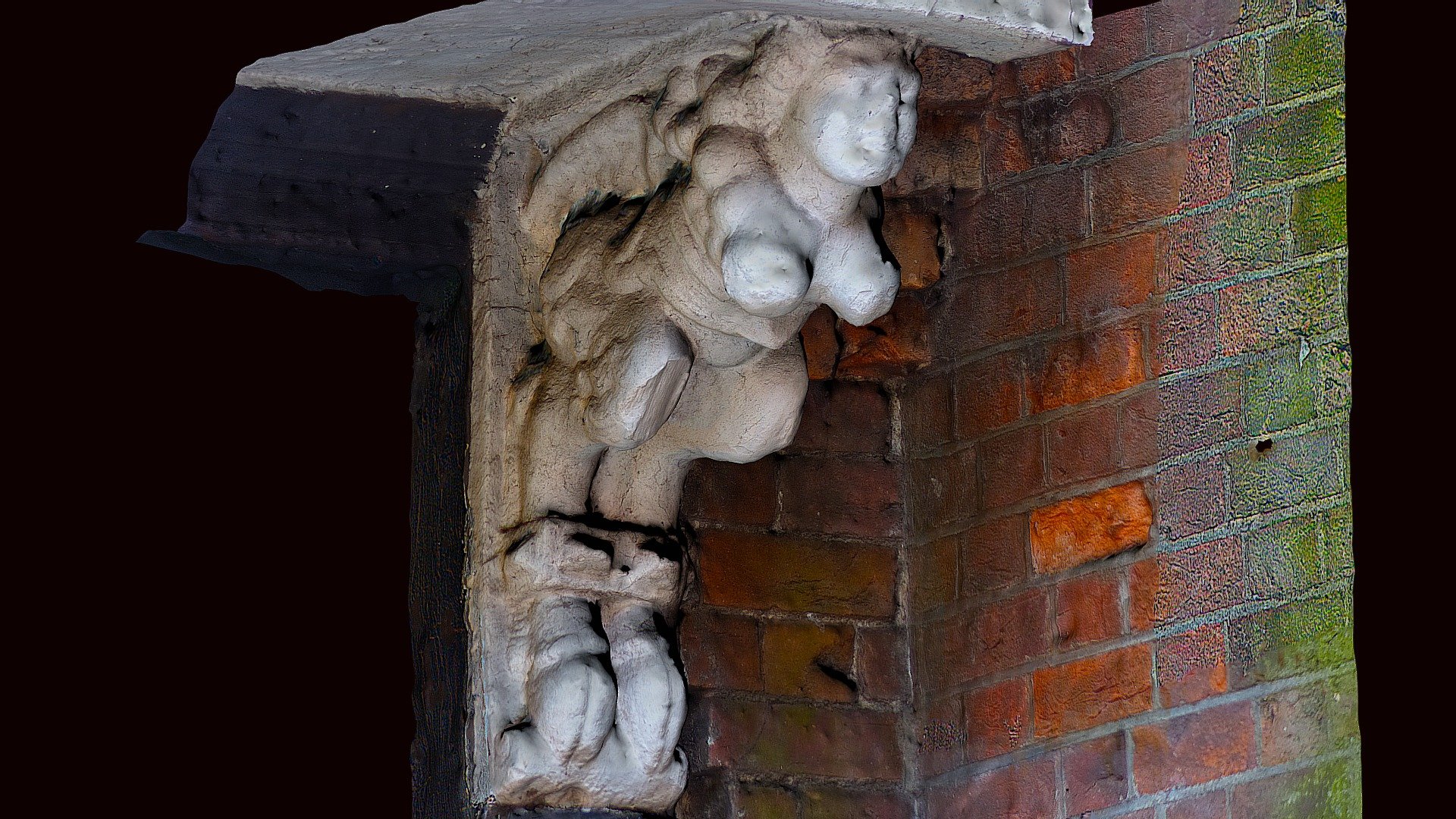
The Succubus, alleyway in St Christopher’s Place, St Albans
A grotesque dating from the late 16th , early 17th century, it depicts a chained female demon with hooved feet and devil’s wings. Attached to the entrance to the Christopher Inn, once one of the most important inns in St Albans.
Designed to ward off evil spirits to prevent them preying on travellers. Originally one of a number of similar grotesques in St Albans but now the only complete survivor. An important part of English folklore. Absence of interest by
authorities led to private individuals financing a Conservation report.
Reason for appearing on the St Albans and District Heritage at Risk Register: Has suffered years of neglect and is badly damaged.
What is needed in our opinion:
- Implementation of Conservation report to treat and preserve the wooden figure.
The St Albans Alleyways, Market Place, St Albans (Boot Alley, Dog Cut, Lamb Alley, Queen’s Way, Sovereign Way)
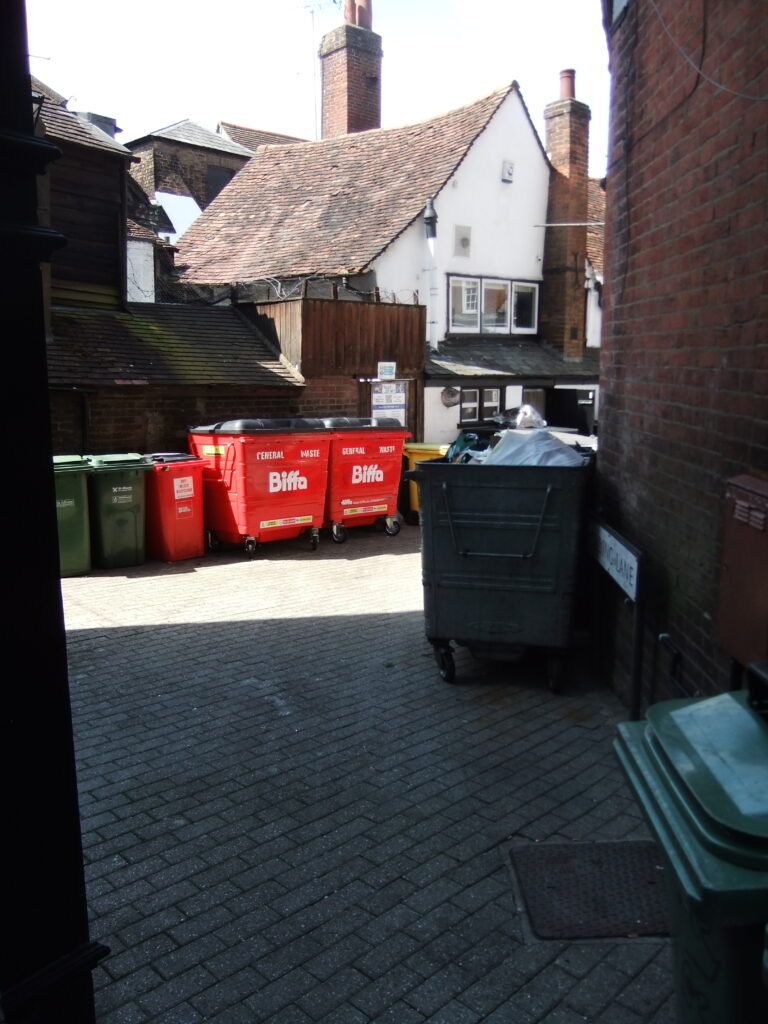
The city centre alleyways marked the passages between the stalls in the medieval market as well as providing entrances to its inns. Boot Alley was in the area where leather was worked into shoes; meat puddings were sold in Pudding Lane. Dog Cut and Lamb Alley led to the Dog Inn and Lamb alehouse. Some have their own specific architectural or historical interest. Sovereign Way has a Tudor butcher’s shop and, notoriously, played a part in the great electoral bribery scandal of 1850/1851 that resulted in St Albans losing its right to elect MPs for 35 years.
The Market Place, probably accessed by the alleyways from what is now Chequer Street, played a part in both of the War of the Roses battles that took place in St Albans (1455 and 1461).
Reason for appearing on the St Albans and District Heritage at Risk Register: In many of England’s old towns and cities their alleyways play an integral part in the visitor
experience. The special heritage of the alleyways in St Albans has been long neglected and their condition is dire. Passageways are soiled with pigeon excrement; the state of the buildings is poor with graffiti on the walls. Some of the alleyways are clogged up with wheelie bins that are often subject to fly-tipping, The wheelie bins are both an eyesore and a health hazard, encouraging vermin. Areas prone to fly-tipping.
What is needed in our opinion:
- St Albans district council to work with businesses to remove wheelie-bins through appropriate waste collection regulations and penalise fly-tipping.
- Alleyways to be regularly cleaned.
- Owners to be encouraged to maintain their alleyway walls.
- Graffiti to be removed and anti-pigeon devices to be installed.
- Each alleyway to be either greened or have supporting themed murals and information boards.
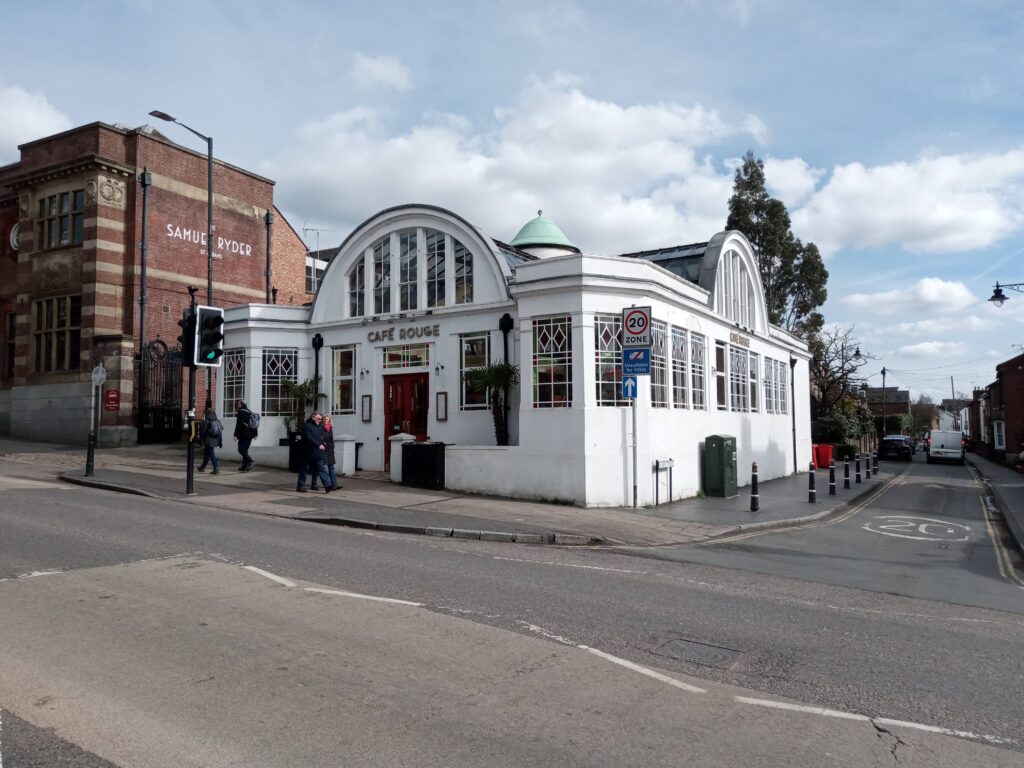
The Samuel Ryder Seed Hall, Holywell Hill, St Albans
A Grade II listed Art-Deco/Modernist building designed by St Albans architect Percival Blow to exhibit plants grown from garden seeds sold by businessman and philanthropist Samuel Ryder, now more famous for golf’s Ryder Cup. Formerly a restaurant.
Reason for appearing on the St Albans and District Heritage at Risk Register: Since the closure of the Café Rouge restaurant, plans for this building and any resulting alterations are not known. The subject of a previous article in the St Albans Times.
What is needed in our opinion:
- Close scrutiny of any future business proposals.
- Surveillance kept on the building in its unoccupied state to prevent damage.
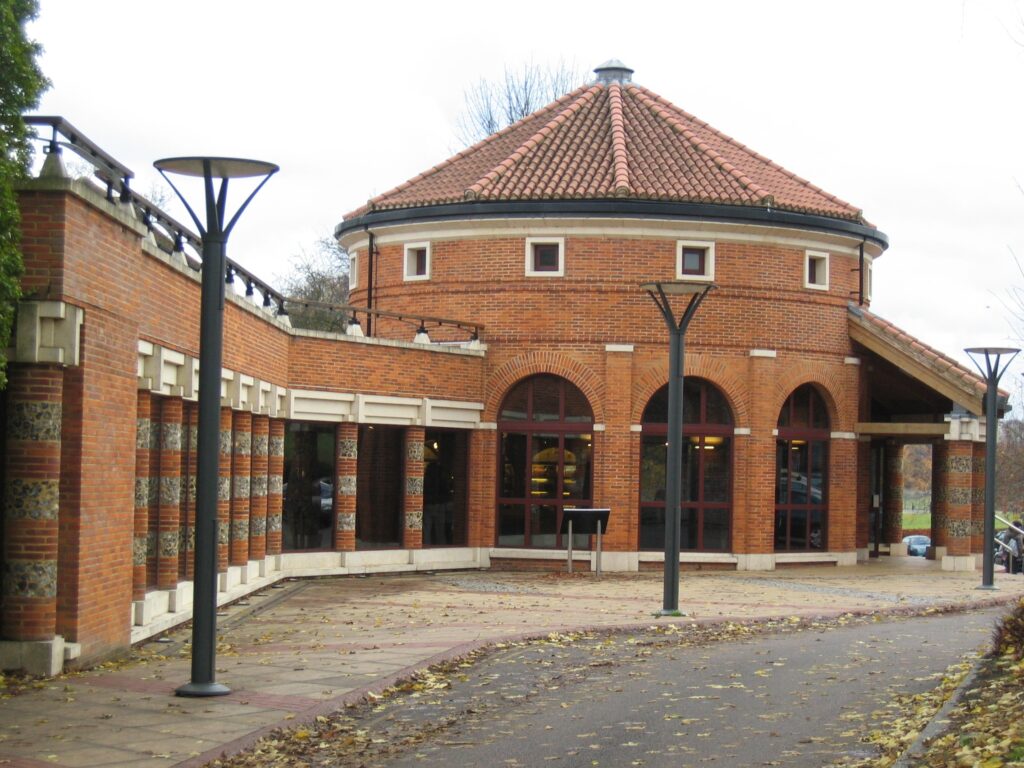
Verulamium Roman Museum
One of England’s most important museums giving
award-winning interpretations of life in Roman Britain using artefacts from the excavations of the Roman town of Verulamium.
Reason for appearing on the St Albans and District Heritage at Risk Register: Due to the recent change in the charging structure, residents of St Albans and their children now need to pay a charge every time they visit the museum.
We believe the charging structure will discourage those families, particularly those on lower incomes, from wanting to visit the museum on a regular basis. Given the importance of the subject matter on the school curriculum, children from poorer households will be disadvantaged.
What is needed in our opinion:
- An annual pass, as distinct from a Friends scheme, should be implemented allowing multiple visits for a fixed price.

The Allan-Williams Turret, south of A414 near Hedges Farm Napsbury (pictured above)
A Grade II listed gun turret in situ, originally constructed to defend Radlett Airfield and particularly the Handley Page construction hangars during the Second World War. It is one of a very small number of surviving examples of this rare form of gun emplacement; and even more rarely in situ.
Reason for appearing on the St Albans and District Heritage at Risk Register: Although virtually intact, the turret is in a belt of trees adjoining the controversial strategic rail freight interchange site.
There are no explanatory panels and nothing to suggest that it will be protected if the development goes ahead.
What is needed in our opinion:
- As the gun turret is in situ, conservation work should be undertaken, and the site preserved given the danger of the turret being destroyed by heavy construction vehicles.
