24 Feb 2025
“One of our challenges is that we are reasonably well-known but poorly understood. A lot of people will go into our shops and not realise they’ve been served by a formerly homeless companion.”
Duncan Lewis has been the CEO of Emmaus Hertfordshire for the past four years, and is arguably the public face of the charitable organisation, a lifeline service providing shelter and meaningful work to get rough sleepers off the streets and ultimately back into society.
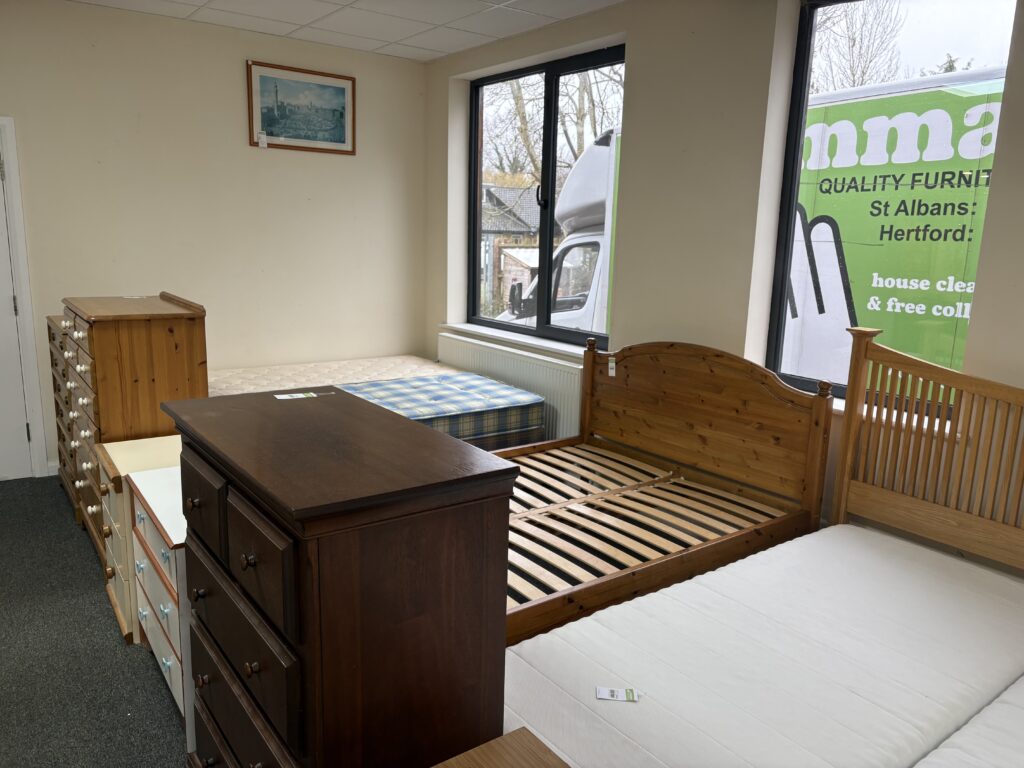
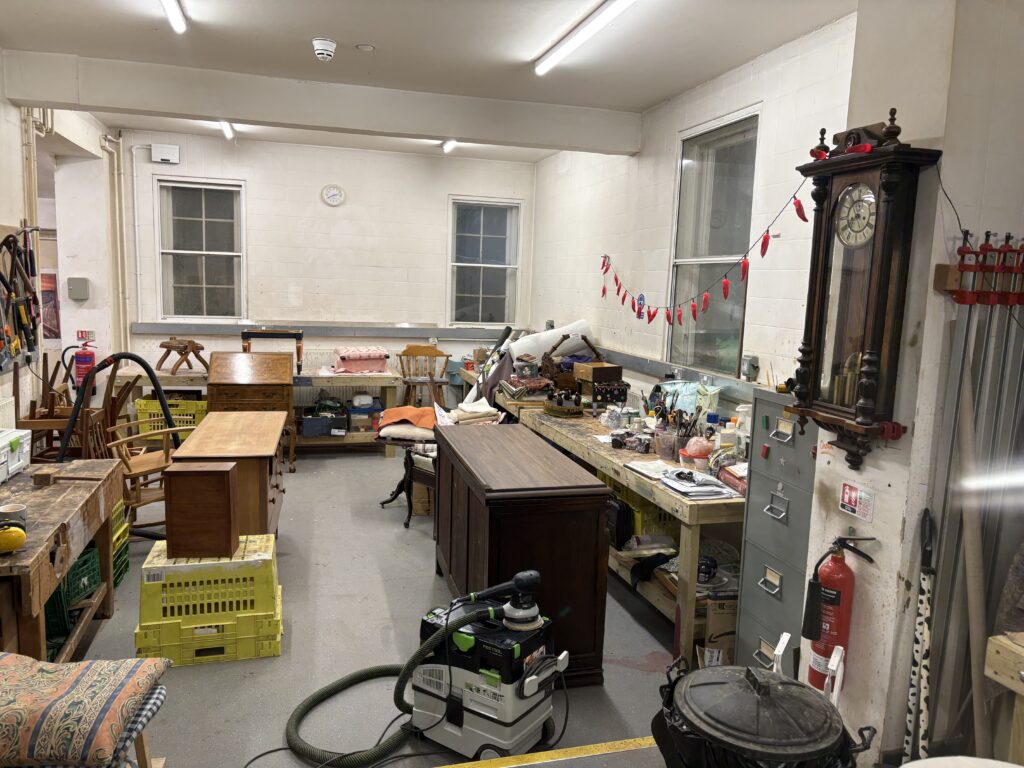
The scheme is funded by collecting donated furniture and household goods, often upcycling and repairing them, and then selling these items in their shops.
This repair work is carried out by “companions”, the formerly homeless people who live on site until they are ready to begin new self-sustaining lives on their own.
Crucially, the charity has to walk a fine line between providing a social enterprise which generates the necessary revenue to provide its services, and also supporting those people who have experienced homelessness in rebuilding their lives through counselling and skills training.
A global organisation, Emmaus has been in St Albans for the best part of 23 years, and until recently had a prominent retail presence in St Peter’s Street, but currently operates from its headquarters in Hill End Lane, which includes a large furniture shop.
It is based in the former Great Cell Barnes House, a large brick farmhouse built in the 1800s, which later became a semi-stately home and then the nurses’ accommodation for staff at the nearby Cell Barnes Hospital when it opened in October 1933.
The home had long since been empty when the hospital closed in 1998, and much of the building had been vandalised and the gardens neglected when Emmaus took occupation.
Former Bishop of St Albans and Archbishop of Canterbury Lord Robert Runcie – working with Emmaus UK President Terry Waite – was instrumental in establishing an Emmaus community in his hometown of St Albans and fundraising the £750,000 needed to cover the costs of reconstruction.
Planning permission was approved in April 1999 and the building officially opened in November 2001. The ceremony was carried out by Lady Runcie, her husband having died 18 months earlier, before he saw the project reach fruition.
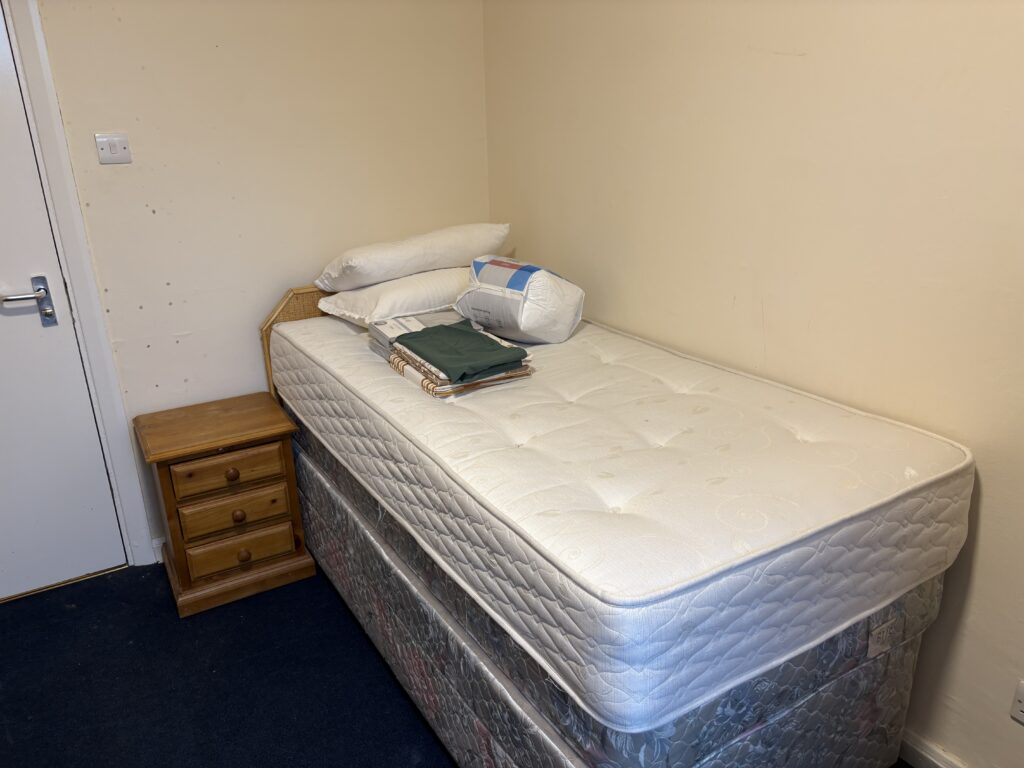
Walking around the building with Duncan, there are still echoes of its former use, particularly in the student accommodation-style rooms, which each feature a single bed, wardrobe and sink, with toilet and shower/bath facilities being found elsewhere.
A meeting room featuring an ornate mantlepiece was once used for the nurses common room, and old photos show it was home to a roaring fire surrounded by staff in their starched uniformed finery.
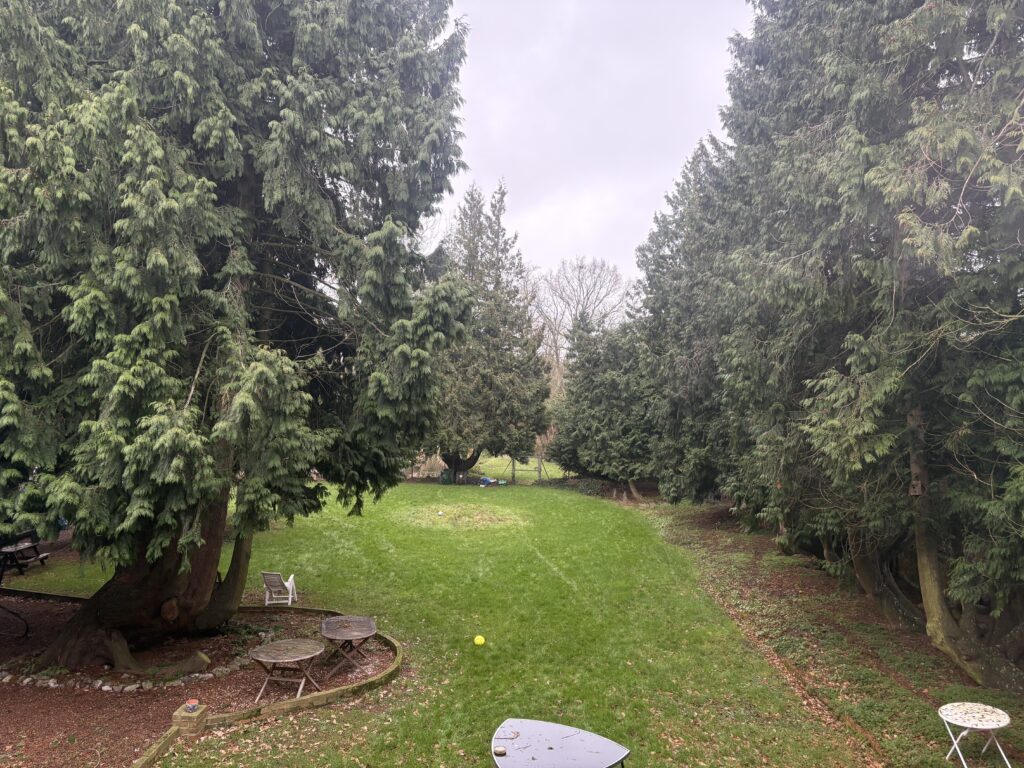
The gardens, bordered by towering fir trees, once housed the pond which is now enclosed within Highfield Park, and formed part of the 208 acre Cell Barnes estate. They are now an essential feature of Emmaus life, especially during the summer months when they host barbecues and other social functions.
Duncan is aware of the building’s strengths as well as its shortcomings.
“We’re very fortunate to have it on a long term lease from the district council, who really value the work we do, but we’re in charge of the maintenance, which is a bit of a challenge because it’s an old building and not the most energy-efficient.
“About 75 per cent of the running costs of the charity are raised from the social enterprise activity we undertake, and the bulk of the rest of our day-to-day expenses comes from the benefits signed off by our residents.
“Housing benefit comes to us kind of in lieu of rent, but one of the strengths of the Emmaus model is that our communities are by and large financially sufficient, and where we go out and do some fundraising it’s if we’re investing in expanding our staff team, our van fleet needs upgrading or something like that, and inevitably there’s always a shopping list for all kinds of stuff.
“We’ve spent quite a bit of money recently, mainly to make the building warm, safe and dry.”
Unfortunately recent years have seen replacements needed for boilers, fire safety systems, CCTV, radiators, light fittings and sanitaryware…
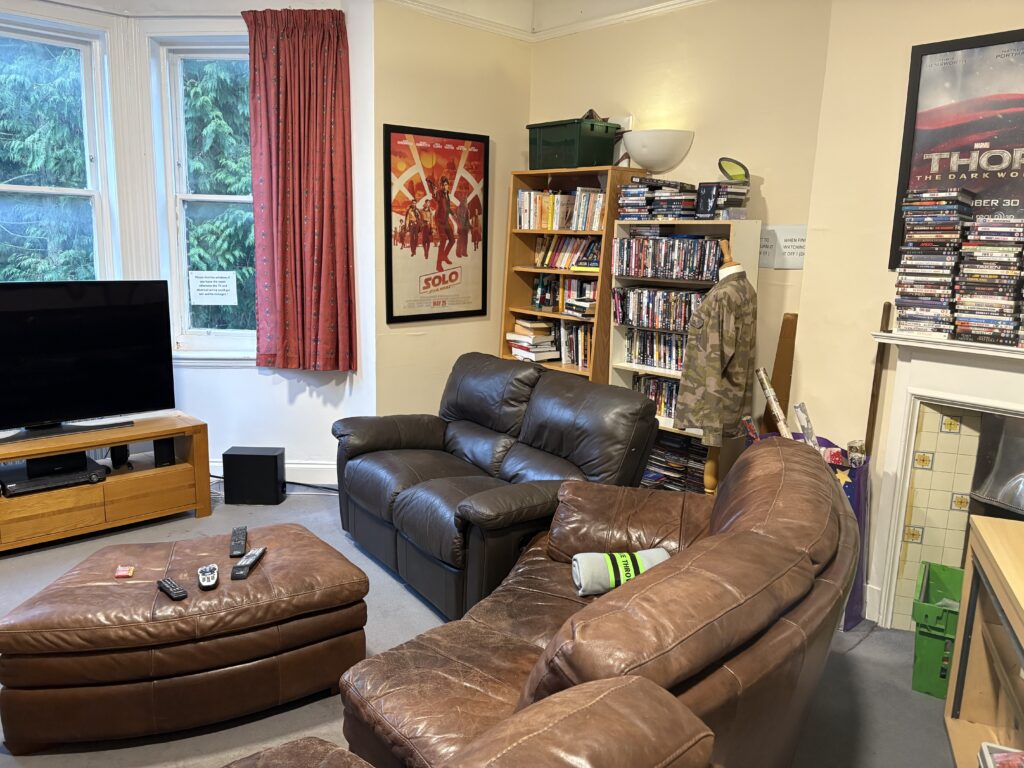
The obsolete computer room equipment is also in desperate need of updating, the communal TV room seems to be the place DVDs go to die, while the kitchen features a disparate collection of donated fridge-freezers alongside canteen-style cooking facilities.
But while there’s something ramshackle about the way everything sits together across the site, there’s no denying the fact that this is a home, albeit a rather unconventional one.
Recent changes in immigration policy, and government attempts to empty asylum hotels, have led to short-term spikes in homelessness and an increased demand for Emmaus’ services after a decline during the pandemic.
“I think we need to be proactive in reaching out to make sure that the right referring organisations are aware of who we are, what we do, what our capacity is and who the right kind of people are to refer to us.
“But if we’ve got enough staff doing that then sadly for the foreseeable future we’re always likely to be full and there are always likely to be waiting lists.”
Emmaus is a dry house, and also isn’t equipped to help residents detox which mean addicts have to be clean before moving in. That said, if any companions need help in managing their addictions then staff will help to source this and give them time off for counselling sessions.
“We’re also not staffed 24-7. Although there’s a member of staff on call there isn’t someone physically in the building, so if somebody has really acute mental health needs then actually this might not be the best place for them.
“But I think we’re a fantastic safety net to stop people falling too far, who are either at imminent risk of or have recently become street homeless.
“We’re also a great step back towards independence for people who’ve fallen but bounced back and just need that supportive environment where they can start to get work experience in a structured way.”
So do companions who leave Emmaus keep in touch afterwards? “It really varies. For some people, this is a chapter of their lives that they are keen to close and move on from, and we perfectly understand that.
“But we say to everybody who leaves, we are still here to help you. Some of them will come back every now and again and volunteer because they enjoy the social contact, others you won’t see for a long time and then they’ll drop in for a visit.
“If somebody’s going to move on successfully, they need to be financially independent and that’s a challenge in the local area. They need to get a reasonably well-paid job, they need to be practically independent in terms of their life skills and they also need to be socially independent, which can be a challenge away from the ready-made social network of community living.”
Although the shop in Hill End Lane remains busy, the loss of the St Peter’s Street store was a sad development for the organisation.
“I think a lot of people went into that shop and didn’t realise it was a charity shop, they just thought it was a really nice, boutique, second-hand furniture shop. So that’s the feel that we’re going for.
“We’re desperate to be back in the city centre because I think we’ve got quite a well-known and well-loved institution that added something very different to the retail offering.
“There are quite a few empty properties in the centre of St Albans, but landlords for whatever reason don’t seem keen to get a charity in as a tenant, despite the fact that it would reduce their business rates and liability.
“We’ve talked to the council about the use of the market depot site, and that would be great, but UK Power Networks are doing some essential work next door at the moment which is very important for St Albans’ infrastructure, so we would get in the way of that, but we’re hoping for a long-term presence in the city centre.
“We just need to be a bit mindful of the logistics, because we’ve got to transport stock, we’ve got to get staff or companions there to run the shop, but I’ll throw it out there because I sometimes think people don’t consider us as an option.”
Find out more about Emmaus Hertfordshire and how you can support their work at https://emmaus.org.uk/hertfordshire/