06 Jan 2025
It’s been a tumultuous few months since Parliament returned from the summer recess, and whatever honeymoon period the Labour Government enjoyed after the July General Election has long since ended.
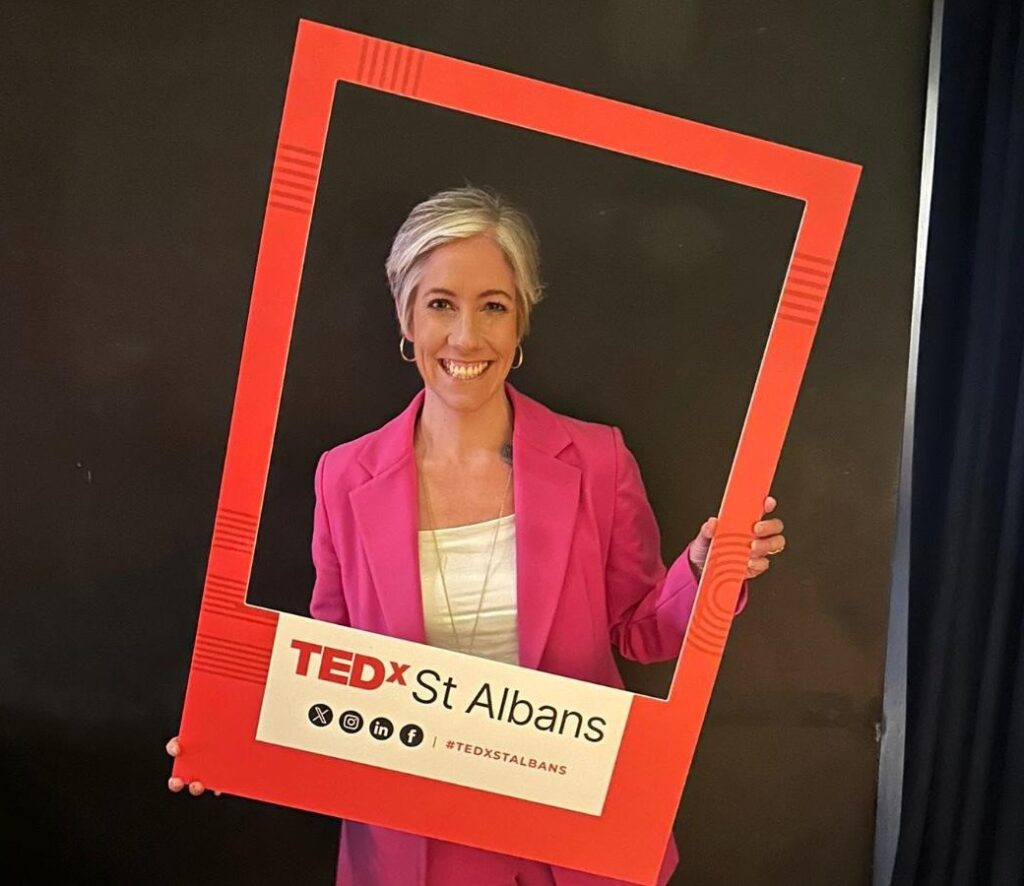
We’re catching up with St Albans MP Daisy Cooper, now the Liberal Democrats’ Treasury spokesperson as well as deputy party leader, to assess what she has made of this initial session.
“I think the biggest shock is just how bumpy the ride has been already. Every Government makes mistakes, but they rarely make mistakes quite so early on.
“We all know the Government’s got a terrible inheritance and the Conservatives flatlined the economy and drove public services onto their knees.
“We know there were some difficult decisions to make and a lot of us had huge sympathy for any government that was going to come in and start clearing up the mess.
“But we’re concerned that there have been a couple of decisions the Government has made that are really quite shocking.
“One is the winter fuel payment. We all know there are wealthy pensioners who don’t need the payment, but the way they’ve done it is so crude. There will be roughly two million people are going to lose out and they’re taking the payment away before they’ve even started the drive to get people onto pension credit.
“People from some of the more deprived areas in St Albans have said they’re going to miss out because they’re four pounds above the threshold to get pension credit, so they’re turning the heating down, and that’s just desperate.”
She said the second issue was around the Budget and its impact on small businesses: “I don’t think the Government set out to undermine small businesses in high streets or undermine growth, but the impact of the measures they’ve introduced is that is what’s going to happen.
“The very, very small micro-businesses with four or fewer employees will be spared the impact of the National Insurance Contribution, but for bigger businesses the costs will pile on.
“There’s also what is effectively an increase in business rates, as the relief is going to be reduced, so businesses who haven’t been paying any or paying very little business rates are going to see a massive increase as well.
“That is just going to put huge pressure on these businesses, and ultimately they’re going to have to suppress wages or lay people off, and in some cases they’re going to have to shut up shop.”
The Labour manifesto said there wouldn’t be an increase in NICs, but the argument is whether that meant employee or employer contributions.
“People are dancing on the head of a pin in terms of what this actually meant and whether it’s a broken promise or not, but fundamentally for me it’s less about whether it’s a broken promise and more about the impact it’s going to have on small businesses and high streets.”
She said the Government knows it’s got to turn the economy around after years of Conservative rule, but fears they’re putting all their eggs into one basket with plans for growth through building millions of homes.
“They don’t seem to recognise that actually a lot of growth happens with small businesses, and high streets are a very visual and visceral indicator to most people as to whether the economy is working.
“When you see your high street is doing well and there are vibrant shops then people feel more confident about spending, and where that isn’t the case it’s less so.
“Now we’re very lucky here in St Albans, we’ve got a thriving high street, an award-winning market and a really nice mixture of chains and independent stores, and generally we do manage to weather the storm.
“But you’ve just got to scratch the surface of a few businesses to see how close to the wire they are.
“Over the last few years many of them have already made significant changes: they’ve reduced the hours they’re open, they don’t open when it’s really cold because they can’t have the heating on, and some people are worried that for some businesses this could be the straw that breaks the camel’s back.
“So I guess what I want to say to your readers is use it or lose it. These continuing pressures do take their toll and we’ve got to keep them going.”
She is also campaigning for major changes to business rates: “The Government has announced a consultation on business rates and what they’re proposing, but they’re not looking at wholesale reform.
“They’re going to introduce a number of different rates, which means it will start the process of rebalancing rates between bricks and mortar on the high street and the big out-of-town warehouses, but that’s quite a long way down the line.
“We’re going to ask for the next Budget to be the last where business rates are a permanent feature, as they are a really, really outdated form of tax.”
Having launched straight into a critique of the Government, it’s only fair to look at the other side of the coin, and what they’re doing well.
“They’re saying they want to invest in the NHS but we’ve yet to see how much money that is; they want to tackled the challenges of overcrowding and homelessness but we’re yet to see the plans as to what that’s going to look like; I think the Government handled the riots really well and came in hard against people who were fundamentally criminals, which was a tough thing to deal with in the first few months.
“Since July they have launched close to 70 taskforces and reviews, and I hope some of these will produce good things, but at the moment we’re in a bit of a holding pattern
“The prison crisis is a real mess, and whoever was in government was going to have to deal with that at some point. But it’s been a case of responding to events and starting to clear up the mess left by the Conservatives, it’s not yet clear to me what the story is, what the Government wants to achieve and where we as a country are going to be in two years’ time.”
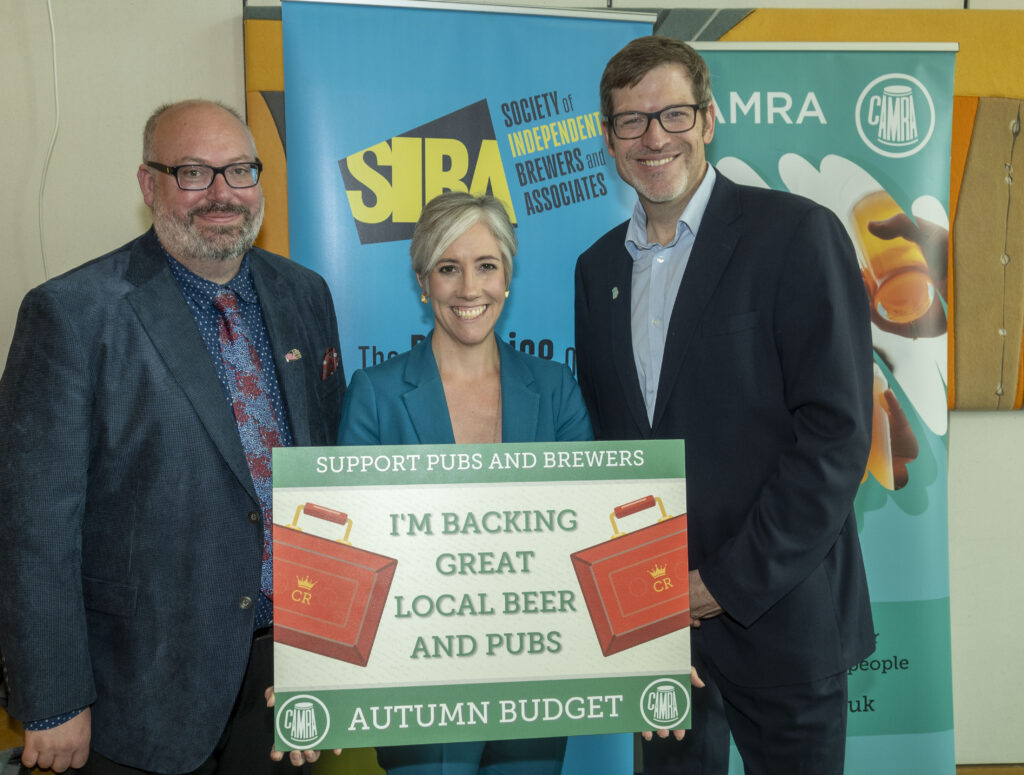
Even before the Liberal Democrats reasserted themselves as a major force in British politics, Daisy found her own profile gaining prominence as number two to Sir Ed Davey, something which she says was always part of the party’s strategy.
“About three years ago I had a conversation with our then-director of communications, who said we need to get you out there as much as possible because when it comes to the General Election every broadcaster just wants to the leader, so unless they know you, they think you provide good content and they can trust you then they won’t get you on.
“So I basically had a three-year exercise in making sure that I got to know the producers and presenters, and that they knew I was a reliable guest. It’s been quite a long journey building up to it, but it worked a treat.
“I enjoy doing it because when I see what local people are telling me in my inbox I can put that on the national stage, and it just amplifies the message that we have as a party and for me as a local MP.
“I think it’s a real privilege. Not every MP gets to stand up as Treasury spokesperson and namecheck a dozen businesses in their local area to the Chancellor.
“I’m always up for using those national roles to promote local issues here in St Albans as much as I can.”
So does this mean she’s being groomed as a leader-in-waiting, because Sir Ed isn’t going to be there forever?
“No, the party absolutely wouldn’t do that. We’re very democratic and Ed’s the leader. He’s the most successful party leader that we’ve ever had, and without a doubt he will be leading us into the next General Election.”
One of her current local campaigns is to save St Peter’s Street Crown Post Office from closure, but following cross-party gathering last month, she is less than complementary about their bosses,
“They looked like lemmings about to walk off a cliff. That meeting was truly appalling. We had some really basic questions: can we see the finances of the individual Crown Post Offices in our constituencies. They didn’t have that data available with them, even though they’d come to Parliament to speak to MPs.
“They said the information about the closures was leaked from private meetings, and so we asked when they were intending to tell us, and they couldn’t answer that question either.
“There were people there at the meeting who said they thought they could make the St Peter’s Street Post Office work, there was a route to turn it around and make a profit. I asked if that meant they were guaranteeing the location and the staff but were changing the services, and they couldn’t even guarantee that, so they weren’t telling me anything.
“Obviously my number one priority is to keep St Peter’s Street Post Offices because it provides really valuable services and people come here from Welwyn, Hatfield, Hemel, Luton and further afield to use it. Crown Post Offices are guaranteed to provide additional services that the staff are trained up on, like passports, but if it becomes a franchise these could disappear, or if it doesn’t turn a profit then after a few years the franchisee closes it down.”
She said the lack of communication from the Post Office, particularly after the recent postmaster scandal, was nothing short of appalling.
“The fact that they can’t tell you that they’re going to close down a Crown Post Office in the centre of a city is just not good enough. But we just can’t get the information we need about what the next steps are.”
Daisy enjoyed Christmas at home with her husband Rob and one side of their family, the rest coming for New Year. Before the big day she did a reading at the Cathedral, was at the Clock Tower for the Chanukah lighting, and managed to find a quiet spot in a pub for some uninterrupted time with Rob.
So as we enter 2025, has she made any New Year’s Resolutions?
“I tend to make resolutions before September, because in my mind that’s always the going back to school time of year. In terms of issues, special educational needs is the big one. The Government says that it’s going to look at both the funding formula and the way the services are delivered, but we haven’t had any announcements yet.
“We’ve had the worst of both worlds here in St Albans and across Hertfordshire. We’ve had the former Conservative government completely messing up the funding formula, which means it would take us 15 years to catch up with other similar areas that themselves are underfunded.
“But also, the services from Hertfordshire County Council have been found to be woefully inadequate, with systemic failings according to the Ofsted report.
“Obviously we’ve got the county council elections in May, and the Lib Dems are hopeful we might be able to replace the Conservatives and take control, which would be a huge achievement, but we’re certainly not taking it for granted.
“There’s a lot at stake, because the county delivers services to some of the most vulnerable people, whether it’s social care to older residents or through special educational needs, and they’re also responsible for highways, with Hertfordshire one of the worst places in the country for potholes.”