02 Sep 2023
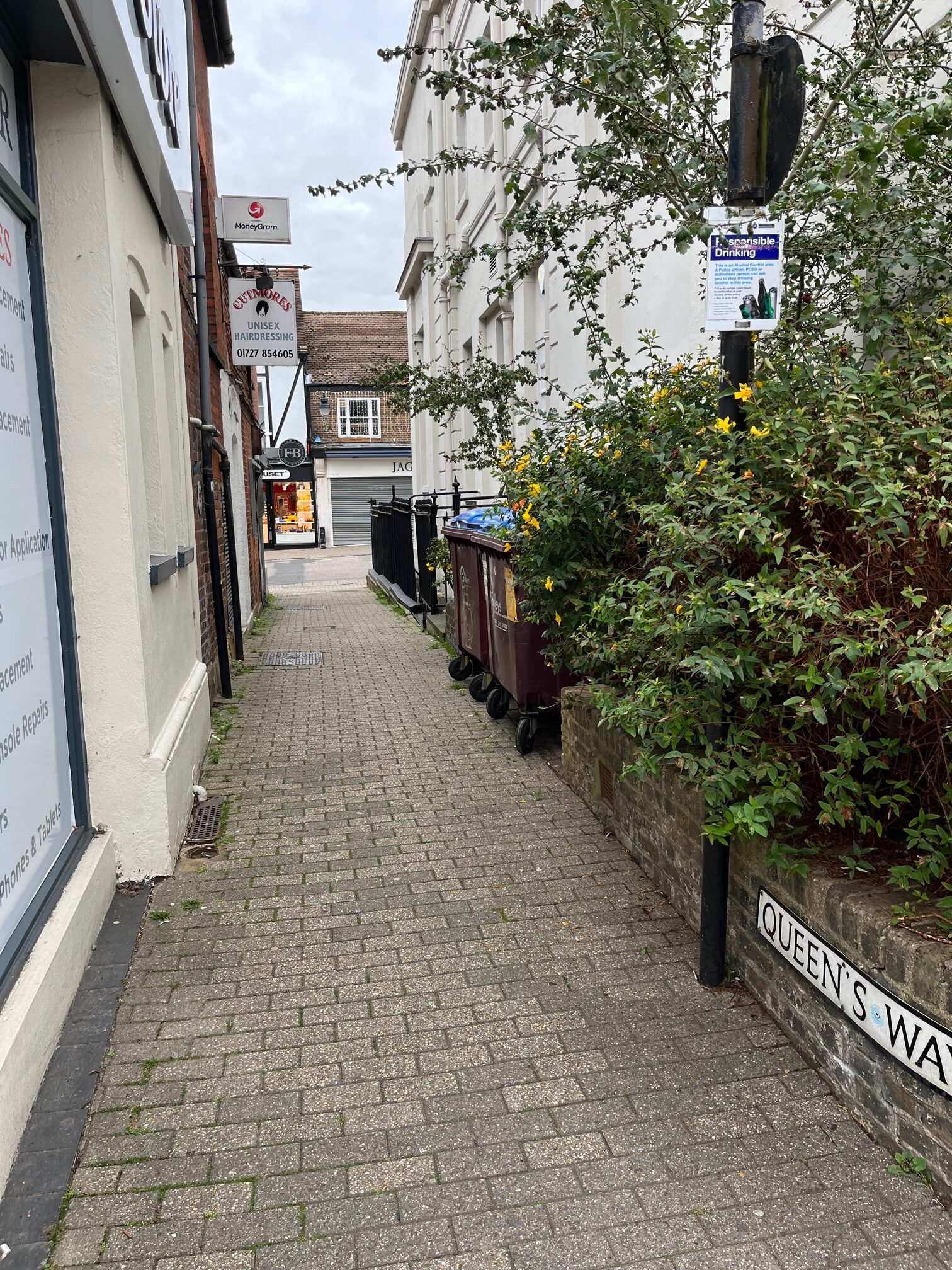
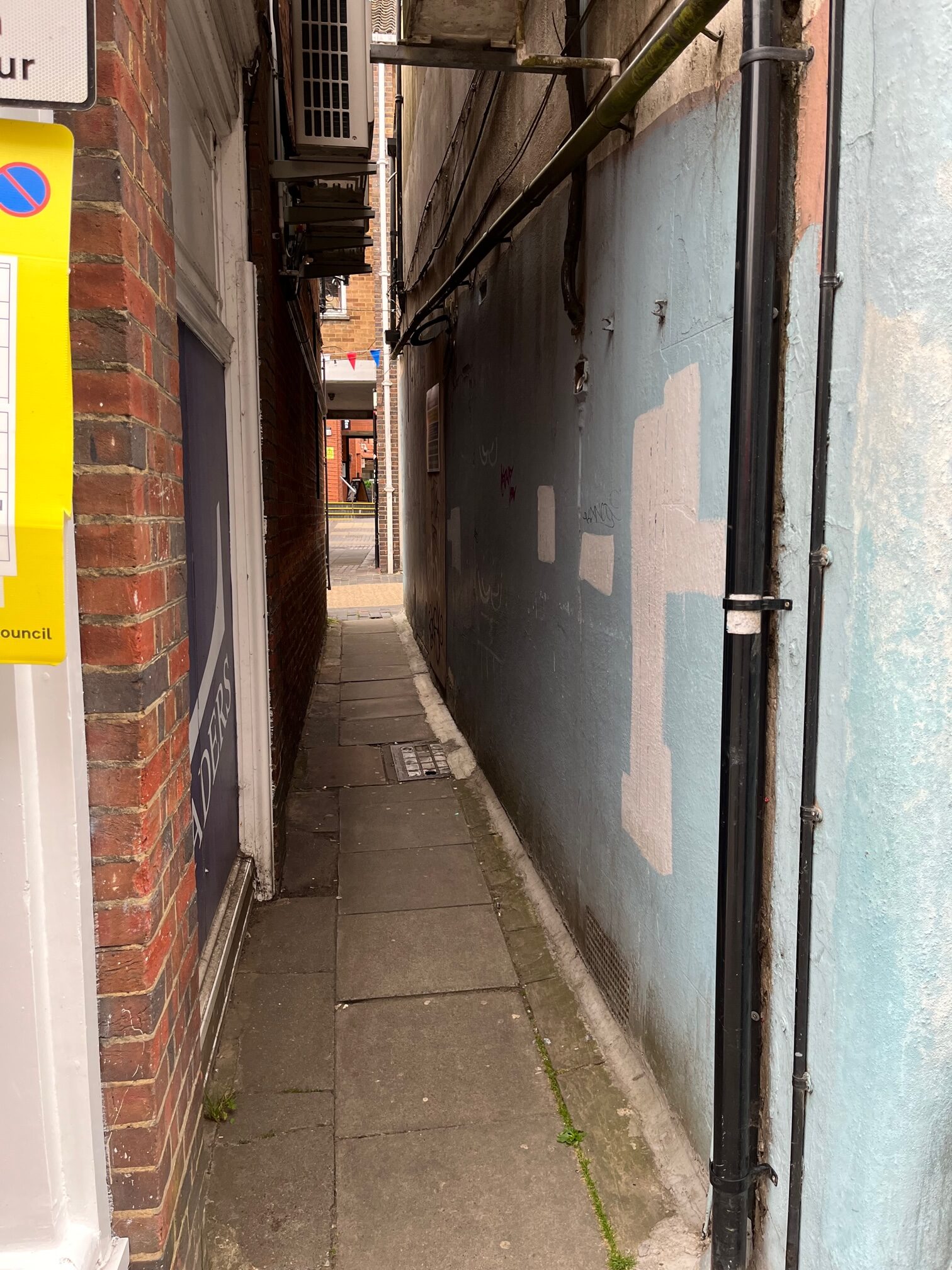
Many of us use them without thought when we visit the city centre, a network of passages running between Chequer Street, Market Place and French Row, often seen as little more than shortcuts or somewhere to store the bins.
But a new initiative aims to celebrate the heritage of St Albans’ historic alleyways by restoring them to their former glory and exploring their rich stories.
The cooperative project – which involves Conservation 50, St Albans and Hertfordshire Architectural and Archaeological Society, the BID and the district council – wants to resolve the issue of rubbish and wheelie bins, improve the condition of the alleyways, and then with permission from the owners and SADC, introduce historical themes and greening opportunities for each alley, with the support of the local community.
Professor Tim Boatswain, who is the lead for the project, explained: “The benefits of restoring and decorating the alleyways, apart from their aesthetic appearance, will that they become part of the social and cultural offering of the city, encouraging footfall and engagement with both citizens and visitors alike.”
The idea is to restore civic pride in the alleyways and create something akin to what is found in York’s Shambles, Lewes and the Twittens, and even Brighton’s Lanes and Laines District.
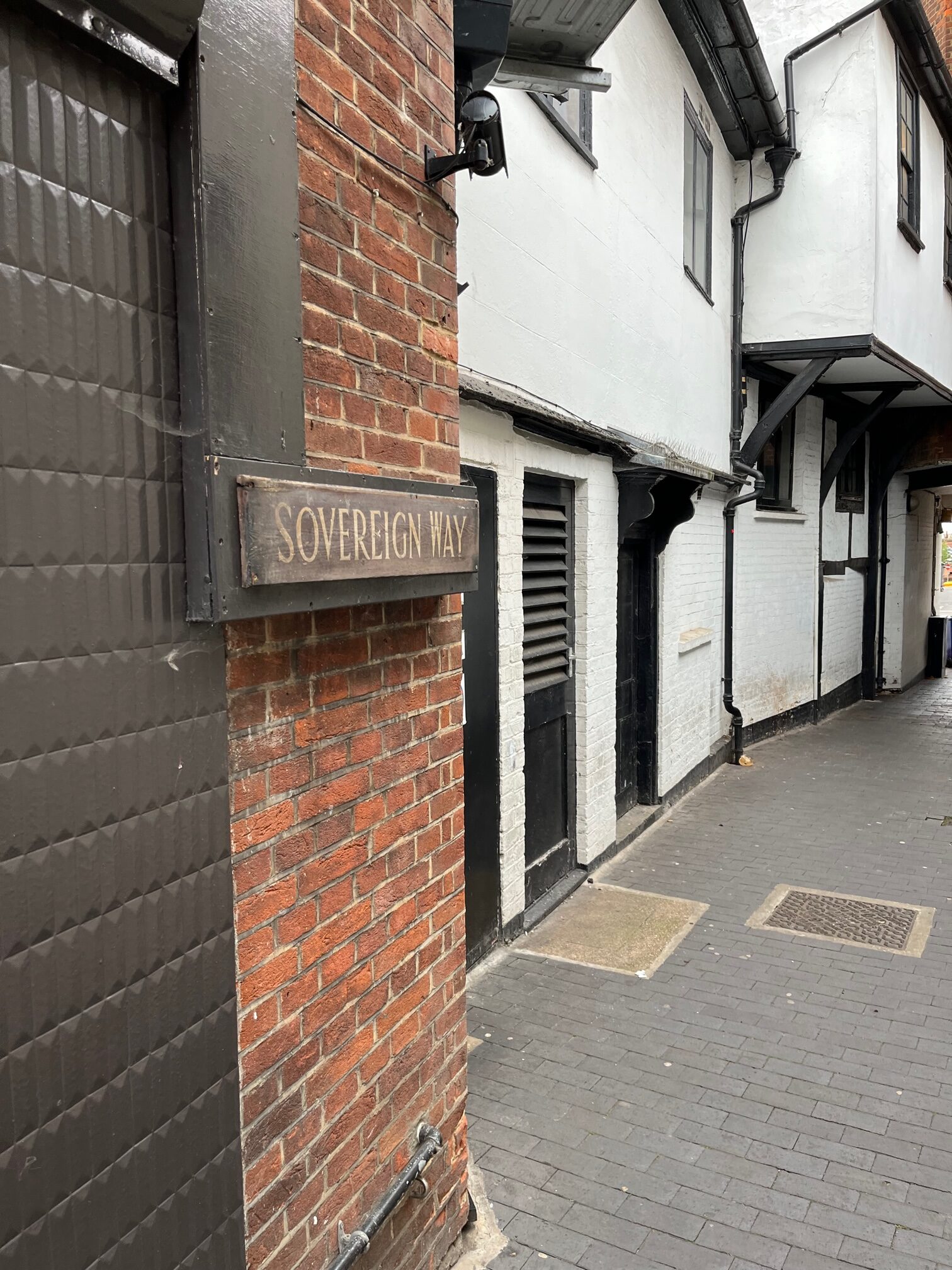
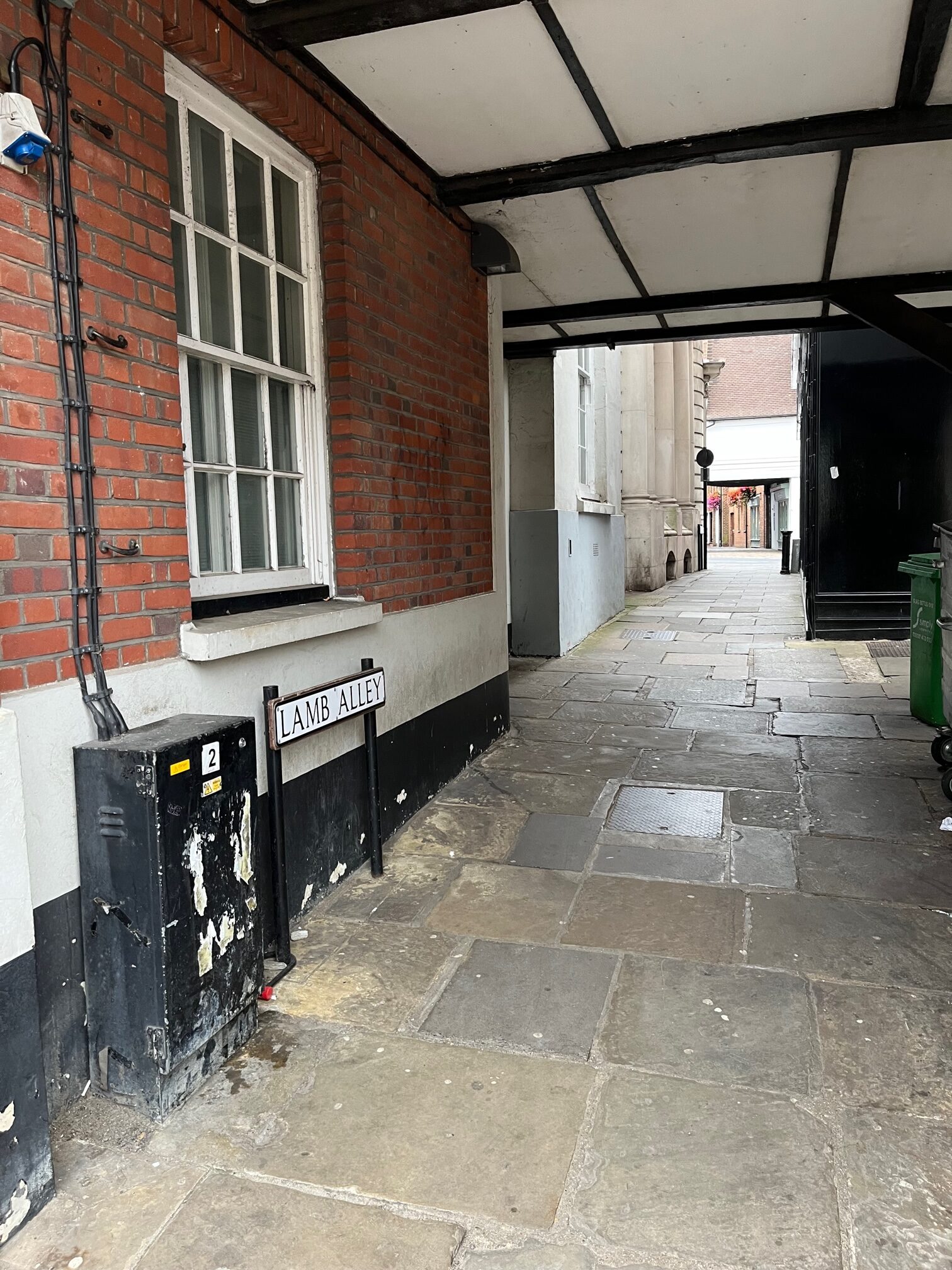
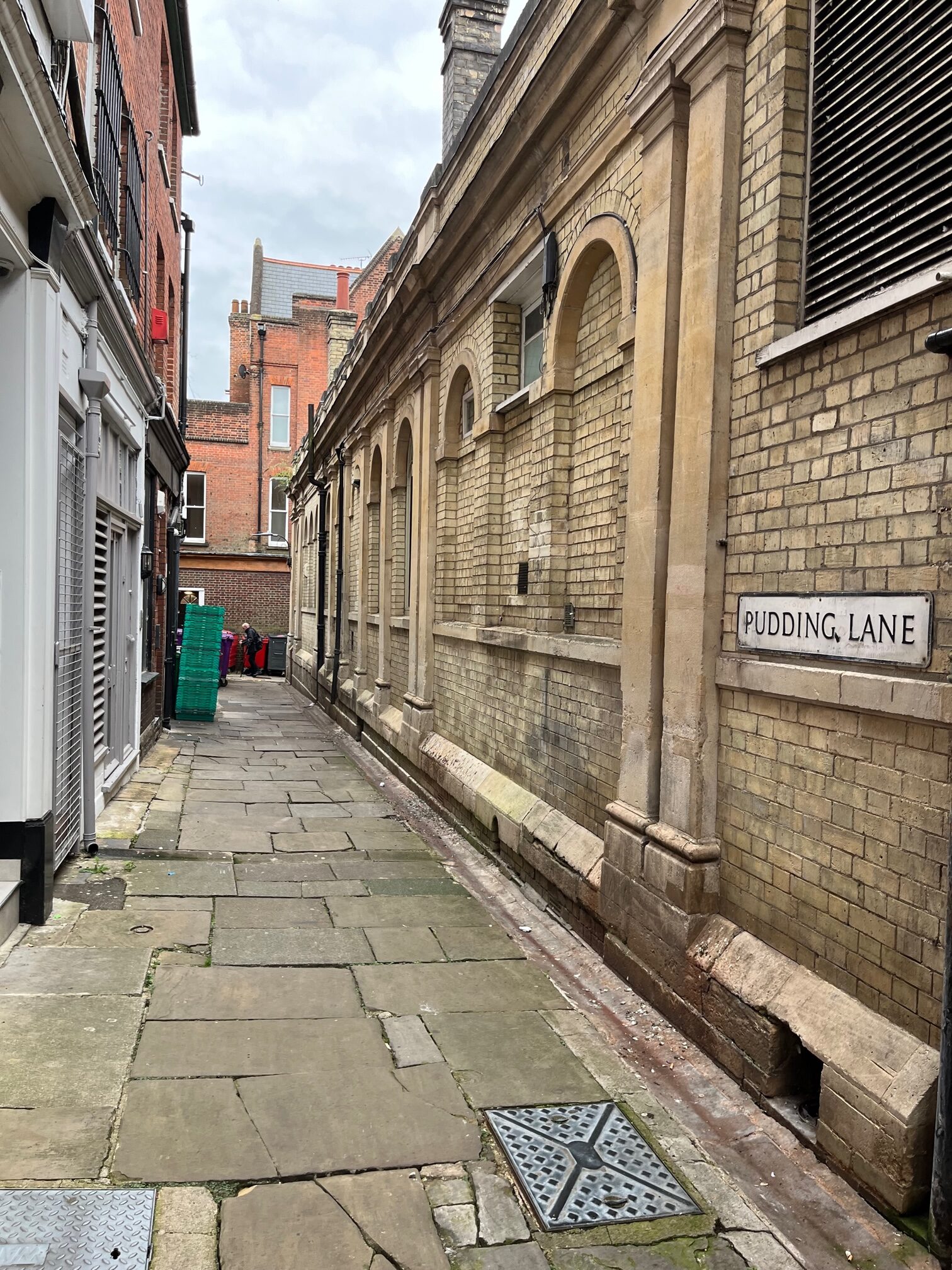
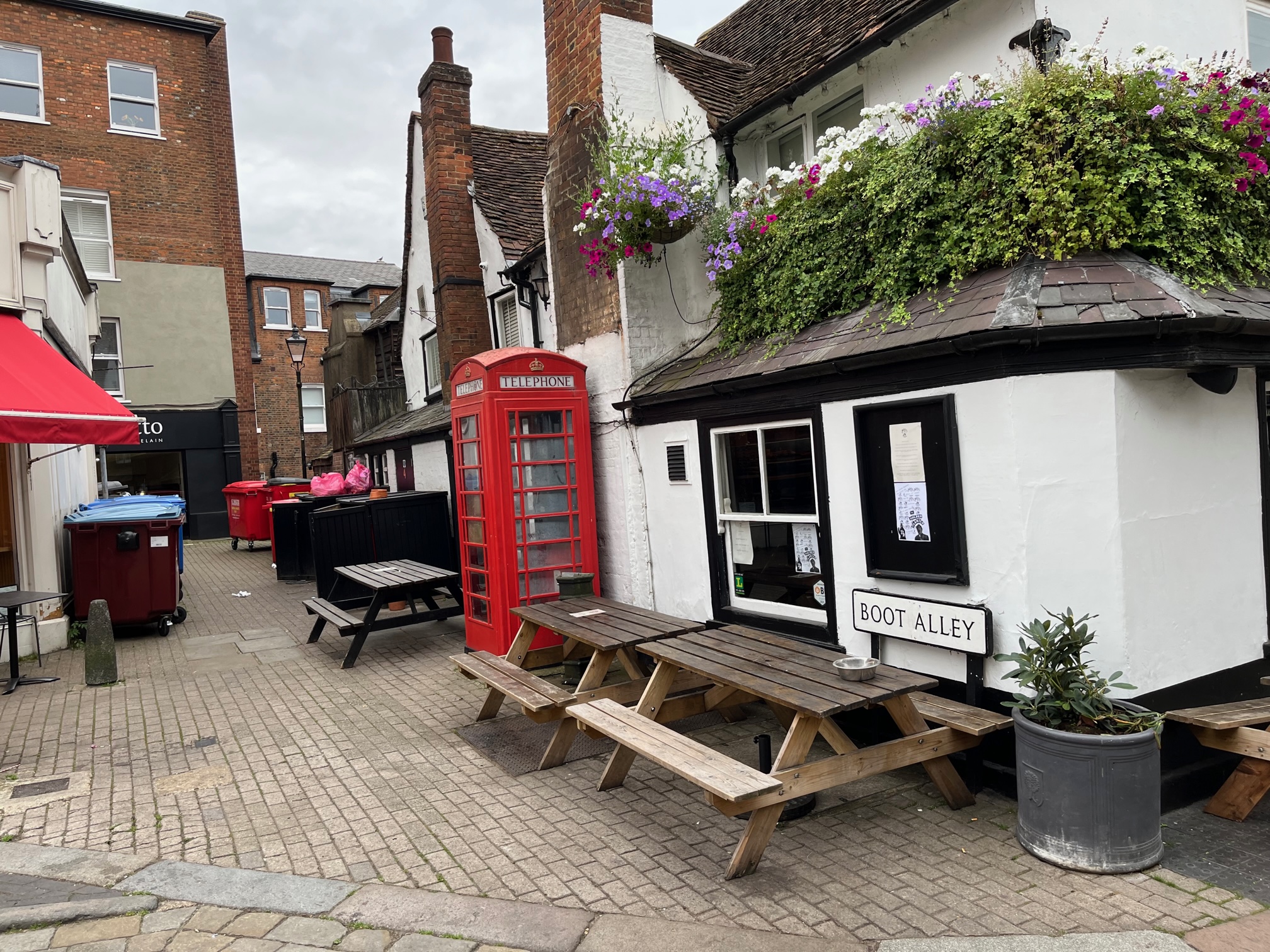
Sovereign Way, Lamb Alley, Pudding Lane and Boot Alley are the main routes criss-crossing between the major roads, marking the passages between the stalls in St Albans’ medieval market as well as providing entrances to its inns.

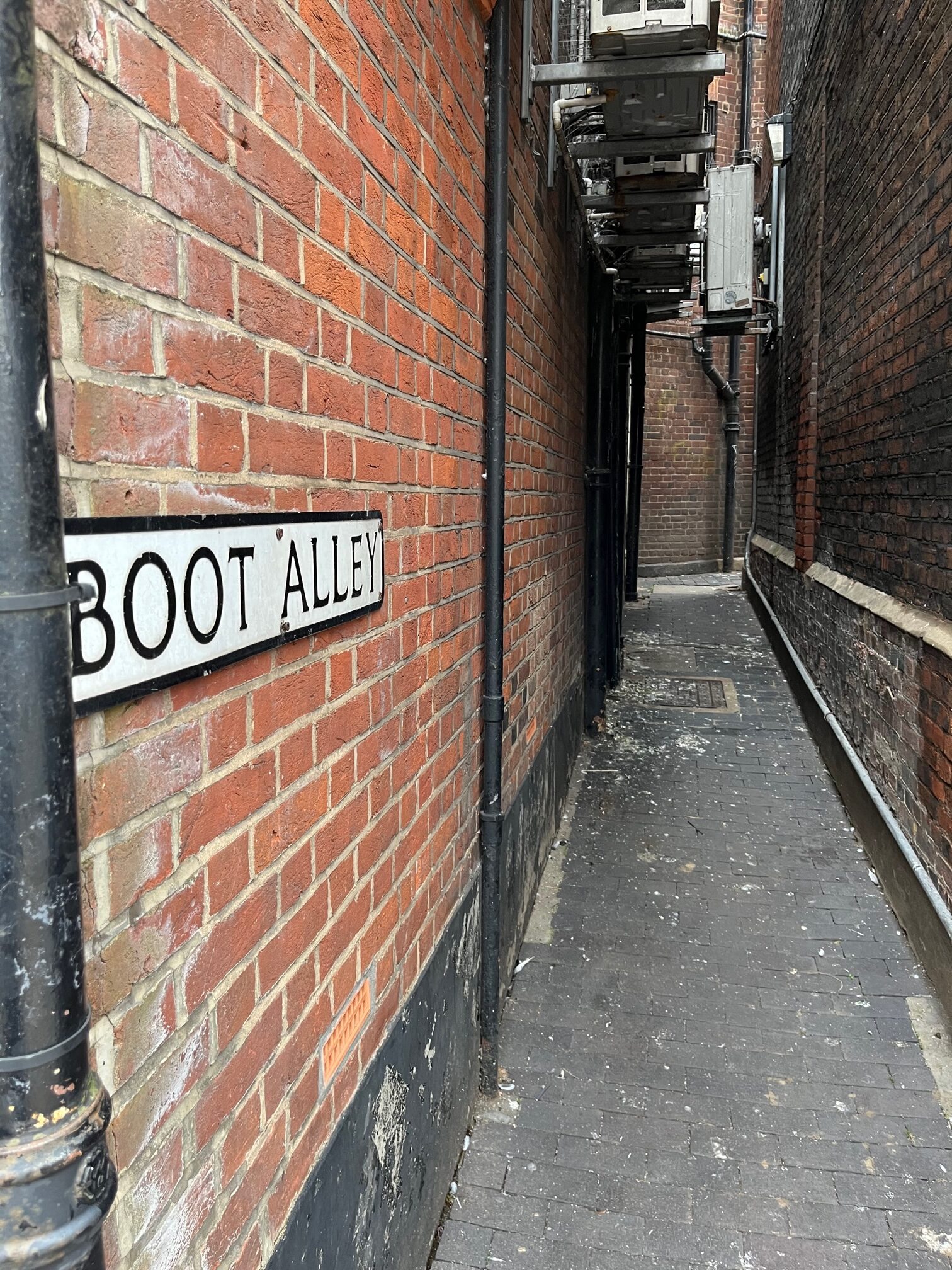
Boot Alley was in the area where leather was worked into shoes; meat puddings were sold in Pudding Lane; Dog Cut and Lamb Alley led to the Dog Inn and Lamb Alehouse; and a mediaeval window in Sovereign Way served the abattoir which previously occupied the premises of Caffé Nero.
Queen’s Walk was named after the Queen’s Hotel in Chequer Street, previously called The Turf Hotel, which has stories of its own… It was built by celebrated racehorse trainer Tommy Coleman, who founded the St Albans steeplechase event which saw the likes of Captain Martin Becher compete (the man who gave his name to the Grand National’s Becher’s Brook). When it became the Queens Hotel Charles Dickens stayed there in 1852.
The entrance to the Christopher Inn, off French Road, has a late 16th/early 17th century carving of a succubus – a she-devil – believed to prey on unwary travellers.
There are plenty of other gems to be found if you know where to look, for example Boot Alley contains the remains of Tudor brickwork and Lamb Alley features a parish mark. St Albans City Guides often take visitors to see these items, but unfortunately not without some apprehension and embarrassment at the likely squalor to be envountered.
Most importantly, Market Place, probably accessed by the alleyways from what is now Chequer Street, played a part in the War of the Roses (the Battles of St Albans on May 22 1455 and February 17 1461).
Professor Boatswain said: “In many of England’s old towns and cities their alleyways play an integral part in the visitor experience.
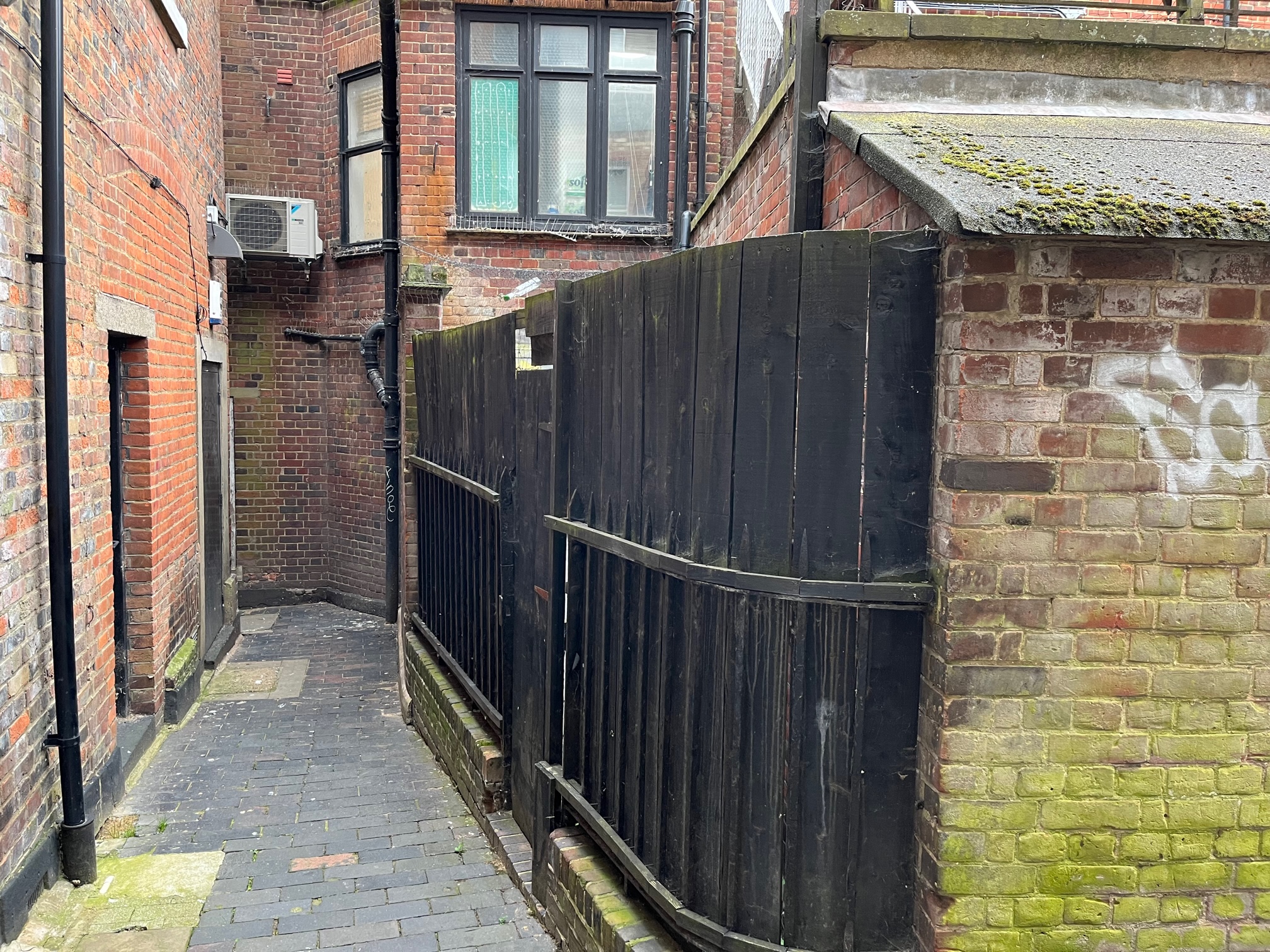
“There is artwork and interpretative panels for the visitor indicating their history. Sadly in St Albans the special heritage of its alleyways has been long neglected and their condition is dire. As well as the passageways being soiled with pigeon excrement, the state of the buildings is poor with graffiti on the walls.
“Some of the alleyways are clogged up with wheelie bins that are often subject to fly-tipping, and are both an eyesore and a health hazard, encouraging vermin. This is a very poor advertisement when the city is attempting to encourage more visitors to enjoy its heritage.”
The Alleyways Project is working towards a council policy which will recognise the historical importance of the city centre alleyways and the part they can play in attracting visitors to St Albans.
SADC will strive to conserve and preserve them by:
- working to remove wheelie bins through appropriate waste collection regulations;
- ensuring that they are regularly cleaned;
- encouraging owners to maintain their alleyway walls;
- removing graffiti;
- installing anti-pigeon devices;
- greening certain areas;
- supporting themed murals and information boards.
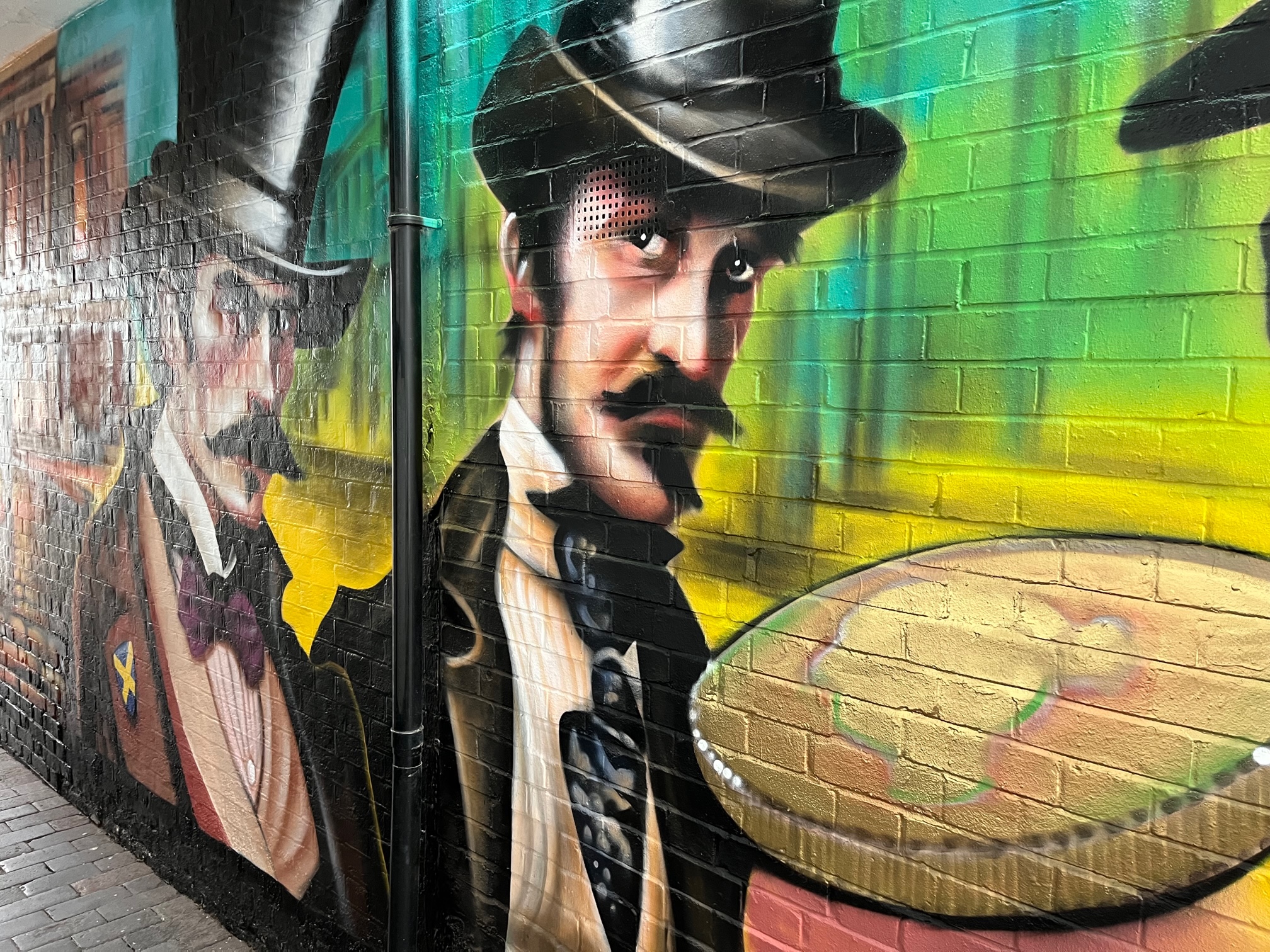
The first mural to be created is in Sovereign Way. Cathedral artist in residence Ant Steel was commissioned to recreate images from St Albans’ great election scandal of 1851, when corrupt parliament candidate Jacob Bell bribed over 300 voters at the scene. Entering a door on the south side of the passageway, members of the electorate were offered refreshments and then called to go upstairs to meet the candidate’s agent. There the agent would turn his back and the voter could help himself (only men of a certain property status could vote then) to a sovereign.
The scandal became exposed and an official enquiry was set up at what is now the Museum + Gallery, which resulted in all of St Albans being punished, as the constituency was not allowed an MP for over 30 years.
Once the mural is completed St Albans Arc and Arc will provide an information board that explains the scandal.
Mayor Cllr Anthony Rowlands, who visited the mural recently to see the work in progress, said: “This is a stunningly innovative public art project. Ant Steel has created a suitably colourful visual representation of one of the most notorious episodes in our city’s history.
It is also a great example of the hitherto untapped historic interest of city centre alleys.”
Professor Boatswain added: “We are absolutely delighted that the amazing artist, Ant Steel, has undertaken this project which highlights this unfortunate but fascinating episode in St Albans’ past.
“If people are wondering why there is a beautiful lady wearing a plumed hat in the mural when only the men could vote, it is because there were seven female witnesses, called by the enquiry who gave crucial evidence about the scandal. I hope this mural will serve as a lovely example of what can be done to the rather neglected alleyways of the city centre.”
Ant Steel and Professor Boatswain are also working on another initiative for Dog Cut – the passage between French Row and Christopher Place Shopping Centre – offering dog owners the chance to have their pooches’ portraits painted by the artist.
These would then be placed on public display for a period of time before returning them to the owners. To find out more email Tim Boatswain at tjboatswain@gmail.com.
St Albans BID has been heavily involved in the alleyways project, as manager Vivien Cannon explained: “On behalf of the group, BID has helped to hand deliver information to businesses to introduce the project and why it’s taking place and continues to work with the group to draft a project plan.
“Immediate actions for the group focus on improving the cleanliness of the areas which are now jet-washed on a weekly basis by SADC’s contractor.
“Where businesses or residents living in the area have been careless with their waste, fixed penalty notices have also been issued to ensure littering is addressed and deterred. We know that rubbish is an issue, and the longer-term plan is to reduce bins in the area.
“The group also wishes to promote the historical significance of each alleyway with signage and historical information that will be valuable to both local people and visitors to our city.
“The BID will continue to meet and work with the project group to ensure the voices of city centre businesses are heard and that the project plan reflects their needs and those of our visitors.”