15 Sep 2025
Matt Adams is at the Abbey Theatre for the start of Company of Ten’s new season…
Although he’s now best known for his work on drama series like Doctor Who and Sherlock, television writer Steven Moffat actually made his name on comedies like Coupling, Chalk and Joking Apart, so he’s an old hand at humour.
The Unfriend is therefore something of a return to his past triumphs, starting with an apparently innocent moment and transforming it into a catalyst for chaos.
The best story-telling arguably comes from taking normal people and exposing them to extraordinary events, and for suburban couple Peter and Debbie Lindell, their lives are irrevocably changed as a consequence of a random meeting on a cruise ship.
As the first play of the new season from the Abbey Theatre’s Company of Ten, it proved to be a fitting reminder of just how good they are, delivering theatre of the very highest standard on a modest budget and with what we must not forget are an amateur cast and voluntary production team.
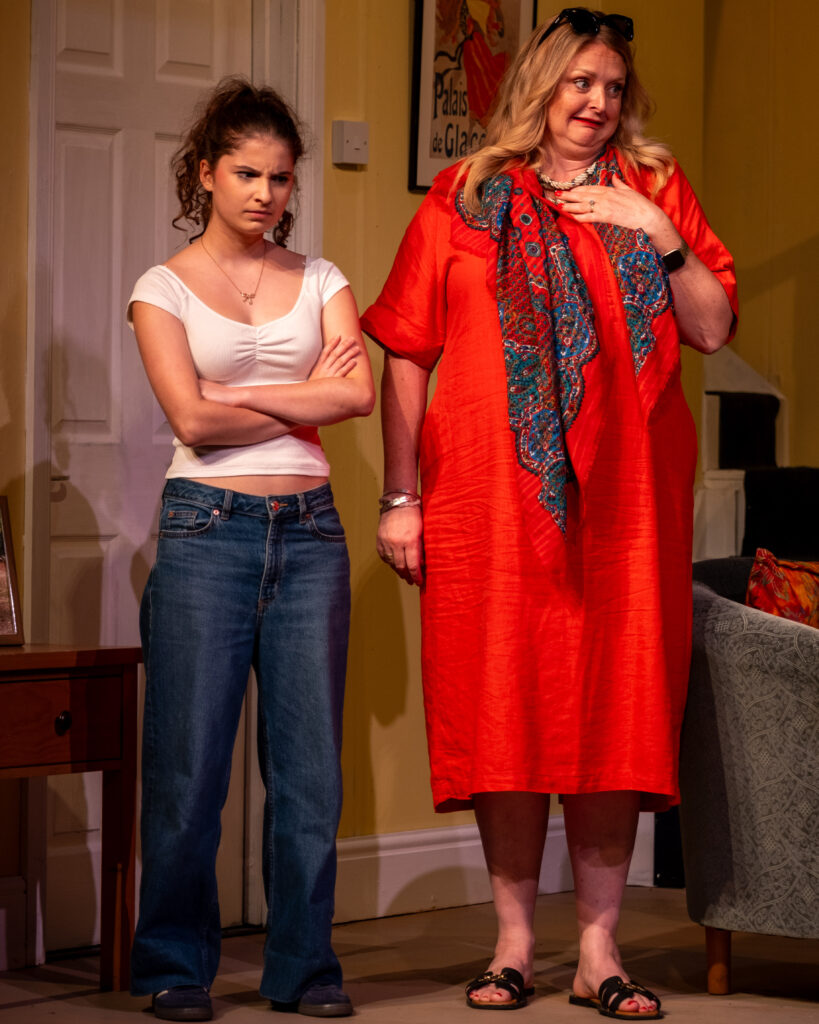
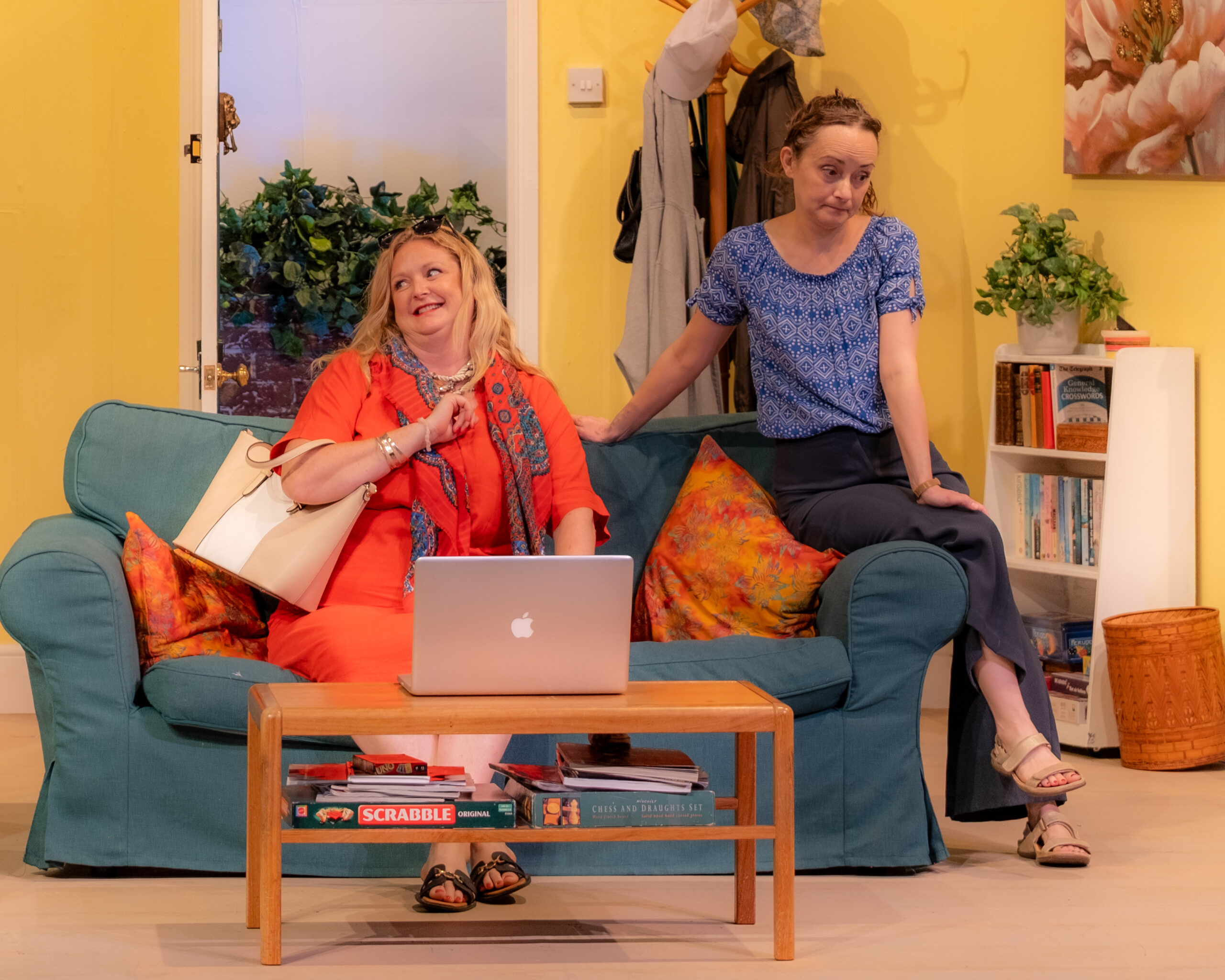
Bold and brassy, Elsa Jean Krakowski is the sort of person you tolerate for brief periods of time despite her toe-curling wrongness, or is it in fact because of it? A Trump-loving widow from middle America, she is entertaining for all of the wrong reasons, and just the sort of person you can judge from afar while knowing your time in their company is limited.
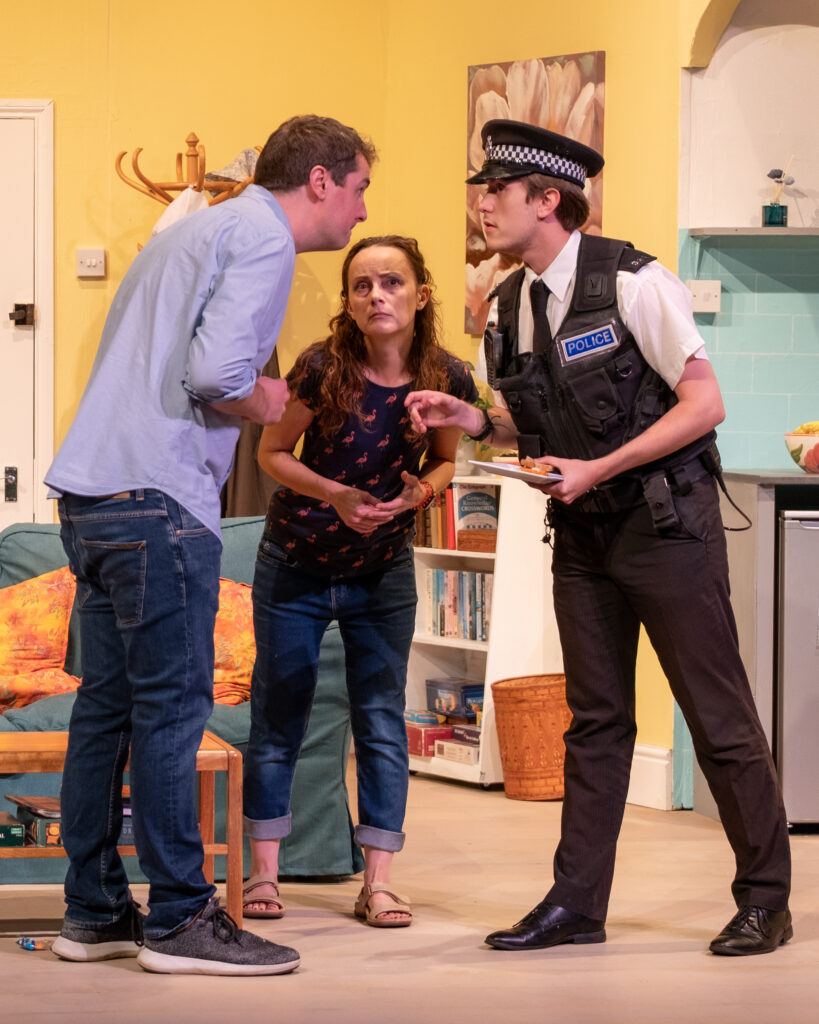
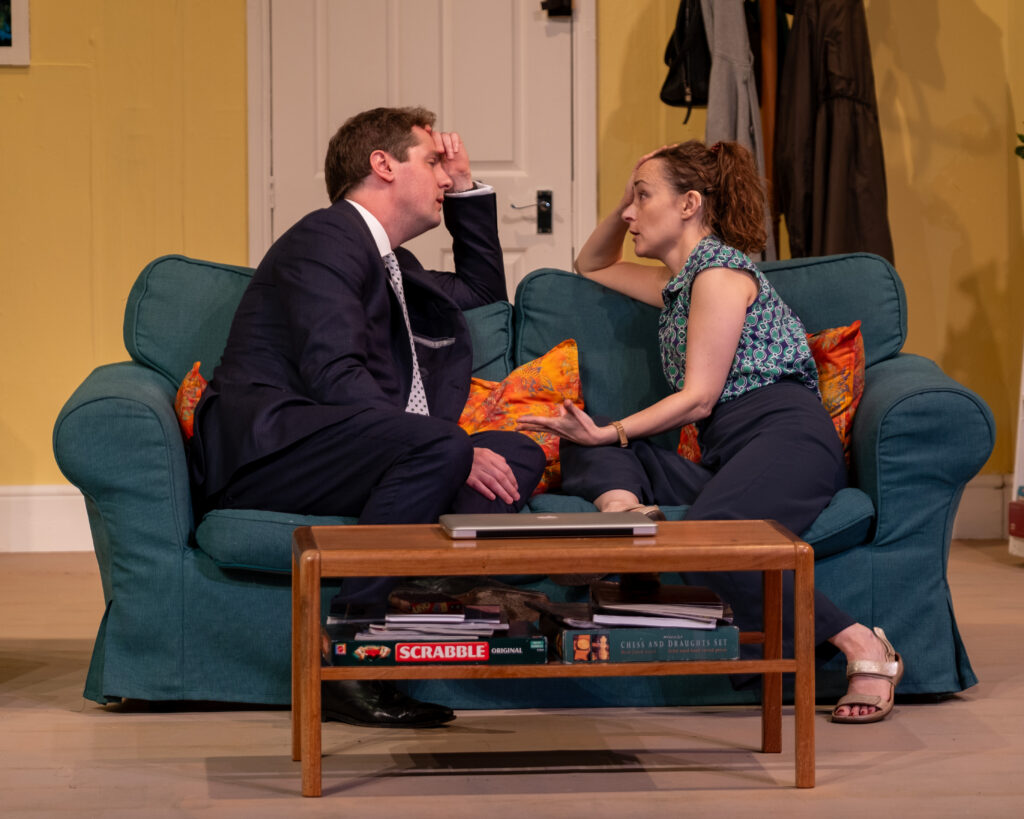
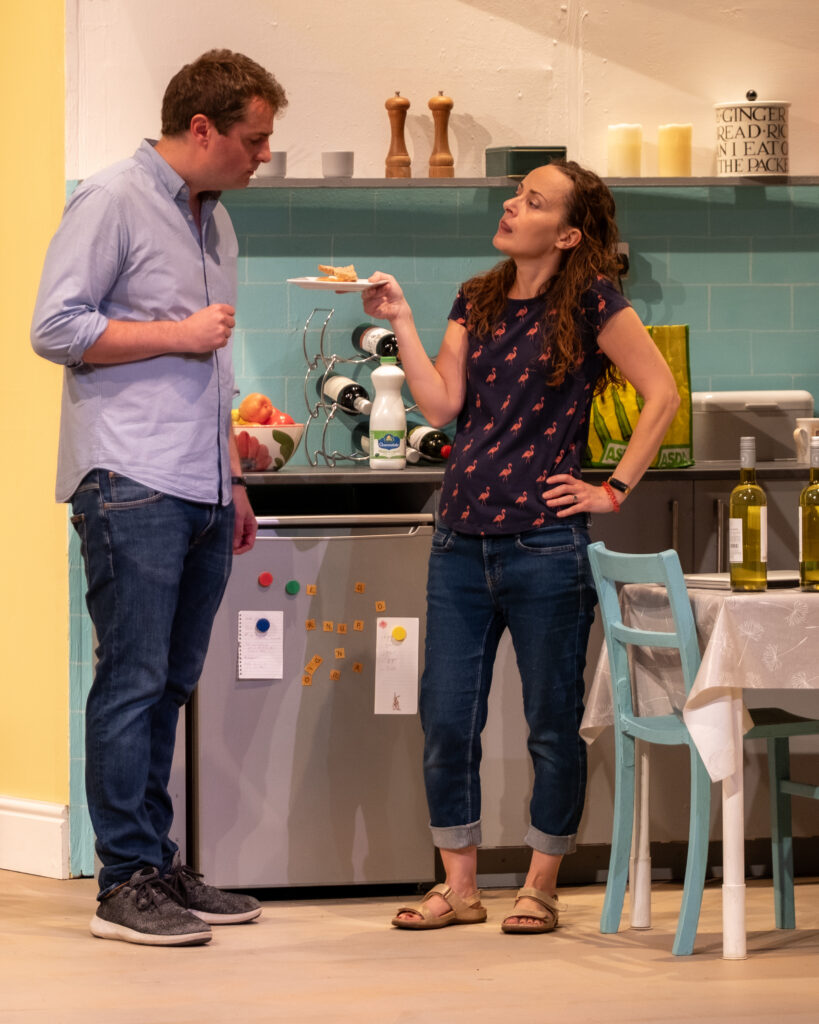
Uptight, anxious and misanthropic, Peter (James Morrell) can never be happy, while his wife Debbie (Deborah Heath) is sensible, rational and dare I say, somewhat boring? But after 20 years of marriage and two kids would you really expect anything else?
Elsa was therefore something of a welcome distraction from their own banality, and neither expected her to invite herself to visit some weeks after their return to the UK, but then she did say she was the sort of person who doesn’t take no for an answer.
She certainly isn’t the sort of person you invite for an extended stay with no end in sight, let alone after discovering various skeletons in her closet…
Transplanted from the tranquil environs of the cruise ship back to their modest home, the Lindells live with their disinterested son Alex (Lex Cameron) and melodramatic daughter Rosie (Sophie Parker), a family fraught with the usual challenges of modern day society – unable to engage with each other, distracted by technology and caught up with their own individual desires for gratification.
“Both our children hate us…”
“But not as much as they hate each other – so they’ll never win.”
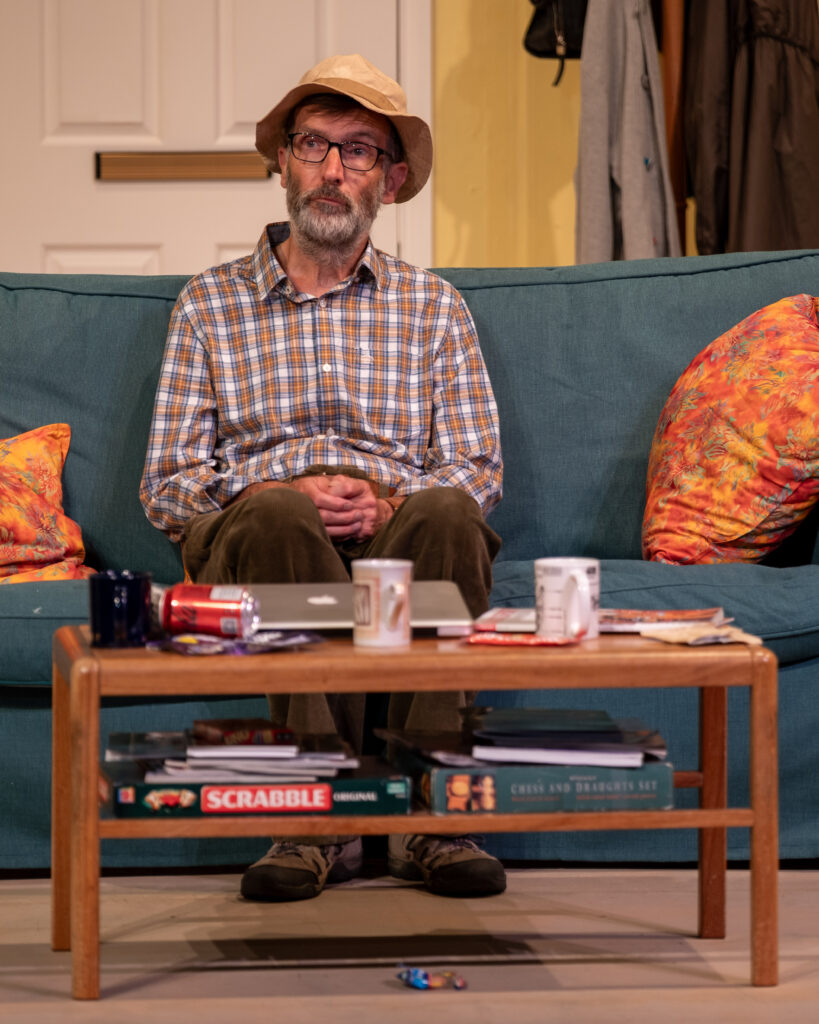
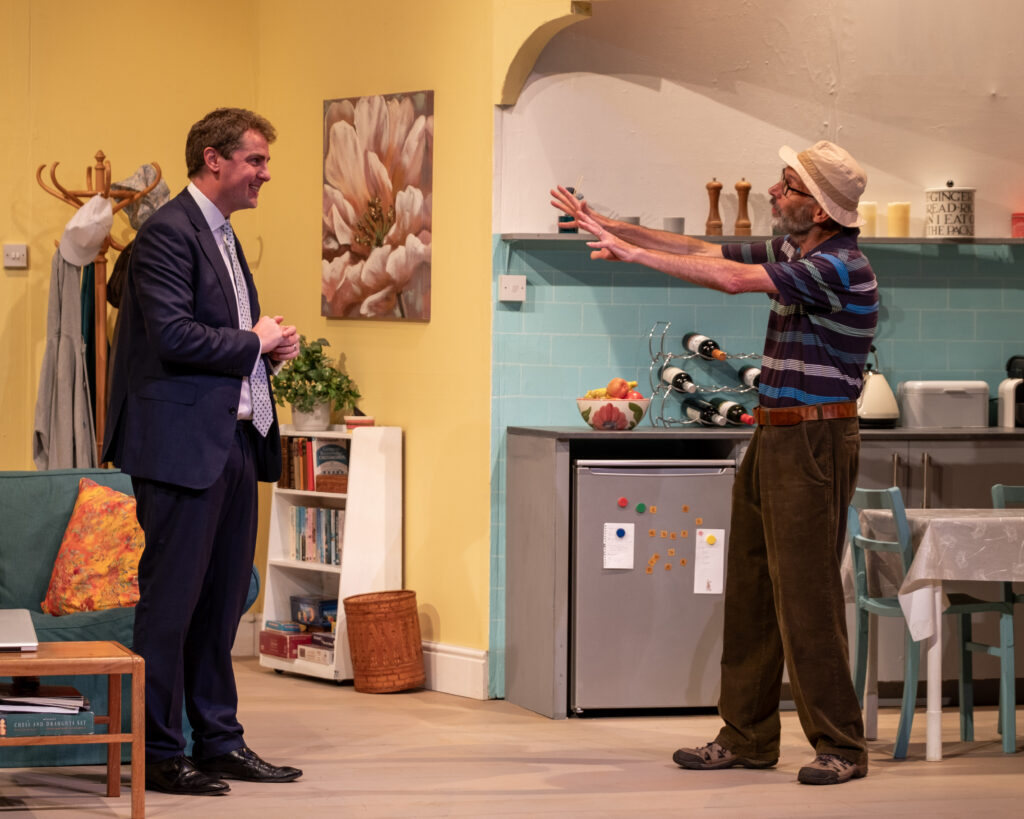
Thrown into this maelstrom of mundanity is their unnamed neighbour (Keith Macdougall), a man so boring he is memory proof. Irritating, persistent and intrusive, yet undoubtedly frustrated by Peter’s inability to communicate with him, he is the sort of person you really don’t want living next door, as he sticks his nose in to positively everything.
Having reluctantly agreed to Elsa’s request to pop in while she’s in the country, Debbie makes the regrettable decision to Google their houseguest before her arrival, only to discover there’s much more to the brash American than they previously realised…
When she turns up unexpectedly two days early there’s an immediate attempt to keep everything light and chatty for the sake of appearances, but Elsa shows remarkable insight into the family dynamics, and is soon picking away at the scabs of civility.
As time progresses, and Elsa engrains herself deeper into their lives, something truly remarkable happens, as she succeeds in making their home a better place.
The children are happier, Peter is more relaxed, and only Debbie seems haunted by her knowledge of Elsa’s dark past, albeit resigned to the insanity of it all…
A beautifully observed character piece, The Unfriend is arguably often uncomfortable due to the realisation that these events could happen to any of us, as Steven Moffat’s script never veers into the realms of wild implausibility, and remains grounded in the sort of suburban world which we can all identify with. In fact, it’s all very Snorbens, and I’m sure we all know a couple like the Lindells or a neighbour just as tedious and irritating. Even their children are reminiscent of everyday teenagers, from the games-obsessed Alex to self-centred Rosie, and the fractious relationship they have with their parents is all too familiar.
I watched the production with my own teenage daughter, who said her face hurt afterwards from laughing so much. It’s refreshing to watch a play where the humour is never contrived, being allowed to play out through the situation unfolding on stage and the sharpness of the dialogue.
Deborah Heath and James Morrell prove a remarkably convincing couple, portraying the Lindells as comfortable in their own company and accepting of the flaws and foibles in each other’s personality. Their relationship with their kids feels natural and normal, not just because Lex is Deborah’s real-life son. As the polite and reserved contrasts to Elsa they could have come across as boring and two-dimensional, but their performances have depth and consideration which ensures that is never the case.
Victoria Lenza had the difficult task of avoiding slipping into some sort of parody with her portrayal of Elsa, who needs to be kept on the right side of believability for the play to work, and thankfull she does that brilliantly. When she’s described as “the most popular human being I’ve ever met”, you can actually understand why someone might make that observation, regardless of just how annoying the character actually is to spend time with.
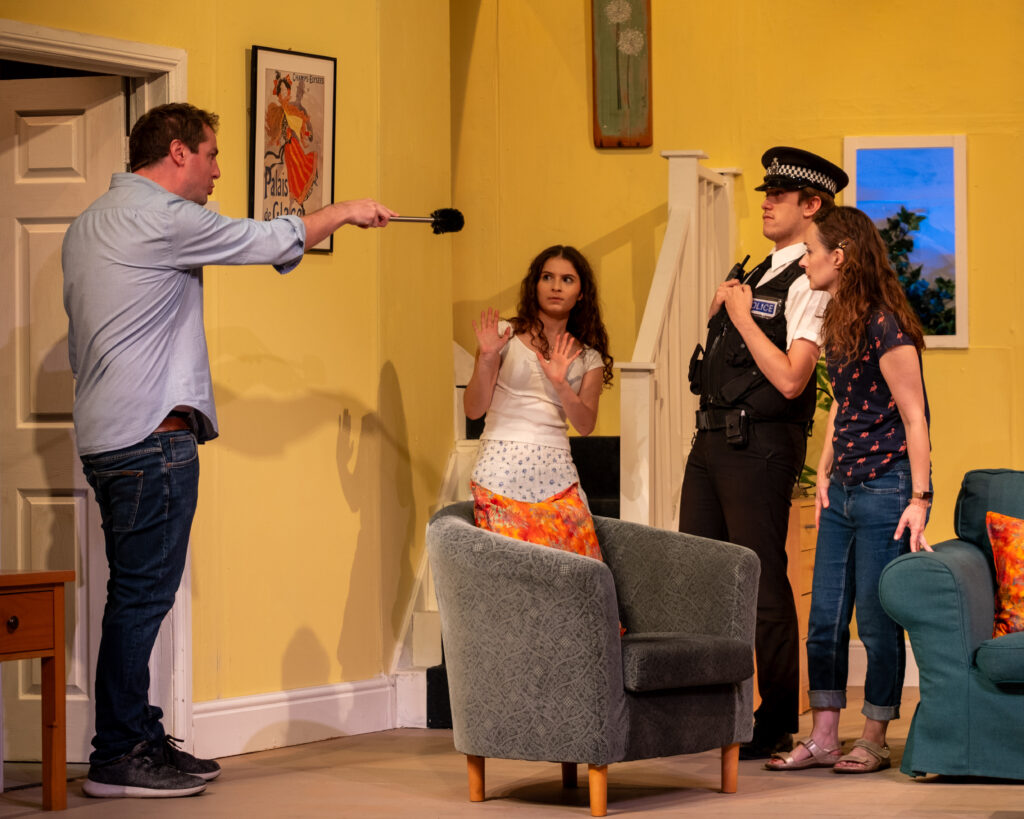
The unnamed neighbour is brought to life with delicious understatement by Keith Macdougall, all passive aggression and loaded comments, with a similarly impressive brief performance by Conor Booker as the jobsworth PC Junkin.
Credit must also go to Judith Goodban and the Company of Ten props team for creating a remarkably realistic suburban home on a provincial theatre stage, complete with lovely details like the family portraits, fridge notes, boardgames and other signs of everyday life. The sound design by Stuart Barry – who also produced the excellent video sequences which pop up throughout the play – adds to the illusion that we’re peering into the Lindells’ lives like some sort of voyeurs.
When you have a script as tight as this, it would be easy to let the dialogue and situations carry the production, but director Katherine Barry has allowed her cast room to breathe and make the roles their own. They each add something very special to the overall whole, and carry the audience through the story without events ever feeling forced or farcical.
This is so much more than your average situation comedy, with grounded performances and direction that keep it real throughout, and is absolutely worth catching before the end of the run next weekend.