14 Oct 2024
Deborah Heath is blown away by the Company of Ten’s exceptional production at the Abbey Theatre Studio.
Company of Ten’s autumn season continues with ‘The Father’ a challenging play about dementia which may be familiar to some of you from the film adaptation starring Anthony Hopkins (2020). I am as ever impressed with the well-balanced programme of plays that have been chosen; this autumn for instance we began with the ever-popular Noel Coward comedy ‘Hay Fever’”’ on the main stage, the psychological drama ‘The Father’ and shortly a musical telling of the story of Nell Gwynn.
I particularly enjoy CoT’s offerings in the Studio theatre; it gives them the opportunity to embrace the versatility of the performance space with unusual staging and treat the audience to intimate stories that are all the more hard-hitting due to the proximity of the actors.
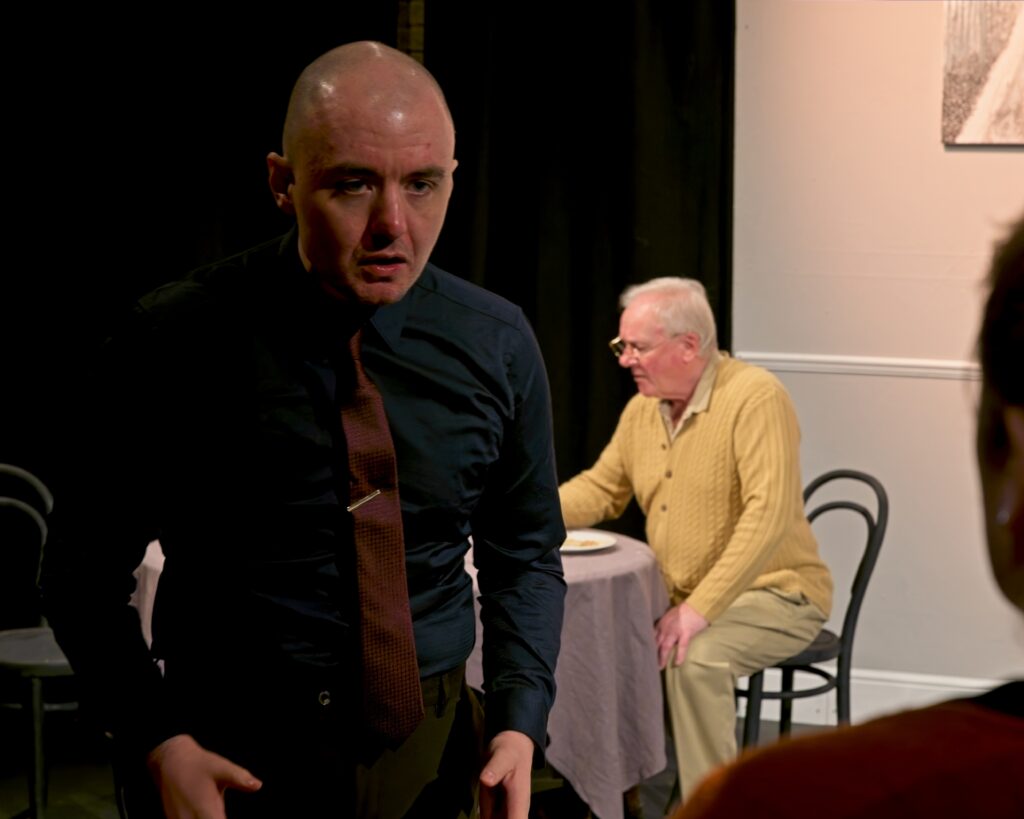
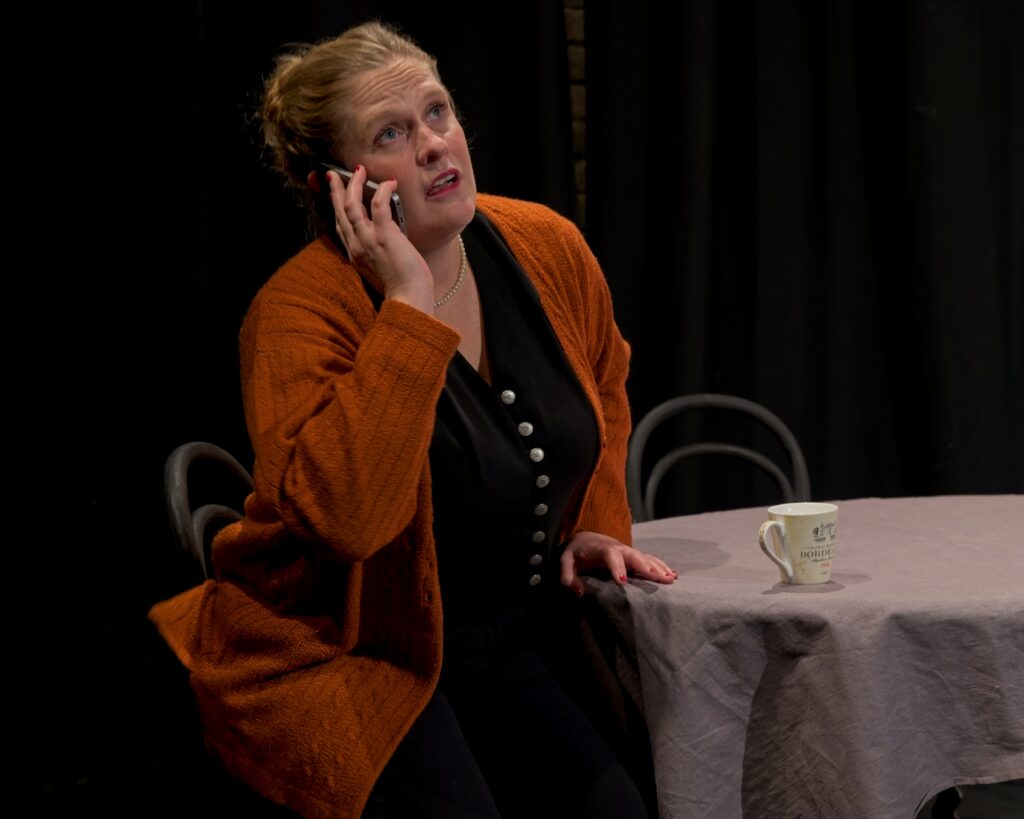
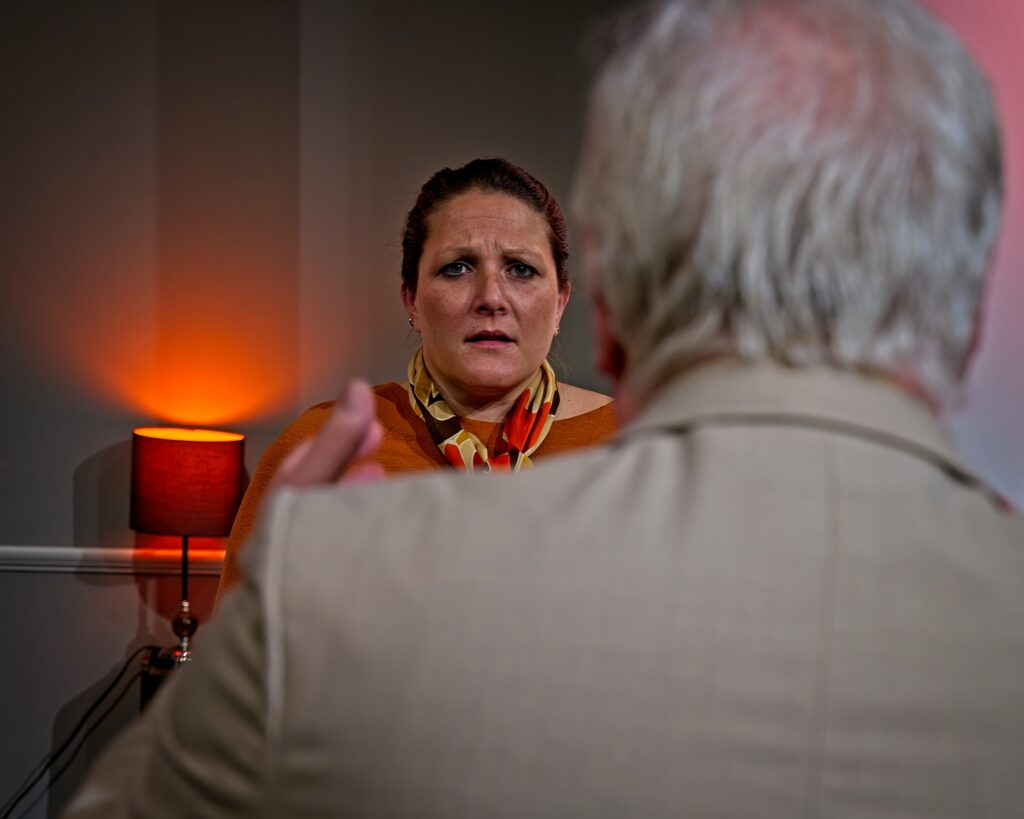
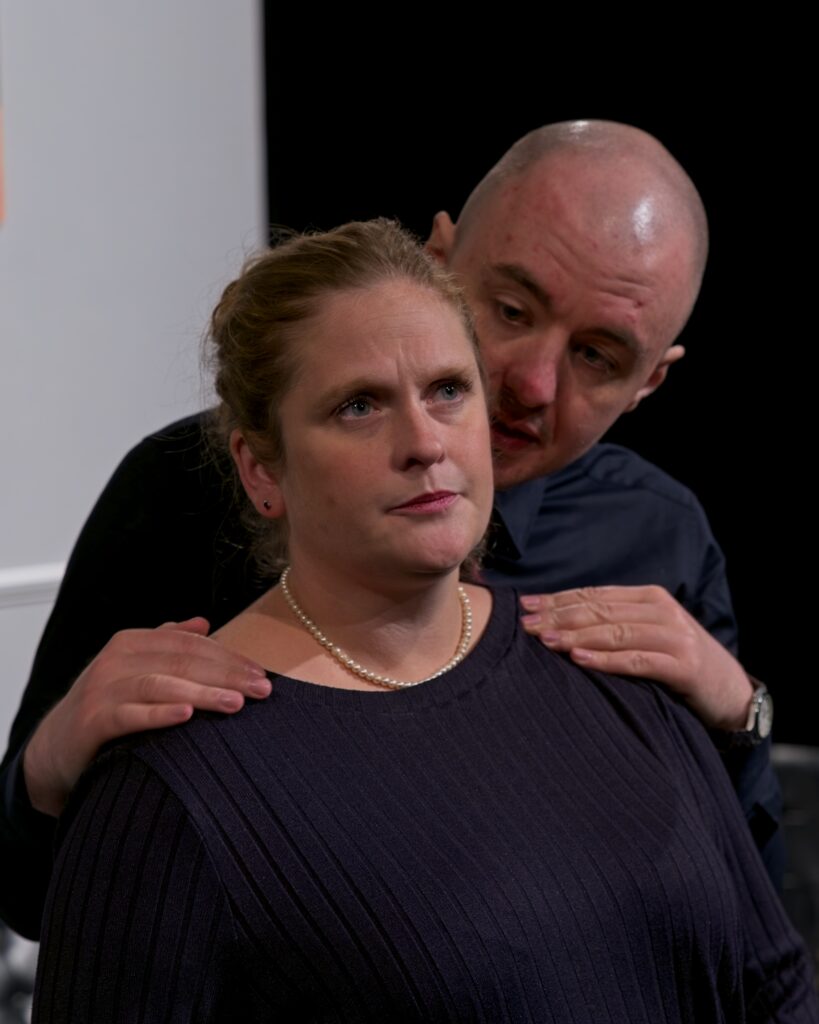
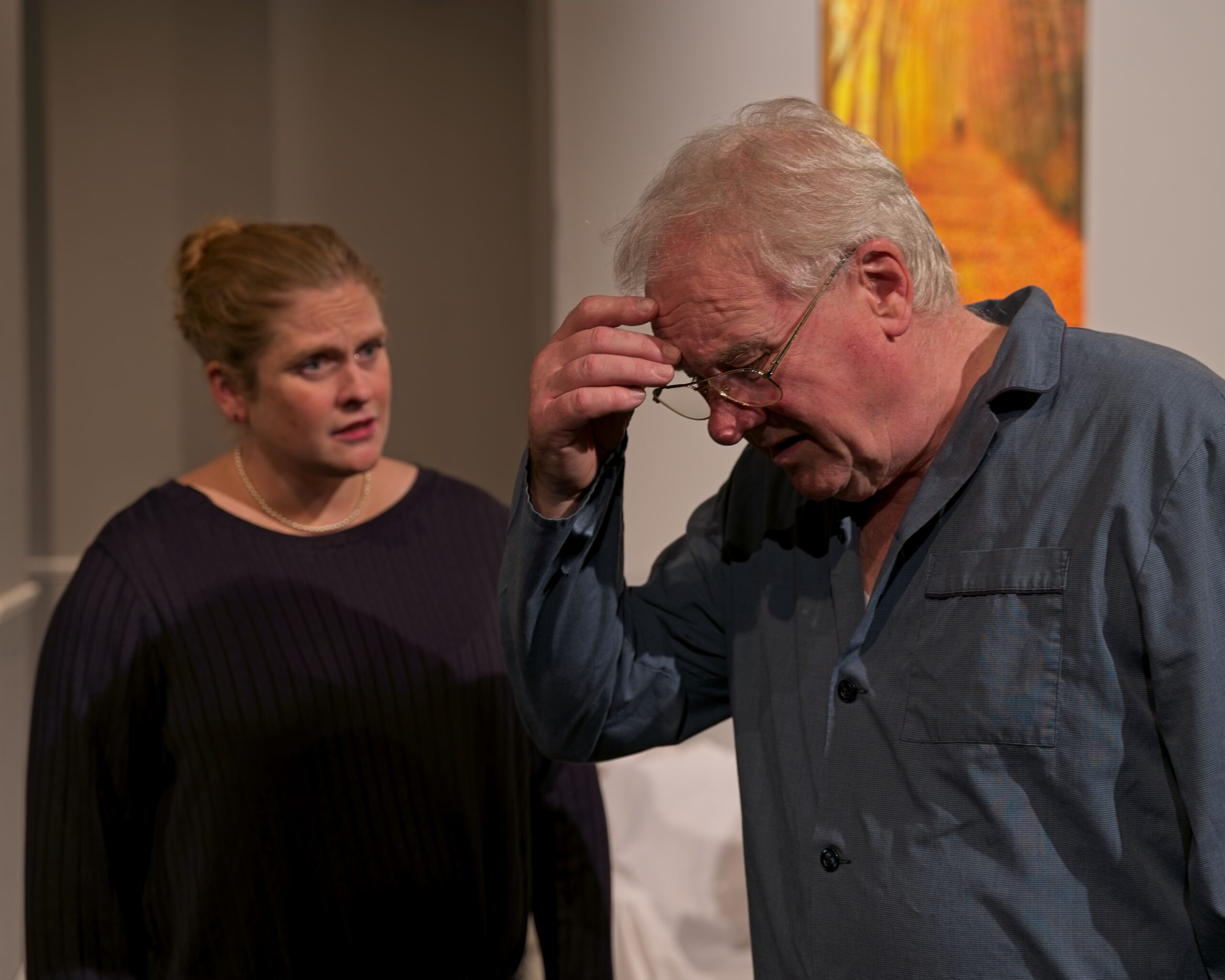
‘The Father’ was no exception. This is the story of Andre’s dementia and the way the script is structured, with a haywire timelines and multiple actors playing two of the main roles, watching it I felt that I was going through it myself. This impact was achieved firstly through the marvellous script. Translated from the original French by Christopher Hampton, it presents a whirlwind of characters and timeline shifts with the central truth that Andre’s memory is deteriorating but his daughter’s love and devotion is constant.
I am sure that like me, most audience members had some experience of a loved one coping with dementia. What director Philip Reardon presented to us was a distressing and frustrating world with some moments of humour. For whilst it is horribly sad supporting someone with dementia you really do need to be able to find lighter moments or it can be utterly draining.
When my Nan began collecting the false teeth of everyone in her nursing home we had to chuckle and I felt the same emotions when Andre believed he was a tap dancer or kept losing his watch. This lost watch was a clever dramatic device too because it represented Andre’s internal clock which was often at odds with reality.
Secondly, the creative realisation of this script was outstanding. director Philip Reardon explains: “I instantly formulated pictures in my mind. I also had a deep understanding of the subject from both the text and from lived experience.”
Philip selected an extremely talented cast and design team to bring his vision to life. The world was established before the actors even entered, thanks for a poignant playlist
including “Les Feuilles Mortes” (Autumn Leaves) which ties in beautifully with the imagery in the play and went hand in hand with Ali Pagan’s exquisite set.
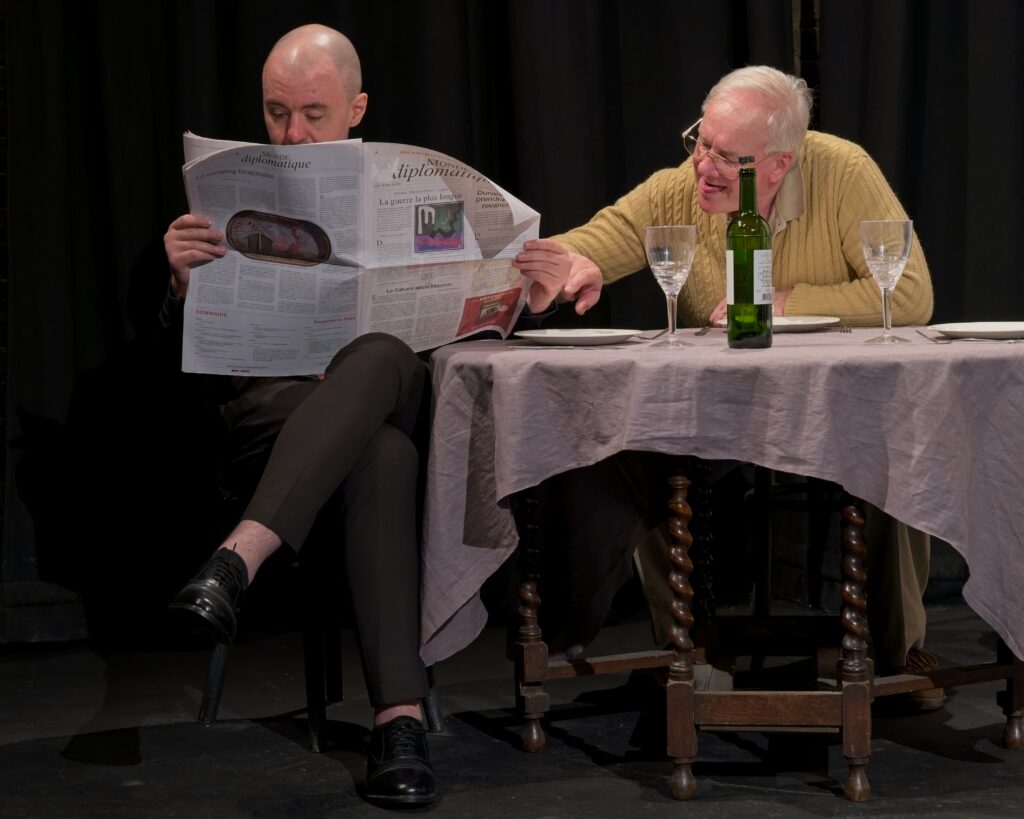
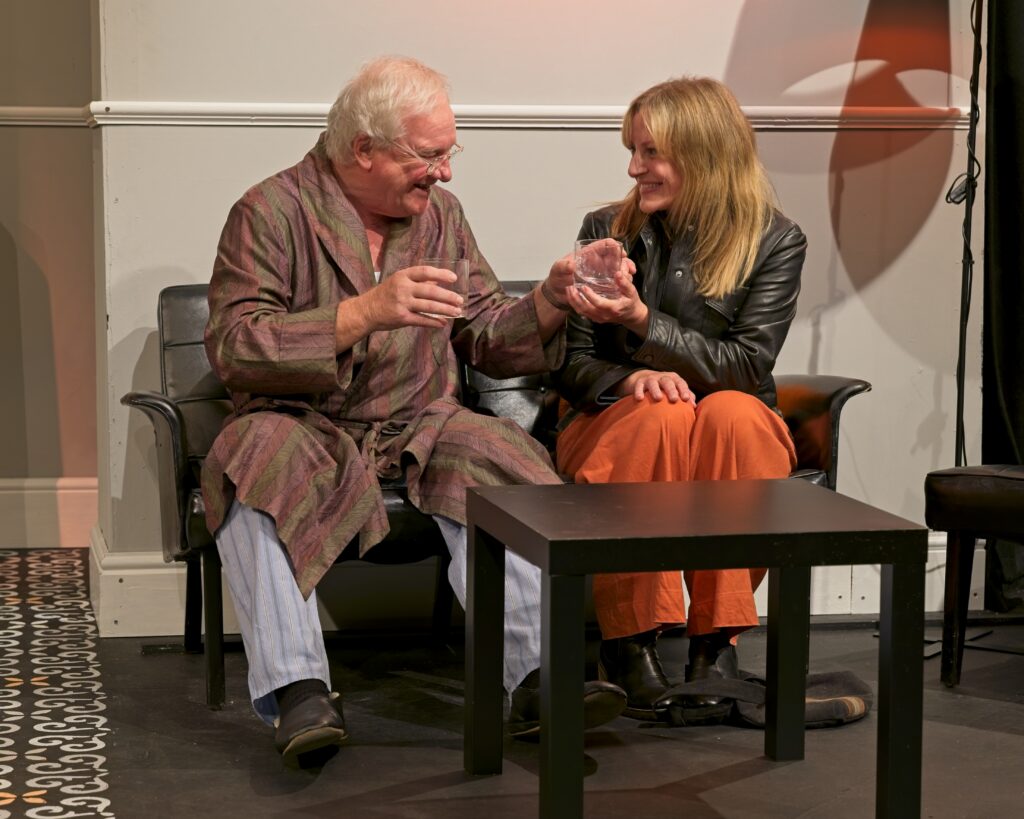
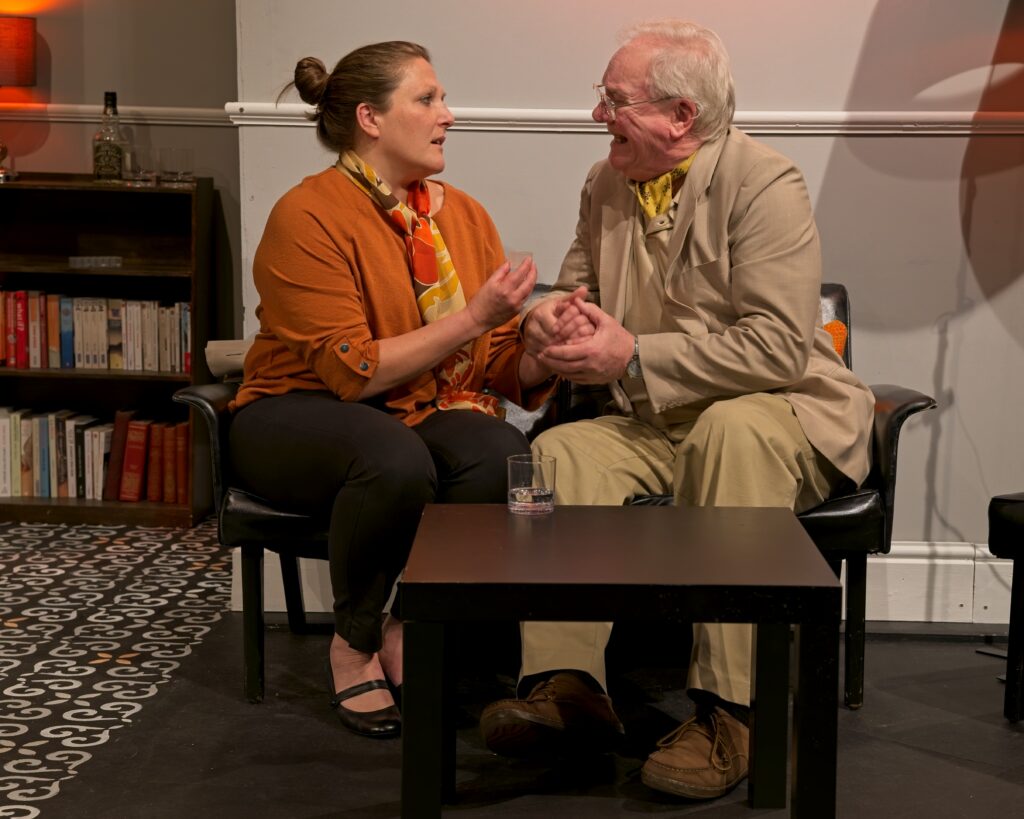
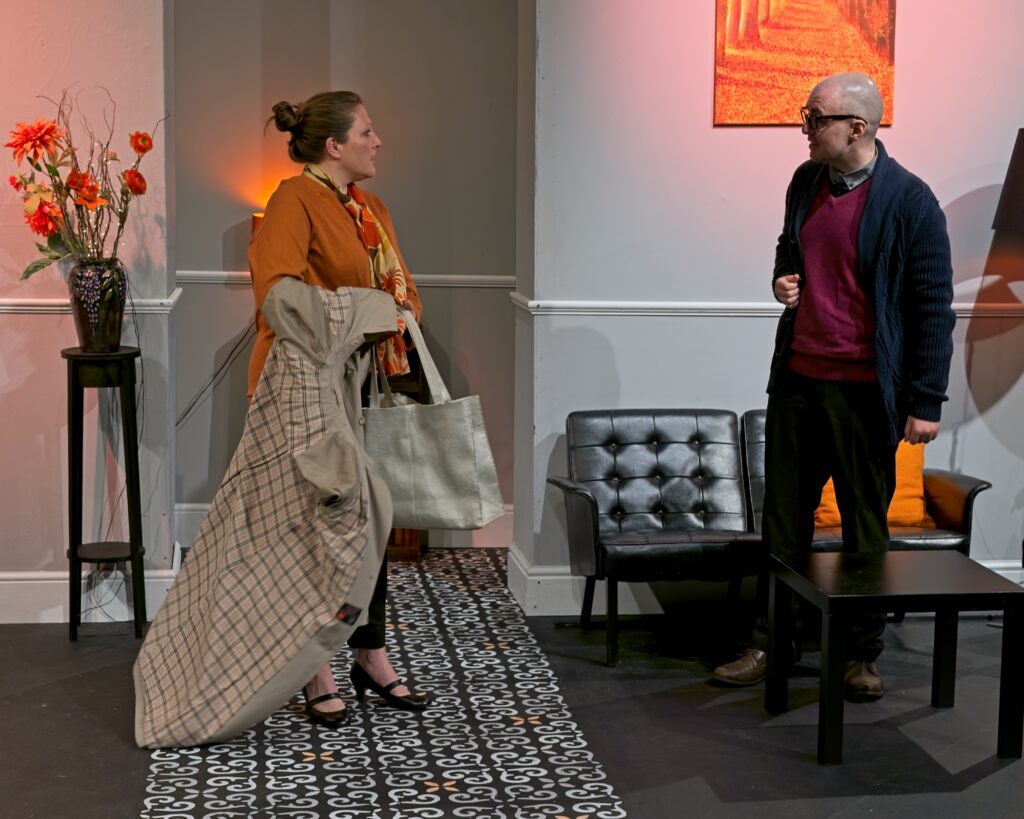
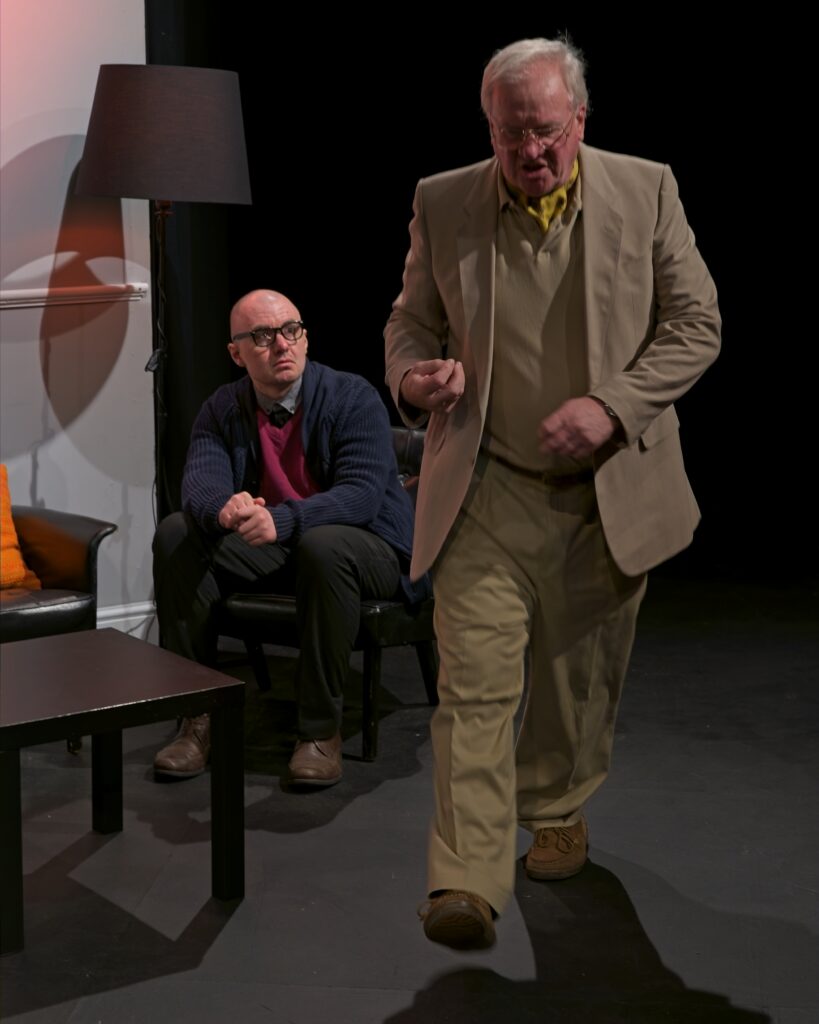
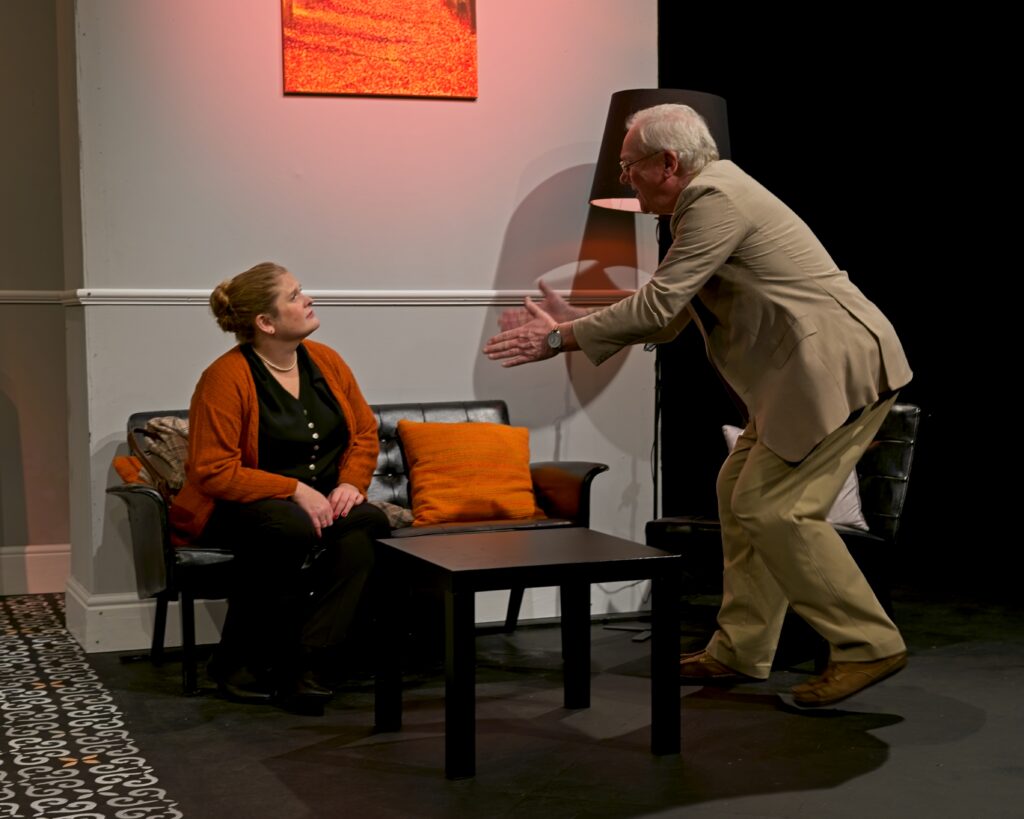
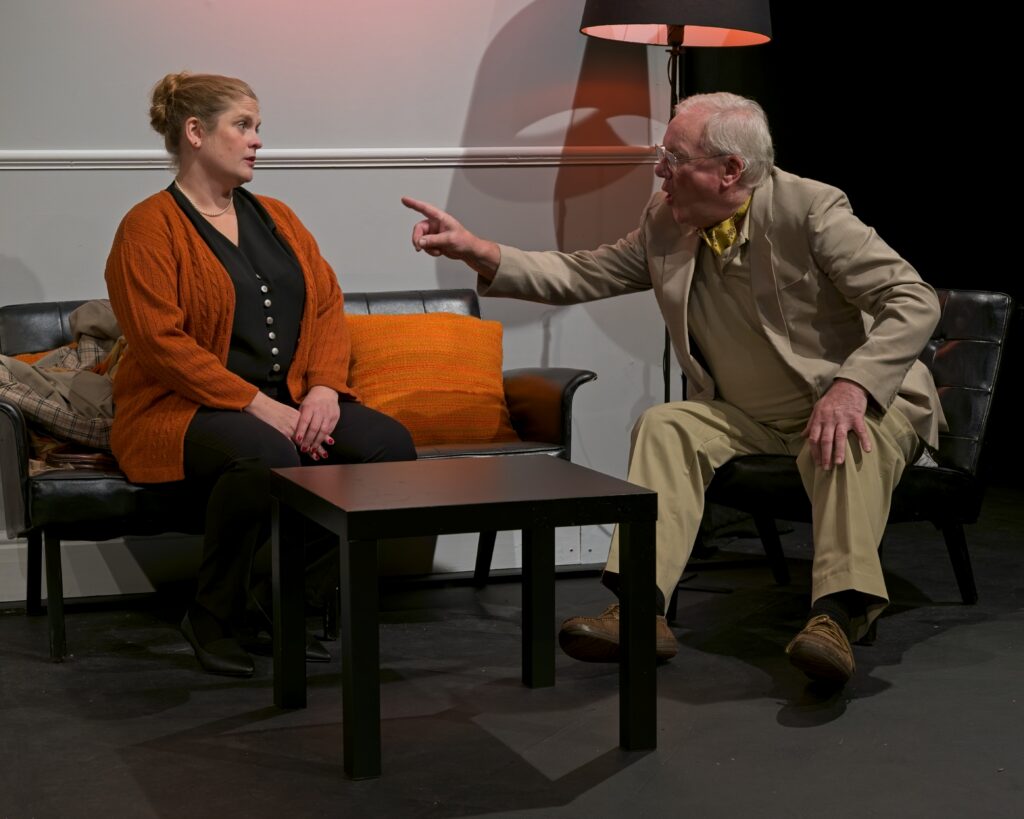
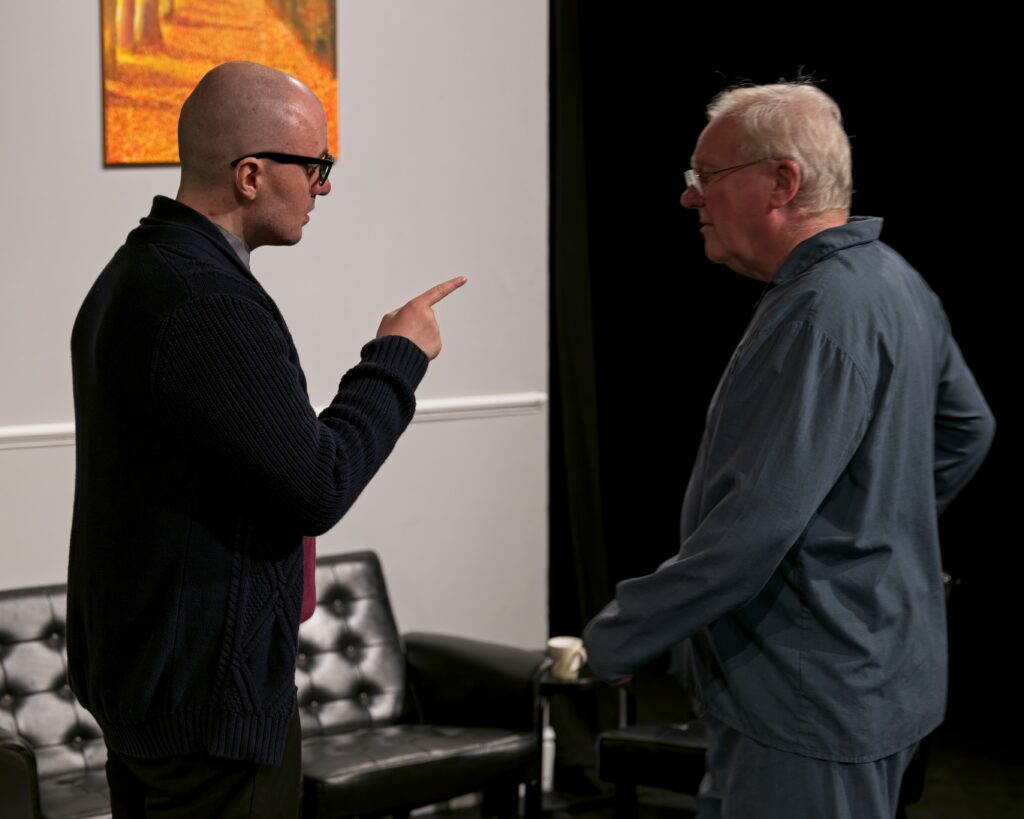
The scenes are played in a Paris flat (or possible two) – beautifully simple and stylish in grey with orange autumnal accent pieces which in fact extended to Jenny Whitlock’s choice of costumes too.
The design for this show was one of the most successful I have ever seen for it boasted its own beauty across all disciplines (lighting, sound, costume, set props) whilst always being true to the practical and symbolic aspects of the script. This, combined with the intimate space of the studio truly enveloped the audience in Andre’s world where everything is decaying in the autumn of his life. “I’m losing all my leaves” yet the warmth of familial love glows orange.
I have enjoyed Rory Byrne’s performances in the past but never so much as in this play. His professional level of character realisation was a joy to behold and the pain, bewilderment and pride was hauntingly played. Alongside him starred Katy Robinson, Rory’s real-life daughter playing Andre’s daughter Anne.
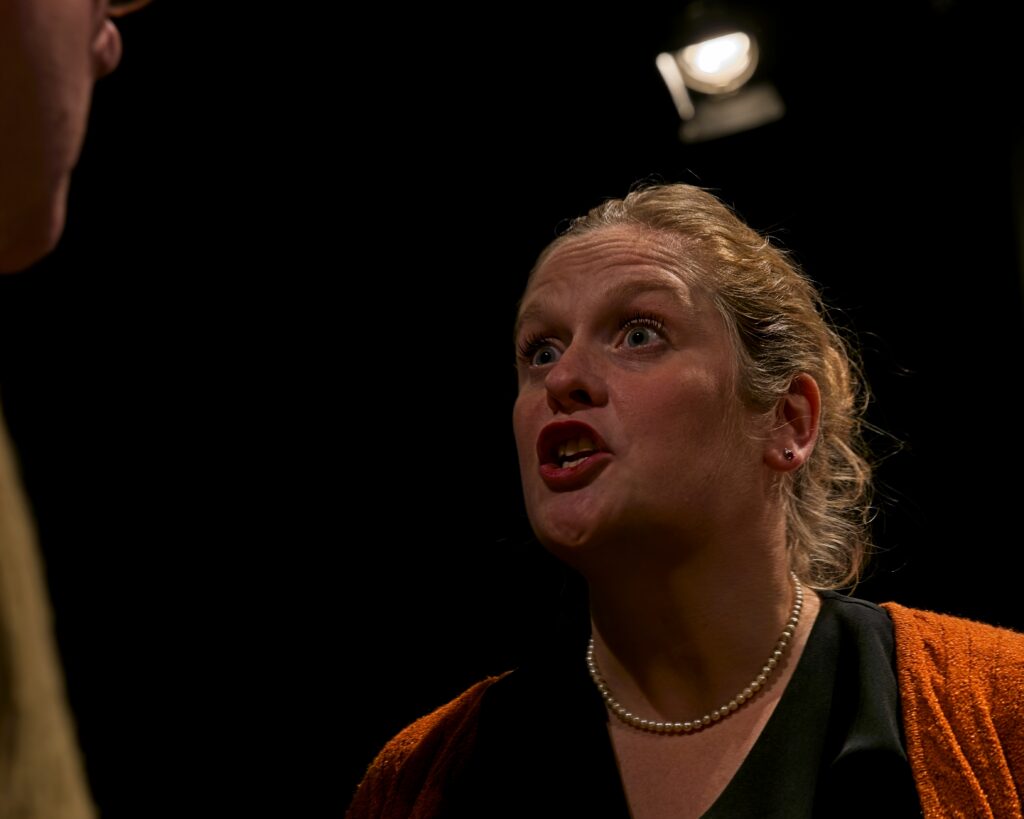
Their relationship was, as you might expect, thoroughly believable and Katy’s presentation of a woman whose patience, love and devotion were at times challenged was so identifiable.
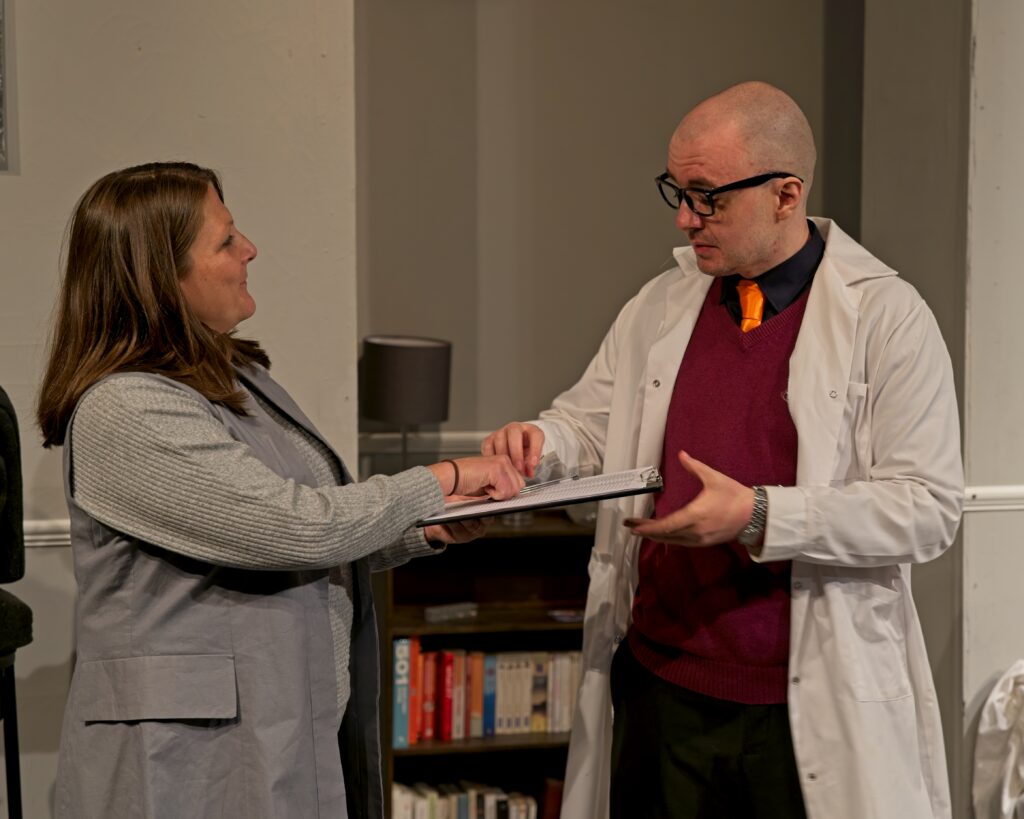
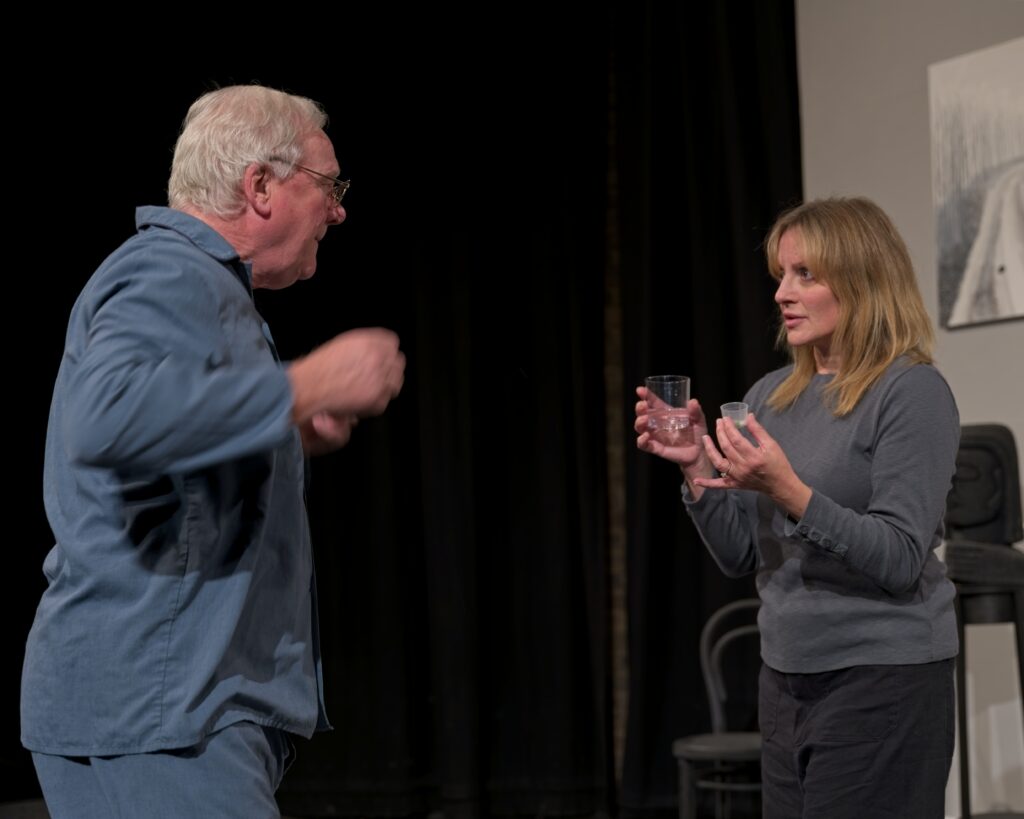
Matthew Hunter played Anne’s husband Pierre and “Man” with a brilliant balance of sympathy and sinisterness. Susie Evershed had the interesting dual role of “Woman” and possibly at times represented Anne, both of which she commanded with ease.
Noelle Hudson made her CoT debut as carer Laura who gave great depth to a reactive character. Watching her responses to Andre’s situation was a joy to behold.
In short, ‘The Father’ is an absolute triumph. Not just because of the superb acting and direction but due to the way every single aspect of this production works together.
The design, the choice of performance space, props (Nicki Marriott), the lighting plot (Jamie Jenkins) and the sound (Mial Pagan).
Philip Reardon should be extremely proud that his vision was so well realised. For many people dementia is an emotive subject and thus perhaps it might put some potential audience members off buying a ticket.
However, if this does apply to you, I urge you to think twice because I hope that like me, you will find it a cathartic experience. ‘The Father’ will certainly impact on how I interact with dementia sufferers in the future, trying my best to enter their world rather than always fighting to bring them back to “reality”. Thank you Company of Ten for an outstanding piece of theatre.