


05 Jun 2023
Surely it makes perfect sense? The idea that you are no more than 15 minutes away from essential amenities like a grocery store, the gym, parks, the cinema and school. Walk or cycle, it doesn’t matter, life is local. So why are the conspiracy theorists having a meltdown over the idea of the 15-minute city?
The concept was originally unveiled at the COP21 summit by Carlos Moreno, but contrary to some naysayers, was not about a total ban on cars, merely the idea that we should look at creating better living environments where driving should not be the first and often only option to reach amenities.
It gained further momentum with Paris Mayor Anne Hildago made it part of her re-election campaign, calling for more self-sufficient communities in the French capital, and has since been picked up globally by city authorities and planners.
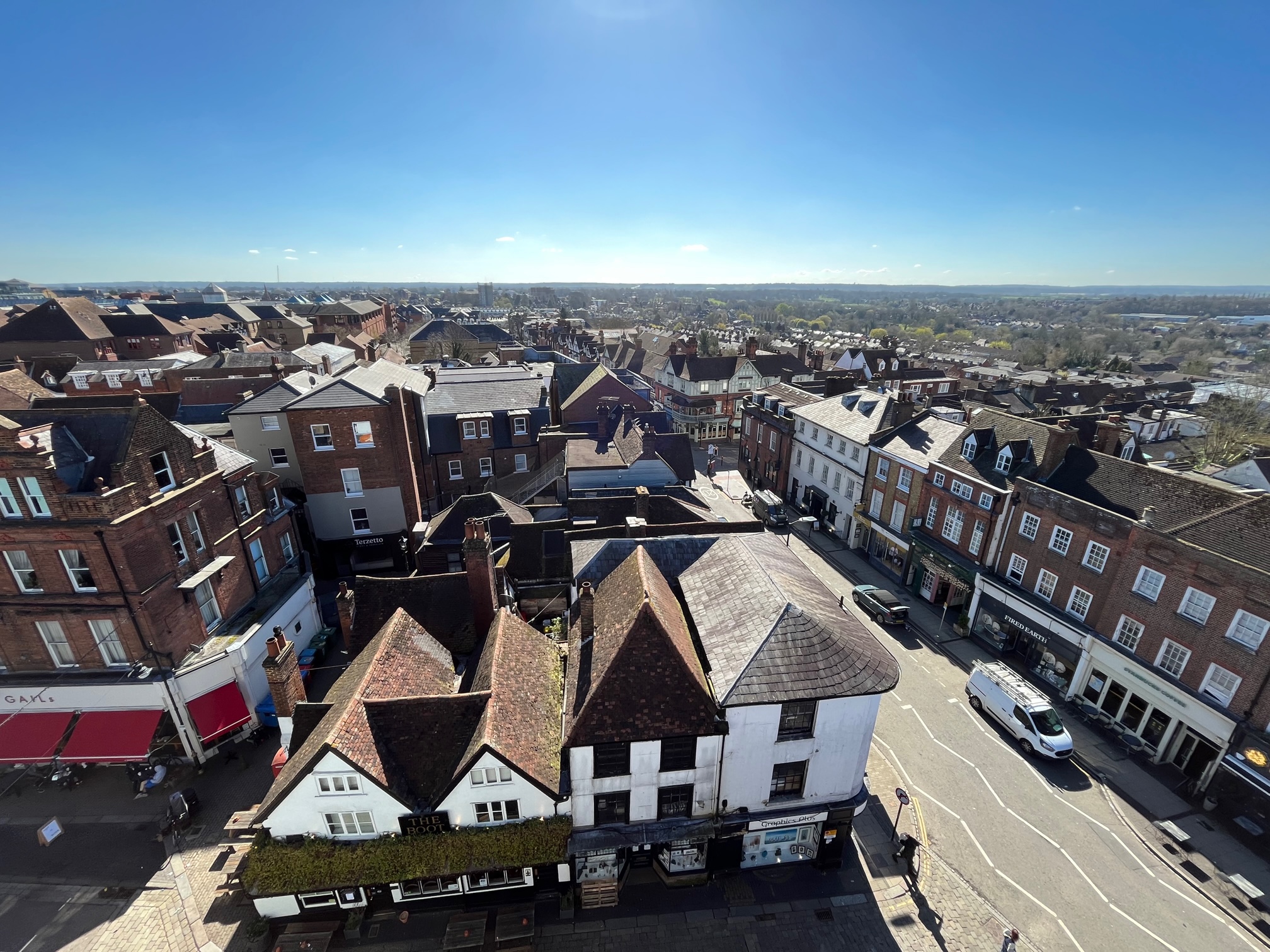
Locally, it is a theory adopted in the development of Jubilee Square – the CCOS South site – where developers Morgan Sindall Construction aimed to protect the city’s history while embracing modern and sustainable design.
Writing for New Start website, David Rowsell, area director for Morgan Sindall Construction – Northern Home Counties, said the aim of 15-minute cities was to have everything a resident or business needs situated within this space, including offices, parks, leisure venues, hospitals, restaurants, etc.
“This project is a great illustration of how a holistic approach to creating new developments can help cities adapt and better reflect contemporary living, working and leisure requirements. Achieving this requires a careful consideration of the environmental, cultural, economic and wellbeing values that are important to the local community.
“By paying close attention to these factors, we will ensure that the centre of St Albans provides a futureproof environment that fulfils Hildago’s objective for a 15-minute city, which is one that invents ‘a new history without forgetting its past’.”
However, conspiracy theorists posting on the St Albans Voice Facebook group claim the idea behind 15-minute cities is to restrict people’s movement to a certain area, and fine them if they try to leave their mandated zone.
One of the members warning of the consequences said: “People will be monitored by numberplate recognition via CCTV. Cities and towns will be divided into various ‘15 minute’ districts. You will be permitted 100 trips per household per year (upon application). Any trips outside of that will be incur a fine of £75 per trip. This is already being trialled in Oxford and St Albans is on the list.”
A group admin referred to the Morgan Sindall article as proof the concept will be introduced locally, even going so far as to linking it to the debunked ‘market masterplan’ whereby the Charter Market would be scrapped and replaced by massive street festivals in the city centre.
“This is surely proof that St Albans IS signed up to be what is loosely termed a ‘15 minute city’. A confirmation from SADC’s main contractor. Of course we have other sources of proof that this is the plan for St Albans and various indications of moves towards this are already manifesting themselves in terms of road closures and planned pedestrianisation of St Peter’s Street, raised parking charges and what appears to be the gradual clearing of the taxi rank in St Peter’s Street…
“Of course the market changes are part of this grand masterplan which is no ’myth’ but actually happening in St Albans slowly and step by step, little by little and in secret as much as possible. Morgan Sindall confirms this is no myth.”
The Oxford model is actually a means to restrict car use through residential parts of the city at peak hours, and certainly nothing like what the far-right media personality Katie Hopkins has warned about. She compared the scheme to Covid lockdowns and claimed authorities will use facial recognition technology to restrict people to 15 minutes of freedom a day.
But another St Albans Voice member offered his alternative take on the issue: “Just trying to understand all this. So the government has a secret plan to make everyone stay within 15 minutes of their homes. Only it’s not a government plan it’s the Lib Dem-run St Albans district council who have the secret plan. And this secret plan would stop the at-least 25% of the population of St Albans who go to London, Watford and Hatfield for work from being economically active.
“Which you would think would be bad for the city, but it will benefit councillors who have businesses in Christopher Place, as because no one will be able to get to work they will be forced to go to coffee shops in the closed-off High Street. A bit weird that government has spent billions on road and rail schemes over the last ten years, if they knew SADC were going to stop people going more than 15 minutes from their home, but that just proves it’s a secret scheme that only people like Katie Hopkins and Lib Dem councillors are party to.”
Local politicians have also spoken out against the rumours being bandied about online.
Cllr Simon Grover, leader of St Albans Green Party (pictured), said: “Conspiracy theorists have managed to turn 15-minute cities into a controversial issue, when they don’t need to be. Properly planned and carefully implemented, they promote multiple benefits, from health and exercise to reduced emissions and more neighbourliness.
“For some people, who think that streets are for cars and everyone else takes second place, there needs to be a bit of a culture shift. Streets were originally shared spaces – certainly in places like St Albans, and they can be again, with users respecting each other and a hierarchy of users based on, amongst other things, vulnerability. Proper consultation and area-specific measures are essential if the changes are to be successful and understood.”
Council leader Cllr Chris White dismissed the concept’s local relevance in terms of planning: “Not so long ago it was the 20-minute city! It’s a vague planning idea which suggests that you should design new settlements so that most things (primary schools, shops etc) are a maximum of 15-20 minutes away. So it is not especially relevant. In any case in our established settlements it’s more or less the case already so the concept adds zero to the planning discussions.”
And when it came to limiting traffic movement he was also more realistic about what residents would welcome, with the county council being responsible for any restrictions as the highways authority.
“Restricting movement is always contentious and in a district with a complex geography [like St Albans] close to impossible without huge knock-on impacts.
“Herts CC has come up with a couple of proposals: one, in the Sopwell lane area, got a massive thumbs-down last year. Another in Fleetville would clearly never have got public support given the level of potential road closures: as a result the county council is now looking at something closer to a 20mph zone.”
We also spoke to David Lane, from local firm DLA Town Planning, a chartered town planner with more than 40 years experience in planning in both the public and private sectors.
He said: “It all goes back to Ebenezer Howard’s garden city movement, and the creation of a self-reliant community with a balance of land use.
“All amenities were planned in one self-contained neighbourhood, with shops, pubs, primary school, open space all within walking distance. But you don’t have to use them. It’s about choice.
“People are over-reacting and not looking at why there’s a need to restrict cars and traffic – stopping residential streets being used as rat runs makes them much safer for children, cyclists and pedestrians.
“We already restrict people’s movement to an extent by the use of traffic signs and speed limits, and this just means the exit routes from neighbourhoods are curtailed to major routes.”
