


30 Sep 2026
It’s OK To Say founder and CEO Stacey Turner reflects on separation anxiety...
Last week, I wrote about the many changes that come with going back to school for children, young people and parents, guardians and carers too, and let’s include grandparents. But there is another part of September and even October that can be particularly difficult for some families, and that is separation.
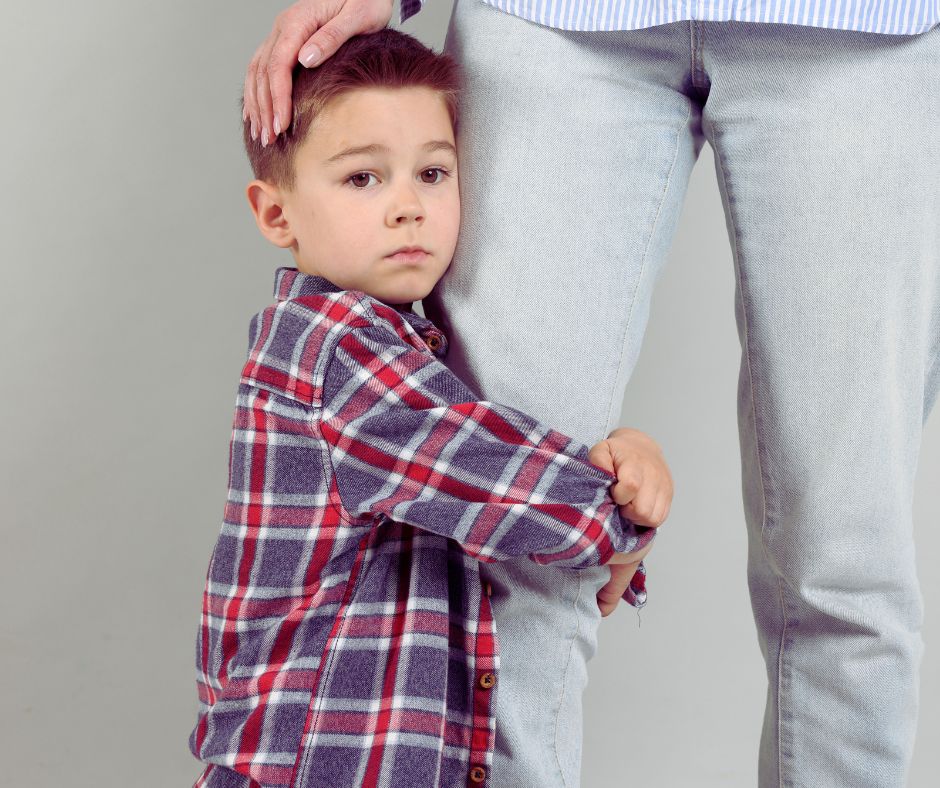
We often hear the words separation anxiety and immediately picture a small child clinging to their parent or guardian at the school gates, crying as they walk away.
And yes, separation anxiety is a very normal part of early childhood. But it doesn’t always disappear simply because a child gets older. It can return during times of change, stress or uncertainty, and for some children and teenagers, being away from the person who makes them feel safest can feel genuinely overwhelming.
Believe it or not, separation anxiety can actually be a show of your connection with your child – and, in a strange way, a compliment. You are their safe person. You are the person they trust, the person they know will look after them, and the person they feel safest with. However, that doesn’t mean we should simply accept it as something they have to live with, or that we should feel guilty every time we walk away.
A strong connection is wonderful, but our children also need the opportunity to develop confidence in themselves and discover that they can feel safe and capable even when we aren’t right beside them.
Sometimes separation anxiety is obvious. A child may become tearful, clingy or distressed on the way to school or when you leave. They may struggle to settle at school, repeatedly ask when you are coming back, worry that something terrible might happen to you, or find sleepovers, school trips or even seeing friends difficult.
Other times it can be much harder to recognise. Tummy aches, headaches, feeling unwell on school mornings, disturbed sleep, irritability, avoidance or suddenly not wanting to do things they previously enjoyed can all be signs that anxiety is sitting underneath the behaviour.
And this is where I think we sometimes need to pause.
Because when a child says, “I don’t want you to go,” it can be tempting to respond with, “You’ll be fine,” or “There’s nothing to worry about.” We mean it lovingly, of course. We want to make the worry disappear. But for a child experiencing anxiety, the feeling is very real. What they often need first is for us to recognise it: I can see this feels really hard today. Tell me what you’re worried might happen.
That conversation can tell us so much.
Perhaps they are worried something will happen to you while they are away.
Perhaps they are worried about being unable to cope without you. Perhaps something has changed at school. Perhaps they have had a difficult experience that has made the world feel a little less predictable.
Or perhaps they simply need some time and support to rebuild their confidence after a long period of change.
Perhaps we can think about it as three simple steps: notice, express and support.
Notice. Start by noticing the changes and patterns. When does the anxiety appear?
What seems to trigger it? Is your child suddenly complaining of tummy aches on school mornings, struggling to sleep, becoming unusually clingy or avoiding things they would normally enjoy? Behaviour is often communication, and sometimes what looks like reluctance, anger or “not wanting to go” is actually a child telling us that something feels difficult.
Express. Find a way to help your child get those feelings, niggles and worries out, rather than keeping them all inside. And this will look different depending on their age.
For a younger child, you might suggest expressing feelings through colour – perhaps painting or colouring how they feel, choosing a colour for their worry or drawing what is happening inside their head. It doesn’t have to make sense to anyone else.
The important thing is giving the feeling somewhere to go.
For an older child or teenager, you might try something a little less “little child”. At It’s OK To Say, we might use something like a Feelings Monster – a place where they can write down a worry or niggle on a note and then physically post or zip it into the monster’s mouth. There can be something surprisingly powerful about writing down the thing that’s been going around in your head and then getting it out.
It doesn’t need to be complicated, and it doesn’t necessarily need to be a big conversation. Sometimes it’s simply about creating a safe way to say, this is what’s bothering me, without having to sit down face-to-face and explain everything.
The idea is to help children and young people learn that feelings don’t have to be kept inside. They can be expressed, shared, understood and worked through.
Sometimes, once a worry is outside of our heads, it can feel a little less overwhelming.
Support. Once we’ve noticed and helped our child express what’s going on, we can think about what support they might need. That might be reassurance, a predictable goodbye routine, practising small periods apart, talking to school, or simply knowing that someone is listening.
We can certainly help you find age-appropriate ways to do this at It’s OK To Say.
Sometimes the right starting point isn’t asking, “What’s wrong?” but finding a way of saying, “Let’s get some of those niggles out.”
There isn’t one magic answer, but small, predictable steps can help and we can get creative. Talk about what is going to happen before the separation rather than only in the moment. Create a simple goodbye routine. Practise small periods apart where appropriate. Let them know when you will return and, importantly, follow through.
A familiar object, a little ritual or something that connects them to home can also provide comfort.
And remember, confidence doesn’t usually arrive before we try something. Sometimes it grows because we try it.
That doesn’t mean forcing a child through something they find frightening. It means listening first, understanding what the worry is telling us, and then finding manageable ways to help them discover, I can do this. I can be away from my parent or guardian and still be safe. And they come back.
There is also something important here for us as parents, guardians and carers. We can feel separation anxiety too. We can worry about leaving our child, especially if we know they are struggling. We can feel guilty walking away when they are crying.
Sometimes their anxiety meets ours at the school gate, and suddenly neither of us feels particularly confident.
So perhaps this September, instead of seeing separation anxiety simply as a difficult goodbye, we can see it as communication. A little person, or even a much bigger one telling us that something feels difficult and asking us, in whatever way they can, to help them understand it.
If you’re unsure whether what you’re seeing is separation anxiety, start by noticing the pattern. When does it happen? What seems to trigger it? What does your child say they are worried about? And how much is it beginning to interfere with everyday life? If anxiety is persistent, getting worse or affecting school, family life, friendships or activities, it is worth talking to your GP, school or another appropriate
professional.
At It’s OK To Say, we talk about mental health because understanding something can be the beginning of changing how we experience it and we have anxiety specialists. You can find out more about our work and the support available at itsoktosay.org.uk, including resources and information to help recognise worries and start conversations.
Because sometimes the most helpful thing we can do isn’t to make the worry disappear. It’s simply to make sure our child doesn’t have to carry it alone.
It really is OK To Say, “I’m finding this hard.”
