


08 Aug 2025
The fascinating lives of Harpenden residents which would otherwise be lost to the mists of history have been collated and preserved for posterity.
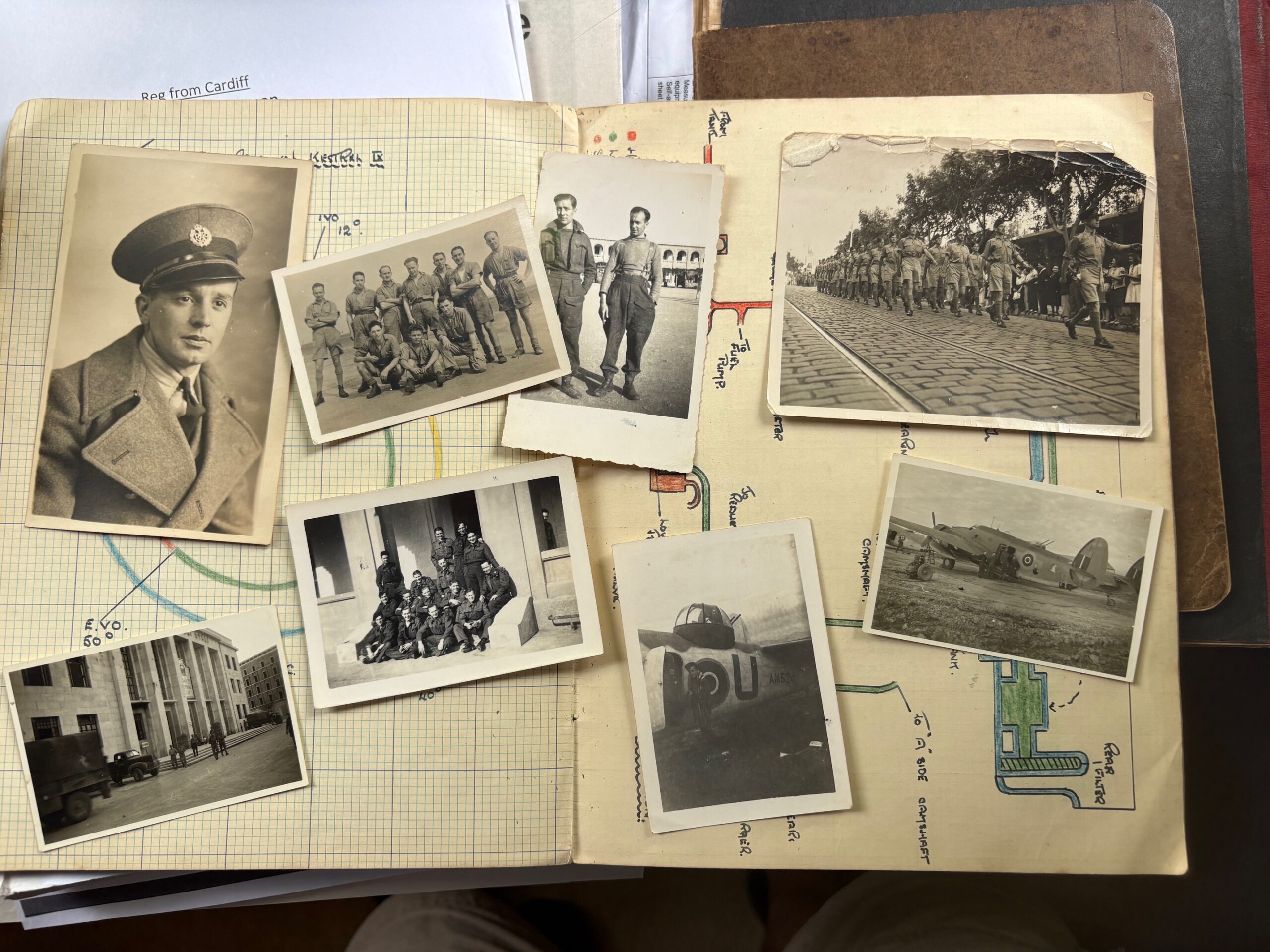
Social worker Andy Strowman has lived in the same house in Roundwood Lane for more than 15 years, but resided in Harpenden for 40. During this time he has recorded oral accounts from people he has met around the town, for no other reason than he doesn’t want them to be forgotten.
But he fails to realise that his own life is no less interesting than those he came to record, and just as worthy of preserving.
Sitting in an old wooden chair in the front room of his house, surrounded by scrapbooks and folders, Andy is obviously delighted that someone has taken the time to listen to his stories.
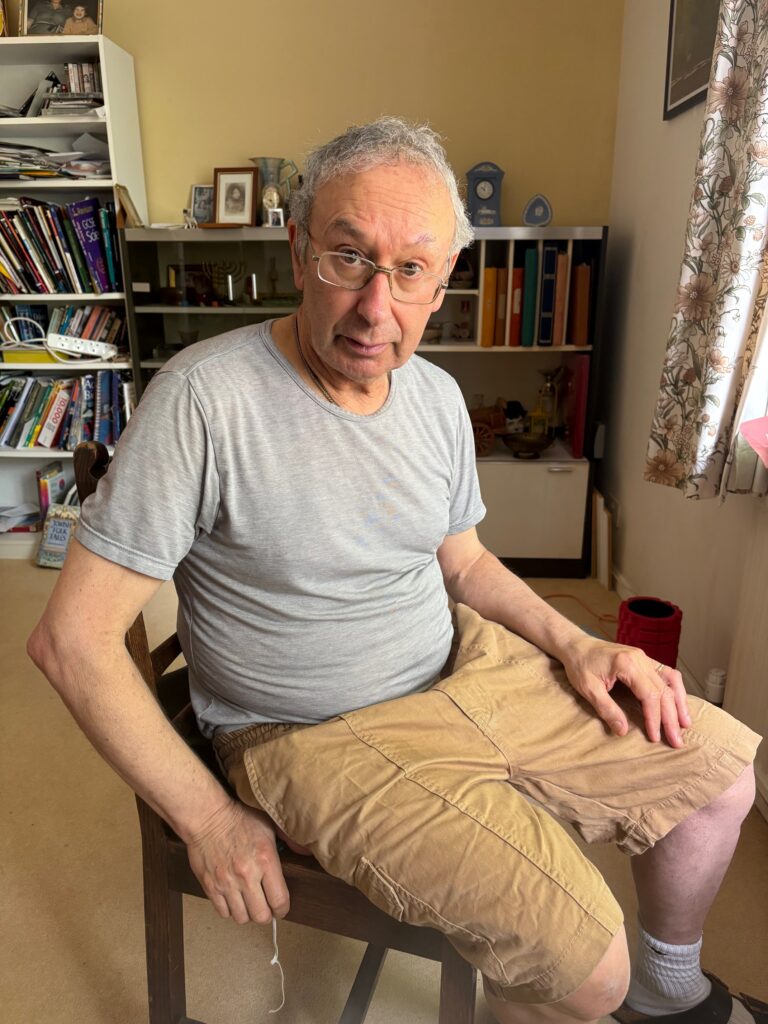
He explains how his grandparents escaped the Jewish pogroms which took place in Lithuania – then part of Russia – in the 1880s, and settled in Stepney in London’s East End – what is now Tower Hamlets.
His father was an American serviceman who came over during WWII and met his mother at Piccadilly Circus, with Andy born in 1953. “Where I lived the street was 150 years old when I was born. Second oldest street in the whole of the borough of Stepney.
“You have to remember, everything was very basic then. We didn’t have a bath. We had an outside toilet. We had one little cob fire, if we got that going, and that was it. My three brothers, we all slept in the one room with a bucket to catch the drips.
“Like most of my family, we were machinists in the garment industry. We used to call it the schmutter trade. My auntie, my mum was a milliner, my Uncle Jack, my Uncle Barney, Uncle Davey, they were all in it.
“In fact Uncle Davey was a cutter, which is probably one of the better jobs, probably the best job you could have. I worked in the factory when I was 14.”
Andy recalls one occasion as a young man when he had cause to visit Whitechapel: “I had been talking a man in an army surplus store and was told by the person who worked there afterwards that he was a relative of President Eisenhower.
“In those days you could just call up the American Embassy to ask, and a few weeks later I received a letter from [the President’s wife] Mamie Doud Eisenhower confirming that he was in fact, related.”
The man, John Kling, who went on to become one of Andy’s good friends, also served in the Eighth Army in the war.
“He had a broad smile and a giddy laugh,” Andy recalls.
It’s the sort of story he has in abundance. Anecdotes he pulls out of time and recounts in an accent which still holds traces of the old Jewish East End.
“My grandmother, her best friend was a woman called Bela, who lived two doors away, Polish. My mum always used to send me over there to see how she was. I was probably eight, nine, can you imagine that happening now?
“Anyway I use to go there, and to be honest, I liked going to see her. She was very different, One eye was very, very bloodshot, and she walked with a stick.
“She used to tell me stories about what life was like in Poland. One day, she told me that she’d gone to live with her grandparents, who owned a little shop in this village.
“She told me she used to wash the clothes in the river for her grandmother, her grandad and herself. Once a month her grandparents would go into town to get supplies, and while she was washing the clothes a man on a horse came along she’d never seen before.
“He had a helmet on and was dressed in army uniform. She was just 14, and had never seen anything like that. He got off the horse and started talking to her, and she said he was very nice and very polite.
“After he left, she finished the washing and went back to her grandmother. Well her grandmother was absolutely beside herself, so furious for what she’d done. She had put herself at tremendous risk, she said, because that man was a Cossack and they were known for their brutality, for raping young girls and killing people, whatever.
“They were butchers, and the Tsar used them in that way, so on that particular occasion, she was very lucky…”
Andy moved to Harpenden in 1973 to study horticulture at Oaklands College, leaving behind his old life as a warehouse worker and settling in what was still very much a village, eventually starting his own gardening business.
It was this venture which resulted in him encountering a broad cross-section of Harpenden residents, and eventually getting to know their stories.
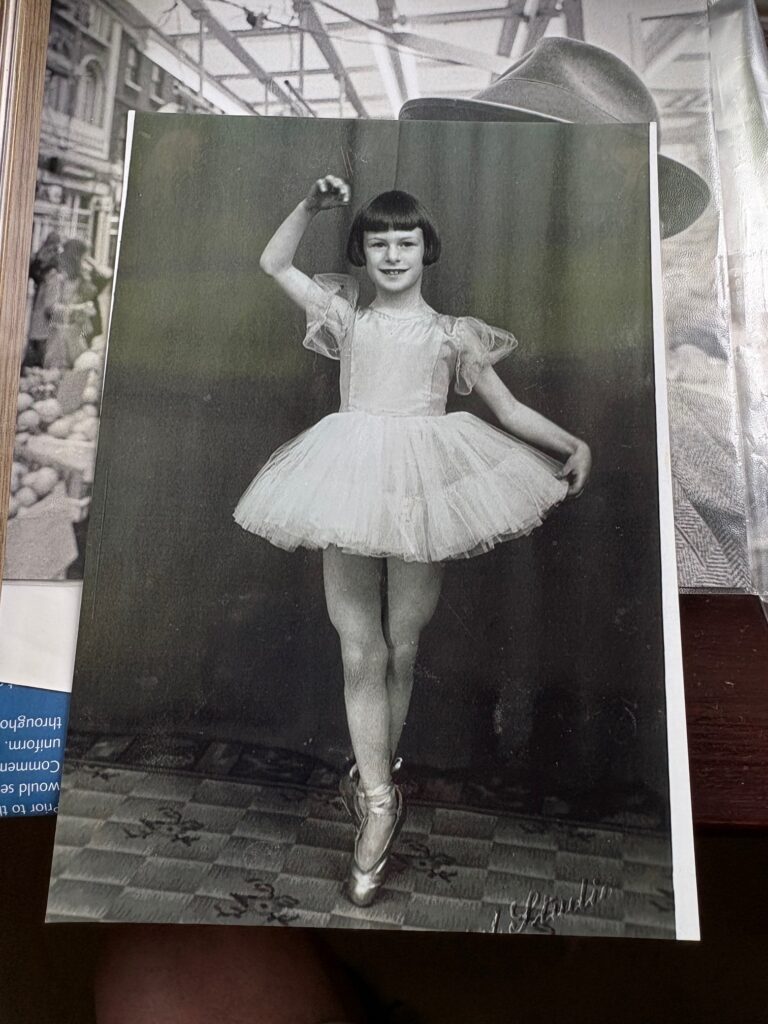
Living next door to him was retired professional ballet dancer Flora Macdonald Whittaker, who had kept secret her memories of a horrific experience shortly after the end of the war.
“I used to knock on her door about three or four times a week, and one day I said I’ve been to the Rose Garden and lit a candle, because it was Holocaust Memorial Day, and she said, ‘well I was there’.
“At first I didn’t realise what she was talking about as she hadn’t been with me at the Rose Garden, and then I realised and I got a bit wobbly, I held on to the baluster, and that’s when I asked if I could come in.
“She started to talk to me, but for a long, long time before this, she had never talked to her family about it.”
Flora confided how she had been just 17 when she joined the armed forces entertainment service to raise morale among the front-line troops still stationed in Europe following the fall of the Third Reich.
“She had been working in the West End when the group she was performing with were approached by recruiters who were looking for volunteers. The man said, ‘how old are you?’ and she said 17, but he replied ‘well you’re supposed to be 18 but never mind, you’ll be 18 when you get back so you can come’.
“So she went to various parts of Germany by train with a group, and one of the places she visited was Bergen-Belsen concentration camp…”
He pauses, voice breaking slightly: “It’s not easy to talk about this sort of stuff…”
Then continues: “She said there were all these people there who just looked so lost. They were just wandering about with nowhere to go, and she kept repeating this to me, ‘nowhere to go’, and there were piles and piles of clothes and shoes, just stacked so high, but she couldn’t understand what was going on.
“Then this little girl appeared, and two British soldiers digging a trench encouraged her to go up to the tour group, so she went up to Flora, curtsied, and said ‘cioccolata, cioccolata’ as she was obviously Italian. But they didn’t have anything to give her, and when she smiled every single tooth in her mouth was black.
“Flora said they put on the shows for the troops, but weren’t really allowed to circulate with the other people…”
She only found out later that they were the survivors of the Nazi regime’s inhumane Final Solution, liberated by the Allies before they were exterminated.
Flora is much better known in her native Leigh, in Lancashire, but despite his efforts, Andy hasn’t managed to share her story in any Harpenden schools: “I think it’s a disgrace they haven’t wanted to talk about her.”
He met Reg Parrish, originally from Cardiff and then living in Station Road, some 30 years ago.
The 80-year-old veteran, who was at the time suffering from a brain tumour he was unaware of, revealed how he had found his wife dead on the couch after coming home from work.
“Reg went into Bergen-Belsen concentration camp, and after what he saw there he vowed he would never have any children and bring them into this world…
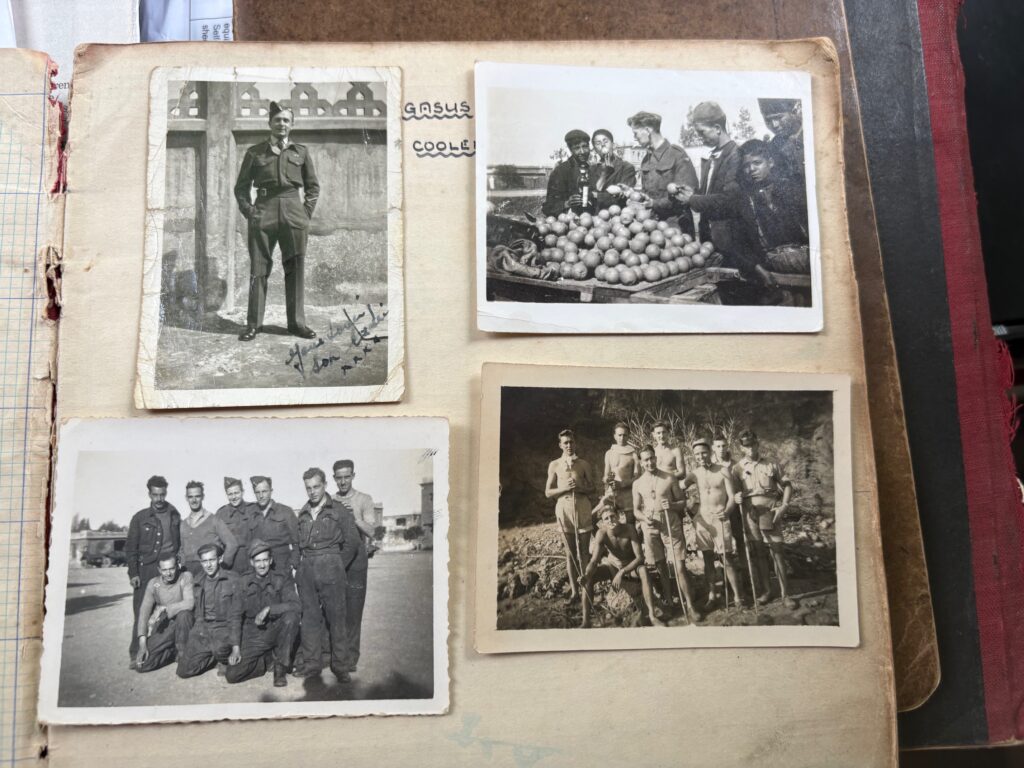
“One evening he brought out a photograph album and opened it ever so carefully. Inside were black and white pictures from when he was in India during World War Two.
“’These were my mates Andy,’ he said. ‘They were all great blokes. I stared at a photo showing a group of young soldiers and asked Reg simply, ‘Are any still alive?‘
“Tears appeared in his eyes. ‘They all died. Every one of them. What did they die for? Why couldn’t I go with them?’ Reg said.
“He shut the book, ‘I’ll go and put the kettle on,’ he said with a whisper. I sat and listened to the clock ticking and heard sniffling coming from the kitchen, then Reg’s voice, ‘They were all great blokes. Bloody great blokes.”
I met Reg’s sister in Eastmoor Park while on a gardening job and she gave me copies of those pictures as she was from the East End like me.
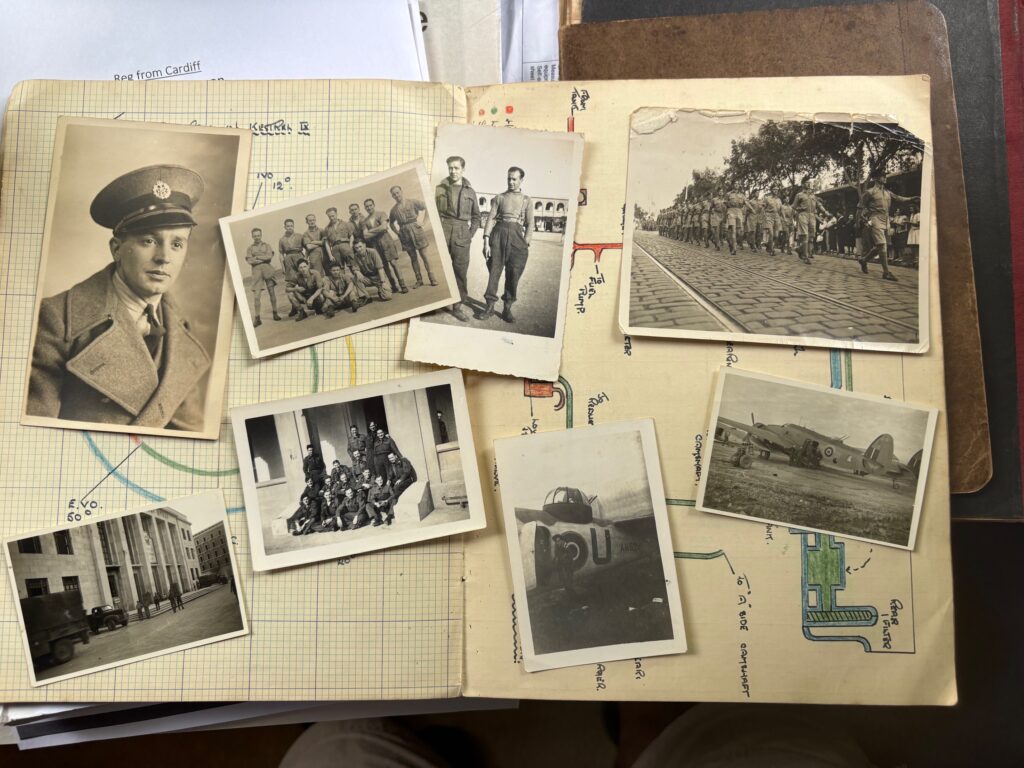
Spitfire mechanic Eddie Girling, who lived near Andy’s previous home in Ox Lane, left him his his original workshop and laboratory records, together with scrapbooks of photos from his time in service.
“Another guy I worked for in Wheathampstead, Alan Rose, was also a Spitfire mechanic. He went out to Germany after the war and said people would come up to his group and say ‘it was nothing to do with us, we didn’t know anything about it’, and that’s before they were even asked any questions. It was really bad.”
Another was Luton resident Eric Trott, who became a close friend and entrusted him with photos he had taken when he went to Bergen-Belsen with the Royal Army Medical Corps and found survivors of what the Nazis called a “breeding hospital”.
A deeply private man, he had not disclosed to his family anything of what he had experienced, but gave Andy two photos – one showing a skeletal Jewish man being supported by British soldiers, the other of bodies piled in a pit at the concentration camp.
About four years ago, Andy resolved to donate them to the Jewish Museum in Berlin after Eric died.
“When I went to Germany, I didn’t go there with any prejudice, but I was shocked there was nothing on display anywhere in Berlin which highlighted that any of this had gone on, not even in the Jewish Museum, where they had no interest in taking the photos.”
Andy eventually ensured Eric’s photographs and memories are now housed in Israel’s Yad Vashem Museum.
His eyes mist over when he recalls a similar experience in Poland.
“I used to go by coach from London Victoria to Gdansk, it took about 27 hours, and because you’re likely the only English person there, everybody is speaking Polish.
“I thought I’d better check I was getting the right coach and sparked up a conversation with a woman who was also waiting. We started talking about what life was like growing up in England, and I showed her a picture of my family.
“She stared at it hard, and she said to me, ‘Are these people Jewish?’ and I said, yes, yes, they are. She went quiet, and then she said to me, ‘I think you’d better put this picture back in your pocket, and never show it to anybody when you come to Poland.
“What a thing to say? Can you imagine that here? You couldn’t, could you? Then she said, ‘I’ll tell you why’, and I went very quiet like you’re doing.
“She said, ‘I’m going to tell you a story. During the war, my grandparents were living outside of Poznań, and one night it was raining hard when about one o’clock in the morning, there was this banging on the door. My grandmother came downstairs, and there were three people on the doorstep, a woman and a man and a young child, and she knew they were Jewish. So my grandmother spoke to them, and the woman started pleading to let them come in and stay there, so she knew they were on the
run. So she let them in, took them upstairs, and for three months let them stay there; fed them, didn’t charge them any money’…”.
Andy pauses: “The woman who told me the story said the rest of the family thought the grandmother was foolish, because it was
dangerous as well. Anyway, one Sunday morning a black car pulled up outside and a man from the Gestapo banged on the door. The grandmother opened it, he pushed her aside and came into the kitchen, looking around. He then went up the stairs, into the room with the family was, and fired three bullets
Then he came down the stairs, got into the car and drove off.
“I didn’t realise how the Holocaust still affects people. When I got to Gdansk I mentioned to a local woman that I was Jewish and she backed away like I was Dracula or something.
“Even the Jewish people I met in Warsaw said, ‘you know, we don’t talk about being Jewish here, there’s still some bad atmosphere about’.
“That’s why it’s so important to remember these stories of people that have had that first-hand experience of what’s gone on.
“You look at the world today, and there is a danger that we forget the lessons of history. The rise of the right wing in so many countries around the world, it’s terrifying that we could see it all over again.”
It’s time to go, but not before Andy shows off poems he has penned about some of the people he has met, and offers one final explanation for his fascination with other people’s lives.
“I always look for the underdog. That’s why I’m doing it. I don’t get any money out of this or whatever, any glory. I’m not in it for myself.
“I just think that people like Flora, people like Eddie, people like Reg Parrish, they deserve their stories to be remembered. It is never too late to appreciate people . Be kind, be polite, and caring to others . You might be the only one to do so.”
Andy Strowman has written a selection of poems about some of the people he has encountered…
Looking back (in memory of Private Eric Trott)
Looking back over the years ,
The vistas, the people, and the scenery,
What was it worth ?
My factory life,
Gave me tomorrow’s rules today.
Left me enough for a small squeeze of tobacco,
Some margin assemblage of pay .
I only did what people told me to achieve ,
I only saw what the angels wanted me to believe ,
Now,
It’s over.
I waited for a Jew.
Someone to pass the photos on to,
Someone like you .
The lessons I learnt from her:
Imperial war,
Are memories and pain,
From people I swore
To stay with me .
As I remember now
On bended knee.
Kind people (for Flora Whittaker)
Such people like you
Make the winter grey go away.
Flora, you gave us hope,
And made your sunshine stay .
Flora, you are a tribute,
A magnificent example to all .
That kindness costs nothing
It’s like building a permanent love wall.
You walked the deserted poor streets,
You spoke to the military how
To give back the meaning of lunches,
Inspired a little girl in the Bergen Belsen camp
To curtsy and bow.
Is there a road really worth saving?
Must we always give up?
For silence will come softly waitin ,
Looking like a stranger for love.
Any school, college, day centre or other organisation that would like Andy to tell his stories is asked to get in touch by emailing him direct at andy.strowman1@gmail.com
