01 Oct 2024
To mark the 90th anniversary of Verulamium Park and Lake, Dr Robert Wareing, who regularly walks the park with his wife Linda, has undertaken a labour of love to research its history and to celebrate its place in the heart of St Albans residents.
Significant challenges face Verulamium Park and lake. The need for improvement is overwhelming and St Albans is on the threshold of implementing ambitious and wide-ranging multi-million pound plans for revitalising the River Ver and the lake, and thus Verulamium Park.
But will these plans be a bright new sunrise or a yet another false dawn? Because over the years a number of plans have come and gone… and yet fundamental chronic problems remain unresolved.
In this final piece of my series I will first look at the need for change: the chronic – and now, acutely – poor state of the River Ver and lake, together with persistent flooding problems. Next, I review the changes proposed and the way proposals have divided opinion. And, lastly, I highlight three key missing – but essential – links: finance, maintenance and trees!
The River Ver
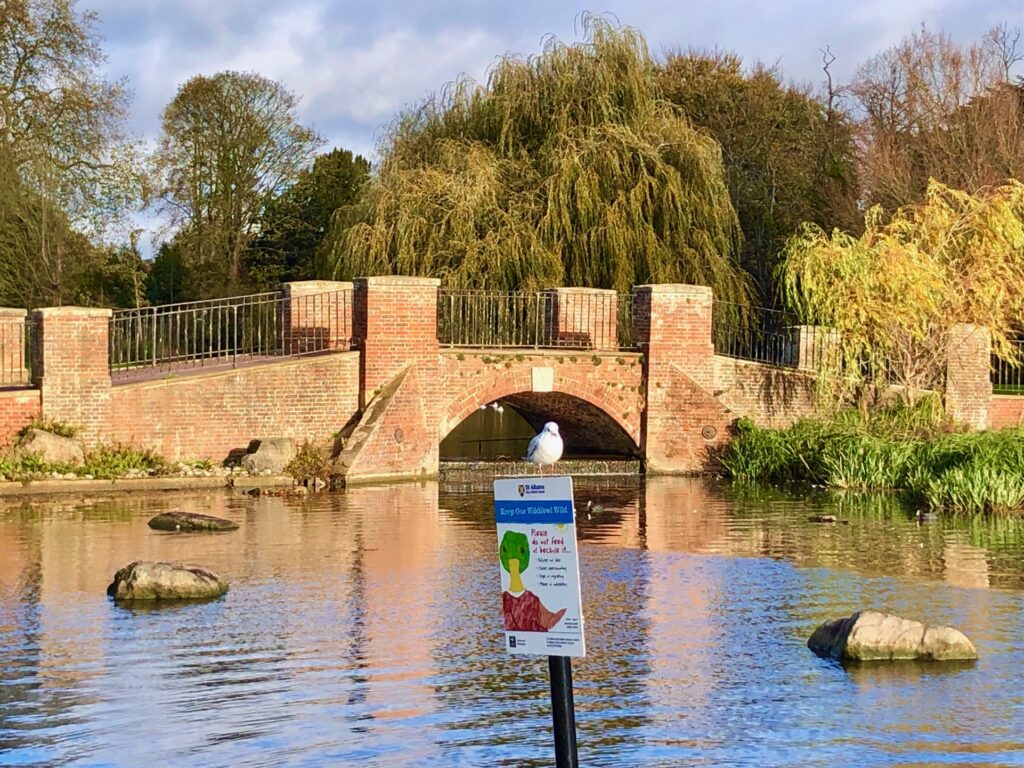
Starting at the beginning, the source of the lake. The lakes were originally designed to receive a constant flow of water from the River Ver. The River Ver flows through Verulamium Park and the heart of the city. It is one of only 200 chalk rivers in the entire world.
Chalk rivers are fed from the chalk aquifer (the underground layer of rock saturated with groundwater). They are naturally crystal clear and support a huge diversity of habitats and wildlife. Their rarity and importance have led them to be described as ‘England’s Rainforest’.
Unfortunately, like many chalk rivers, the River Ver has fallen into a bad state. In Verulamium, the sides of the river channel have been lined in concrete meaning there is no habitat for freshwater wildlife. The route of the river channel has been moved from the valley floor to support industry such as the silk mills and there is no effective gradient which makes the river more like a pond and leads to silt building up. These factors contribute to the gravel bed being smothered with a thick layer of silt. and water cannot percolate through the gravel bottom as in natural chalk streams.
The river is also unable to support the beautiful chalk stream plants we would like to see. One reason is that the river channel is overshadowed by trees which prevents light reaching the river which is necessary for chalk river plants to thrive.
Verulamium Park Lakes
Built in the 1930s, the iconic ornamental lakes of Verulamium Park are also in a bad way. Effectively, the large lake is a seven acre concrete basin which is not especially eco-friendly.
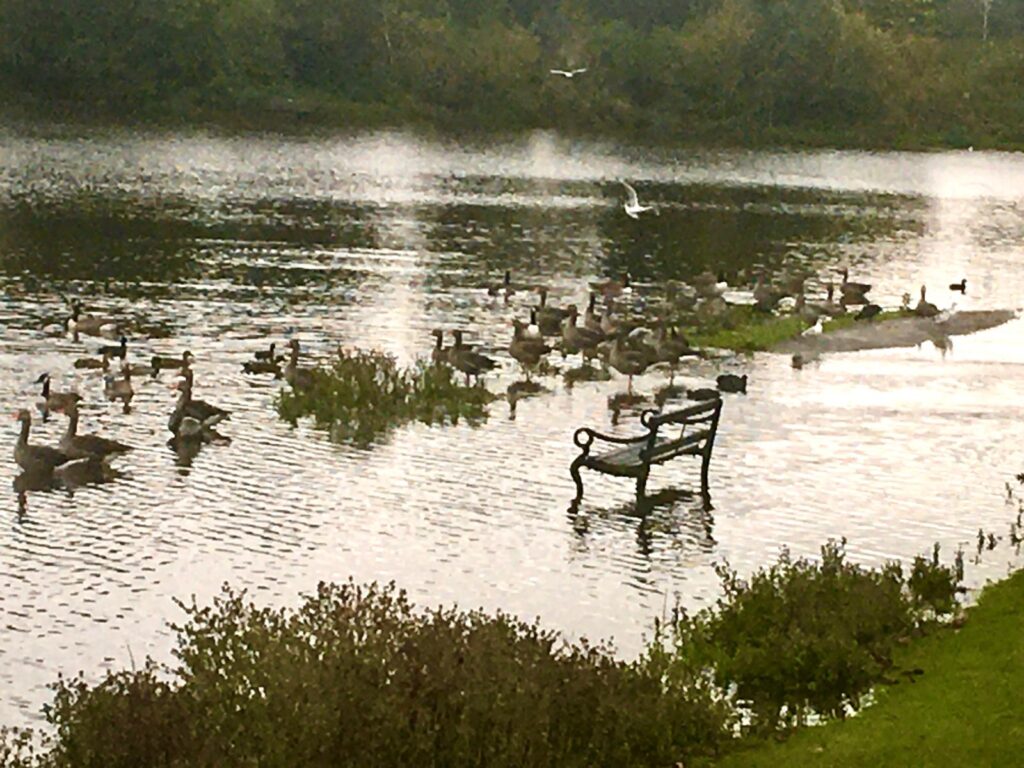
The lakes are far too large for the flow they receive and are clogged with silt, sludge and all kinds of detritus. The large numbers of non-native Canada geese add to this issue as their droppings contribute to the poor water quality. Clouds of blue/green algae also form in hot weather. These problems are especially bad in summer months when so many people come to enjoy the park.
In 2012, surveys showed the lake to be in urgent need of very substantial repair but funding of £200,000 which had been allocated was withdrawn when political power in the council changed.
Roy May, a former park superintendent, speaking then, pointed out that the lakes were last cleaned in the 1950s and early 1970s. The small lake was once again cleaned in 2005 when it completely dried up! I believe the original design of the lakes may have incorporated a regular maintenance plan to clean them out every 20 years.
In the absence of proper and regular cleaning, various attempts have been made to address the poor state of the lakes. But none has succeeded.
As mentioned, the lakes were originally designed to receive a constant flow of water from the River Ver. Owing to increasing levels of water extraction from the Friars Wash Pumping Station upstream, the river water levels dropped. The lake was therefore left to stagnate.
In 1992, following considerable lobbying by the Ver Valley Society, the Friars Wash Pumping Station was shut down which increased the flow of fresh water into the lakes. (It is worth noting that as part of a wider programme to protect and restore chalk streams, Affinity Water is currently reducing the amount of water they abstract from groundwater sources near St Albans.)
Some years ago, you may remember, the profile of the lake was changed with large rocks, soil and aquatic plants established around the margins (some still remain visible near the bridge). This was intended to provide shelter and food for nesting birds and swans, and valuable oxygen for aquatic wildlife. Bio-remedial action was also taken by introducing a strain of bacteria into the lakes to reduce the levels of pollution and restore the natural processes. Also scores of Canada geese were corralled and transferred to new homes away from Verulamium.
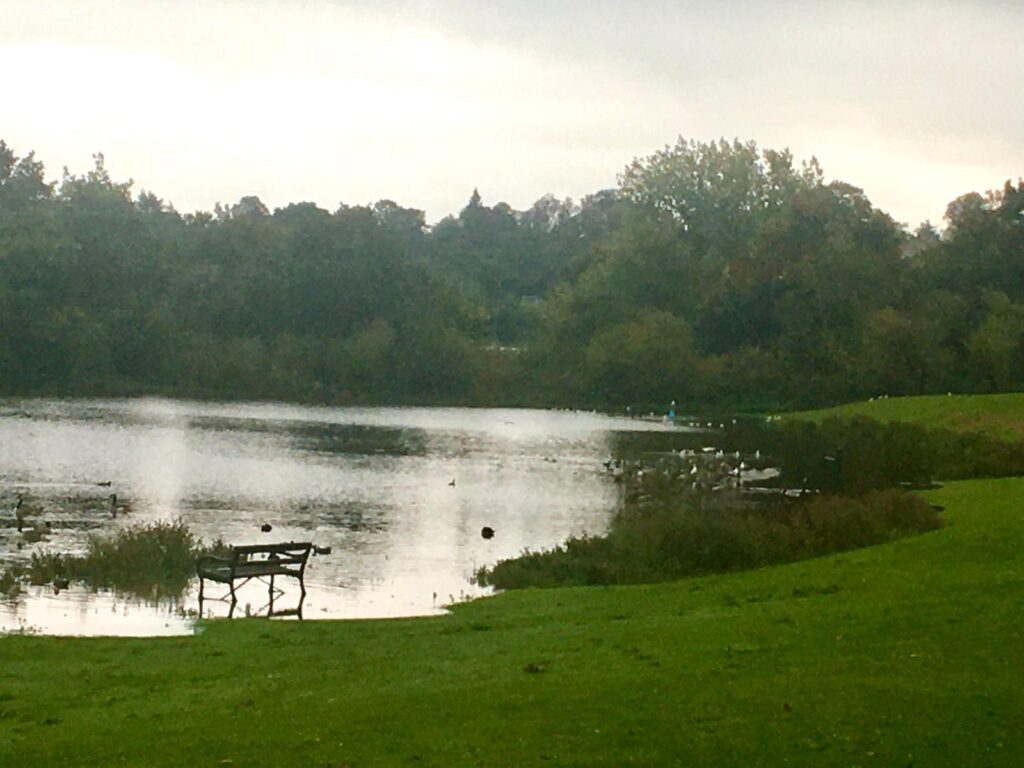
But fundamental problems with the river and lakes continue unabated. Not the least of which is the flooding in Bell Meadow and around the lake which is becoming increasingly common. A situation which is not helped by the massive increases in rainfall with the advent of global warming.
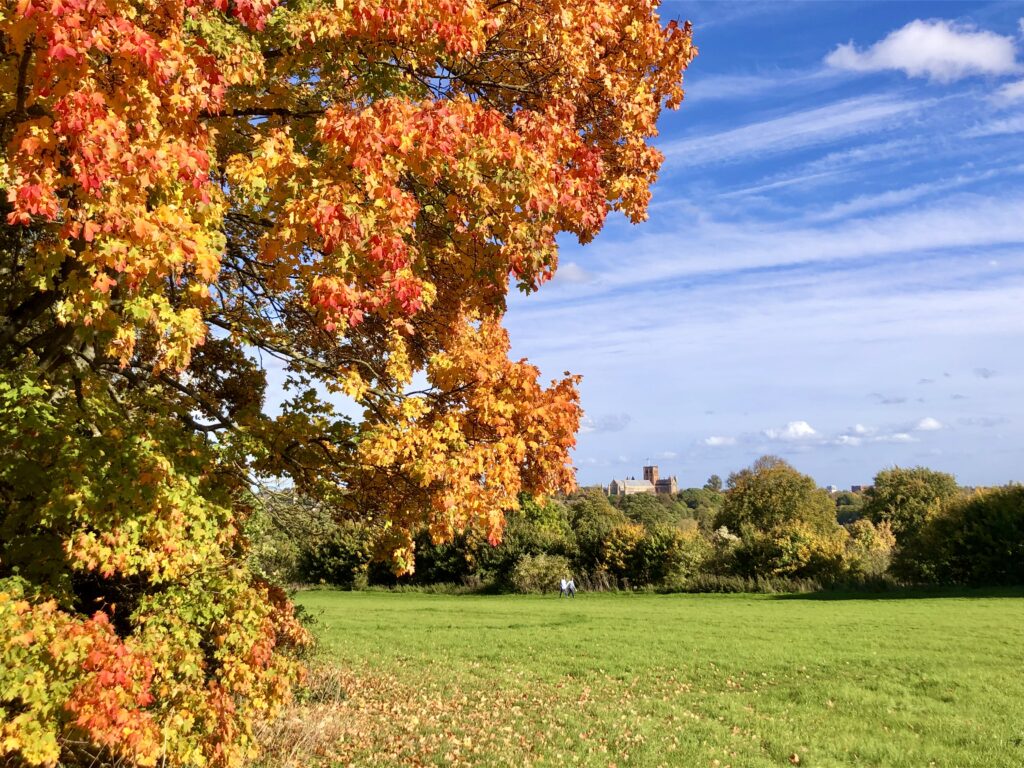
St Albans is on the threshold of implementing ambitious and wide-ranging multi-million pound plans for revitalising the River Ver and the lake, and thus Verulamium Park.
It is bringing together the district and county councils, the Environment Agency, Affinity Water and English Heritage, each of whom has a key role but different priorities.
The public debate to consider possible improvements to the park has now been going on for twice as long as it took to create the park from conception to completion! Proposals have evolved and changed over time. The hope is that the revitalisation of the lake is handled sensitively and with due respect to the rich history of this precious place.
There seemed to be two distinct camps, or opposing forces, at work. These can best be summarised as radical change versus preservation of the status quo together with proper maintenance of what we have. The radicals were pushing for significant change to the size, shape and vista of the lake, with newly planted vegetation and aquatic plants to screen the lakeside, an additional stream and newly created wetlands. The conservatives were advocating the systematic application of proper care and maintenance to the existing lake and park, to preserve its natural beauty.
In the now published plans for revitalising the River Ver and the lake, and thus Verulamium Park, the declared aim is to restore the River Ver, a rare natural chalk stream, to its original natural state. It makes clear it is not aimed at preventing flooding because this area is a natural floodplain; rather, I believe, it aims to alleviate the effects through a series of cleverly interrelated measures.
A major – and rather controversial – proposal involves reshaping and significantly reducing the size of the main lake to make room for a new chalk stream. This will follow its more natural course after it passes the gardens of St Michael’s Manor. It will sweep down to the lower ground running along the bottom of the valley and through the park.
Water will continue to flow down the existing route of the River Ver to the Fighting Cocks pub.
There will also be a slight increase to the flow of water from the River Ver into the lakes to freshen the water.
Another controversial proposal is for concrete linings and edges to the lakes to be replaced by newly planted vegetation and aquatic plants to screen the lakeside.
The smaller lake will continue to be available for model boating with a new launch area provided.
A wetlands area will be created at the south-west corner of the large lake which will support many different colourful plants and animals. Boardwalks will be installed to allow people to explore this environment and get close to nature in all its beauty.
In the events meadow, further south (opposite the car parks to Westminster Lodge Leisure Centre) it is planned to create two more wetlands with boardwalks (this has echoes of the watercress beds that used to exist here many years ago).
In another initiative, the main islands on the larger lake which are close to sinking will be extended and raised to create better conditions for herons.
It’s worth noting that we’ve been here before! A not dissimilar scheme was “planned” between 2004 and 2008 but a two million pound lottery bid to fund it was not successful.
I understand that plans for the first phase of this project, ‘Reach 1’ (the area in Verulamium Park) are under review, as the Environment Agency does not have the funding.
Officially, the council states: “This is a hugely complicated project with many conflicting constraints. As a result it is unfortunately taking longer than we would hope. Funding remains a significant challenge. The Environment Agency estimates delivery costs for the whole project have significantly increased due to high inflation.”
Is this the Achilles’ heel to the whole project, given the current parlous state of public finances – with the often talked about multi-billion pound black hole inherited by the new Government? Financing promised for the radical proposals for ‘Reach 1’ of the River Ver and lake project may yet fail to materialise. So, what then?
Having referred to the potential essential missing link of finance, I would argue the plans lack two further essential elements: trees and a maintenance schedule.
Looking first at trees. I can find no reference to tree planting to reverse the awful attrition rate of trees in Verulamium Park.
In 1923 the site of the Roman city of Verulamium was the first of its kind in the country to be listed as a Scheduled Ancient Monument, meaning it is protected by law. But in this strength there is also weakness. English Heritage now very strictly controls what trees are planted, and where, because of the Roman remains below the soil. Understandably, their priority is the conservation of these archaeological treasures and a major concern is tree root damage. But under this uncompromising policy, trees that form an essential and integral part of the landscape are dying and simply not being replaced.
In a letter published in the Herts Advertiser in 2007, I pointed this out and went on to say: “In the last 20 years – since the Great Storm of 1987 – more than 200 established and mature trees have been lost, felled by weather, age or disease. And this is only in the area above Roman Verulamium. In that time less than 20 trees have been planted that have become established.
“It doesn’t take 20-20 vision to see that if that rate of attrition continues, very few trees will remain in a further 20 years.”
Friends of Verulamium – prior to their closure in 2012 – campaigned for more than 12 years for more trees. But the net result has been an acceleration of the loss of these majestic plants with a further 100 trees being felled. NO actual replacements have been planted, just hollow promises made of replanting. It seems to me that English Heritage fails to appreciate that people, fauna and flora share this precious space together with our heritage. It is crucial we find a way out of this impasse …
The third crucial missing link is a maintenance schedule. We should learn from history that the lake, park and river need a maintenance plan with clear guidance, instructions and lines of accountability (plus finance, of course) to prevent a recurrence of the current situation.
Finally, I would like to acknowledge the many improvements made to our park in recent years.
The splash park was constructed above the old paddling pool; a new play area was built to replace the old swings and slides; a beach volleyball court has been created; an outdoor gym has replaced the Adidas zone; cycleways have been introduced; improved signage put in place… and the list goes on.
BUT compared to the fundamental improvements required by the lake and River Ver, I would argue that these – whilst very welcome – are relatively short-term and superficial.
In my view, it is essential that focus on revitalising the River Ver and the lake, and on replanting trees in Verulamium Park, must be the number one priority.
It is only through these fundamental measures that our heritage will be preserved for future generations.
If the park and lake were created in the lead up to the Great Depression, surely finance can be found to carry out this crucial project.
This is a once in a lifetime opportunity to create a park, lake and River Ver that people can enjoy and be proud of for years to come. So, fingers crossed, here’s wishing good luck and every success to this innovative project. Let’s hope it finally comes to fruition.
It is worth reiterating what I said in my introduction to this series of features: “Just as the Abbey is the jewel in the crown of St Albans, so Verulamium Park forms the emerald in that same crown … and it is the lake – both the large and small – that adds a special sapphire sparkle to this gem.”