03 Feb 2025
The stories of the notable individuals buried at Hatfield Road cemetery were featured in the pages of the St Albans Times several months ago, but what about those interred in the city’s churches and graveyards?
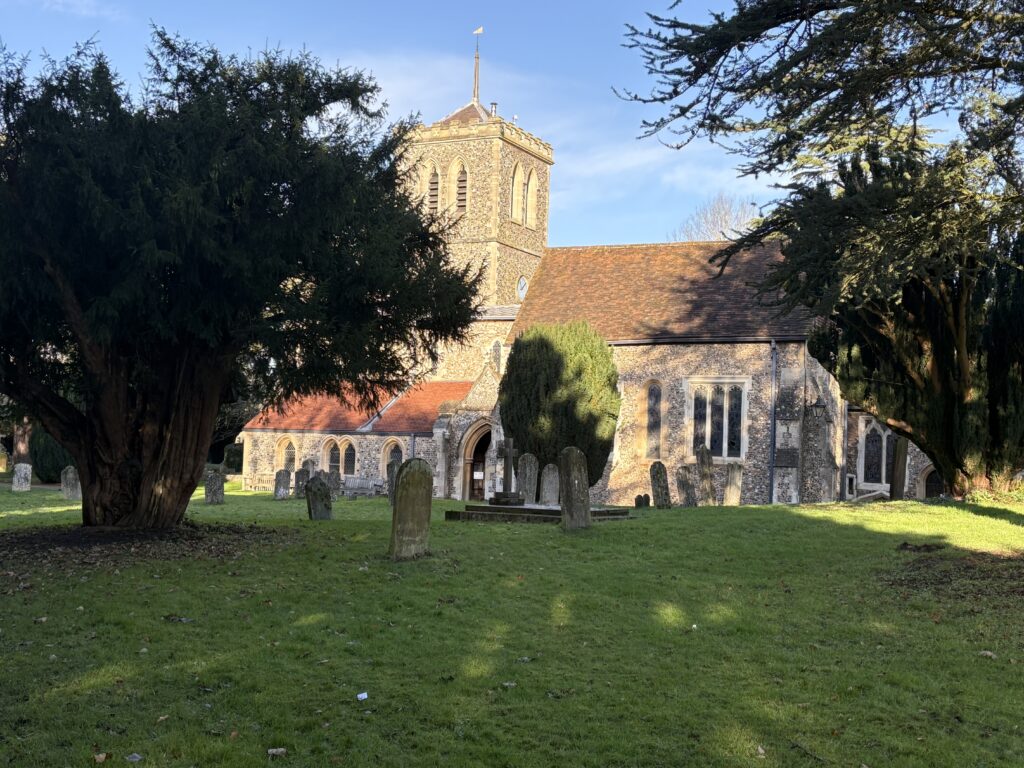
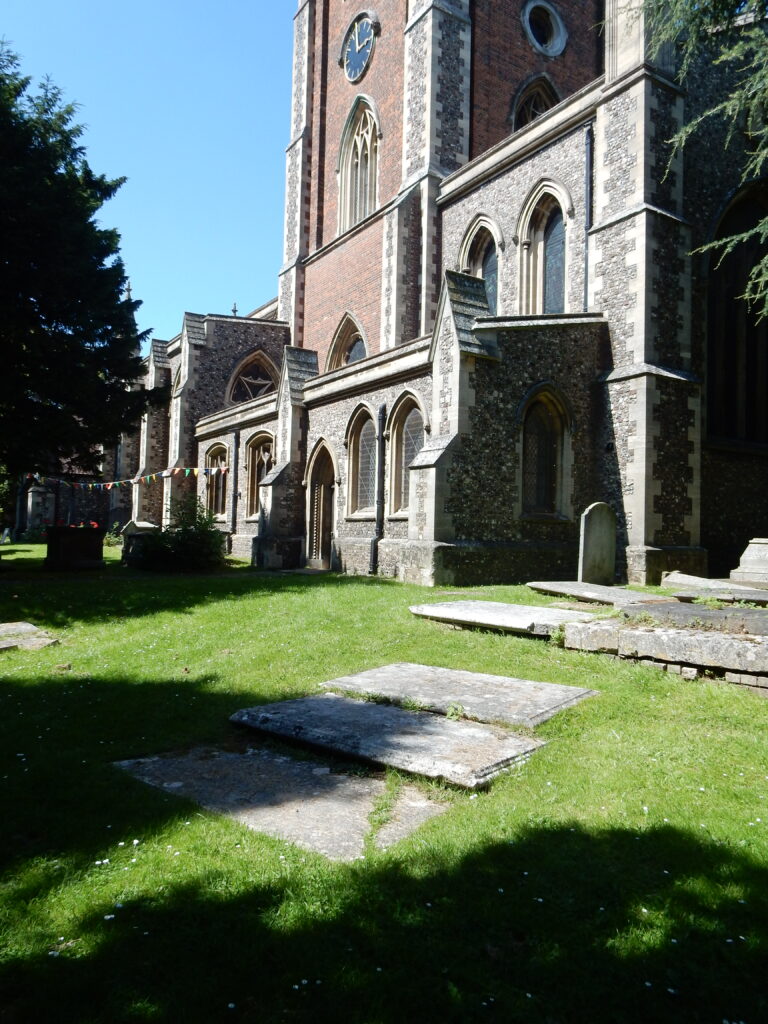
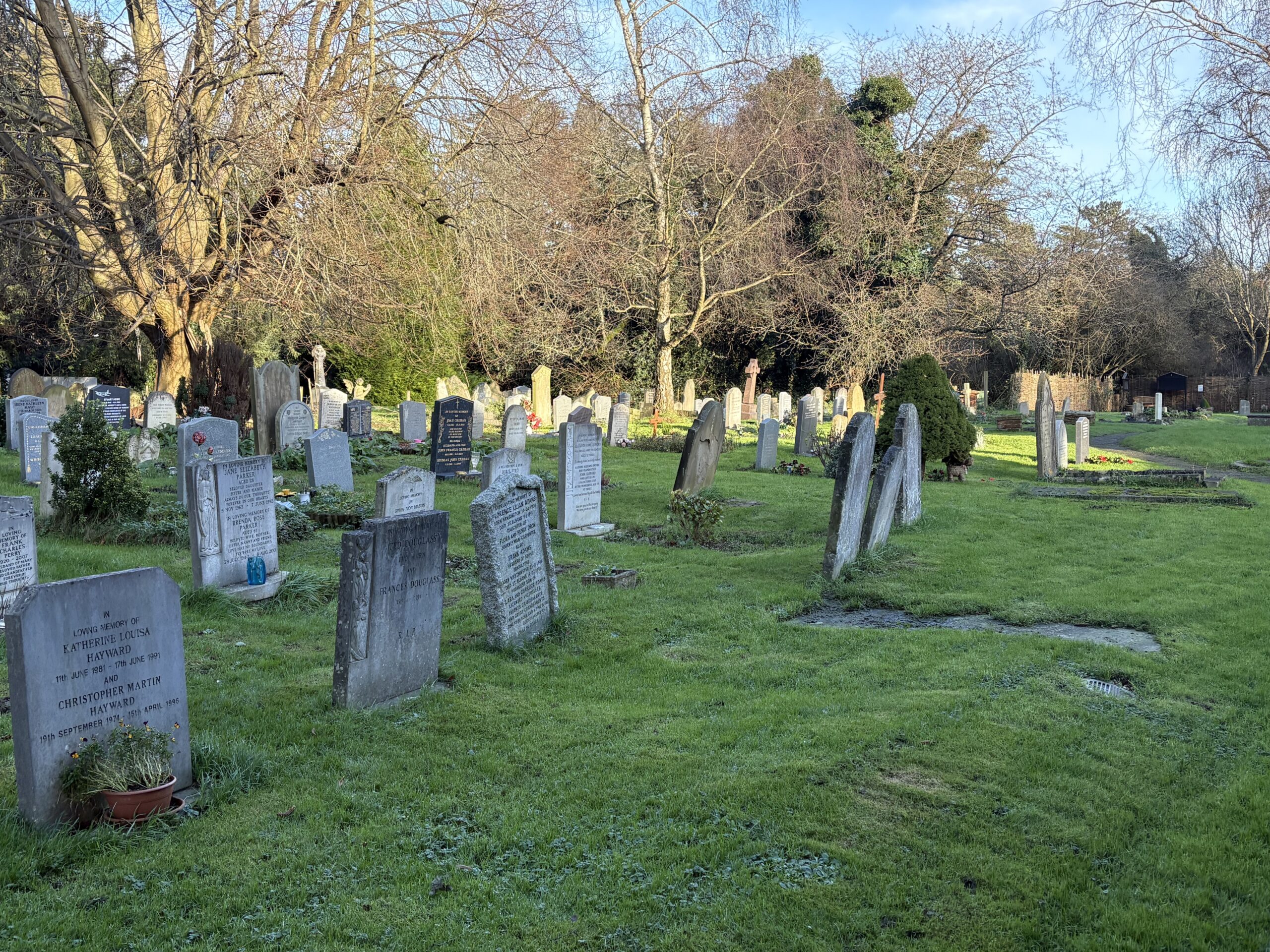
St Peter’s Church, at the northern end of St Albans city centre, dates back more than a thousand years, and was founded in 948AD by Abbot Ulsinus when he laid out the town market. Also established that time were St Stephen’s and St Michael’s, both of which we will explore later.
Inside St Peter’s in the north aisle is a marble monument to Edward Strong (1652-1724), who served for many years as the chief mason to Sir Christopher Wren.
Strong, who came from a family of stonemasons, is thought to be responsible for Romeland House, opposite the Abbey Gatehouse, and Ivy House, opposite St Peter’s churchyard.
The Strong stonemasony business was at the centre of the rebuilding of the capital following the Great Fire of London in 1666 and the Strongs contributed to the construction of many buildings across south-east England. Most famously, the Strongs supplied and installed stonework at the new St Paul’s Cathedral in 1680. The memorial on the wall of the chapel was erected by his son, Edward Strong the Younger.
The present chancel was created when the church was restored in the 1890s, beneath which lies the grave of Sir Richard Lee (1513-1575). Lee was the foremost military engineer of his time and building surveyor to Thomas Cromwell, Henry VIII’s chief minister. He was also an MP for Hertfordshire and the first English engineer to be knighted.
When St Albans Abbey was closed, he acquired its grounds, including Sopwell Priory off Cottonmill Lane. Lee promptly tore down the buildings and used the stone to build Lee Hall, an opulent Tudor manor, on the site, the remains of which can be seen today, albeit misnamed locally as the Sopwell Nunnery ruins.
Also inside the church, to the right of the south door, is a brass memorial to Roger Pemberton (1565-1627), his wife Elizabeth Moore and six children. Pemberton left money for the housing of six poor widows in almshouses, which can be seen on the opposite side of St Peter’s Street, and are still used today. He is buried under the floor of the south aisle.
As you step into the porch on the floor can be seen the tombstone of two local children who died from the Black Death in 1666 and 1682.
Near the south-east corner of the church is the grave of Dr Nathaniel Cotton (1707-1788), a poet and a pioneer in the treatment of mental illness, developing a form of clinical psychology.
Cotton founded a sympathetic asylum ‘Collegium Insanorum’, literally “a college for the insane”, on the corner of what is now College Street and Lower Dagnall Street. In 1763 one of his patients was the poet William Cowper, who came to Cotton suffering from depression.
Stacey Turner, founder of the St Albans mental health awareness charity It’s OK to Say, unveiled a blue plaque on the site of Dr Cotton’s college on behalf of Blue Plaques St Albans in March 2022.
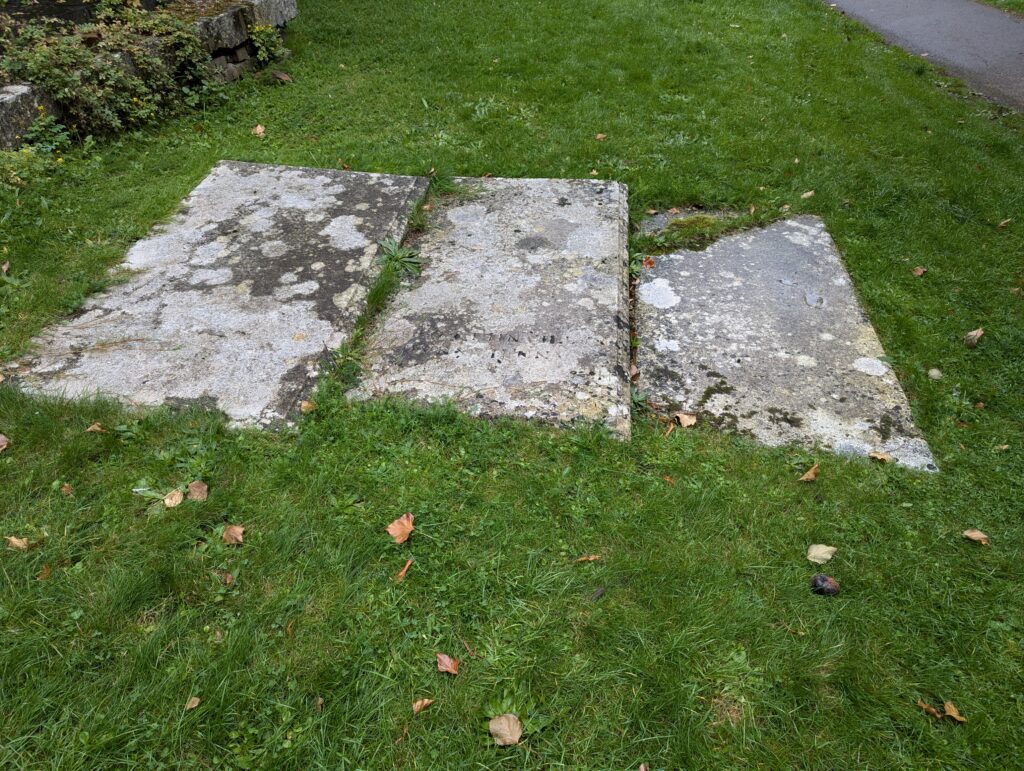
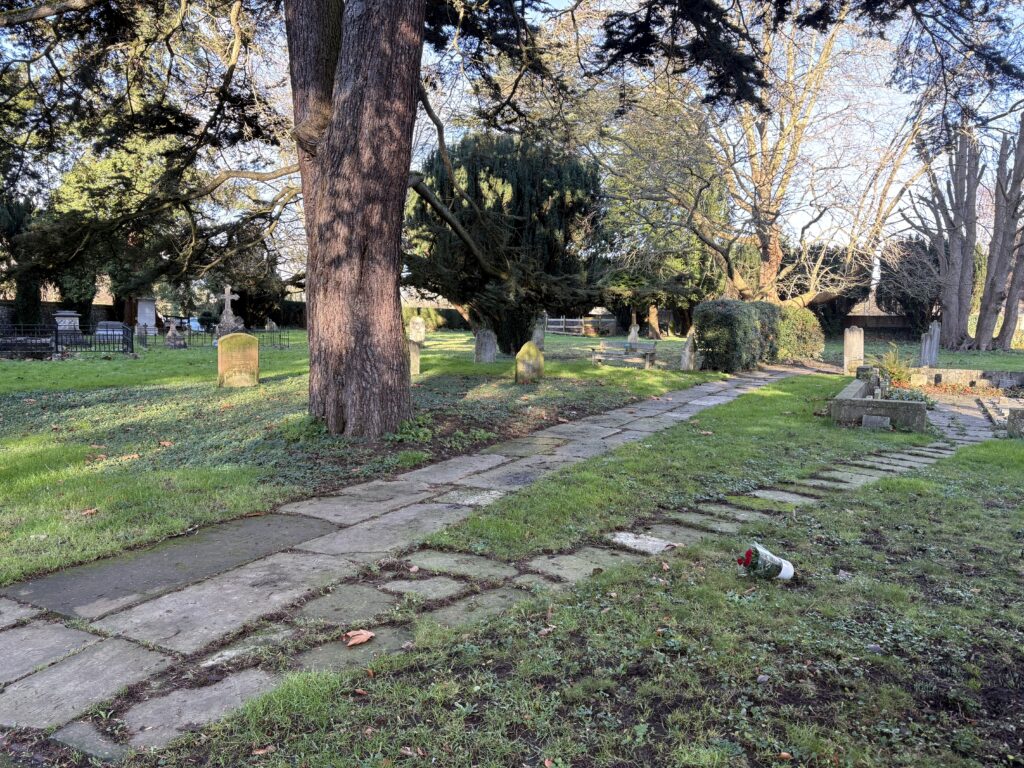
Also at St Peter’s Church are many unmarked graves, including the mass burial of soldiers involved in the first and second Battles of St Albans in the War of the Roses in 1455 and 1461. These were the ordinary soldiers. The aristocrats killed in the battles were buried in the Abbey, although their graves were lost during the Reformation.
The Foundling Hospital in London was established in the 18th century to care for abandoned babies, and many of these were sent out to the home counties to wet nurses, including in St Peter’s parish. Those who sadly didn’t survive were buried in the churchyard.
The Fraternity of Guild of All Saints, otherwise known at the Charnel Brotherhood, was founded during the reign of Edward IV (1442-1483). On the corner of the churchyard nearest to what is the roundabout in St Peter’s Street, once stood the Charnel Chapel associated with the Brotherhood, where human skeletons were stored after a person’s death.
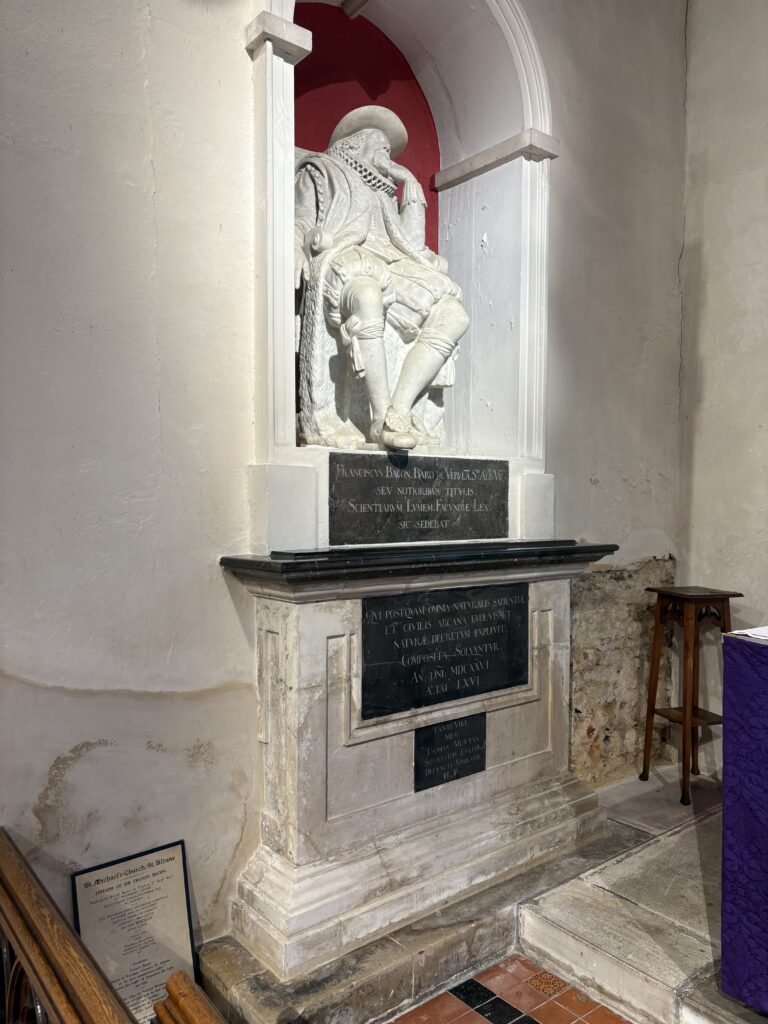
St Michael’s Church is mostly famously known as the final resting place of Sir Francis Bacon (1561-1636) – the father of empiricism – although the quandary is that nobody knows exactly where that is. He’s somewhere in the church or churchyard, but his remains have never been found.
The Shakespearean authorship thesis has Bacon as the author of some or possibly all of the plays attributed to the Bard. He built Verulam House at Gorhambury to his own designs, a building completed in 1617 at a cost of £9-10,000, and included underground larders and kitchen and two rooms for Turkish baths. It was demolished sometime between 1663-1666.
A memorial to Bacon can be found in the north wall of the chancel at St Michael’s.
The school previously named after Francis Bacon is now Samuel Ryder Academy.
Also buried at St Michael’s is Sir Harbottle Grimston (1603-1685), 2nd Baronet, who was a judge and Speaker of the House of Commons in 1660 during the Cromwellian period. Sir Harbottle purchased the estate of Gorhambury, formerly owned by Francis Bacon, and was rumoured to have been buried in Bacon’s vault, displacing the philosopher’s own coffin.
On November 7 1640, at the start of the so-called Long Parliament, Grimston gave a passionate speech in the Commons summarising what he thought the previous the Government had done wrong. He accused it of mishandling previous Parliaments and mistreating political critics, corrupting religion, and ignoring the law, and called for those responsible to be punished.
His son James Walter Grimston became the first Earl of Verulam in 1815.
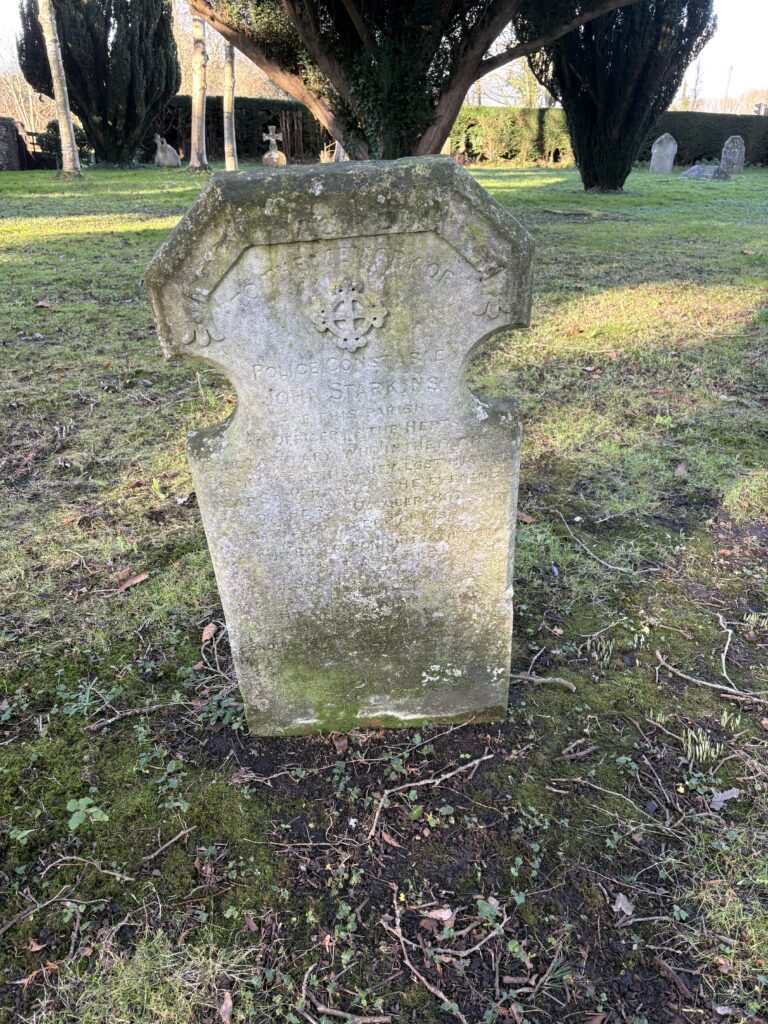
The first officer from Hertfordshire Constabulary to be killed in the line of duty is also buried there.
PC John Starkins, 25, had only been with the force for a few weeks when he disappeared while on duty in Stevenage. His mutilated body was found in a nearby pond three days later.
A local labourer named Jeremiah Carpenter was charged with PC Starkin’s murder but the evidence was circumstantial and a jury found him not guilty. Many years later Carpenter’s wife confessed to a local churchman that her husband had, in fact, committed the murder.
The third of St Albans’ thousand-year-old churches, St Stephen’s, has some interesting memorials of its own.
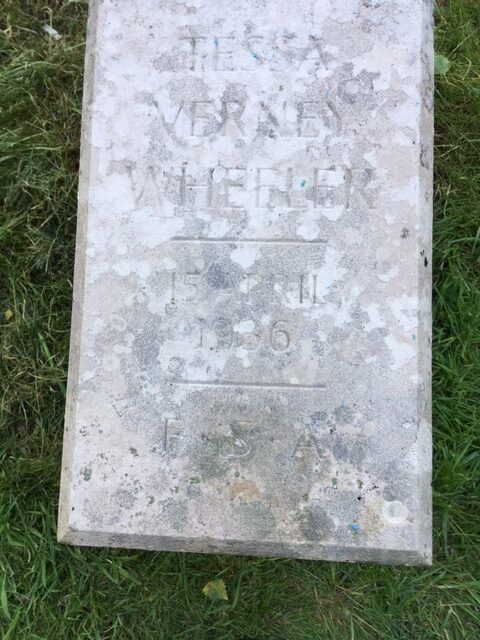
They include Tessa Wheeler (1893-1936), wife of Mortimer Wheeler. Together they led the excavations of Verulamium in the 1930s. He was the public face of the dig, but she did most of the work!
Tessa not only pioneered a new method of lifting mosaics but also managed the dig and its budget.
She ensured that the women in her team – accounting for half – shared jobs equally with their male counterparts which included labelling pottery, excavating the trenches and washing up. She was an excellent teacher and encouraged practical experience to learn about the skills of field archaeology, as well as giving talks to visiting groups, from Scouts to academics, and spent time creating detailed drawings of mosaics and other finds.
Also buried at this site is musician Woolmore Wigram (1831-1907), who was a leading pioneer of the revival of campanology, better known as ecclesiastical bell-ringing. His series of articles in the periodical ‘Church Bells’ was published collectively in 1871 under the title ‘Change-ringing Disentangled and Management of Towers’. He was made honorary canon of St Albans in 1886, and died from the effects of influenza at his home in Watling Street in 1907.
The story of one of the church’s other graves does not involve the burial of a human being, but a brass eagle lectern, and reveals a fascinating insight into the history of St Stephen’s.
When the medieval Dunkeld Lectern – known in Scotland as the Holyrood Bird – was looted from Holyrood Abbey during the Rough Wooing in 1544, possibly by our friend Sir Richard Lee, it was taken south to St Stephen’s, where Lee had acquired the rectory during the Reformation.
The lectern remained in use for many years, but in 1643 it was hidden in the Montagu family tomb in the church’s chancel, possibly by Anglican clergy to ensured it escaped destruction by the Puritans during the English Civil War.
It remained there for more than a century, until the tomb was opened in 1748 or 1750 for an internment and the lectern was found lying in the grave. Arguments over its repatriation to Scotland followed, which were initially rebuffed, until it was stolen by Scottish ultranationalist group Siol nan Gaidheal in 1984.
After a long period when its location was unknown, an anonymous donor left it in the reception of Netherbow Arts Centre, and it now resides in the National Museum of Scotland.
St Stephen’s was given a Victorian replica of the lectern as a replacement, and a permanent loan agreement was negotiated between the NMS and St Albans Diocese to ensure the Holyrood Bird remained in Scotland.
Finally we move to a public space which has not been a graveyard for 140 years. The central part of Romeland, the large area opposite the Abbey Gateway, was used for burials between 1812-1885. But much earlier, it proved to be the final resting place of a baker by the name of George Tankerfield.
A plaque at the site reads: “During the reign of Queen Mary in 1555 a protestant baker, George Tankerfield, was brought to Romeland from Barnet and burnt at the stake as a warning to other protestants.”
Tankerfield, who originally came from York, renounced Catholicism after seeing the cruelty of papists under Mary’s reign, leading to his arrest and imprisonment at Newgate, where it is believed he was tortured to get him to renounce his beliefs. Eventually summoned before Edmund Bonner, Bishop of London, he declared his convictions and was sentenced to death.
George was brought to the Cross Keys in St Albans, and stayed firm to his faith right to the last. As he was tied to the stake he cried out to the crowd not to believe the priest who was trying to get him to repent his views.
Of course, no look at the city’s graveyards would be complete without a visit to the most celebrated of them all, St Albans Cathedral, but such is the number of famous people buried within its environs that we will return to look at their stories in a future article.