11 Jun 2024
Elena Hogg, founder of local culinary company FOOD by Elena, raids her garden for some fresh herbs.
Last week we visited my parents-in-law up in the Midlands. My father-in-law had done an online shop to make sure there was plenty of food to feed everyone, and among the wares were wild garlic leaves, which he’d thought would be nice in a salad. And indeed they were.
But I was totally taken aback by the fact that the leaves from wild garlic, which grows in abundance in a hedgerow near you, were being sold in small cardboard trays wrapped in plastic. And for nearly four pounds! We have a big wild garlic plant in our garden that keeps us vampire-free for months over the spring, which cost us mere pennies when we planted it and is now apparently saving us a small fortune.
A pang of guilt reverberated through me as we drove back home, replete and stinky of breath. I realised I have largely neglected our trusty garlic plant so far this year, along with most of the garden herbs, in fact. I promised the M1 (for everyone else had drifted off with the car hum) that I would make amends.
And so it was that, the very next day, I brandished my kitchen scissors and stormed the borders and herb-beds. And what a bounty I reaped! I laid everything out on the kitchen counter and watched the various creepy crawlies make a dash for it. A wash under the tap and the air was suffused with vibrant, savoury scents, and my appetite was truly whetted.
‘Chuck them in with careless abandon’ is my highly curated methodology for cooking with herbs. You have to go a long way before you’ve used too many, in my book. I will even make a salad using herbs instead of lettuce; for example, in a parsley, octopus and lemon salad. The ingredients list there denotes the order of importance.
I was first introduced to this salad at the house of a Turkish friend of mine when I was in my early twenties and still quite new to all things culinary. I had strong misgivings about so much parsley in one mouthful, but something about the pairing with tender pieces of octopus mellowed the flavour entirely. It was my first encounter with herbs as protagonist rather than support role.
In this same vein, I use lovage as the main ingredient in soup. Our lovage plant grows abundantly at this time of year, and batch-making vats of soup for freezing is a good way to keep it trimmed back. Taste-wise, lovage is a curious mix of celery and parsley, so eminently savoury and delicious whizzed up with buttery leeks.
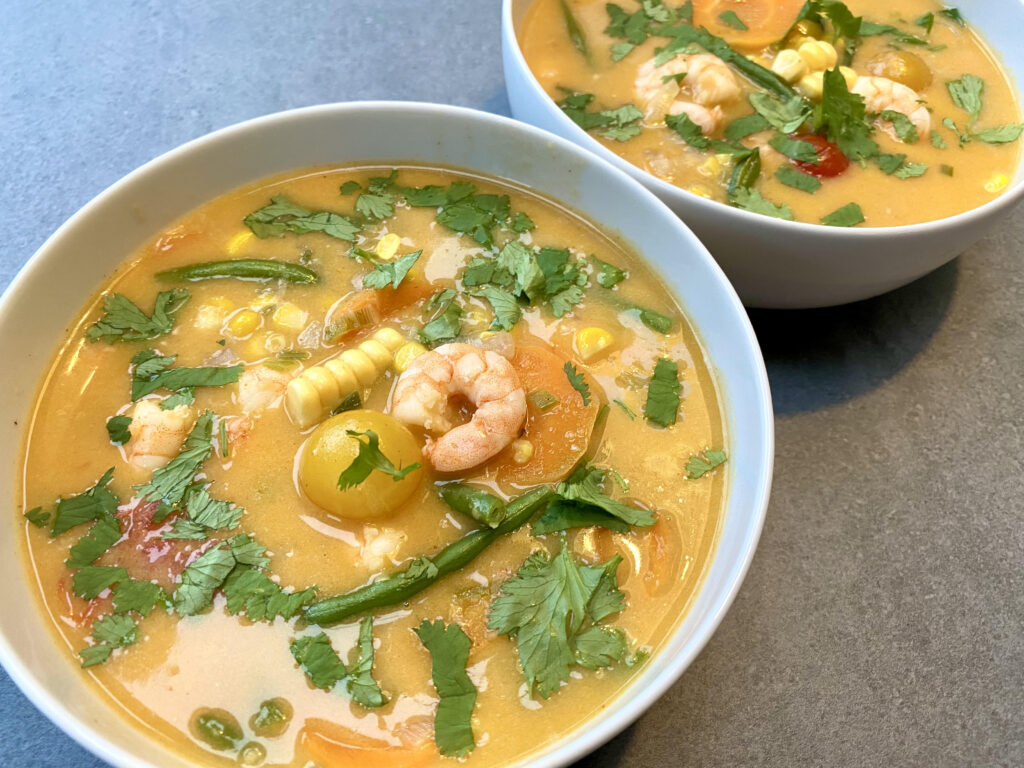
Another soup I regularly make when I want to impress my diners while barely lifting a finger is a Thai–inspired squash and coconut soup. Coriander is the herb of choice here. Its zingy, citrusy kick cuts through the richness of the coconut and the sweetness of the squash. I use the finely chopped stalks of the coriander to make the base of the soup, sweating them down with the onions at the start so they release their grassiness, and I sprinkle with some ground coriander, too, for earthiness.
You can add any extras you like to this versatile base – chicken, broad beans, tofu all work beautifully. I recently made it with prawns and some sweetcorn kernels sliced off their cob, which burst with juice as I chewed. Add coriander leaf before serving, but think ‘ingredient’ rather than ‘garnish’.
Mint is another stalwart of my garden herbs. Paired with coriander, it is joyous with watermelon and feta: the sweet and salty contrast of the fruit and cheese, but also their complementary textures – soft, crumbly feta alongside crisp bites of watermelon. Adding mint and coriander brings another dimension that’s tricky to describe in words, so please just try it for yourselves.
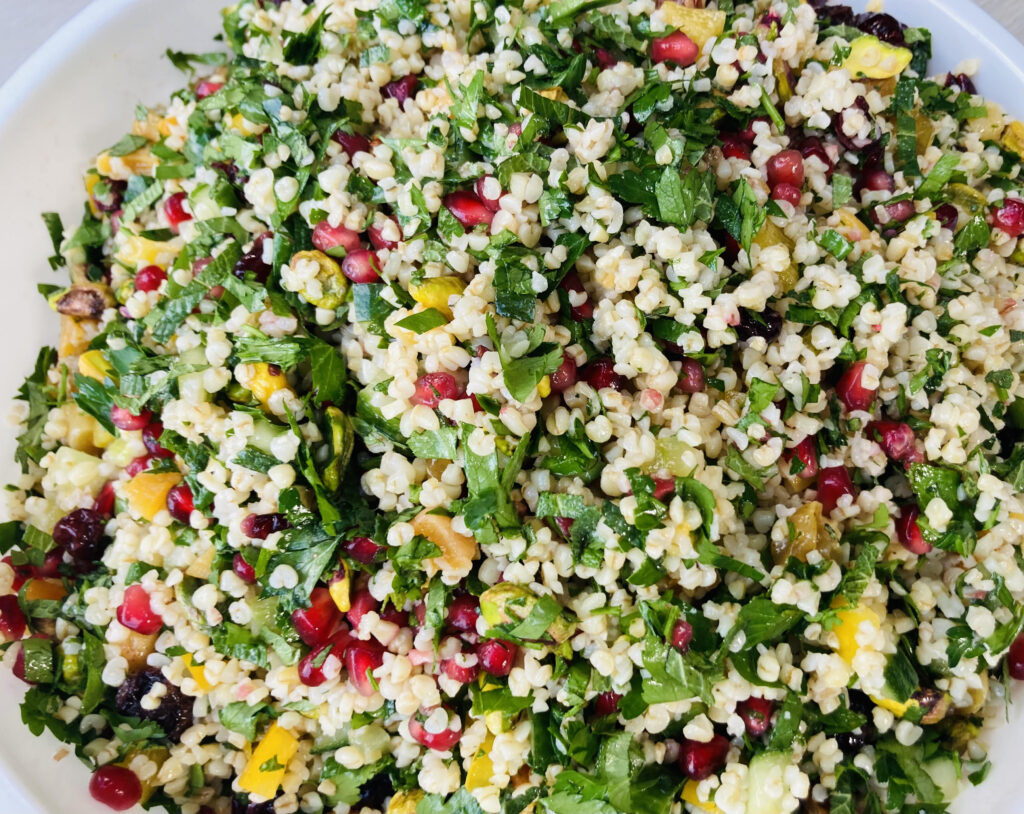
Mint is a real team player of a herb because, as well as with coriander, it also pairs with parsley for a Middle Eastern hit of flavour. I use both herbs in my jewelled tabbouleh and the medley of ingredients is lifted by the zap of mint and coriander, which take your taste buds on a veritable flavour roller coaster. Don’t hold back on quantities: think big dipper over the tea cups.
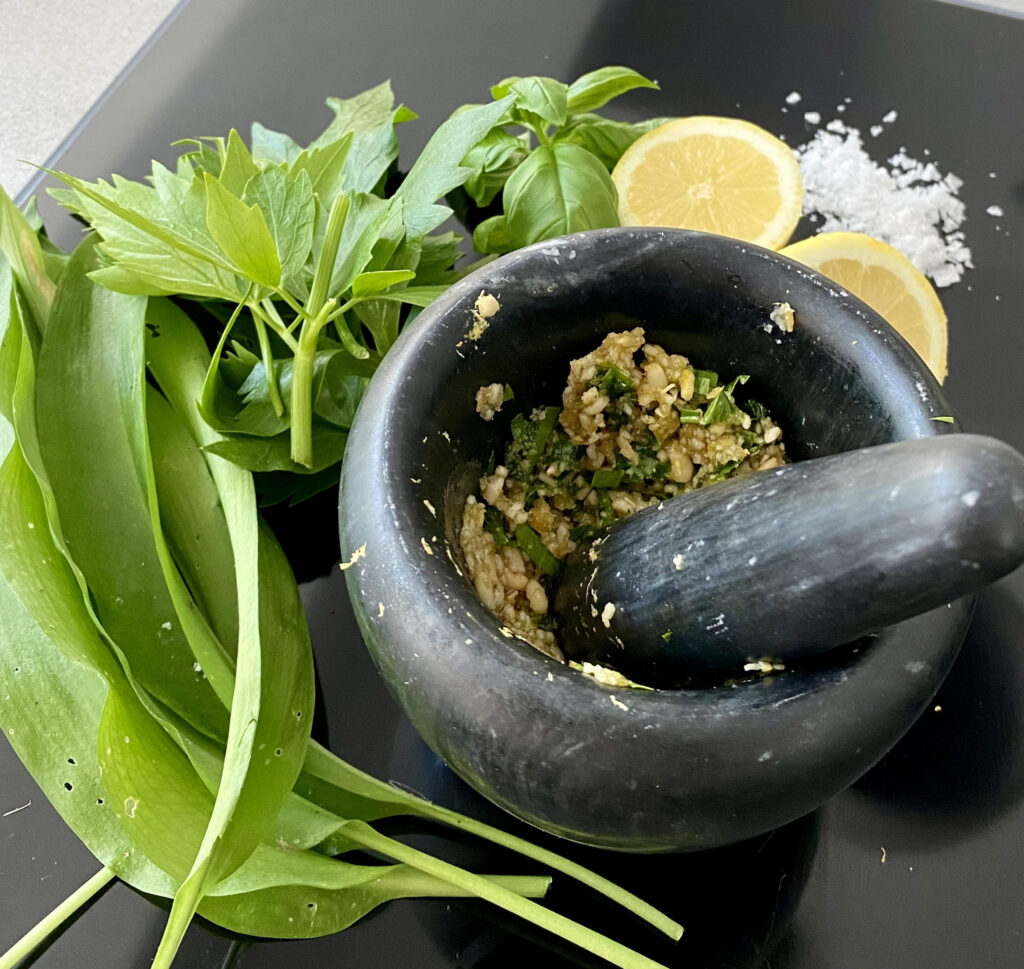
Going back to the pile of herbs I brought in from the garden after our visit to the in-laws, my ‘more is more’ attitude to herbs took hold, and I found myself reaching for my pestle and mortar and pounding up lovage, garlic leaves and basil along with pine nuts, fleur de sel and lemon zest.
The result was more of a gremolata than a pesto on account of its chunkier texture, and it smelled of pure summer.
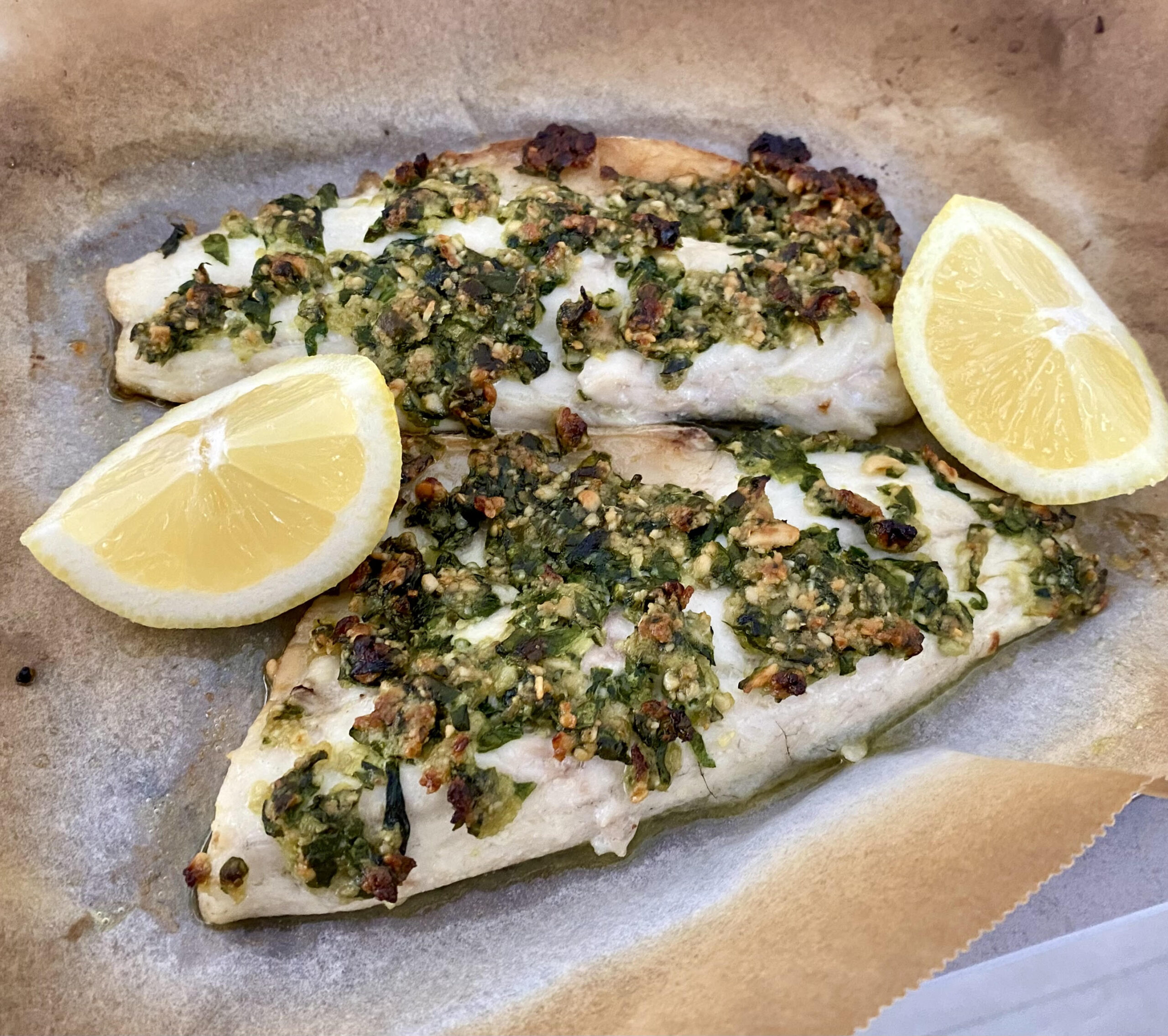
Some was immediately slathered onto toasted sourdough for an instant quick-fix, while the remainder I used to spread on sea bass fillets for dinner. I let the fillets sit under their vibrant green duvet for about an hour before baking, to allow some marinating time, then baked at 180 degrees fan for about ten minutes.
The pine nuts got nuttier, the herbs conjured their savoury magic, while the lemon zest infused each bite with a floral but bitter note. I’d definitely make it again, but who am I kidding? Next time it’ll be a different combination of herbs and different quantities. It’s never the same twice.
But that’s the beauty of herbs. Precision and specificity are unnecessary. If ever there was a safe space to experiment in, it’s with herbs. Even the most unlikely combination will offer something of value, while more often than not, the result will be triumphant. Herbs are healthy, affordable, easy to grow and make food taste amazing. What’s not to lovage?