22 Jul 2024
Elena Hogg, founder of local culinary company FOOD by Elena, celebrates the lemon’s versatility in dishes sweet and savoury.
Very little looks, smells and tastes as summery as lemons. It’s a trifecta. Just a glance of the vivid, dimpled skin transports me directly to the Sicilian lemon groves, the Mediterranean heat intensifying the citrus aroma. And I’ve never even been to Sicily, so that’s how powerful lemons are.
I’d like to go, though. I once had a neighbour from Sicily whose mother made the most incredible preserved lemons. They were entirely different from the slightly soapy version you can buy in the supermarkets, and I would hint heavilythat I’d run out whenever my neighbour was about to travel home to Sicily, so good were they.
Preserving in salt, of course, draws out the liquid in the lemons, but my neighbour’s mum added a little sugar, too, which balanced out the harshness.
The preserving liquid was pleasingly sticky, as I recall, and scented with the bay that she’d pop in the jar before sealing. Magic.
This summer I’m determined to make a few of my own jars of preserved lemons, having intended to for about six years now. I’ve been thinking about different aromas I could add – star anise might be an interesting addition to one jar and some juniper berries to another.
Perhaps some fig leaves from our tree might be nice. So many things would work well.
Lemon is indeed a versatile fruit, lending its zing to savoury and sweet alike; to meat and dairy dishes, pulses and vegetable dishes – or candied and eaten on their glorious own.
I remember dehydrating thin slices of lemon as part of the decoration for my mum’s 70th birthday cake and, because I’d sprinkled a little sugar over the slices before dehydrating, they could be nibbled as a tasty palate cleanser.
More recently, I made a lemon tart. There’s no two ways about it: it’s a laborious dessert to make, with all the zesting and juicing of lemons, simmering and straining of cream, and the pastry-making – if you’re going the whole hog, that is.I added some lemon zest to the pastry as I rolled it out for added punch, as well as to the filling, allowing the oils to infuse into the creamy-eggy mixture as it simmered. After baking, I mustered the patience (gold star for me) to wait until the tart was fully cooled before unmolding and plunging my knife in to extract the first slice.
The feel of the pastry crumbling under the blade, the soft noise of it, sets my salivary glands in motion – to say nothing of the silky, pale custard. Well worth the effort.
Of course, lemons, despite being a fruit, don’t only have to be for sweets. Their fresh sharpness can bring out the flavour in many a savoury dish.
In fact, the very simplest use of lemon is quite possibly the most effective: squeezed generously and cuticle-stingingly over grilled fish.
Wedges of lemon added to a baking tray of bell peppers, courgettes and red onion make a fabulous layer to top with chicken breasts or pork medallions, giving everything a cheery brightness. Another classic coupling for lemon is ricotta.
Add lemon juice and some seasoning into fresh ricotta for a tangy baked sweet potato topping, or mix it into beaten eggs with some wilted, chopped spinach for a delicious, zingy omelette.
Don’t mix too thoroughly and you’ll retain some discernible clouds of ricotta to delight you as you eat.
Not long ago I experimented with a new recipe for chicken breasts. They’re often considered somewhat pedestrian and therefore overlooked as a dinner party option, but I thought I’d see if I could raise their plate-profile a little.
I added thyme, garlic and lots of lemon zest to blitzed stale sourdough, along with plenty of salt and pepper, of course, to make a fragrant crumb mixture for pressing into the chicken breasts.
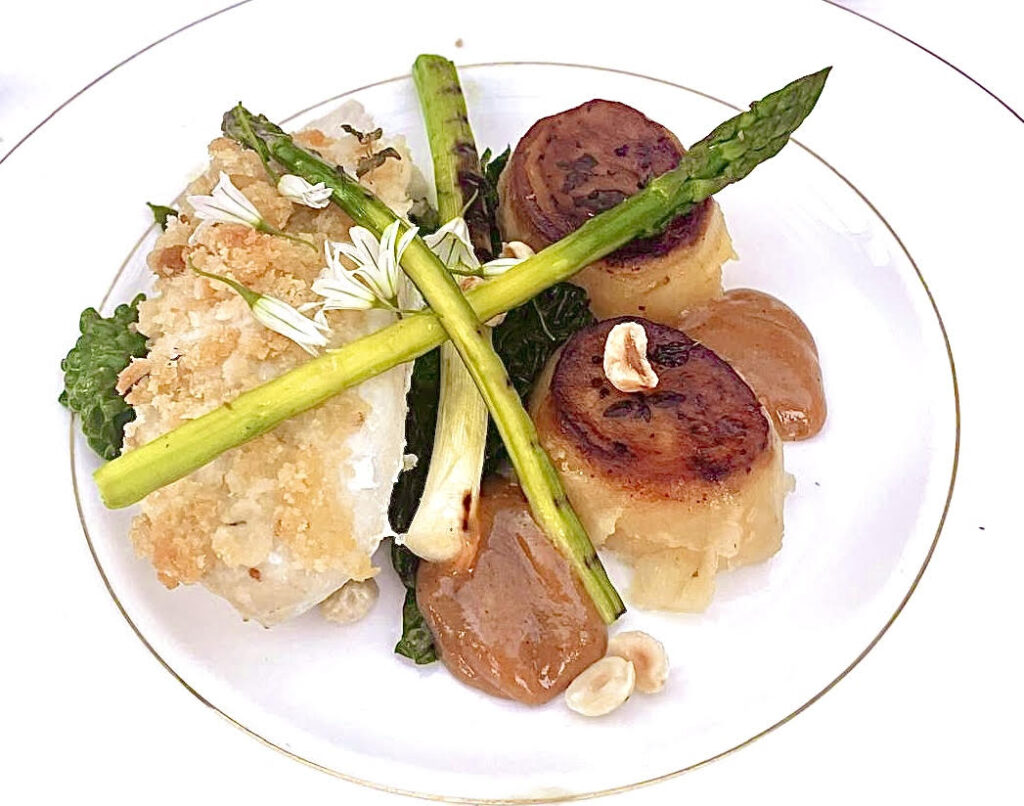
These flavours are a classic combination for a good reason and long may they reign. The crumb helped keep the breast moist and flavourful. Each bite was heady and comforting, but also vibrant and moreish, when most food is either one or the other (and sometimes neither). Plated with some hazelnut puree, some asparagus spears and some buttery fondant potatoes, it all made for quite elegant fare. Just for a moment, while I snapped a photo, mind. Then it was decimated in record time, I’m not really ashamed to say.
As well as thyme, lemon pairs beautifully with almost every other herb. In fact, I’ve just tried to think of a single herb that doesn’t go with lemon and I’ve come up short. Mint and lemon, for example, is summer in your mouth.
The zest, pounded in a pestle and mortar with mint leaves and salt flakes, makes a fabulous dust to sprinkle over a watermelon and feta salad. Using sugar instead of salt, on the other hand, gives you a fabulous topping for lemon mousse, or a simple bowl of yoghurt and nectarines.
I’ve also been known to dip the rim of a tumbler into the sugar-mint-lemon mixture, dampened first with lemon juice so it sticks, for a slightly fancier homemade lemonade of a balmy evening.
I’m just waiting for the balmy evening…