27 May 2025
Elena Hogg, founder of local culinary company FOOD by Elena, is whipping up some of her favourite desserts...
I dread to think how many hours in my life I’ve spent gazing at the array of ice creams in the freezer section of the supermarket. The choice is overwhelming and deeply enticing – there’s something for everyone these days, from the coffee and macadamia gelato aficionado to the die-hard Fab lolly lover.
The other day, my daughter and I found ourselves in the ice cream aisle, in fact.
Her nine-year-old eyes were drawn to the colourful array of rocket lollies, ice creams in the shape of watermelon slices and other fruity offerings.
I, on the other hand, was up the other end of the aisle salivating at the tubs of luxurious and creamy pistachio ice cream, or butterscotch-studded pecan flavour, or rich coconut ice cream swirled with passion fruit, among other such nirvana-inducing choices.
As we pondered what to get, my daughter and I were able to meet in the middle – both physically and metaphorically. The freezers in the middle of the aisle were dedicated to ice creams like Magnums and Soleros, which – despite not being super-posh – had the advantage of being both affordable, tasty and a far cry from the garish assortment further down.
And there, nestled among them, was one of my favourite things on this fair Earth: the Mars ice cream. I was a child when I tried one for the first time and I remember being transported to a chilly heaven. These days, there’s a second reason my hand reaches for a box: it was the father of my lovely friend Rachel who invented them.

Dan Jacoby worked tirelessly to create the delicious Mars ice cream, not only on the initial design of it, but then finding just the right technology to get real chocolate to stick to dairy ice cream, moving away from the choc ice, which was the only comparable product available and which we all know was encased in a thin coating masquerading as chocolate that fell away in shards at the first bite.
Dan, who very sadly died in 2015 aged just 63, paved the way for Bounty and Snickers ice creams, taking the lead in their roll-out too, and was described by colleagues as a ‘genius’, nicknamed ‘the mad professor’, and is remembered by Bob Beveridge, in a letter published in The Times, as having “enthusiastically persuaded all the doubters […] that we could sell the product for a high enough price to justify investment”.
And how right he was, given that 33 years on we’re still eating them with gusto.
It’s been a decade since his death and I am celebrating both Dan Jacoby and the clement weather with some ice cream-making of my own.
As long as you’re not trying to invent a brand new confection with it, it’s a relatively simple process.
Essentially, you make a custard and then freeze it, mixing it regularly once it’s in the freezer to discourage any crystals from forming.
In fact, that’s possibly the most onerous thing – making sure you remember to come back every hour or two for a stir, and don’t make it so late in the day that you have to choose between sleep or stirring the ice cream (though the delicious end result is worth the dark circles any day).
Not all ice creams need to be custard-based, though: while egg yolks do give a richness to the flavour, sometimes that’s not what I’m after.
Possibly my favourite ice cream recipe is for lime and coconut ice cream, a spoonful of which immediately delivers you to a tropical beach with a soft breeze carrying calypso music to your ears.
Warm two tins of coconut milk (opt for high-fat varieties) in a pan and allow 200g of caster sugar to dissolve into it. Add the zest and juice of four limes and stir, then leave to cool and refrigerate. When it’s fridge-cold, you can either pour it into an ice cream churner, or else into a food storage container which you pop in the freezer and stir every couple of hours.
The result is somewhere between ice cream and sorbet, because it’s creamy enough to be the former, but zingy enough to be the latter. It’s addictive and you’ll definitely want seconds, which is why I’ve given you quantities for two cans of coconut milk instead of one.
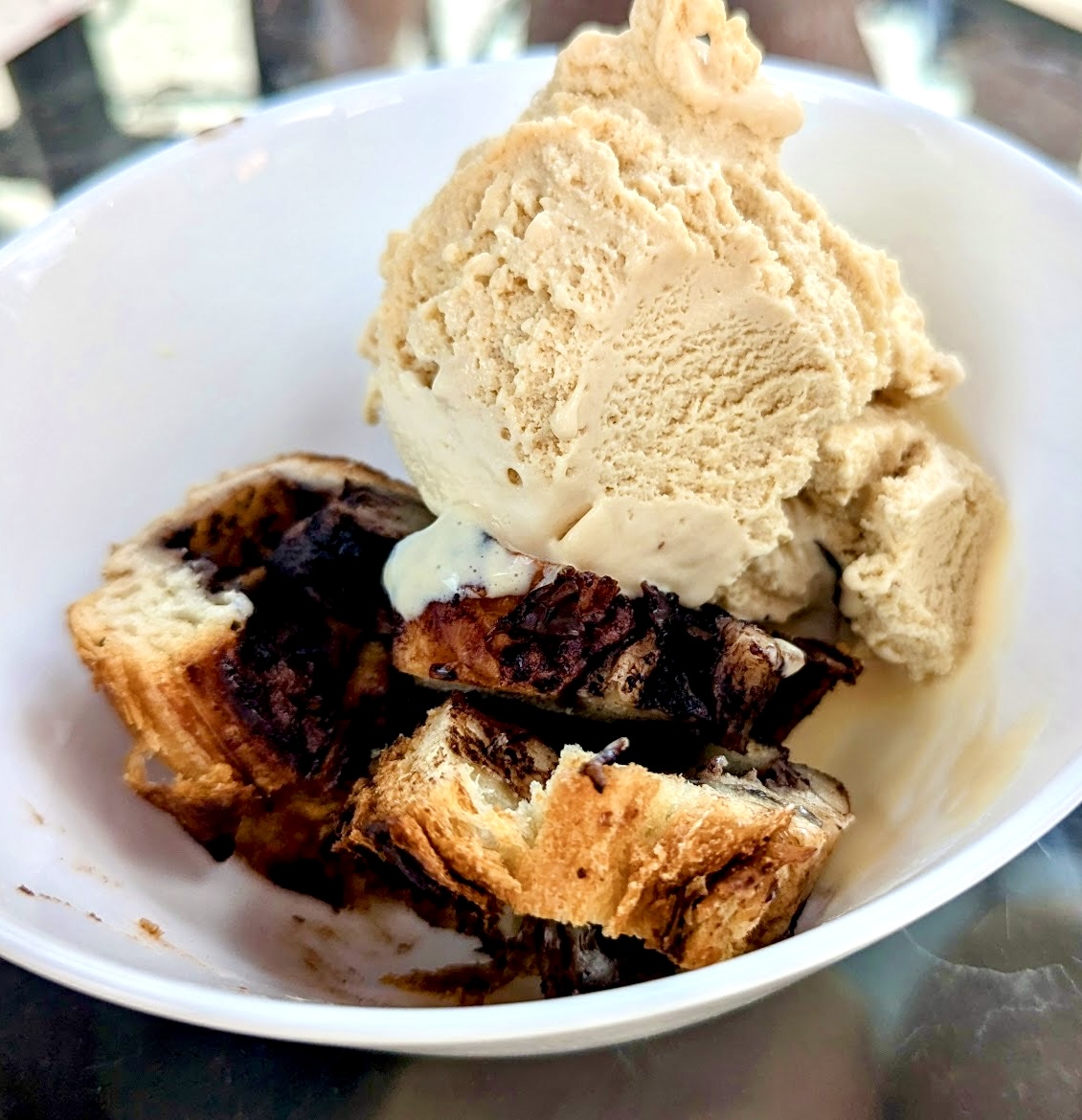
Another ice cream I really enjoy making, but which is a little more complex inasmuch as it uses two kinds of sugar and egg yolks too, is malt ice cream.
You can buy jars of malt extract from health food shops and there are lots of recipes online to choose between. There’s something really comforting about having what is essentially frozen Horlicks for dessert, especially served with something a little stodgy or spicy, like chocolate brioche or ginger cake.
If, however, you’re in the mood for something entirely fresh, rather than unctuous, then perhaps a sorbet is the way to go. Like ice cream, it’s incredibly simple to make, by and large.
Some verge on being more like a granita, an icy rubble that cleanses the palate beautifully, and some can be quite smooth, comparatively, usually due to the addition of whisked egg whites, which give a satin quality to the texture.
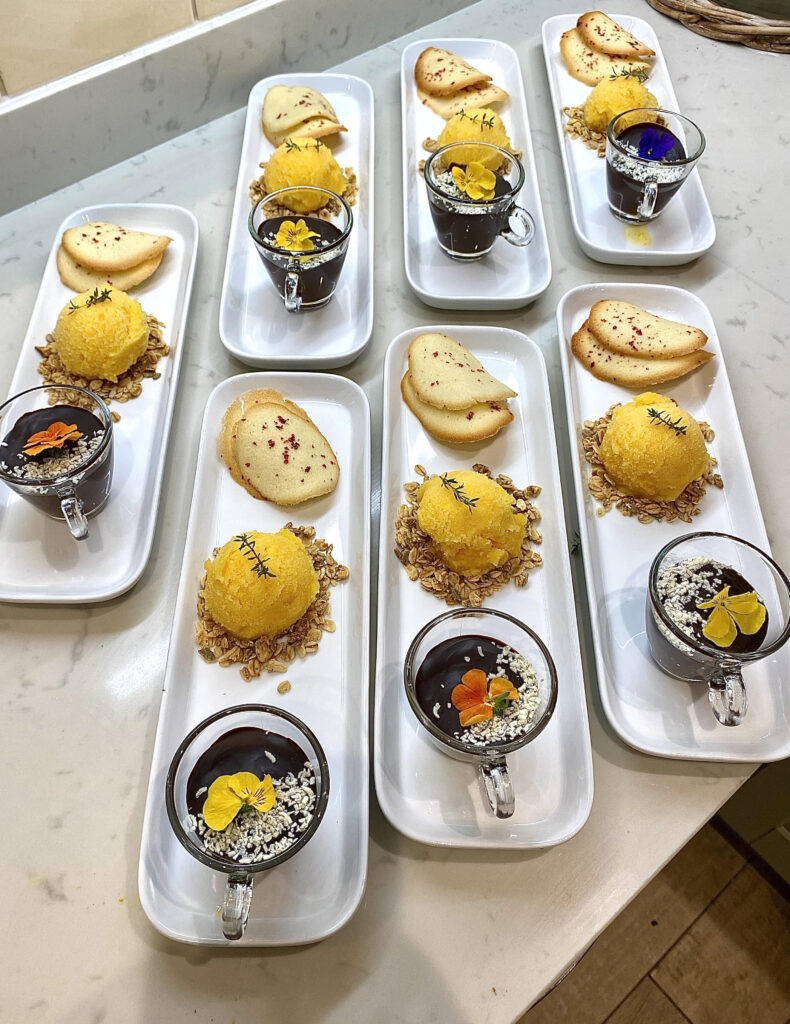
I recently made an orange sorbet with egg whites for a lovely client and her friends for a special birthday meal. I paired the orange sorbet with a dark chocolate ganache, which gave a contrast in flavour, but temperature and texture, too. I’d made some pink peppercorn tuiles as well, for crunch.
Even if you’re not a fan of orange chocolate, this dessert didn’t so much combine the flavours as juxtapose them, so the Terry’s haters can enjoy it too.
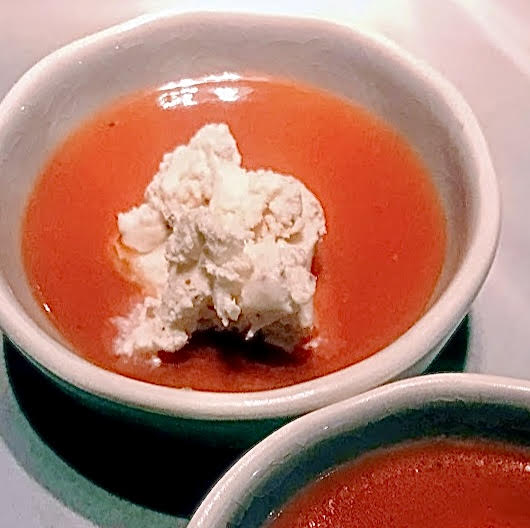
Finally, I leave you with another frozen concoction made for a dinner party I was catering for a good few years ago. The client had ordered my tasting menu and the amuse bouche was a little spoonful of wholegrain mustard ice cream in a tiny bowl of gazpacho.
It rather upturned the assumption that ice cream need be for dessert, and therefore provided a great conversation starter, which surely is what the very first course of a meal should do. Either way, their bouches were certainly amused.