18 Sep 2024
To mark the 90th anniversary of Verulamium Park and Lake, Dr Robert Wareing, who regularly walks the park with his wife Linda, has undertaken a labour of love to research its history and to celebrate its place in the heart of St Albans residents.
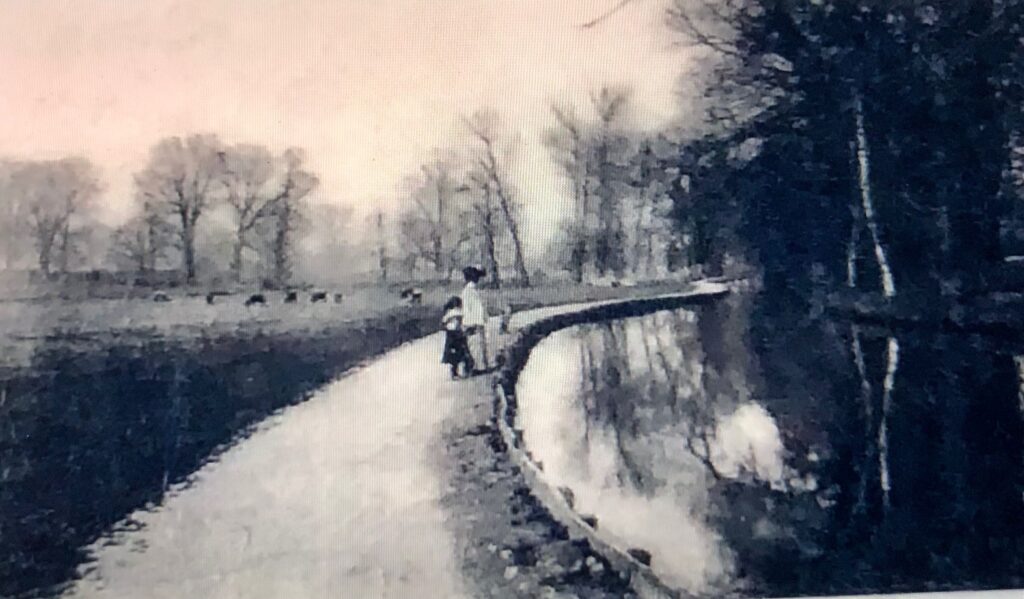
It should be pointed out that the lake is a relatively modern addition to a landscape where, in this location, a body of water in some form has existed for over one thousand years. In Saxon times, records in St Albans Abbey state there was a ‘large deep fish pond’ here.
By the 10th century, the fish pond had been acquired by the Abbey and drained, with just a small section kept for the Abbot. This pond was mentioned in the Doomesday Book of 1086. It is also suggested that the course of the River Ver was altered during the Roman occupation to create a cemetery.
Once again, I should emphasise that factual evidence on this is rather sparse. I have therefore been compelled to join up rather widely spaced dots to form a picture using a combination of logic and imagination. I try to make this distinction clear. This is where I digress from the scientific rigour of my principal source document: ‘Verulamium Lake and Park, St Albans, 1927 to 1934’ written by Janet Ousten and colleagues and published by Friends of Verulamium Park.
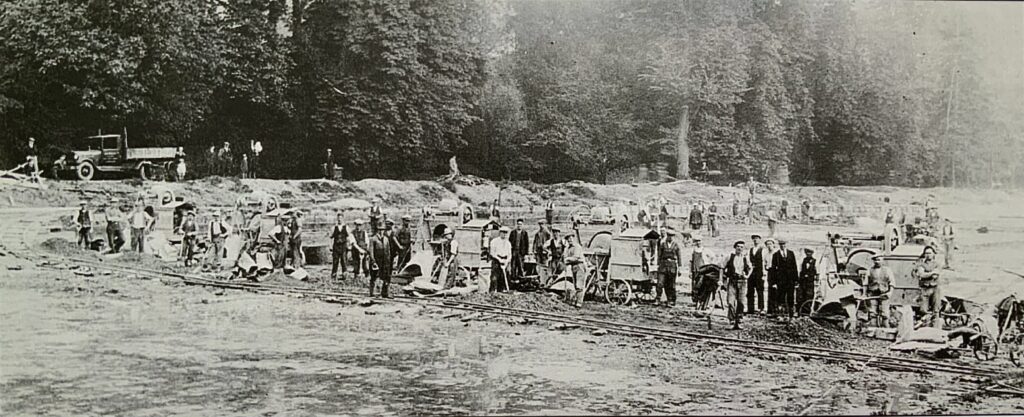
Work began on excavating the lake bed on September 15 1930. Scores of manual labourers, with about 50 per cent of them – it is thought – “transferred” from Depressed Areas, possibly from Jarrow and South Wales, set about the monumental task of carving out the lake bed.
The strength of the workforce fluctuated over time. An army averaging more than 100 workers was gradually built up, the most being used in the summer of 1931. The large lake covers 28,100 square metres (or 7 acres) and may have been dug out to a depth of around 2 metres to allow for the clay bed of the main lake to be reinforced with hardcore.
The small lake is 3,000 square metres (or just under an acre) and is much shallower.
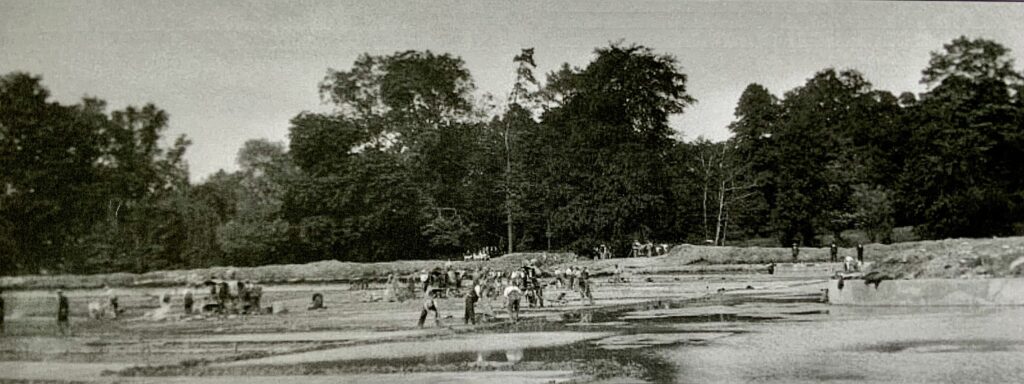
Working long hours, the men shed blood, sweat (and probably tears!) as thousands of tons of soil was hewn out of the ground by hand, using just picks and shovels.
Eighty -year-old photographs (discovered in a rubbish skip) have recently come to light and verify what elderly residents who remember those times say: no heavy machinery was used.
Thus, by the application of sheer hard graft, the lake was excavated by the men. It is thought that around 200,000 man-hours were spent labouring to get the job done.
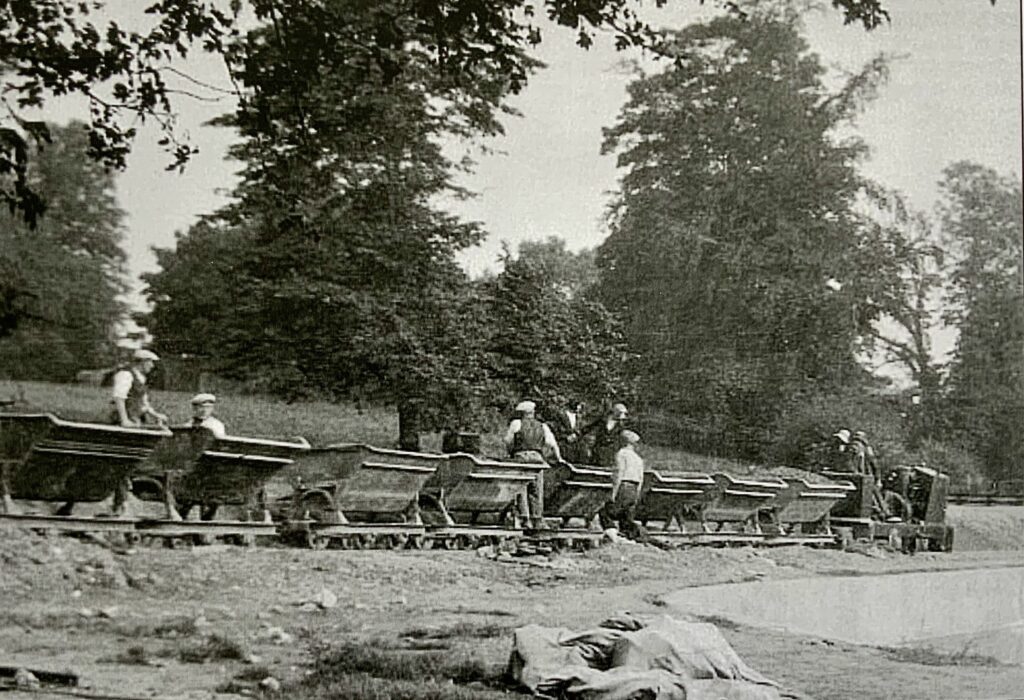
An ingenious system was used to transport the many thousands of tons of soil around the site and carry spoil to the bottom of Abbey Mill Lane.
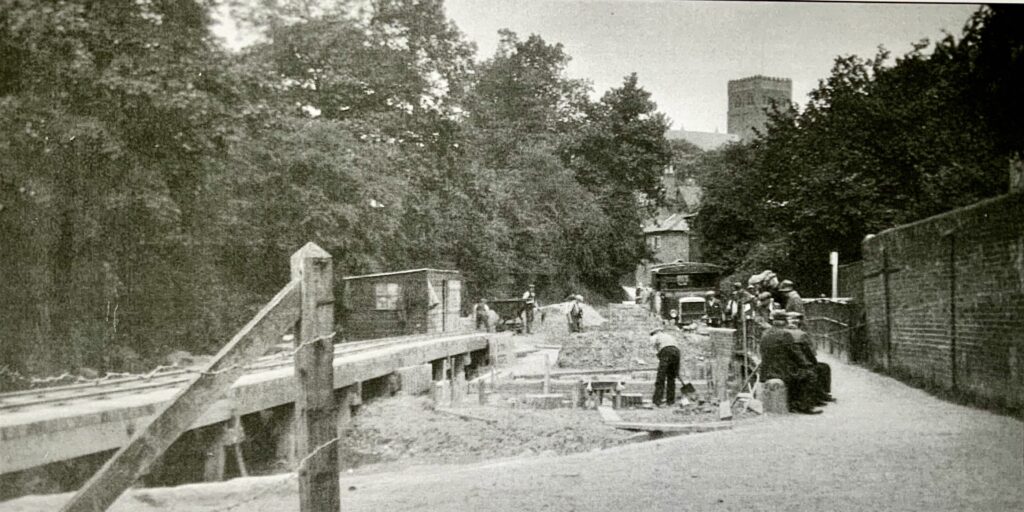
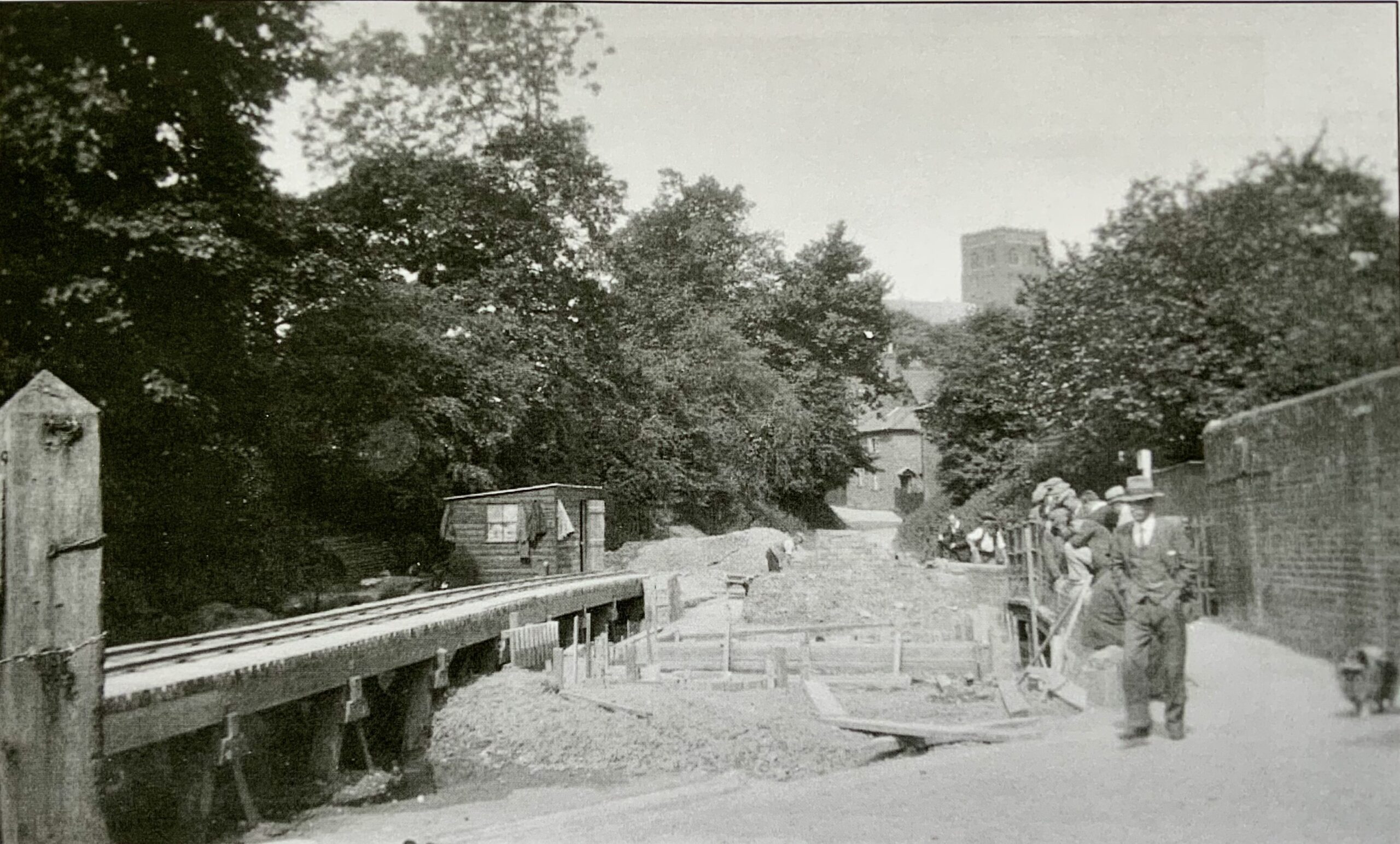
This involved a small petrol driven locomotive on narrow gauge rails pulling a train of wagons. These wagons were said to be typical of those used at the time in collieries and by Welsh slate miners. They were known as Jubilee wagons and widely used on large construction sites because they could be easily moved from one site to another. These are clearly shown in the photograph.
The earth that had been hewn out to form the bed of the lake was loaded into the Jubilee wagons, again by hand. Sometimes it was shovelled directly into the wagon. More commonly, I believe, the men are likely to have wheeled barrows full of earth along ramps of narrow planks supported, where necessary, by wooden trestles, and then emptied the earth into the wagons.
If I am right, the men would have needed a good sense of balance … and I wonder how many wheelbarrows full of earth could have been loaded in this way.
Narrow gauge rail tracks were laid on a temporary wooden bridge which was specially constructed across the River Ver at the bottom of Abbey Mill Lane, as shown in the photograph. Here, it is believed an engine house drove a lift. It is possible that such a powered lift, based on winching principles, was used to draw the wagons carrying spoil to the top of the hill, where it could be loaded on lorries and taken away. An alternative theory is that lorries were loaded at the bottom of Abbey Mill Lane.
Hardcore was almost certainly used to reinforce the clay bed of the lake and construct the base for the footpaths. Again, this would probably have been laid using few, if any, mechanical aids, just the army of toiling labourers. It is possible that compacting hardcore could have been done with a sturdy and reliable steam roller. If so, it was one of very few applications of modern technology – along with the petrol-driven locomotive – to the construction process.
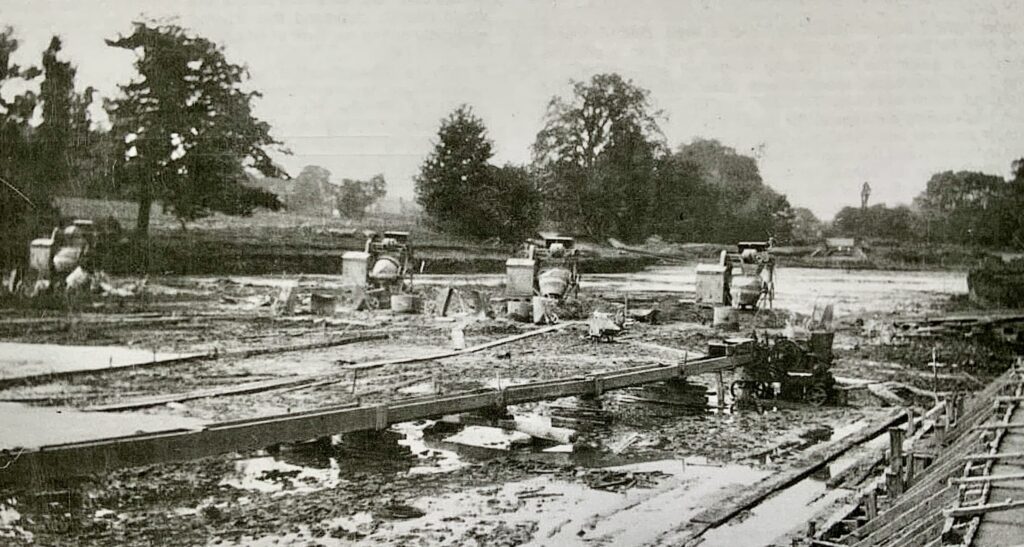
Another, as one of the recently discovered photographs clearly shows, was the extensive use of concrete mixers. These were used because “if all the concreting of the lake had been carried out by hand” the work schedule would have slipped. One photograph shows rows of dozens of concrete mixers standing in line across the width and along the sides of the lake bed.
The labourers mixing concrete by using shovels to load the sand and cement into concrete mixers was the equivalent to the modern-day luxury of lorries delivering ready-mixed concrete. It was absolutely essential as they worked diligently to stay ahead of the frosts of autumn 1931 and complete the scheme on schedule. The concrete was used to construct the massive bed and very substantial retaining walls of the lake. In effect, the large lake is contained in a shallow but massive (7 acre) concrete basin.
When next you walk around the lake, I invite you to enter into this time and breathe directly the atmosphere of industry and physical endeavour. Please use the evocative photographs to allow your imagination to roam back a lifetime as this part of our history is carved on our landscape. Prior to construction of the lake, a Roman cemetery was discovered in this area.
Before the massive construction work started, archaeological excavation of the Roman remains was entrusted to Dr Mortimer Wheeler who led a number of remarkably successful “digs” using a pioneering technique. Over the following years, this innovative approach to archaeology resulted in many spectacular and invaluable historical Roman treasures being unearthed in pristine condition. These are now conserved and displayed at the Verulamium Museum.
As an aside, to illustrate just how rich our heritage is, having mentioned Verulamium Museum, I should briefly sketch the historical context of the site on which it stands.
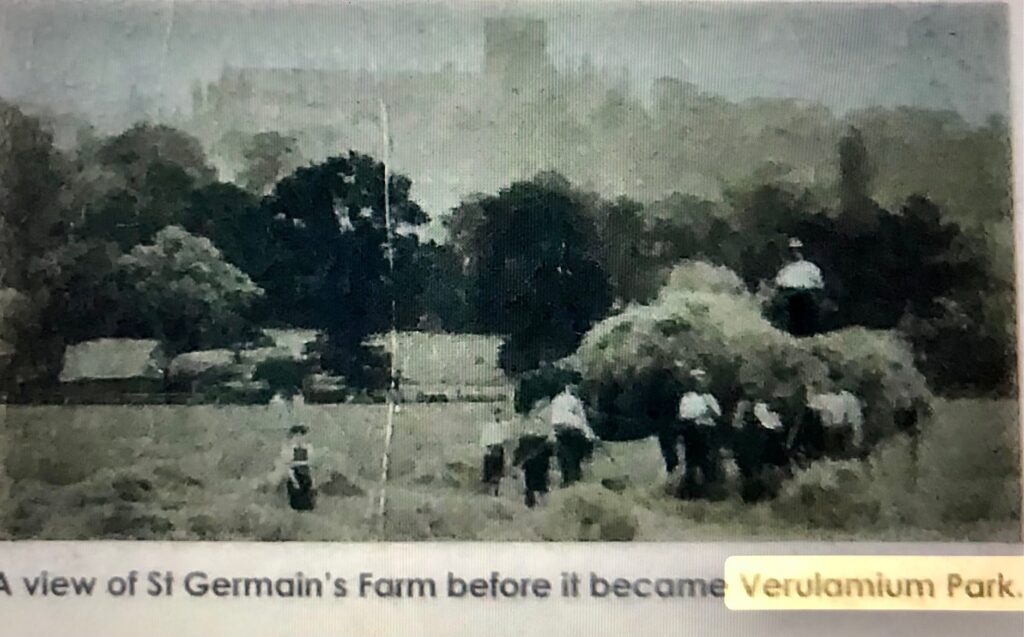
It is here where the original St Germains Farm house – as sold to the council by Lord Verulam – stood. And this, in turn, was adjacent to the remains of the Roman Forum and Basilica (extending beneath and beyond St Michael’s Church, churchyard and vicarage).
The Forum and Basilica formed the administrative, religious and commercial heart of Roman Verulamium.
The Forum was a large market square, surrounded by covered walkways where goods were bought and sold, and where city people met and talked.
The Basilica was a vast, cathederal like building in which the city council met and court cases were settled.
The Roman Court in the Basilica is probably where Saint Alban stood trialwas condemned, and thus became the first English martyr. The still used, and remarkably well preserved Roman theatre is also close by (across the other side of Bluehouse Hill. Though overshadowed by the sensational finds of the Wheelers, the lake project led to several ancient skeletons being unearthed from the clay by the labourers picks and shovels. These human remains were later re-interred in St Michael’s churchyard. Fragments of Roman pottery also abounded and were collected in heaps, brought to light by what the archaeologists despairingly called “the awful havoc of the spade.”