09 Apr 2024
Picture the scene. In an elegant assembly room, lit by flickering candlelight, groups of dancers perform the precise steps of a lively quadrille. Watching them is the elite of society, including mothers and chaperones keeping a beady eye out for suitable husbands for their charges. They could have stepped out of a Jane Austen novel.
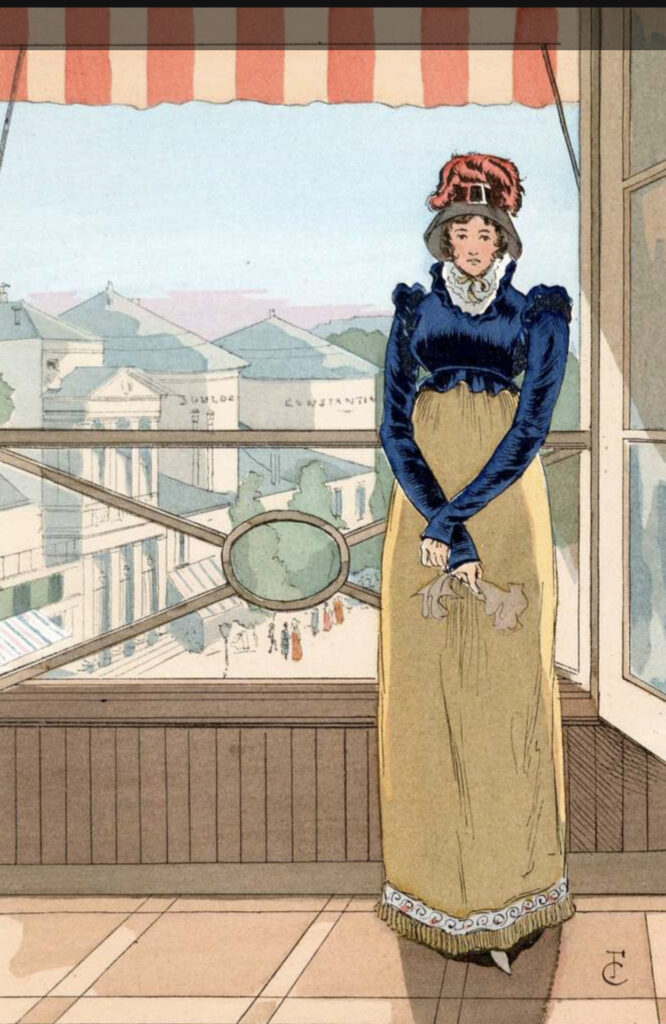
The ladies are wearing white gowns of muslin or silk, the men, smart tailcoats. This is the height of Regency fashion in the early 19th century, and a far cry from the overblown excesses of the previous century.
But first, a little background. George III had reigned since 1760 but suffered debilitating mental illness. Things came to a head in 1811 when his son, George Prince of Wales, was appointed Prince Regent. He continued to rule until his father’s death in 1820 when he took the throne as King George IV.
This period known as the Regency, generally taken to last until the death of William IV in 1837, was one of troubles both here and abroad. At home there was great poverty as the Industrial Revolution drew more and more people to the slum housing in the towns.
Meanwhile Britain and most of Europe was at war with the French Empire led by Napoleon. The culmination was the Battle of Waterloo in 1815, when Napoleon was defeated and exiled.
But against this troubled backdrop, the Regency is often remembered as a time of refinement and culture, if only for the wealthy.
As so often, Britain took its fashion cues from France. The French Revolution in the late 18th century had devastated the French textile industry. To promote French-produced fabrics, Napoleon banned the import of British textiles. This led to a rise in the use of lace and fine fabrics such as tulle. The Emperor also banned women from wearing the same dress twice at court and even blocked up the fireplaces at the Tuileries Palace to encourage them to wear more clothes.
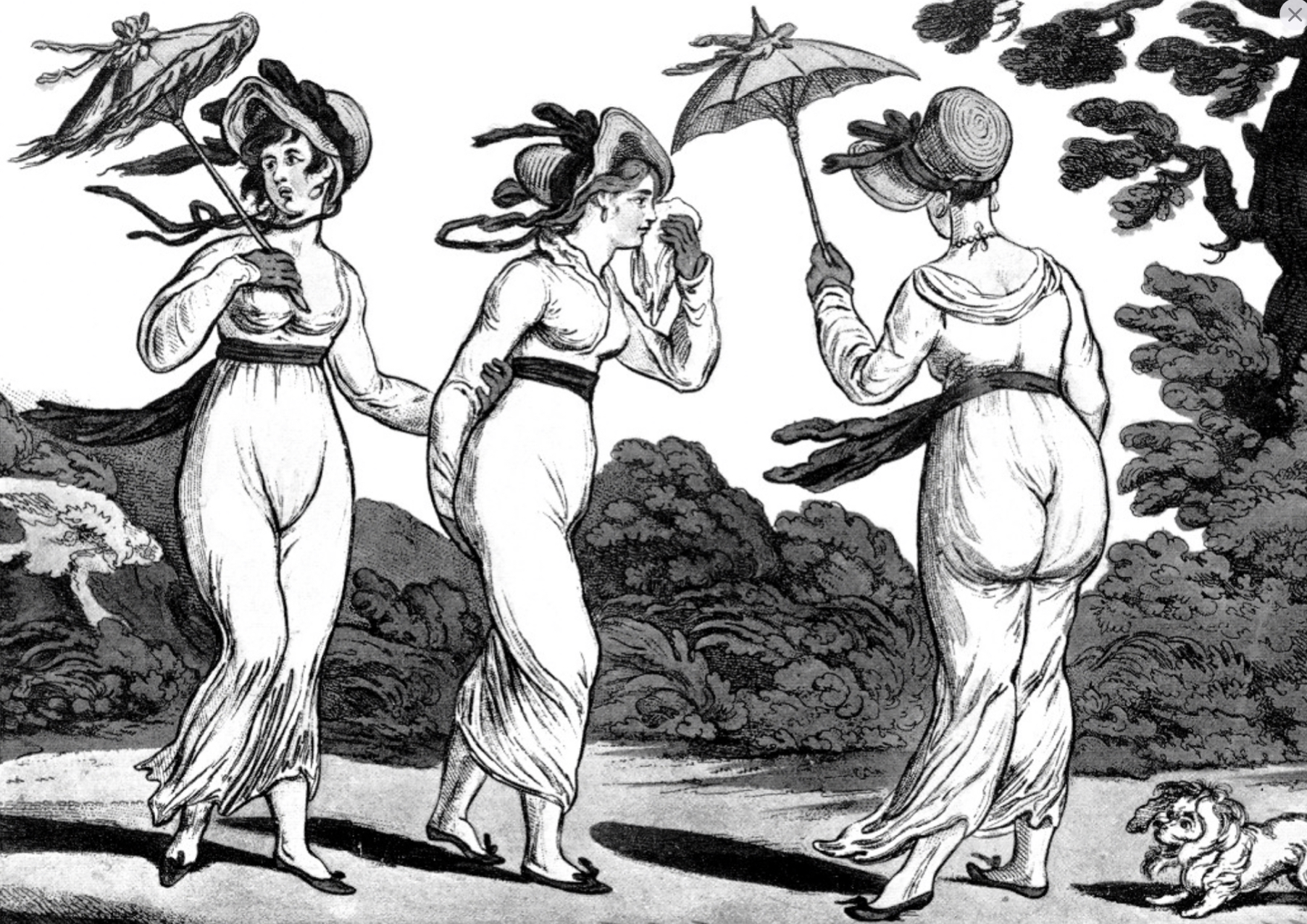
The style that emerged was the Empire line dress – high waisted, low cut and inspired by the flowing styles of classical Greece. Dresses were often made of white muslin, light cotton formerly used as underwear. The classical inspiration also meant a rise in body consciousness.
Stripped of previous bolstering layers of paniers, hoops and restrictive corsets, the curves of the body could now be easily seen. Very seductive, especially with less worn underneath. Women wore short corsets or stays, allowing more movement. These could also be incorporated into the dress as a bodice. Some women chose, shockingly, to discard corsets altogether, just wearing a chemise with a ribbon tied under the bosom for enhancement.
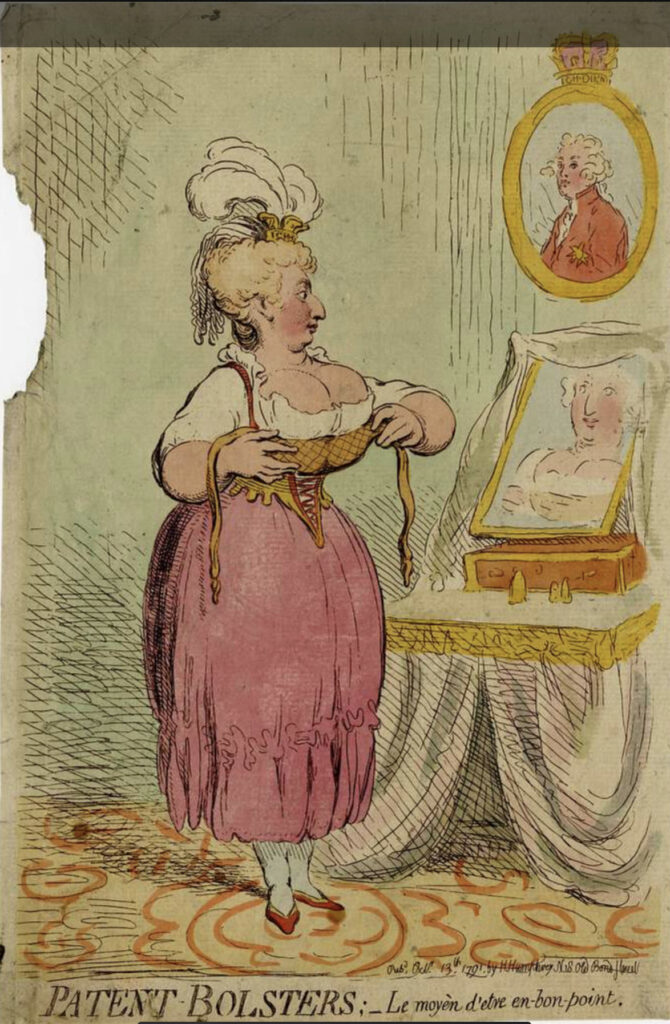
Bulky petticoats were cast off in favour of just one and sometimes, not even that. To show off one’s curves even more, the sexually daring would sometimes dampen their dresses to make them cling. All this was tough for women with bodies not designed for high waisted dresses. False breasts were often required.
Incidentally, drawers for women came along in 1806 but weren’t universally popular. George’s only child, Princess Charlotte, apparently took to them, but one woman wrote that they were “the ugliest things I ever saw. I will never put them on again”, especially when they fell down in the street and she had to walk off pretending they were nothing to do with her.
For modesty (and warmth), during the day the neckline was infilled with a chemisette of cotton or linen. For further warmth, ladies wore a cropped Spencer jacket. The invention of this garment is down to Earl Spencer, descendant of our own Sarah Churchill, Duchess of Marlborough, and major landowner in St Albans at the time. It is said that the earl had singed the tails of his jacket by standing too close to a fire, so he asked his tailor to trim away the damaged cloth, thus creating a new fashion.
Changes in style through the Regency period seem to have concentrated on the waist. Firstly the waistline of dresses moved upwards until 1816 when it arrived under the bust and could go no further. But as soon as the slightly less fashionable had caught up with this trend, it began to descend again, about an inch a year, until by 1825 it was back to its normal position.
Outdoors the dress was covered by a coat, often decorated with braid or frogging reflecting the influence of military uniforms much on display at the time. Outdoor shoes were short leather boots, often with pattens on top. These wooden overshoes protected the wearer from the worst of the mud and filth of the streets.
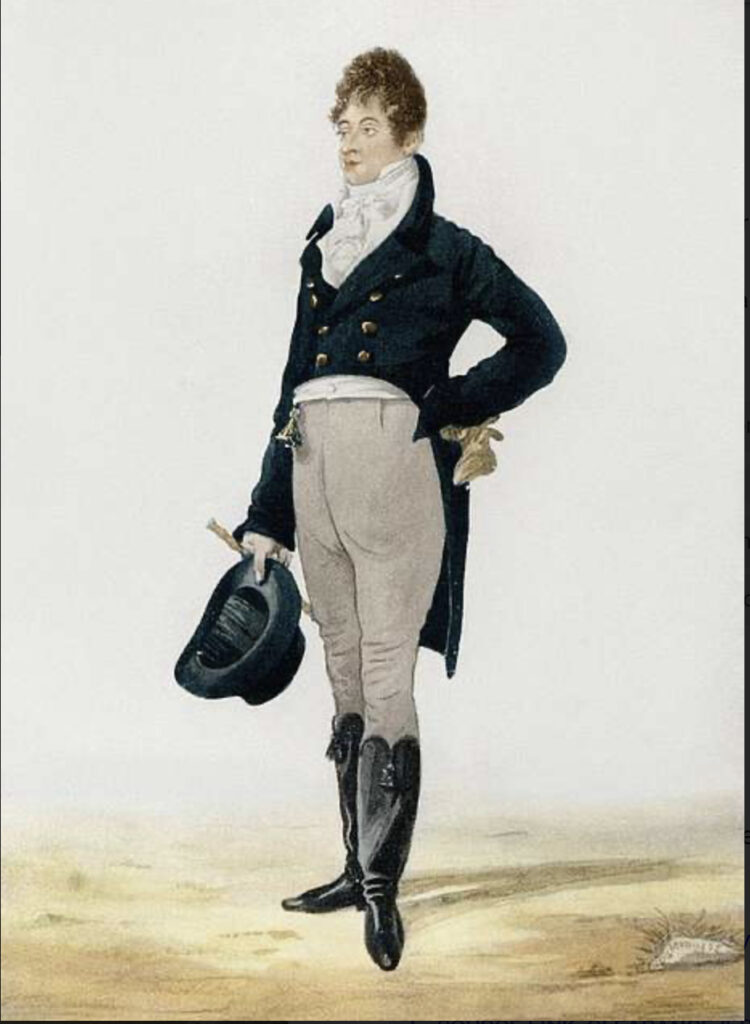
What of the men? The Regency was the era of the dandy. The most famous, Beau Brummell, set the fashion for modest styling, immaculate tailoring and faultless personal hygiene, as a contrast to the ostentation and dubious cleanliness of the 18th century. Gone were the bright brocades, embroidery and lace, to be replaced by spotless white linen shirts, narrow trousers in muted colours and plain dark tail coats. The outfit was worn with knee high boots – the Wellington boot, inspired by the Duke of Wellington, victor at the Battle of Waterloo.
As always, tricks to enhance one’s appearance were not just for women. Leather breeches in cream coloured buckskin were also in fashion and could be tight, very tight. Little was concealed. It wasn’t unknown to dampen the leather so it would enhance the musculature of the thighs.
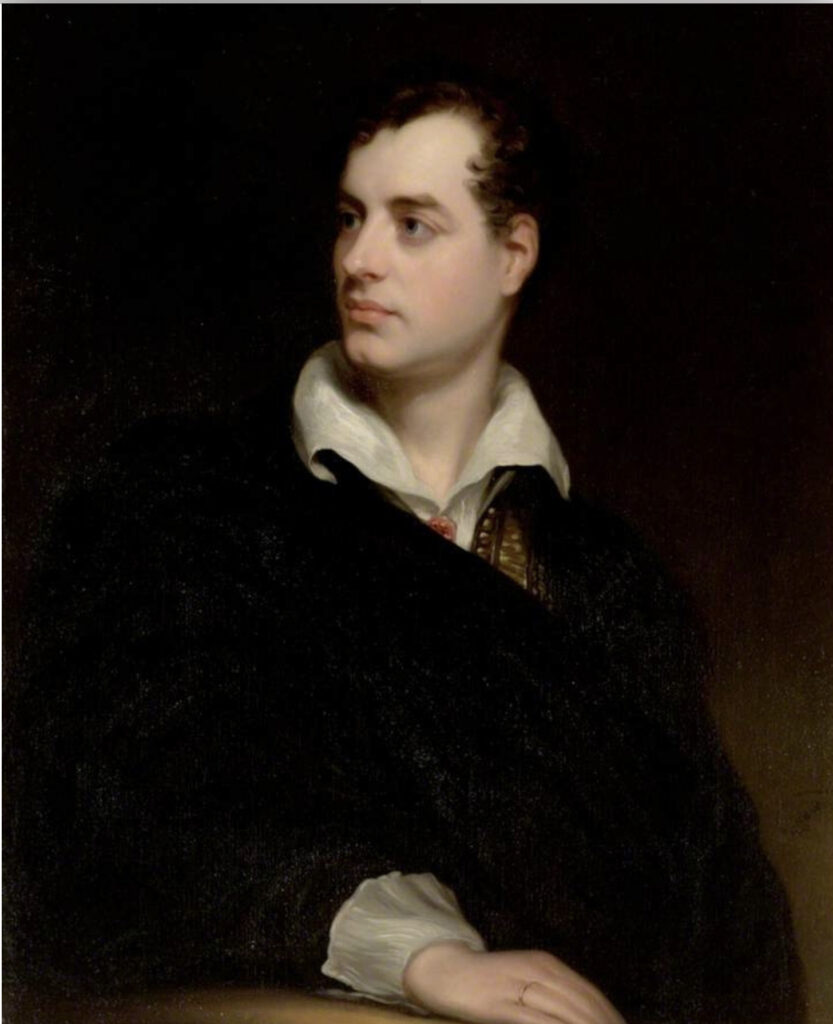
Talking of seductive styles, the poet, Lord Byron – “mad, bad and dangerous to know” – set a very different style to Beau Brummell. A deliberately dishevelled look of sensual abandon created by open shirts and no neck cloths exposing tantalising glimpses of the neck and chest. A popular look amongst young romantic poets and artists.
A mix of exotic Eastern influences were not just on show in the Brighton Pavilion, built as Prince George’s own, very expensive seaside retreat. Feathered turbans à la turque, patterned cashmere shawls and Mameluke sleeves became strong trends, as were tall, elaborate neck cloths for dandies, to the point that they could barely move their heads. Different styles required careful instructions on how to create them.
Hairstyles changed too. Women abandoned the ludicrous powdered wigs towering up to three feet and wore their own hair in simpler styles inspired by the classical world.
For daytime, their hair was topped by a bonnet. For evening functions there were hair ornaments – combs and tiaras – decorated with precious stones, flowers or feathers.
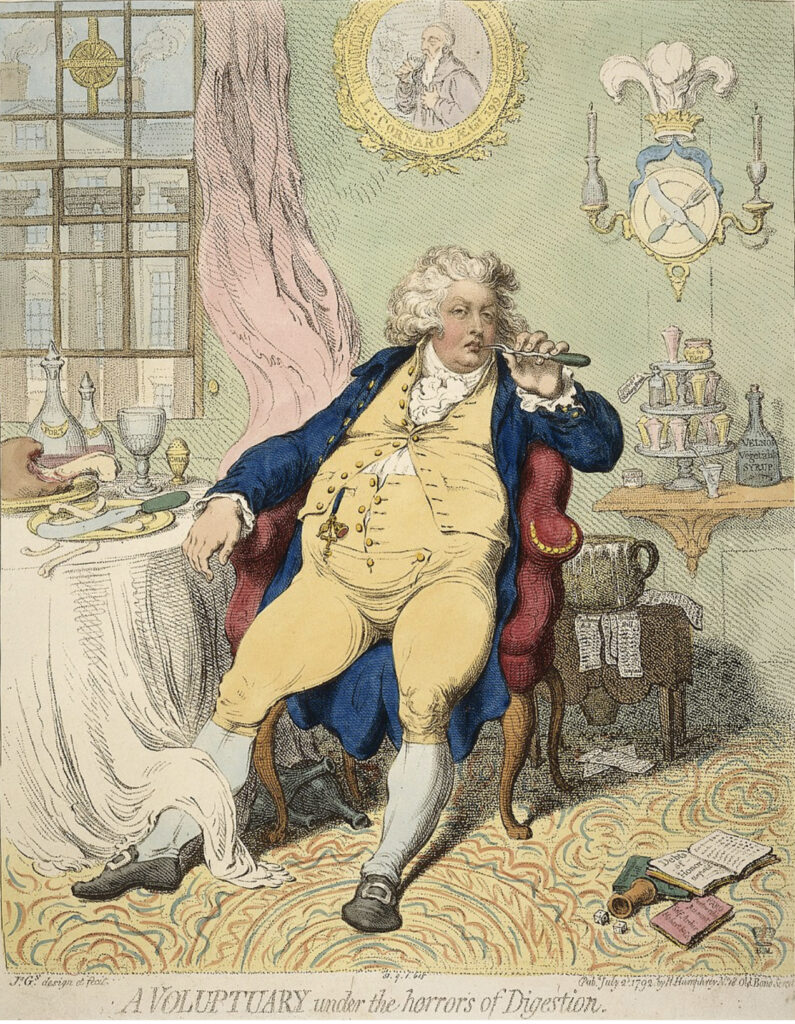
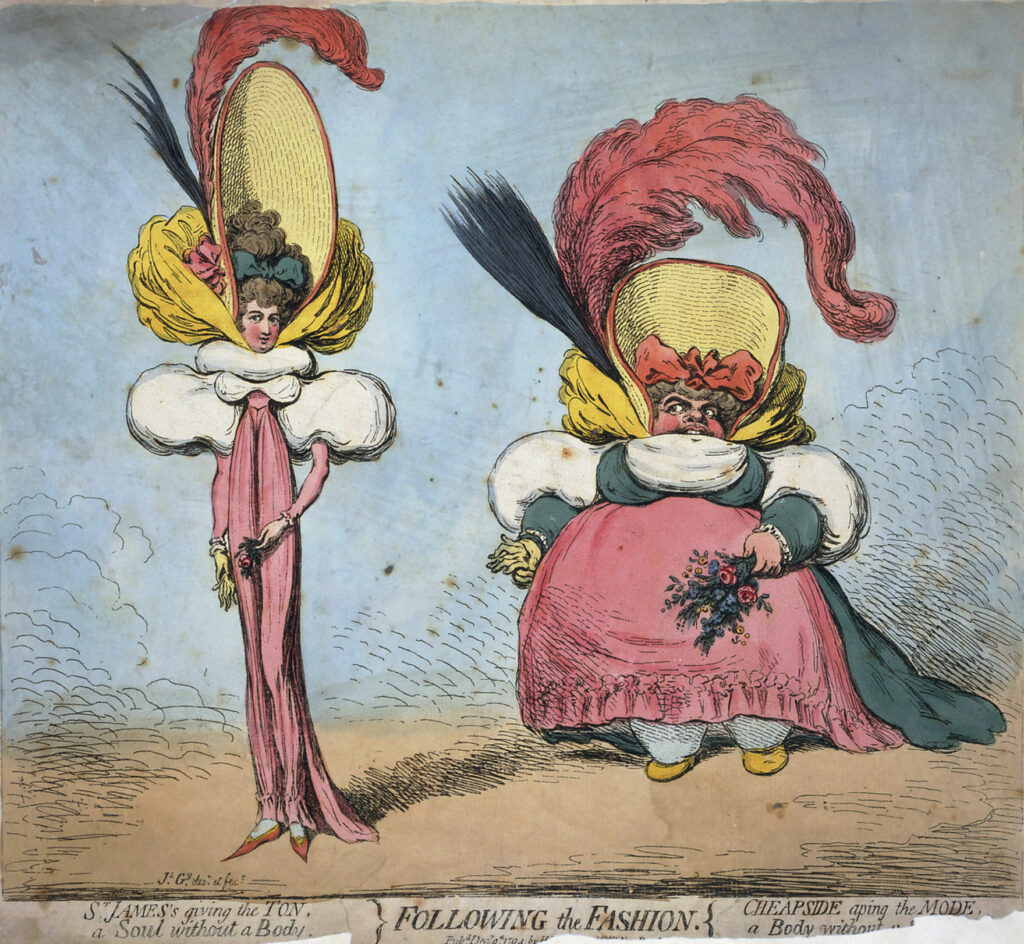
For men and women who didn’t have bodies like Greek gods or goddesses, these fashions often proved a challenge but provided great material for satirists. In particular, George IV’s lifetime of excess and his subsequent progression from dashing young prince to corpulent, self-indulgent monarch was a gift for satiric artists like James Gillray.
These were the fashions for the rich. For the poorer majority following the latest fashion was an unachievable dream. Their clothes were usually second hand or homemade, in practical styles and plain, durable fabrics such as linen, wool or cotton. The only exception was for those working in service where a uniform was provided. These liveries were often old fashioned in style with male servants decked out in the breeches and powdered wigs of the Georgian period well into the 19th century.
What of St Albans during the Regency?
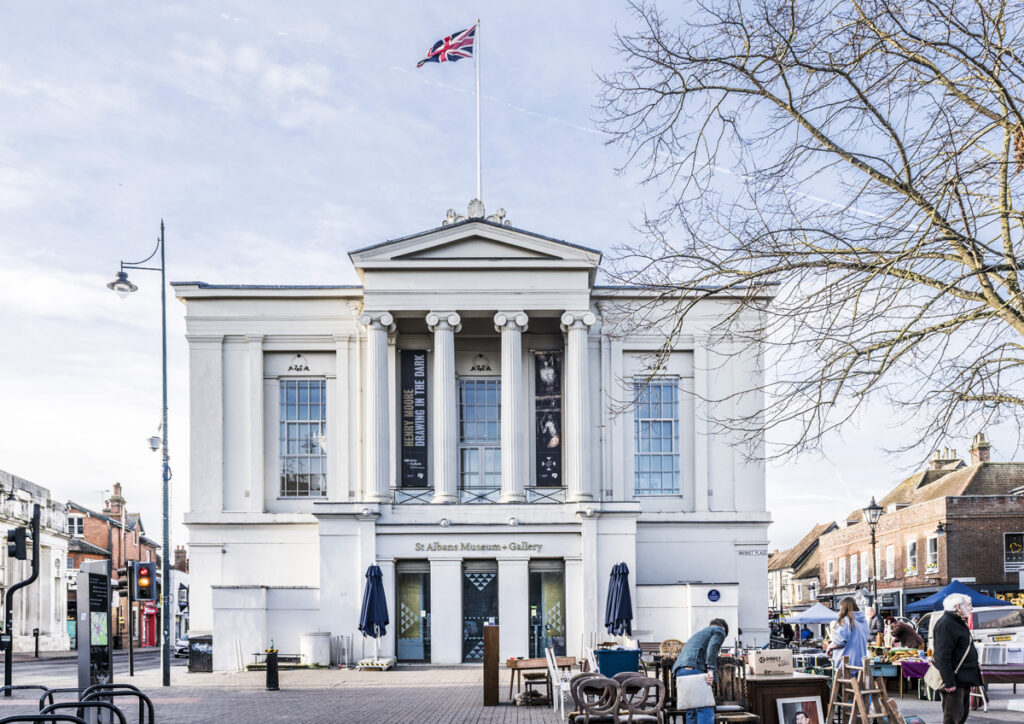
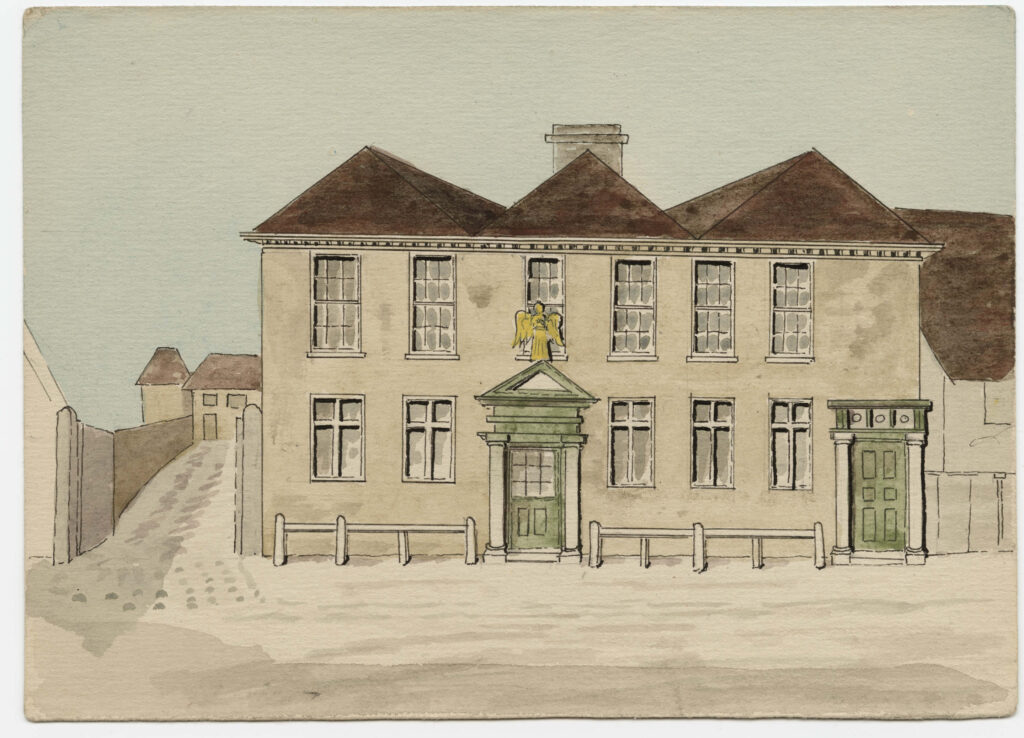
Whilst it may not have been able to match Bath for its fashionable status it did have an assembly room at the town’s principal inn, the Angel in Fishpool Street, which was the social hub for the town’s elite. However, they soon abandoned the Angel for the new Town Hall’s fine Assembly Room, which opened in 1831.
This became the focus of social activity, hosting dances, concerts and dinners.
But in 1837, William IV, the last Georgian king, died. A young queen was to herald a new era. An industrial era in which clothes became mass produced. Newly invented synthetic dyes led to a revolution in colour. And restrictive and downright dangerous female fashions were to drive women to found the Rational Dress Society. To come, the Victorians.
History in glorious colour; www.stalbanstourguides.co.uk