25 May 2026
A new era had arrived. The Elizabethan era. All right, it’s unlikely that a local Teddy Boy sauntering along the bustling streets of St Albans, pausing to admire his slicked back hair in shop windows, would have regarded himself as a New Elizabethan.
Nevertheless, that’s what he was. Elizabeth II had been crowned in 1953. Things were looking good. Hopeful, even. Food rationing, after 14 long years, was finally over. By 1959, the economy seemed to be booming. Prime Minster Harold MacMillan famously declared to the public that “you’ve never had it so good”.
Events both stirring and disturbing were taking place overseas. Fidel Castro led a rebel army to victory in Cuba. General de Gaulle became President of France. In America, Motown was founded in Detroit as Tamla Records. But, on the ‘day the music died’, Buddy Holly was killed in a plane crash. Meanwhile Europe was in the midst of the Cold War.
Here in St Albans, locals sensibly worried about matters they could do something about. It has always been a civic challenge to provide modern amenities yet retain the heart and soul of a city. This publication’s Flashback feature – taken from the pages of contemporary Herts Advertisers – provide a fascinating portrait of the changes taking place in St Albans during the late-fifties and how local people felt about them. Letters show concerns about the construction of new ‘motor roads’ and ‘soulless’ developments as well as dismay at the threatened demolition of historic buildings. There was also criticism of plans for the new Civic Centre because it failed to include a much desired swimming pool.
It was a time when much of St Albans was noisy with building sites and dust rising from regular demolitions. As well as people escaping war damaged homes in London, local aerospace industries like De Havilland in Hatfield and Handley Page in Radlett needed housing for their workers.
The population of St Albans of under 29,000 in 1931 had grown to over 50,000 by 1961. Homes were needed but locals feared the price to be paid.
The Herts Ad of 27th September 1957 led with “Over 50 mothers of young children met at Grange Gardens School to voice their fears about its threatened closure to make way for the proposed Civic Centre’. As it turned out, they were right to be concerned. The Civic Centre was opened in 1966.
But this is when unsung local hero, Albert Moody, Borough Engineer stepped in. Albert persuaded the City Council to show, where possible, a more sympathetic approach to St Albans’ historic past.
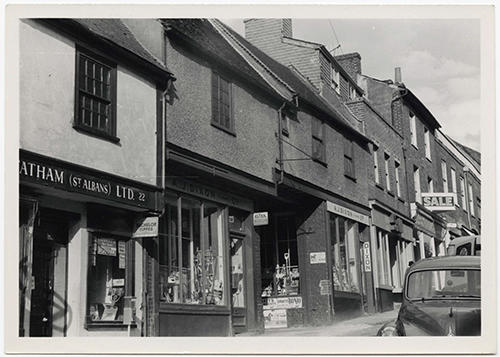
Albert convinced the councillors not to demolish the Christopher in French Row, a 15th century inn which had offered hospitality to wealthy travellers for several centuries (it now forms Simmons bakery and L’Italiana). By the early 1950s, the Christopher was a sad shadow of its former glory, dilapidated and virtually derelict. Albert saved it and led the restoration. Quite a job which also took 160 gallons of insecticide to deal with the woodworm and death-watch beetle. The cost of restoration was £14,800 (approx. £350,000 today). The inn gives its name to the shopping precinct later built in what had been the inn yard.
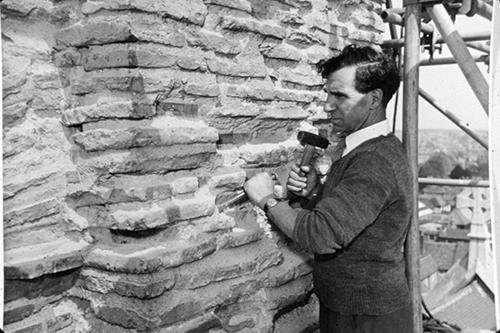
Another quiet hero spent most of the 1950s restoring the Cathedral Tower. Walter Barrett, ably assisted by Fred Restall, balanced on scaffolding in all sorts of weather to ensure that the tower was restored and repointed, brick by Roman brick.
And whereas there may have been opposition to widening Bluehouse Hill from a country lane to a busy ‘motor road’, archaeologist Sheppard Frere was permitted to carry out excavations before the work began. These brought fabulous discoveries. The Lion mosaic and bronze statuette of the goddess Venus were revealed after many centuries hidden under the dark earth, and are now on view in Verulamium Museum.
Other changes were taking place. The Black Lion in Fishpool Street, said to be the last common lodging house in Britain, was heading for closure. In Holywell Hill, the Crown and Anchor (formerly the Crane) was hit by a lorry in 1958. It never reopened as a pub, becoming an antique shop.
Today’s beautifully restored, elegant Museum + Gallery was still in use as the Town Hall and Courthouse. But in 1966, the Mayor and council moved lock, stock and barrel to that new Civic Centre. What to do with the Georgian building they had vacated? One idea was to demolish and replace it with a supermarket. Thankfully that idea went away.
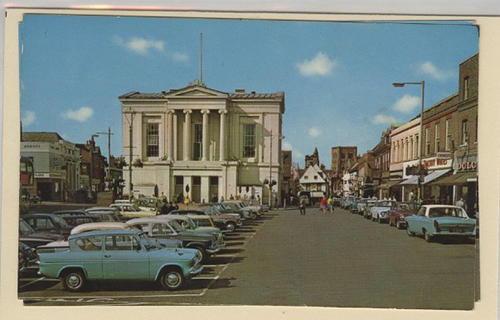
As well as new buildings, new technology was on its seemingly inexorable march. The good news was that certain items were becoming accessible to the general public. The rush to buy televisions to watch the 1953 Coronation meant that many St Albans families could now be captivated by Dixon of Dock Green, Hancock’s Half Hour and Sunday Night at the London Palladium. In 1959, Blue Peter arrived, while children could also be happily absorbed in Noggin the Nog and Crackerjack.
The long, hot summer of 1959 had proved the last straw for many people who had watched food spoil in their kitchens and pantries. There was a boom in buying fridges. This meant that recent arrivals like Findus Crispy Pancakes and Birds Eye Fish Fingers could be properly stored.
Other treats like Tunnocks Tea Cakes had arrived by the mid-fifties although tinned fruit with evaporated milk was still a recurring feature on dinner tables, as, of course, was the ever present tinned spam.
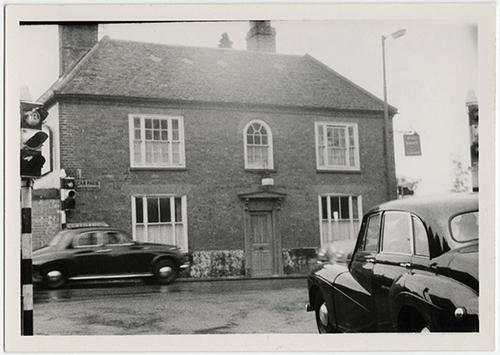
Talking of new technology, another article in a 1957 Flashback mentions a new ‘electrical computer’ being built by sixth formers at St Albans School, with the help of the assistant mathematics master, Dikran Tahta. As it turns out, one of the schoolboys helping construct this computer out of clock parts, an old telephone switchboard and other bits and pieces, was a young Stephen Hawking.
So what about these new young Elizabethans of St Albans? By the fifties, wartime children had become this new sub-culture – teenagers. Instead of being seen as younger copies of adults, they were a distinct social group in their own right. A handy new demographic ready to be targeted by advertisers.
They didn’t want to wear the same clothes or listen to the same music as their parents. They had more independence and more money.
They wanted their own look, perhaps as menacing Teddy Boys with their brothel creeper shoes, long ‘drape’ jackets and heavily slicked back hair styled in quiffs and a ‘duck’s arse’.
Whereas the girls, the ‘Judies’ wore pencil skirts or rolled-up jeans. This trend caused mixed emotions. Even St Albans Debating Society discussed the question, “Teddy boys, more to be pitied than condemned?” – highlighting the impact of the war on that generation. The result was a tie. (Flashback to March 1958 in Issue 163).
Then there were the Beatniks. Often stereotyped as always wearing black, with berets, sunglasses and goatees. Looking inscrutably cool in black polo necks, striped ‘Breton’ tops, tight cigarette trousers, covered by rugged looking pea coats or leather jackets. As the fifties slid into the sixties, the Mods (short for Modernists) began to appear, stylish in their slim suits, button down shirts and Chelsea boots, protected on their Vespas or Lambrettas by fishtail parkas. Their girlfriends would wear bright shift dresses and the new mini-skirts.
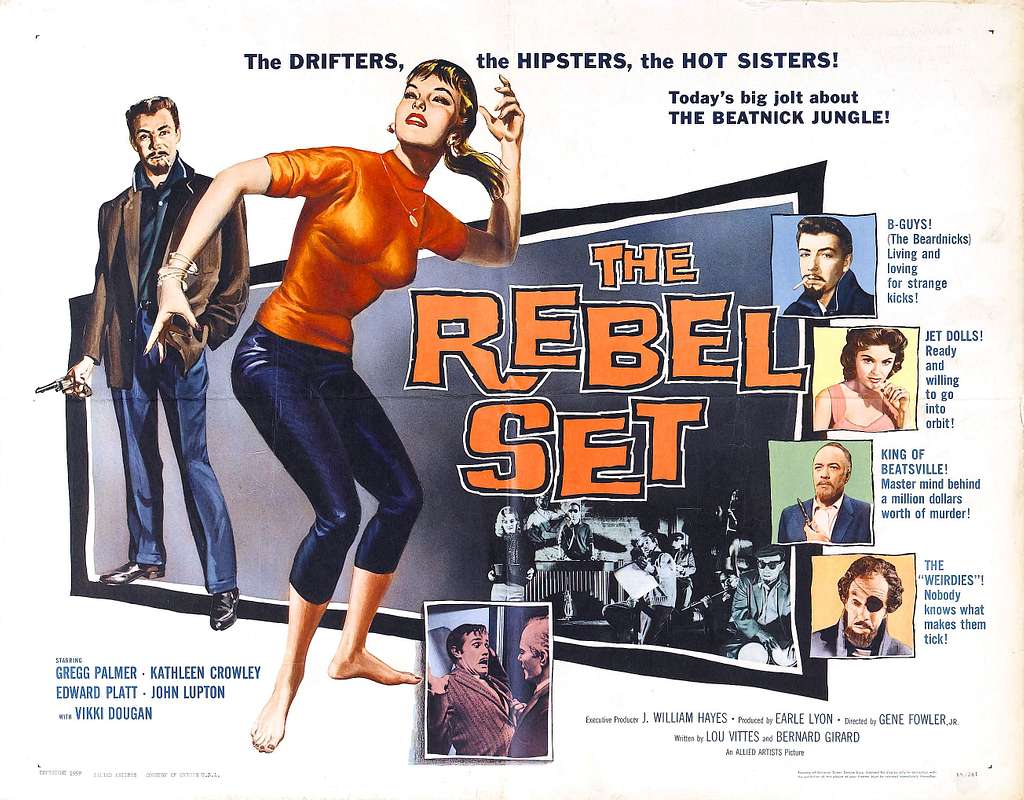
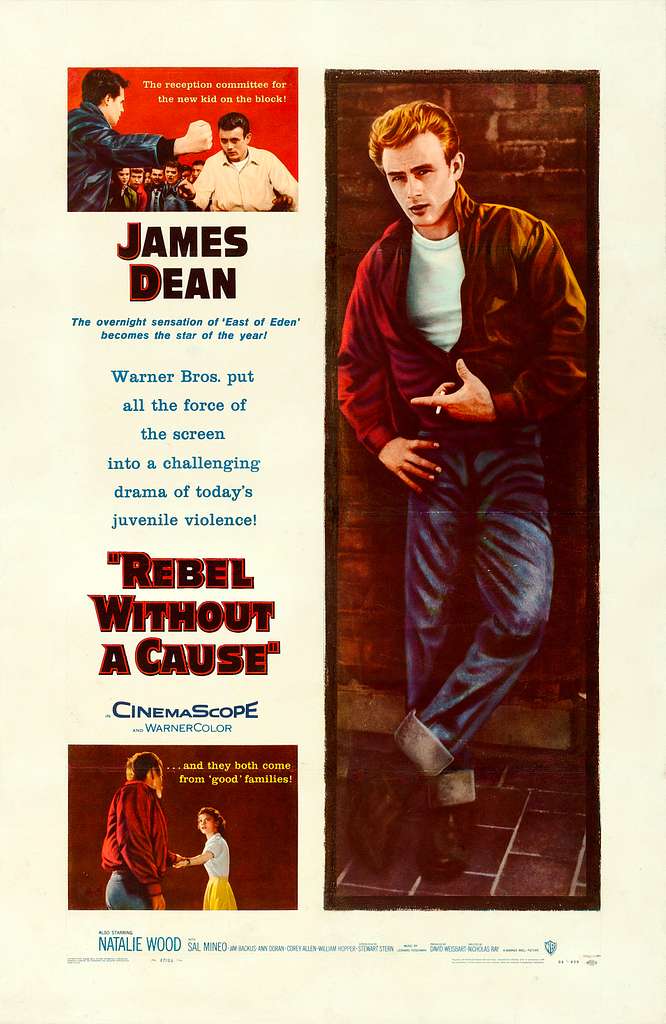
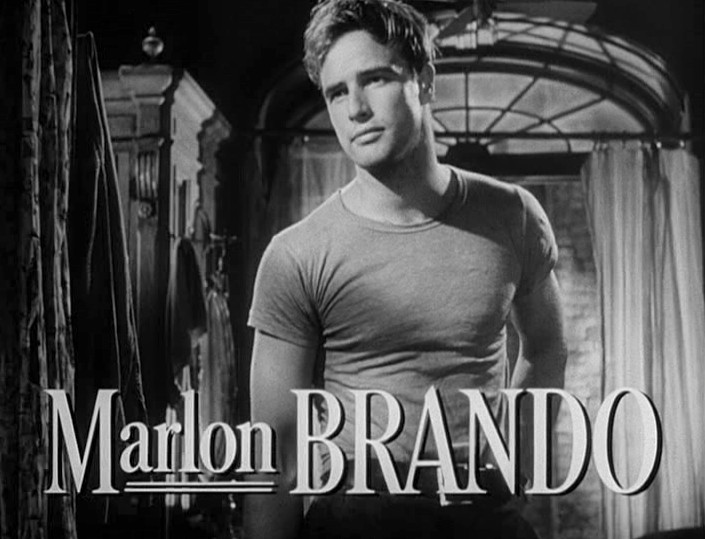
In the cinemas in London Road and Chequer Street, teenagers gazed upon James Dean in the 1955 hit, Rebel Without a Cause. Jeans became popular, seen as symbols of youth rebellion. So did t-shirts, formerly regarded as underwear, now seen stretched across the muscular torsos of brooding stars like Marlon Brando.
The sixties, contrary to current belief, didn’t arrive with a bang. More of a whimper. But that was to change. Those teenagers of the fifties came of age as independent adults. Attitudes towards the way things looked and sounded would be transformed. The impact would be felt right here in St Albans.
History in Colour with www.stalbanstourguides.co.uk