19 Feb 2026
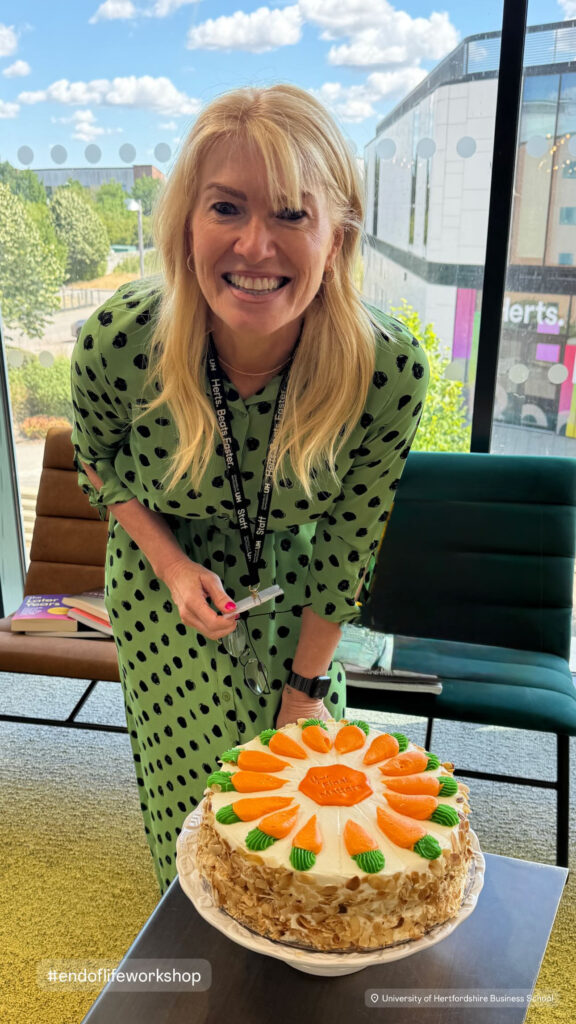
Caro Syson, founder of Your Final Matters, helps individuals and families get their later life and end of life admin organised through practical, in-person workshops and one-to-one support… Here she looks at how many local families are supporting ageing parents while juggling work and family life, only to face admin pressure that often lands on one person by default.
There is a pattern I see repeatedly when I speak to families in and around St Albans, and it rarely comes up in an obvious or dramatic way.
One adult child gradually becomes the default organiser. It’s usually not discussed, rarely agreed, and often only recognised once the load has become heavy. In many cases it’s an adult daughter, sometimes a son, occasionally a grandchild, and often the person who lives closest, answers the phone, or is simply seen as ‘more capable’ of dealing with paperwork.
They are often labelled ‘the responsible one’. Does this sound familiar?
At the start, it feels manageable. Helping with a hospital letter, booking an appointment, chasing a prescription, making a call, or opening any post that looks official or important. None of these things feel significant just on their own, and most people are more than happy to help. It feels like it’s no big deal.
Over time, however, those small tasks start to accumulate. Information begins to flow through just one person. Questions are usually directed to them. Siblings assume they are the ones who “know where things are”. Without anyone quite deciding it, one person ends up carrying responsibility for a growing amount of life admin. And this is all in addition to their own usual chores.
Most adult children I speak to do not resent helping. I often hear the phrase “if you want something done, then ask a busy person” as if implying the capable one will always manage to shoulder just one more thing.
What they struggle with though is how invisibly that support turns into what they feel as ‘responsibility’, and how difficult it then becomes to step back once that role has been assumed or inadvertently given to them.
What often surprises people is that the burden then takes on a life of its own and soon becomes not just about ‘doing’ things. It is about holding information, anticipating problems, and worrying about what might be missing.
That mental load sits in the background while people continue with full-time jobs, caring responsibilities of their own, and everyday life. Often they are referred to as the ‘sandwich generation’ a term used to coin mid-life adults who are juggling both their own younger families or teenage kids alongside ageing parents, plus a partner/relationship and often a full time job. That sounds more like a full on ‘all-day breakfast sandwich’ to me, but sadly served without a meal deal upside of a drink and bag of crisps!
Many people describe a constant low-level anxiety. They are not sure whether the paperwork they have seen is complete, whether there are accounts they do not know about, or whether important decisions have ever been written down. It is not dramatic, but it is draining. They are aware that there must be gaps in their knowledge, and yet they don’t know what they don’t know. How can they?
And they almost dare not ask for opening a whole can of worms that they then become the gatekeeper for.
In practical terms, families are most often caught out by these gaps rather than any big, obvious omissions.
Bank accounts that only one person can access. Utility bills in a single name. Online accounts no one else can log into. Documents that exist but cannot be found quickly when needed.
Each issue is solvable in isolation.
But together, they create delay, stress, and unexpected cost at exactly the wrong time.

Another area that causes real difficulty is legal authority. Many families assume that if something happens, a close relative can simply step in to manage finances or make decisions.
They know where mum or dad’s bank card is and what their pin number is. If a quick shop is needed they can pick it up and pay for it with a few clicks or a tap.
But in reality, once someone loses mental capacity, even immediate family members cannot act legally without the right legal arrangements in place. Discovering that after the fact can be both shocking and upsetting.
The unspoken burden usually becomes visible during a moment of change.
A hospital admission, an accident, a sudden illness, a fall, or a bereavement brings everything sharply into focus. That is when families realise how much has been left unsaid, undocumented, or assumed.
In St Albans, this pattern is particularly common. Life is fast paced and everyone is busy. I get it.
Many families live close enough to be involved, but busy enough that roles are never clearly defined.
As a commuter belt city, we have lots of people heading straight into London, Monday to Friday and adult children often balance demanding jobs, long days, and a family life of their own, fitting support into evenings and weekends.
Because the support is informal, it is easy to underestimate how much responsibility it involves. And because it is rarely talked about openly, the burden is not always shared fairly.
On a national level, it is estimated that 5.8 million people are unpaid carers who contribute enormous value to society, with a growing proportion of that care provided by adult children (59 per cent women) supporting ageing parents alongside work and family commitments.
What is less visible though is the administrative load that comes with that role, and the emotional weight it carries when things are not organised in advance.
This is not about perfection, and it is not about taking control away from our parents. It is about clarity.
Knowing what paperwork exists, where it is kept, who needs to know what, and what someone’s wishes actually are, can dramatically reduce stress later on. Those conversations are often avoided because they feel uncomfortable, but avoiding them usually shifts the burden onto someone else.
In my experience, when families address these issues earlier, something changes. Information is shared. Assumptions are corrected. Decisions are made while everyone still has a voice and a choice.
And, most importantly, the responsibility stops sitting silently on one person’s shoulders.
Have these conversations now. And if you aren’t sure where to start then reach out for help.
Free resources and further information are available at www.yourfinalmatters.co.uk