25 Sep 2024
The Friends of Jersey Lane, formed 18 months ago, and attracting an ever-growing membership, is looking forward to its AGM at 7.30 pm on Tuesday October 29 at Jersey Farm Community Centre, writes Andrew Boxer.
The meeting will welcome a guest speaker from Sustainability St. and refreshments will be available. Members of the public are cordially invited to come along and hear about the work that has been carried out by volunteer working parties along the lane, and plans for its ongoing enhancement.
The meeting will also provide an opportunity for members of the public to express their views and put forward any ideas they may have for ways in which the lane and its environs might be improved for the benefit of its many users and its wide variety of flora and fauna.
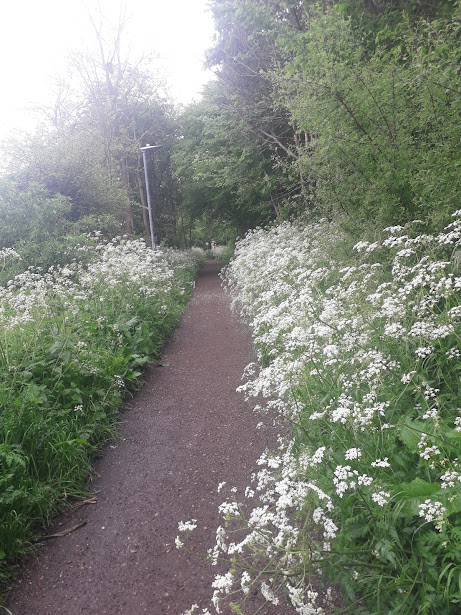
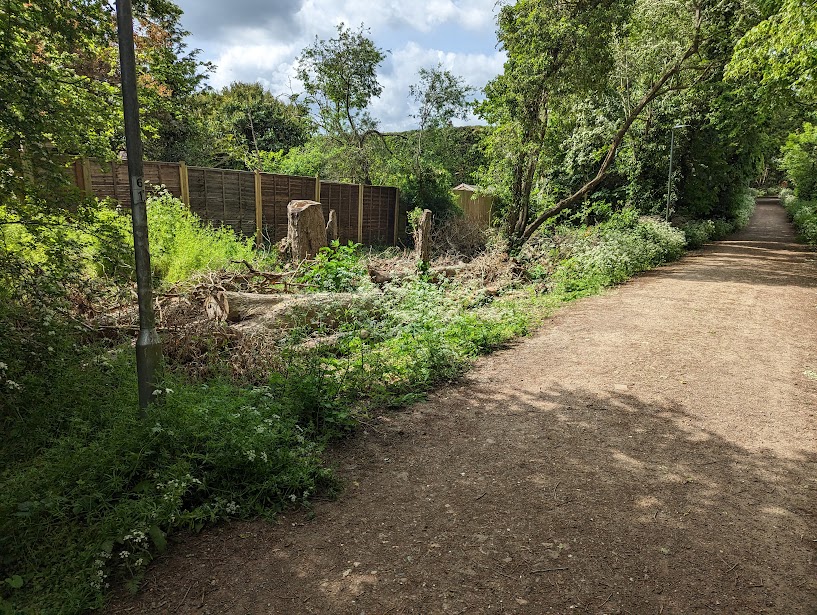
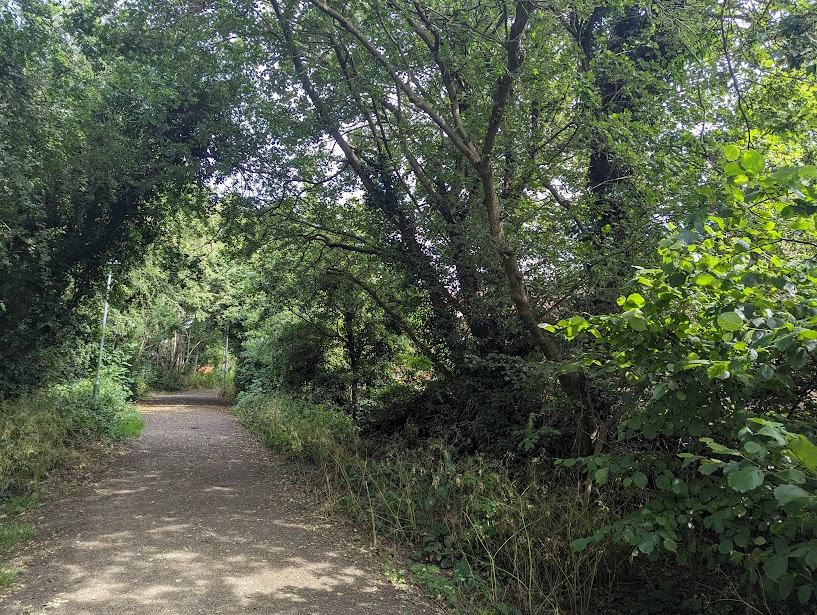
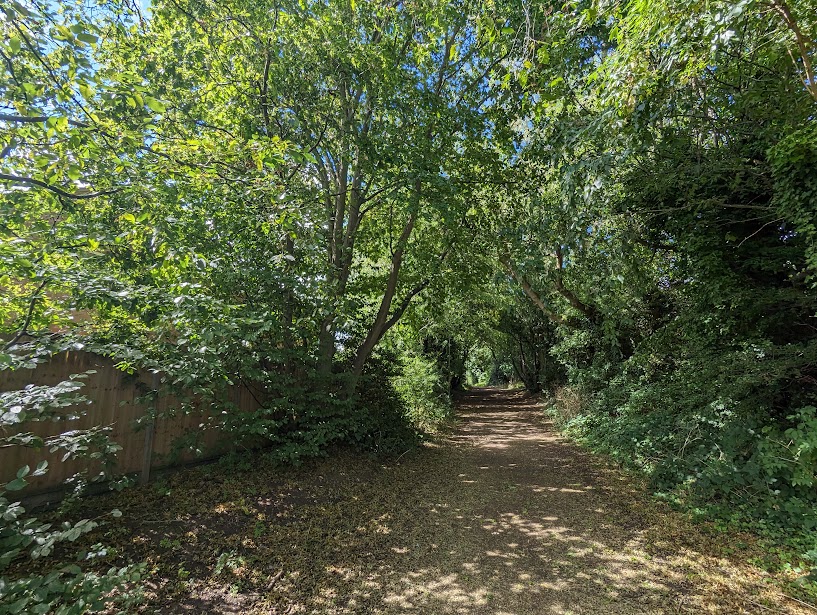
Jersey Lane is a one-and-a-half-mile pedestrian route linking the communities of Marshalswick, Jersey Farm and Sandridge. Originally a country road, vehicles were prohibited as the Jersey Farm estate was constructed in the 1970s. It is a fully lit, pedestrian route used by cyclists, walkers, runners, dog walkers and for general recreation.
The Friends of Jersey Lane (FoJL) was established in 2023 to maintain and improve this green corridor by enhancing its biodiversity, including protecting the trees and shrubs and encouraging birds, bats and butterflies, whilst ensuring that the lane remains a safe route for social users and commuters.
The modern history of the lane – in as far as it can be traced – is described in Mike Neighbour’s two-volume St Albans’ Own East End (vol 1: Insiders pub. 2012; vol 2: Outsiders pub.2013). Mike’s research shows that the lane’s western end once formed part of the private drive to the former Marshalswick House and passed by a brick kiln and clay diggings at what is now Rose Walk. It appears likely that, until the 1930s, this section was known formally as Marshalls Drive, though the local populace would probably have simply used the name of the local Evans Farm, which, in 1931 changed its name to Jersey Farm when Dr Harry Corner moved in with his herd of pedigree Jersey cattle. The farm itself was sold around 1965, by Dr Corner’s daughter, for the development of the Jersey Farm estate.
Post WW2, the lane was widely known as Tramp Dick’s Lane. In his book, Mike Neighbour notes: “There have been regular wandering visitors to and through the eastern districts, and more than one by the name of Tramp Dick. But the first holder of that title – real name Tom Whiting – died in March 1946 at his little hideout along the tree-lined Jersey Lane.”
In fact, Tramp Dick was such a legend among the locals that his passing was the subject of a detailed article in the Herts Advertiser.
His shelter, according to the article, was built of corrugated iron, supported by an old iron bedstead and tree branches and there he lived for many years, together with his meagre belongings. Tramp Dick was quite an enigma: not, by all accounts, a down-and-out, never known to beg, and living, so people believed at the time, on a weekly allowance from an unknown benefactor.
Neighbours thought him well-educated and found him able to “converse quite fluently on every subject”, with “a lucidity which astonished his listeners”.
Legend had it that he became a recluse following an unsuccessful love affair.
“Nevertheless”, the article notes, “he lived as he wanted to live. Shaded by overhanging trees, he would sit outside his domain, cooking his meals over a fire, the fuel for which he gathered in a spinney in Sandpit Lane”.
We are told that he helped with the haymaking and, in summer, “earned a few odd coppers by gathering and selling bluebells, mushrooms and blackberries”. Another of his nicknames was ‘Blackberry Joe’ – probably the origin of the
name of the Blackberry Jack pub. Tramp Dick is buried at Hatfield Road Cemetery, and it was only in the 1970s that people in the area reverted to using the name Jersey Lane, rather than Tramp Dick’s Lane.
A local resident speaks of his father – who was a boy in the mid-1930s – talking frequently about Tramp Dick, whom he describes as, “something of a mystery to the local residents. As the story goes, when he had died, someone entered his hovel and found a hoard of sovereigns. How true that was I don’t know, but a nice story”.
According to this resident, who has done some research of his own, Tramp Dick was, “never a tramp in the true sense of the word. He was well-spoken and known as a gentleman, probably from a wealthy family. He wasn’t scruffy and used to wear a thick, brown coat and walked with a stick. It was his habit to walk from his shelter down to Hatfield Road every day to a baker’s, who used to give him leftover cakes”.
Several other people now living in the vicinity of the Lane have contributed their memories, among them David Lane, who took up the post of junior planning officer with St Albans District Council in 1975.
David recalls making many visits to Jersey Lane in the course of his work, at a time when it was still open to motorised traffic and a planning public inquiry was discussing whether the site should be developed for housing. It was decided at the time to retain the lane as a footpath linking the new estate to the rest of Marshalswick, but also, David says, “to enable the trees which lined the lane to be kept and form a landscape screen to the proposed homes”.
Having moved to live in Jersey Farm, Sue Saunders recalls her delight upon discovering the lane: “It was a quiet, green corridor that gave me a pleasant walk to the shops. I could almost imagine I was walking in one of Thomas Hardy’s Wessex lanes.”
Sue, who, along with David Lane, is a member of the FoJL management committee, found that on her regular walks with a newly acquired puppy, “I became more aware of the
variety of trees and flora, the sounds of birdsong, and the light and shade created by the canopy above.” She also found that her puppy, “befriended many dogs of all shapes and sizes, allowing her to be socialised. The benefit to me was that I met other dog walkers and made several friends. Even if other people don’t have a dog, they will often stop and speak to you. So, dog walking in Jersey Lane is good for my mental health and my dogs.”
Friends of Jersey Lane would very much welcome any further information on the history of the lane, together with personal memories and reminiscences. They would also be delighted to hear from anyone able to offer a little of their time, occasionally, to help one of the volunteer work parties. Further details can be found on the website, friendsofjerseylane.org.uk.