


19 Feb 2024
Elena Hogg, founder of local culinary company FOOD by Elena, can’t wait until spring to get her hands on some rhubarb…
Rhubarb. The Marmite of the fruit world. Its intense sourness isn’t for everybody,
but, coupled with vast quantities of sugar, its sharpness can reach the upper echelons of food heaven.
While its true growing season starts in March, over January and February those craving a sweet-sour fix can find forced rhubarb in the shops. This is rhubarb that spends its first years cultivated outdoors to harden its roots to the frost, then gets transplanted into forcing sheds where the comparative toastiness instigates something of a growing frenzy.
Glorious in its retro-pinkness, these rods of fibrous fruit (or, technically, vegetable) are rich in vitamin K and have some vitamin C to offer, too. They are beyond easy to prepare, requiring a mere wash, a chop and a simmer. Be warned, though, they collapse down and release a lot of water, so buy more than you think you’ll need.
This water they release, though, combined with the sugar you’ve added (and which you really need if you are to combat the tongue-furring tartness of rhubarb), creates the most delicious syrup – especially if you use brown or, say, coconut sugar.
The more you cook down the rhubarb, the more syrup you make – well worth the mush-factor of over-stewed rhubarb, in my opinion.
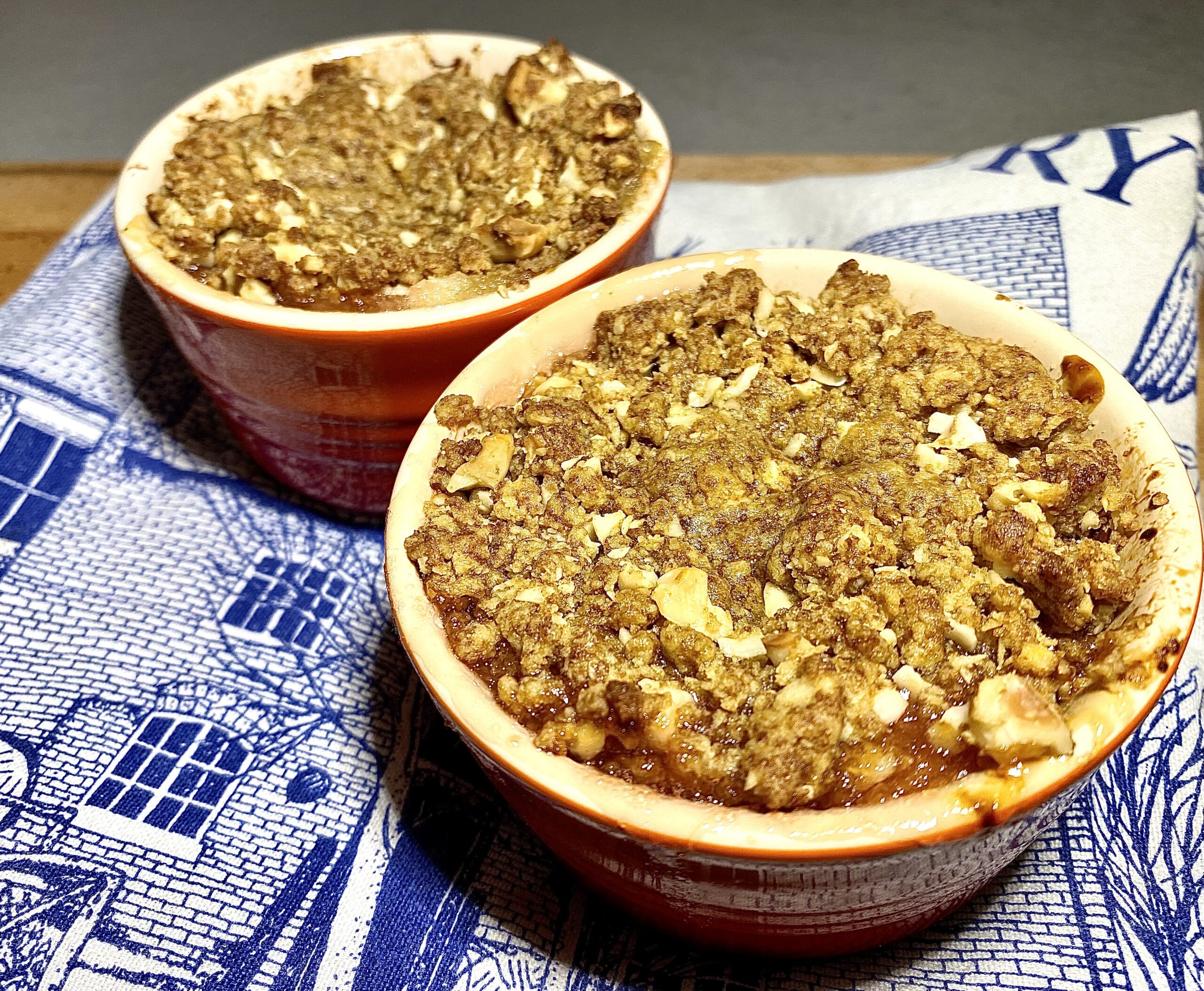
Rhubarb is perhaps most famous for crumbles, of which I am a big fan. I like to add ginger for warmth, and also hazelnuts to the topping.
Their earthiness complements the zing of the rhubarb beautifully, and they offer some texture to what is otherwise a rather soft eat, especially when you think that all the delicious things you eat it with are also soft: cream; custard; ice cream.
In fact, this choice of dairy deliciousness for adorning the humble crumble is the source of much consternation and conflict in our family.
There’s my mum, who would avoid fresh cream like the plague, but freeze it and add sugar and it becomes more than acceptable.
Then there’s my husband, who declares a crumble outright ruined if anything other than custard touches it. To say nothing of the ‘to heat or not to heat’ debate, which has taken twenty-three years to settle with the simple formula of putting hot custard with cold desserts, and cold custard with hot desserts. Twenty. Three. Years.
Rhubarb isn’t just for puddings, though. It makes an agreeable accompaniment to savoury dishes too and, over the years, I’ve experimented here and there with different recipes.
Rhubarb pairs very well with pork, and I’ve also used it to flavour a consommé for a scallop starter. I even remember making some fun, papery ribbons of rhubarb for a garnish that I’d sliced very thinly and dehydrated in a warm oven. They retained their vivid colour perfectly.
We recently hosted a small dinner party, for which I decided to pan-roast some duck breasts. I’ve used plums and blackberries for my duck dishes in the past
because the gaminess and the fruitiness work so harmoniously together, but I wanted to try something new and some rhubarb caught my eye whilst shopping.
So I cut the rhubarb into batons and roasted them in the oven for about ten minutes – at a low temperature to avoid disintegration.
I sprinkled them liberally with sugar before they went into the oven, but I’d advise re-sprinkling after five minutes because the sugar doesn’t stick to them so well when
they’re raw.
I also stewed down several sticks to form the basis of my port and rhubarb sauce, to which I added mustard, redcurrant jelly, star anise and some good chicken stock.
If you want a glossy finish instead of rustic, pass the sauce through a sieve to remove the rhubarb fibres and add a good knob of butter for shine and to enhance flavour. Butter is the answer to everything.
Except heart health.
To offset the sharpness brought by the rhubarb, I alighted on chestnuts.
After roasting, I left some whole for some texture and turned the rest into a silky purée, which added a creamy dimension and calmed the flavour profile considerably.
I fully recommend the chestnut-rhubarb combination and am now working on a dessert of some sort of include these two excellent ingredients.
Though inevitably I’ll face that dilemma again: custard, cream or ice cream?

