


25 Apr 2025
Even before the unprecedented High Court challenge against the Government’s imposition of VAT on private school fees, many independent establishments were already looking at ways of coping with the changes.
While some schools have tried to absorb a percentage of the extra costs, others have looked at ways of increasing their pupil pool, such as switching from single-sex schools to co-education.
Locally we have seen Aldwickbury School welcoming girls this September for the first time since it opened in 1948, and the 1,000-year-old St Albans School becoming fully co-educational in 2026.
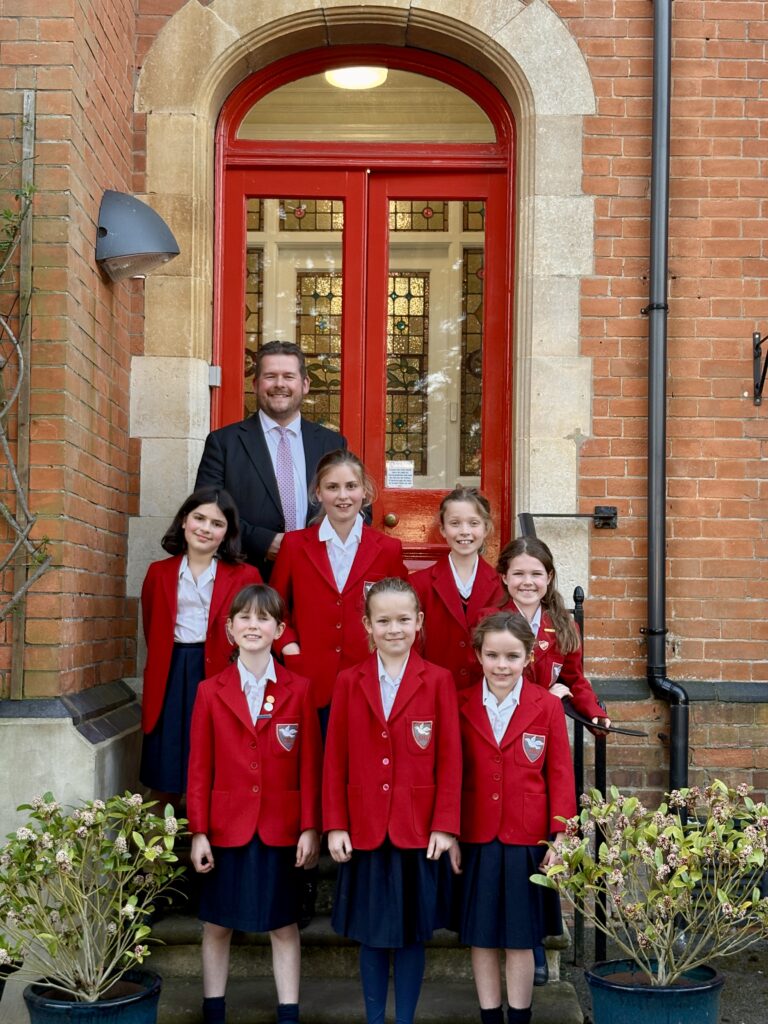
But despite this shift, there remain girls-only schools which are determined to preserve their traditions of single-sex education, including St Hilda’s in Harpenden and St Albans High School for Girls. Daniel Sayers, headteacher at St Hilda’s, said the impact of VAT has been pretty negligible for them.
“I haven’t had any parents wanting to talk to me about it, and if it’s come up in conversations it’s been organically, not as a forced thing. My only take on it is that in a town like Harpenden the level of general wealth is such that it’s not really impacting people, and most people who have mentioned it have just said ‘it’s a tax’.
“But obviously, its impact has been seen very widely elsewhere. I sense that maybe the secondary independents are feeling some impact when there’s that natural break between prep and secondary or senior, with some pupils not going through to the seniors who in other years would have done.
“We always have one or two in our nursery who don’t stay for reception because we offer 15 hours funding so you can pretty much get a free, independent learning experience here.”
Turning to the issue of co-education, did he have any inkling about Aldwickbury and St Albans School’s plans?
“The boys school was a big surprise. I knew that Aldwickbury were potentially going to go co-ed, I just didn’t know when, but with St Albans School I’m still really surprised.”
He is proud of not sending any sort of immediate riposte to the Aldwickbury announcement just before Christmas, instead choosing a measured and carefully pitched response.
“We have joined the Girls’ School Association, and I’m now the chair of the region for the Independent Schools Association, which gives me a bit more weight in promoting our vision and being involved.”
He also featured in The Daily Telegraph in the wake of an announcement about the impending closure of St Hilda’s in Bushy, which had caused a lot of confusion at the time.
“It was really important to get that message across, which we did through social media and to our parents so they could spread the message that all is well here. And lots of our ex-parents were really quick in putting out messages of support through social media.
“But I don’t think St Hilda’s in Bushey is closing because it’s a single sex school. I think it’s because they’re part of a group and their numbers have been struggling for a couple of years. I think also being a charitable trust means they’ve been hit by business rate relief being removed.
“For many schools that’s another massive hit, but we’ve always had to pay business rates in full because we’re a proprietorial school, and then of course there’s the change in National Insurance contributions, which we have to bear as much as anybody else.”
Unlike many other independent schools, St Hilda’s is privately owned. Founded in 1891, it became a limited company in 1977 and is now administered by a Board of Governors, but remains owned by Hutchinson family, who took it over in 1950.
This has in some ways cushioned the school from the impact of many of these recent financial hits.
“I think it’s a benefit, and obviously for the schools that are part of private equity groups have similarly always had to bear these costs.
“But we’re aware of the challenges as much as anybody else, everybody’s finely tuned to it. I think one of the really positive things is that we’re very lucky here to have brilliant parents who are really supportive and very involved, and it’s kind of intertwined everybody even more.”
Daniel says he has been conscious of taking a positive and proactive approach towards advertising St Hilda’s: “We’ve put out a very carefully worded advert, just celebrating the fact that we are proudly a girls school and that we’ve been educating girls for over 130 years. I think it’s one of our big shout outs that we really do understand girls because that’s what our business is about.
“My other really big point is that you’ve got to be true to your USP. I get that we’re all running a business at the end of the day, but the boys schools that are going co-ed feels a little bit carefree in that they’re throwing away everything they stood for, in some cases for hundreds of years.”
He explained his reasoning for not embracing co-education: “I’ve been educating girls for over 20 years, and I do think girls do better academically in a single-sex school. They have the inner confidence because those gender stereotypes are removed, they’re much more prepared to be adventurous and to tackle science and technology and those kinds of things away from the boys. I think it’s really important for girls to be inspired by those subjects, thinking of their career prospects in the future and their career options.
“Then on the flip side, I think boys are much more prepared to tackle creative arts and drama, music, that kind of thing, in a more fearless way.
“In my ISA capacity, I’ve travelled around a lot and seen single sex education in action and I think that it’s proven that boys feel more comfortable doing those things when girls aren’t present.
“I think there’s a massive amount of ethos change that has to take place when you go co-ed, and I don’t think that’s been considered in the present circumstances.”
He said the feedback from St Hilda’s parents he has spoken to supports his thinking.
“We had a Parents Association quiz a couple of weeks ago and the chair stood up at the end and thanked me for standing firm on girls education and being true to who they are, and that received a massive round of applause from other parents.
“I think we’re well known for helping girls reach a very high standard academically, and helping girls who struggle with confidence, especially in this sort of image conscious era in which we live, and that’s not going to change. It’s all about believing in what you do well.”
Amber Waite, the principal of the St Albans Education Group, agrees that there has been a rush by some schools to go co-ed.
STAEG was established last September by merging St Albans High School for Girls – both senior and prep – with Stormont School in Potters Bar to form a new foundation.
“I think it’s important that schools continue to offer a wide range of choice. One of the real benefits of the independent sector is we offer choice to parents who otherwise are limited by what happens to be on offer by their local area.
“In fact, that’s what has been presented to the High Court, this idea that limiting choice is in fact an infringement on fundamental human rights, which is the right to choice in education, and I do think that’s really important.
“I think there has been quite a rush to go co-ed and honestly, I’m not saying it’s not out there, but I haven’t seen a good argument for it from any school that has made that decision.
There are only really two reasons for going co-educational, and undermining everything that your school has stood for, however long it’s been.
“One is financial and if you’re making that decision, I think you should be quite honest with the school community that actually by going co-educational, it means that you can hopefully maintain a critical minimum of numbers.
“The other is to change culture. That can be results culture, because we do know that there’s a gap between girls’ achievement and boys’ achievement, and when you bring girls into a mix, you sometimes get that boost of results.
“In the wake of the #MeToo movement and the Everyone’s Invited movement, it’s also a way of diluting a toxic masculine culture by literally having fewer toxic men around. But unless you really get to the root of that culture, having girls there doesn’t change the culture, it just brings in victims of the culture.
“So I would just like to see a little bit more transparency on why these changes are being brought in, because either these schools are doing it for money, they’re doing it for culture, or they genuinely have had a massive epiphany and have decided that whatever it is that they’ve stood for for the last 80, 100, 500 years is no longer palatable. And that’s a really hard sell.
“I think girls need to have space where they aren’t subject to ingrained societal sexism and bias, and in a girls’ school, there’s no option for girls other than to take on all the roles.
“We teach STEM, girls do STEM. We have leadership opportunities for children, they’re all taken up by women and girls. We need people to stand up and be representatives of their peers. It’s all girls, so those representatives are going to be young women.
“So the fact that it is a single-sex environment, means they are protected from the parts of discrimination and sexism that are completely out of their control.
“It doesn’t mean that they’re not able to deal with it when they go out into what people like to call the real world. It just means that in their really important formative years, when they’re deciding who they are, what they’re good at, what they care about, and the changes they want to make in the world, when they’re making those decisions, they’re making them an environment that’s free from sort of ingrained discrimination.
“Then when they go off to university, for many of them it’s the first time that they will see sexism in action, and it comes as a cold bath. They think, ‘What? Why are you putting up with this? I’m not going to put up with this’. I think that puts them in much more of position where they can self-advocate and they can advocate for other women because it’s intolerable.”
STAHS has not avoided the impact of VAT fees, but Amber said they planned for this: “I think this is about being a well-run business and not just a really good school. We planned for VAT to take a toll.
“Where we’re seeing it is in a higher number of girls who’ve been made offers at 11 plus taking up state school offers, which we fully anticipated, and we’re seeing a higher percentage of our girls leaving at Year 11 and taking up state school offers for sixth form because it’s another natural break point.
“However, we knew that would happen and it hasn’t happened in a catastrophic way, so it was within our tolerances of what we’ve budgeted for.
“We’ve made a very calculated decision that we don’t want to lower the standards of the school. We are an academically selective school. We teach at pace and with rigour, so we don’t want to lower the bar to keep our numbers up.
“What we’ve decided to do is think about what our new numbers would be if we kept the bar where it is, and actually, it’s not vastly different from where our numbers are now. We are making a deliberate decision to have slightly smaller intakes, but at the same standard we’ve always had so that in a few years time, we don’t see a decrease in the outcomes for the girls and don’t have to fundamentally change the nature of our curriculum.”
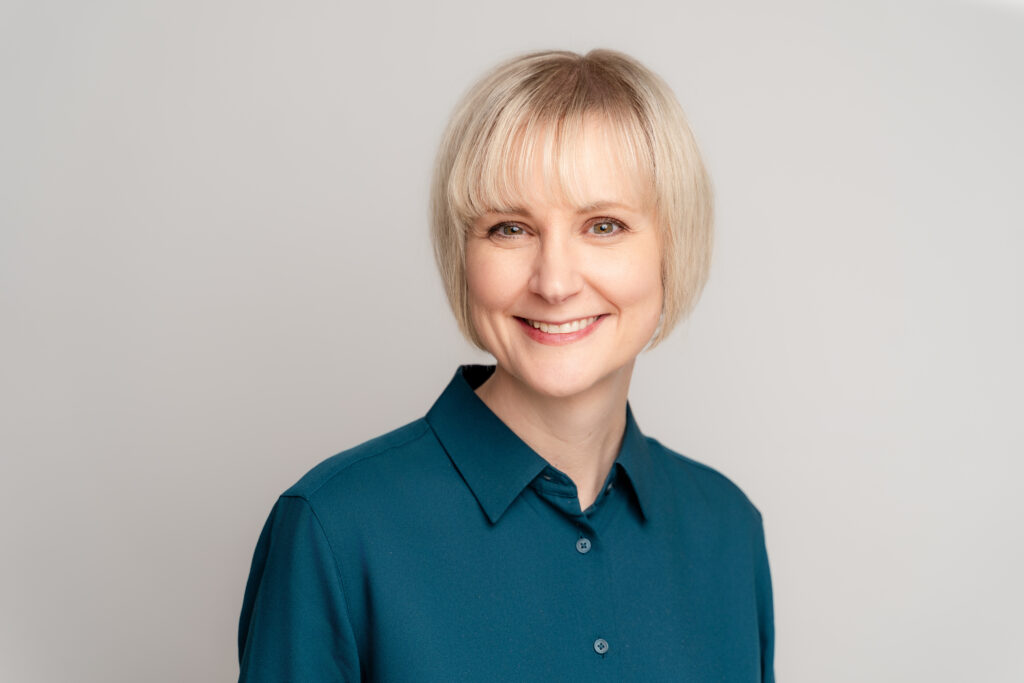
Amber Waite, head of STAEG
