27 May 2024
Elena Hogg, founder of local culinary company FOOD by Elena, explores the versatility of the seasonal salad...
I’m getting mixed signals. My body seems to reject the idea of leafy salads in the winter time. Perhaps it’s to do with some innate awareness of seasonality, or the fact that salads tend to be eaten cold at a time of year when you want to be warmed up. Perhaps it’s the high water content of a bowl of salad that makes it less appealing in the colder weather, when your hydration levels don’t deplete so much.
Whatever the reason, each year I become an avid and daily salad-eater once the warmer months are upon us. Hence the mixed signals: I had been merrily eating salads all last week, thinking the health-kick was finally taking off, and yet this week we’ve seen temperatures plummet right back down and some quasi-monsoon rainfall.
At times like these, the warm salad is a salvation: your bags of leaves or lettuce heads needn’t be wasted but tossed with grilled bacon and some hardboiled eggs for a healthy version of, well, breakfast. Use some mustard in the dressing for an extra hit of warmth.
The beauty of a salad is this: whether you have three ingredients or 30, you’re guaranteed a decent outcome. Salad is one of the most forgiving and versatile dishes you can make. It’s no coincidence that so many chefs refer to “throwing together” salads. It really is that simple.
Growing up, I spent almost every summer in Italy and benefitted from the long and fruitful tomato season. Not very many ingredients have the clout to star in their own, one-veg salad, but tomatoes definitely make the cut. I remember gorging on platefuls of wedged plum tomatoes, still imbued with the scent of the vine whence they were plucked, and dressed in fruity virgin olive oil, salt and red wine vinegar. At the very most, there may have been basil leaves scattered over just before serving, or a handful of sliced red onion. But mainly it was an unapologetic and unadulterated tomato-fest.
The best bit might well have been once all the tomatoes had been gobbled up, because that left the dressing at the bottom of the bowl. I remember pressing crusts of Tuscan bread into the olive oil and vinegar, which had been mellowed by the tomato juices the salt had drawn out. Not a drop would be left in the bowl.
In total contrast to the one-veg salad, though, you can also use a great many ingredients and create an equally successful dish.
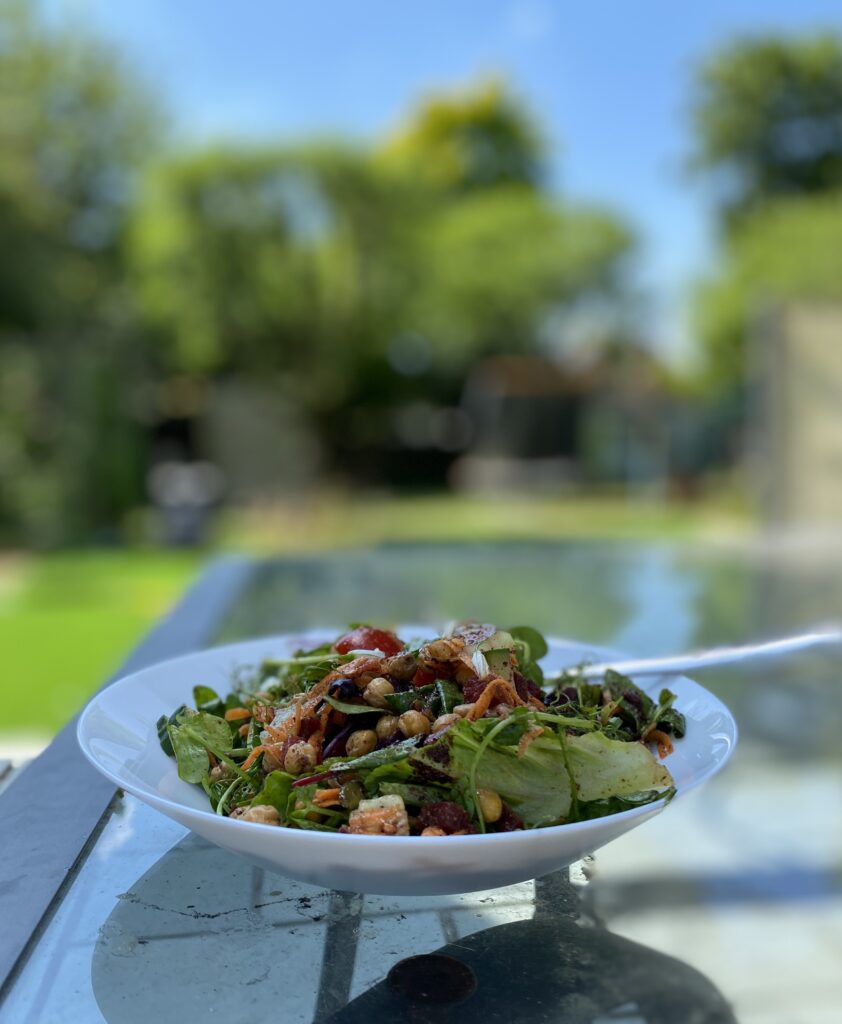
Perhaps the epitome of this is the faithful ‘leftovers salad’, where an eclectic and implausible mix of foodstuffs are chopped up and plonked into a salad bowl. I call it the ‘dice and dump’.
Whether it’s last night’s sausages and peas (perhaps leave the mash out), or the remnants of the omelette you had for lunch, it can all be chopped up and
amalgamated with enough other ingredients that it all becomes a tasty flavour-bomb. In fact, it’s very difficult to concoct something unpleasant when the component parts were all agreeable to begin with.
Between these two extremes, however, by which I mean the ‘one-ingredient’ and the ‘any-ingredient’ salads, are the plethora of classic combinations that form tasty, nutritious and filling salad recipes.
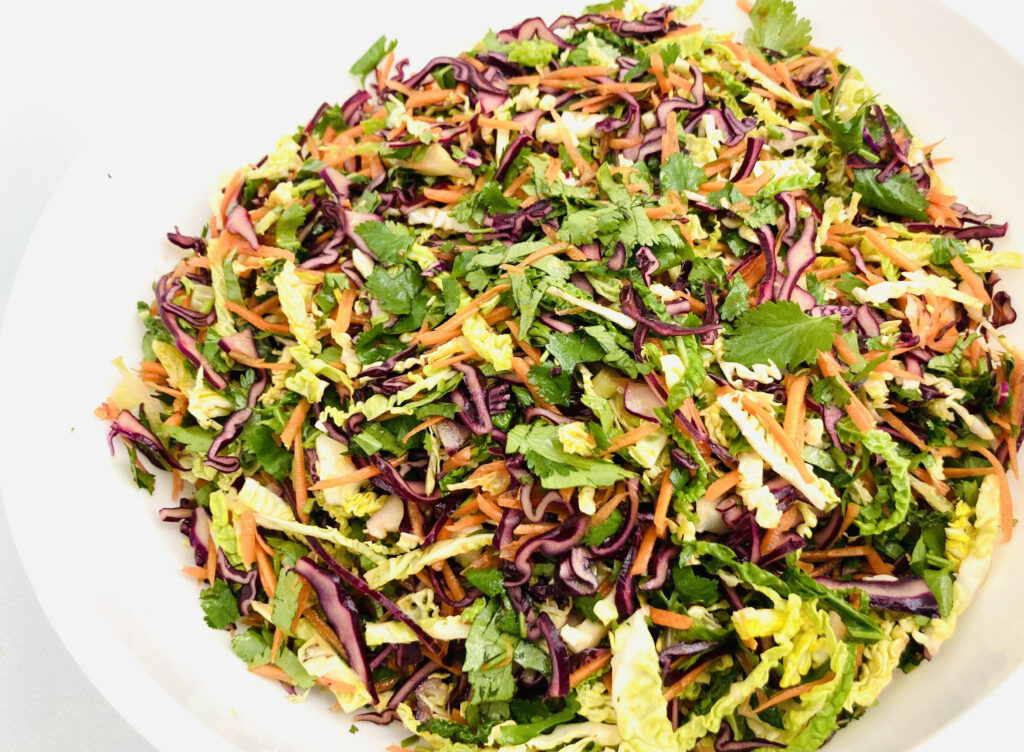
For example, the slaw. Cabbage, carrot and onion held together with trusty mayonnaise. But it takes very little to make this an entirely different and more refreshing dish. Use Chinese lettuce and spring onion with carrot for a zingy, Asian slant, and dress with sesame oil, soy, mirin and lime juice instead of mayonnaise. Add pumpkin seeds and cashew nuts for crunch and protein.
Pasta salad, too, doesn’t have to be a claggy bowl of starch. Add some toasted corn, avocado and baby spinach for a Mexican vibe, or some sumac roasted aubergine chunks with crumbled feta and parsley for a Middle Eastern feel.
Traditionally, there has been a sense that salads aren’t a complete meal, but adding, for instance, pulses to your recipe really boosts the nutrition levels and fills you up. There’s also huge flexibility here, too – whatever beans you have will more than certainly work, from red kidney beans to pinto.
I’ve recently discovered brassica salads. thanks to my accidental accumulation of about five heads of broccoli and cauliflower.
Chopping them up small means they needn’t be cooked and they’re robust enough to take a really punchy dressing, like anchovy and garlic – umami heaven. Your liver will thank you, too.
Dressings are wherein lies the salvation of even the most precarious salad.
Sometimes your fridge offers up only a bendy stick of celery, a wrinkly carrot and a droopy head of lettuce, but as long as you put some love into the dressing, these sad ingredients are resurrected. Think maple syrup, the zest and juice of an orange, a splash of white wine vinegar and some grated ginger all shaken up with oil. Make extra and keep in the fridge for another time.
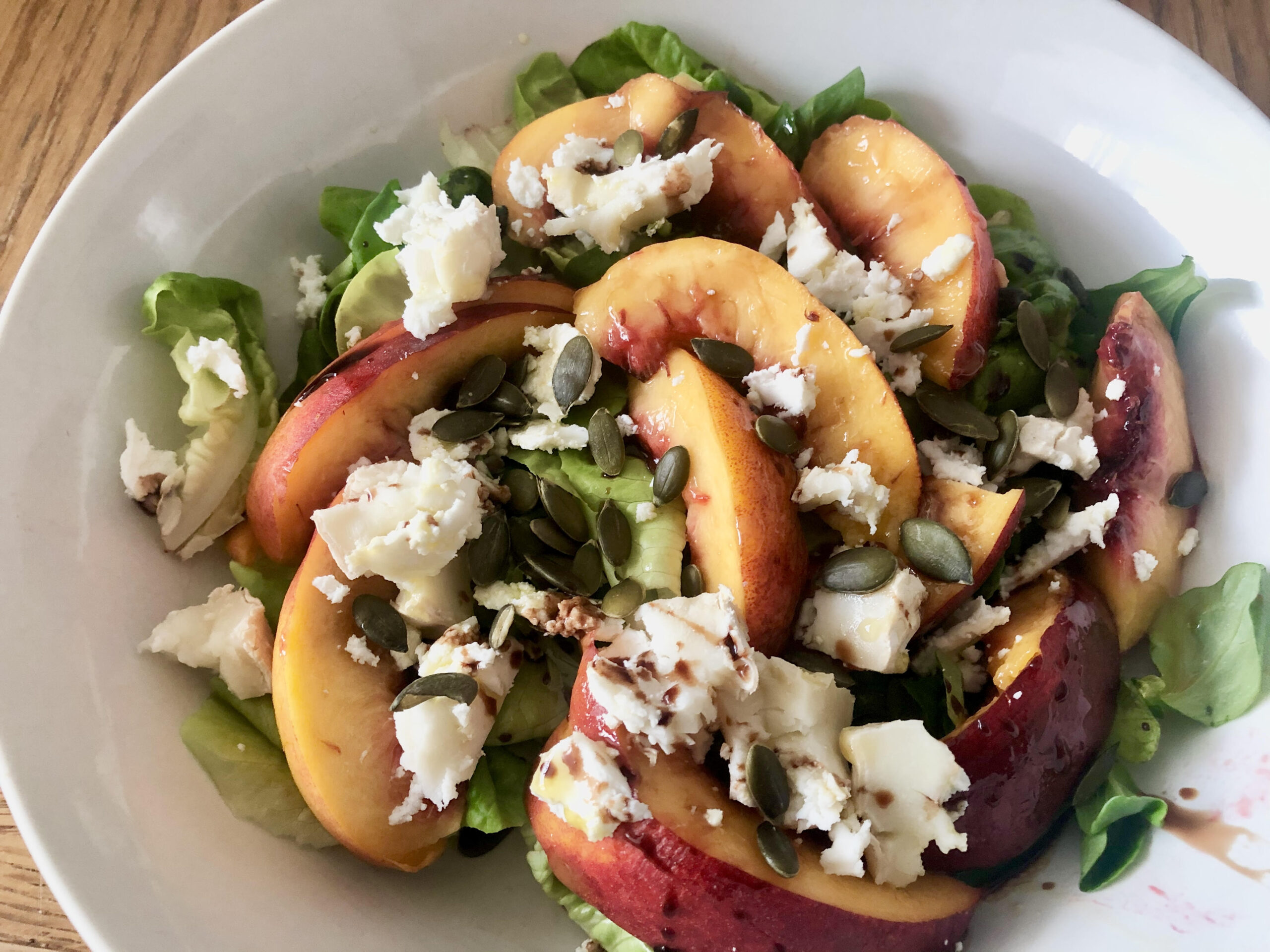
I’m a huge fan of fruit in salads, too. With its buttery, round flavour, mango pairs really well with savoury ingredients. I regularly make a chicken and mango salad with bean sprouts and lots of coriander leaf for a fresh and vibrant Asian-style dish.
Mango also stars in my goat’s cheese, beluga lentil and rocket salad, too: the salty cheese, earthy pulses and peppery leaves are all anchored by the sweet fruit and, with the addition of some sour lime in the dressing, this salad hits just about every flavour receptor you have.
Grapes, too, are fabulous in a herby tabbouleh or any grain-based salad, while orange offers a fresh counterpart to oily mackerel in a watercress and walnut salad.
Dried cranberries and capers together could adorn just about any salad you care to invent because they create that sweet-salty explosion in your mouth and make everything taste better.
So, heatwave or cold spell, deluge or drought, there’s a salad out there with ‘today’ stamped all over it. Try something unusual or outright bizarre – give the weather a run for its money!