


04 Nov 2026
Long before the days of social media pages dedicated to local history, residents shared their memories of times gone-by in the pages of the late, lamented St Albans Observer, with its Questions and Answers section providing a weekly opportunity to remember the city’s past by people who experienced it first-hand.
The column was edited by journalist Ross Bilton, who later emigrated to Australia, where he now writes for The Australian Weekend Magazine. Ross would compile various questions on a variety of topics, with the hope that readers would respond with answers, alongside photos from the newspaper’s archives.
Many of these correspondents will now have passed away, and the St Albans Observer has long since disappeared, but its nostalgic reflections still offer fascinating insights into the city’s past, and here we present a selection of comments on a variety of issues.
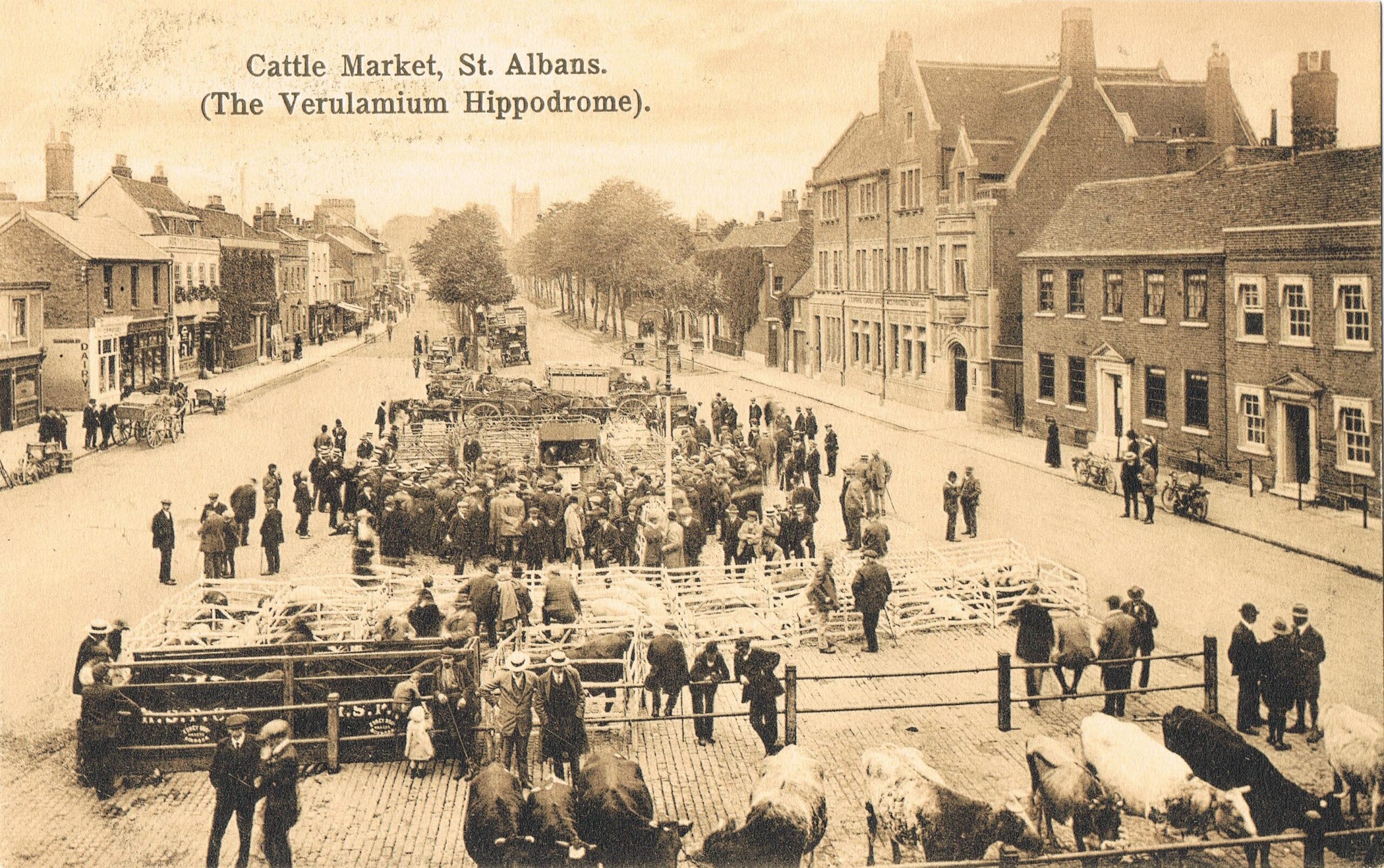
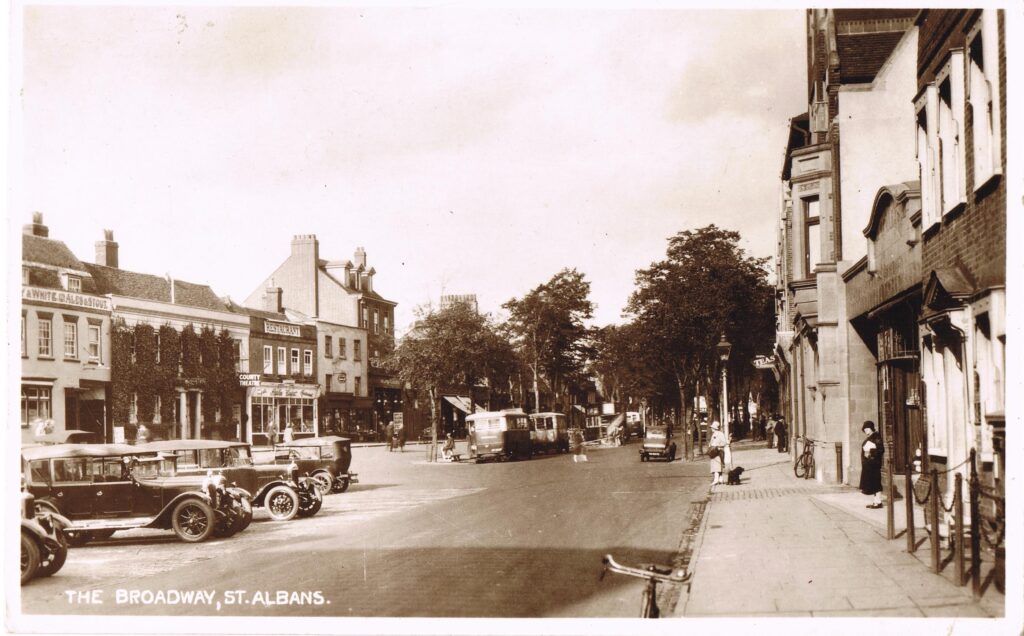
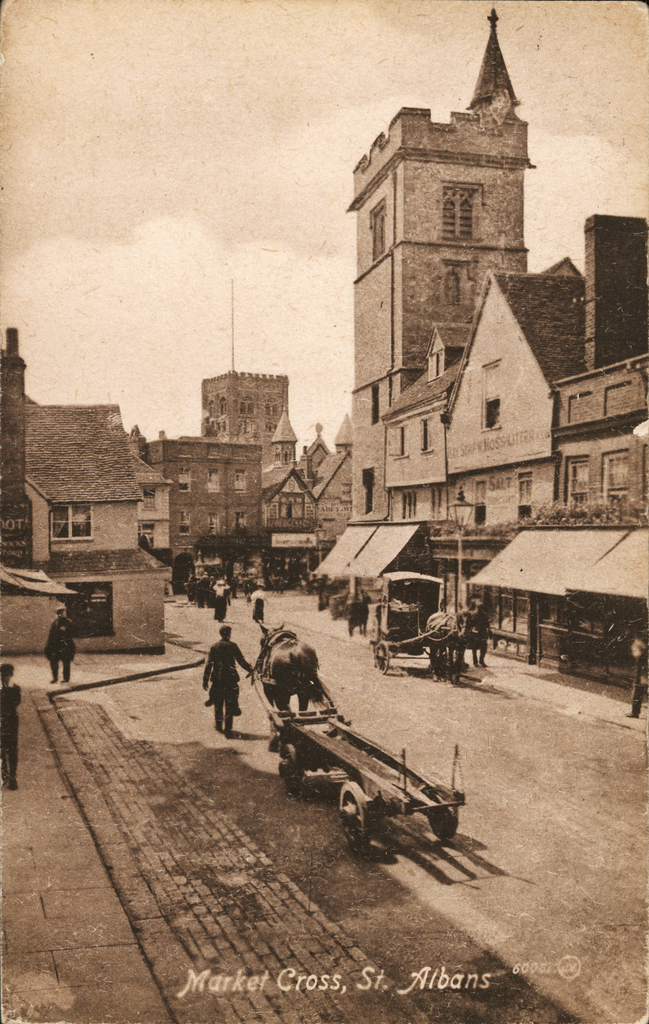
Reader Gerry Milsted, for example, recalled city markets in the 1930s, when he was a boy: “Lots of local farmers used to come in with their horses and carts. Market day was a social occasion for the farmers. There were 67 pubs in the city centre at that time, and they would try to visit a good many of those. If it wasn’t for their horses knowing the way back, they would never have got home.
“You used to get lots of entertainers at the market in the old days – jugglers in and the like – and stalls that cooked food. The market used to go on well into the evenings – until 9 or 10 at night sometimes – and there would be gas lamps spluttering all over the place.”
Gerry also recounted an incident of skating on Verulamium Lake back in 1955: “I remember seeing Douglas Feaver, a sub-dean of St Albans Abbey, skating in his long flowing robes. He suddenly disappeared off the end of the ice, into the water, and some fairly unholy expletives followed, I can tell you. He was the rudest clergyman I have every known!”
Recollections of past businesses in George Street came from Jack Knight: “There was W Field and Son, who were oil merchants and general hardware. Then there was Dixon’s the corn chandlers, who also used to sell seeds and garden equipment.
“Next door to Dixon’s was Bill Hodges’ newsagents, which survived until just after the war. Then there was Statham’s, what we used to call an accumulator’s shop. If the battery for your radio needed charging up, that’s where you would take it.”
Ted Vaisey added: “Mrs Fanning the antique dealer was just like the actress Margaret Rutherford. Then there was Eddie and Josh Pearce’s yard. They used to deal in all sorts of rubbish.
“Other former businesses in George Street were Forbes millinery shop and Eric Martin’s shoe repair shop. You could always see Eric working in the big window of his shop.
“Nearby, on the corner of Spicer Street and Spencer Street was the PSA club, which stood for ‘Pleasant Sunday Afternoon’ and was basically a wooden shed in someone’s back garden. It was a savings club where people used to drop by for a game of billiards.”
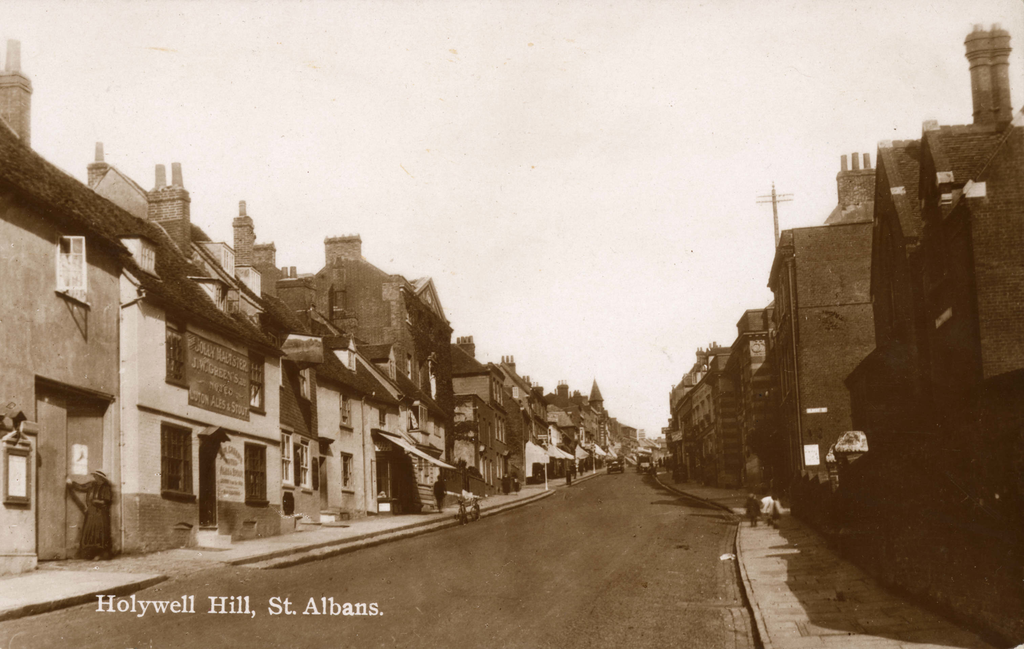
Audrey Patient added her own memories of long-lost shops: “My local sweet shop was Faulders, which was opposite where the Jubilee Centre now stands in Catherine Street. When Christmas time came my family would go to Warwick’s in Catherine Street, which was run by Ernie Walker and had rabbits and turkeys hanging outside.
“Other shops now long gone from the town include Oakley’s, J Lyons, MacFisheries and Butlers the butchers.”
Also with stories about Catherine Street’s past is Sydney Savage, who described it as a little community all of its own in the old days.
“Everyone knew everyone else, the kids played in the road because there was no traffic, and people generally helped each other out a lot more.
“There were two pubs in our street, The Painters Arms and The Pineapple. On the junction with St Peter’s Street was Spurrie’s the bakers. There were two barbers’ shops, Johnsons and Lesleys (which also sold fishing tackle), Sells’ hardware shop, which was run by a couple of brothers, and Doddy Evans’ bike repair place.”
When it came to local sweet shops, George Walker remembers spending his pocket money on aniseed balls, Palm toffees and Spanish liquorice rolls at Blakeley’s in Fleetville, while Max Schroeder patronised another shop called Grace’s in the early fifties: “It was a mecca for children seeking sherbert dabs, aniseed balls, gobstoppers, Trebor chews, ice lollies and halfpenny dips.
“Rushing out of Fleetville Juniors – then totally housed in Woodstock Road South – round the Hatfield Road corner and straight to Grace’s was the weekly treat when you go your pocket money.”
Well-known characters of the time included Ted Ewer, a natural poacher who lived in Fishpool Street. Ted Vaisey recalled: “He was the only person I ever saw tickle a trout from the River Ver, down by where the sawmills were, past the Prae Hotel. The River Ver was full of trout and crayfish then, and a lot of people were poachers in those days through necessity.”
Jean Whitaker had memories of the legendary Tramp Dick, who gave his name to a section of Jersey Lane: “On many occasions we met a tramp who lived in a makeshift shelter in the undergrowth beside this path. My father often talked to him and he was frequently to be seen in Fleetville.”
Neil Moffat said: “I remember Tramp Dick well. Every lunchtime you would see him sitting on the steps of a bank that used to be on the corner of Hatfield Road and Clarence Road, opposite The Crown. He would also sit a lot on the steps on the Grand Palace cinema – later called the Gaumont – on Stanhope Road. He had a white beard and wore a battered old trilby hat with an overcoat tied round with string. Tramp Dick never took much notice of anyone. There were all sorts of stories about him – one common one was that he was turned out of a rich family – but I don’t know if any were true.”
Dennis Blundell said: “The cleaners at the Grand Palace used to give him bags of cigarette stubs that they had collected.”
Dennis also recalled ‘Stumpy’ Endall, who he described as a rough and ready sort of chap who lived down Victoria Street and worked as a plasterer doing war damage repairs in London.
“There was one famous occasion when he was coming back from London on the train, and none of the other passengers would move up to make space for him because he was covered in plaster dust.
“He said, ‘Oh you’re not going to make room are you?’ and started whacking himself all over his body, bashing his clothing and sending a great cloud of dust over the whole carriage. He got fined two quid for doing that.”
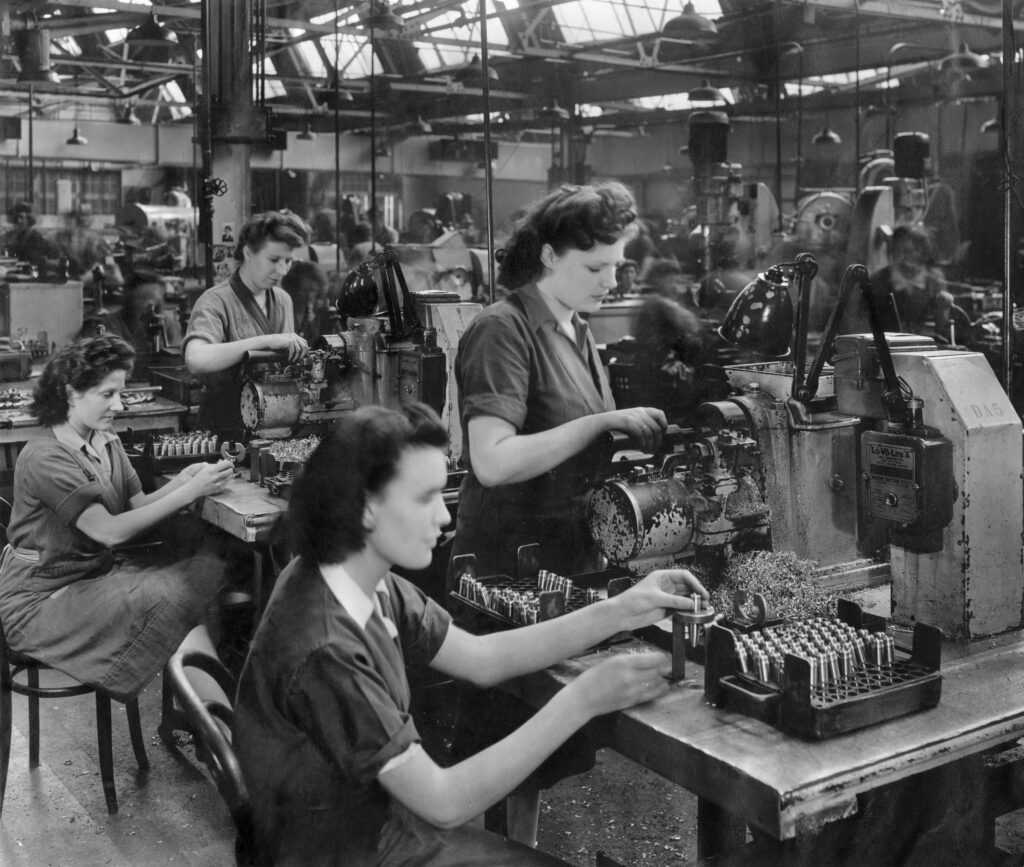
Many readers shared their stories of growing up during the Second World War. Dawn Denholm’s late father Nobby Clarke was the policeman who picked up a German spy captured in London Colney and brought him to Fleetville police station.
“Apparently he came down by parachute in some words on the junction of where the North Orbital meets Highfield Lane, on May 15 1941.
“As soon as he hid his parachute and emerged onto the road, a lorry driver stopped and asked him directions, but being German he could not answer. The lorry driver became suspicious and told a policeman nearby, who arrested the spy. He was found to be carrying false identity papers and a loaded revolver.
“I was only four at the time but my mother’s claim was that she made dinner for the spy when he was brought to the police station in Fleetville – which was where the junior school is now.
“The next day they took him to Hatfield for interrogation, then on to London, where he was put in Wandsworth prison. His name was Karl Richter. He was executed on December 10 1941, which coincidentally was my father’s 40th birthday.”
When he was 15, Gerry Milsted worked as a fire watcher on the Abbey tower, looking out for blazes started by incendiary bombs.
“I was up there on the night that the German planes came over for the big raid on Coventry. They used the Abbey as a marker point, as a visual point of reference, and when they flew over us they changed directly north.
“I was also in the tower during the Blitz, when all I could see of London was a big red glow stretching right across the horizon.”
Mike Church, who lived in Fishpool Street as a boy, remembered bombs falling on St Albans, including a V1 which landed in Gorhambury Drive.
“It came over late Saturday evening but I was awake because I used to like staying up during air raids. We heard this V1’s engine cough then cut out, and we all held our breath while there was this awful wait to see if it would drop on us. Then there was one hell of an explosion. It was an enormous row, even though it was quite a long way away from us.
“The first chance we got the next morning, a few of us went up there on our bikes. It landed on the left-hand side of Gorhambury Drive, just past the farm at Prae Wood. It left a huge crater, and embedded in a tree I found a piece of the exhaust, which I took away as a souvenir.”
Audrey Patient says her first memories as a child were seeing people walk down Folly Lane to the air-raid shelters, located in the playing fields where the swings are now.
“After the war we used to play in the shelters – they were perfect for hide and seek. But before long they had tramps living in there, so we stopped going.
“I also remember seeing a tank going down Folly Lane, and the soldiers threw a box of gum to us. I think they were Americans.
“During the war all the children had to take gas masks with them to school. We had them in little boxes on a string, round our necks. I remember crying when I had to change my gas mask from a Mickey Mouse one to a horrible black thing which smelt of rubber.”
JB Sortwell recalled some of the bombs which dropped in the London Colney area: “There were two small ones in White Lion Lane when Halseys timber yard was on fire, giving rise to rumours of sabotage, and the land mines that fell on Napsbury Hospital where my father was a nurse. One of them didn’t explode and was apparently caught up a tree in the chapel building.
“The same raid produced an oil bomb which whistled over our house in Hollybush Cottages where we were crouched in the cupboard under the stairs. It fell in what was Nicky Ivory’s field, now Five Acres, and set fire to a haystack.”
Neil Moffat was a Scout during the war, based in Camp Road: “One of my most vivid memories was just after Dunkirk, when they had us making Molotov cocktails for the war effort. We would fill bottles half with petrol, half with diesel oil, and wrap it up in cotton waste. The idea was that you lit it and threw it at a tank.
“They were getting desperate at that stage of the war, you see, and they recruited the Scouts to do all sorts of things. They also had us doing two-hour stints of look-duty in the Abbey tower, looking out with binoculars for enemy paratroopers. We never saw any though.”
Some readers could even remember the First World War.
Ella Harrison, 96 at the time of writing, said: “I remember sitting on the wall outside St Stephen’s Church watching all the troops marching in. It took about three hours for them all to march past.
“They came from all over the country and were billeted with families in St Albans. We had three staying with us.
“I can remember seeing Zeppelins coming over here too. They used to circle around the Abbey before heading off to bomb London. A Zep once dropped a stick of bombs in Belmont Hill, which demolished a few cottages.”
These stories are just a small reflection of the tales of yesteryear shared in the pages of the St Albans Observer, and we hope by publishing some of them for today’s readers we go some way towards preserving some of the city’s history which might otherwise disappear forever.
If any readers would be interested in seeing the St Albans Times launch a Questions and Answers section, then please get in touch via editor@stalbanstimes.co.uk
