02 Oct 2025
Elena Hogg, founder of local culinary company FOOD by Elena, rustles up a selection of sumptuous puff pastry dishes…
A question plagues me with mosquito-like persistence and I still can’t quite settle on an answer. Is life too short to make one’s own puff pastry? I admit it’s probably only me asking this question, and therefore I could rephrase it as follows: ‘Is life too short to even entertain such inconsequential nonsense?’ And yet I find myself batting the dilemma around in my head because the process of hand-making puff pastry is tortuous and long, but the result is a kind of buttery, flaky nirvana.
A compromise would be to make rough puff instead, which involves far less folding and chilling. I recommend it for those lazy weekends when the dismal weather dampens any desire to leave the house, and the prospect of nurturing some dough, feeding it layers of grated butter and rolling it into neat rectangles seems quasi-therapeutic.
However, for the purposes of this column, I fully endorse the ready-made variety so easily and cheaply bought at the shops, especially if you can find an all-butter variety.
Although there’s no rolling or folding required with shop-bought puff, that therapeutic quality is still very much achievable. My daughter uses puff pastry a little like play-doh, kneading it in her hands and stretching it into sausages,
twisting and shaping until all chance of lamination is eradicated, but at least she’s had fun and, as long as your teeth are strong, her creations are still just about edible.
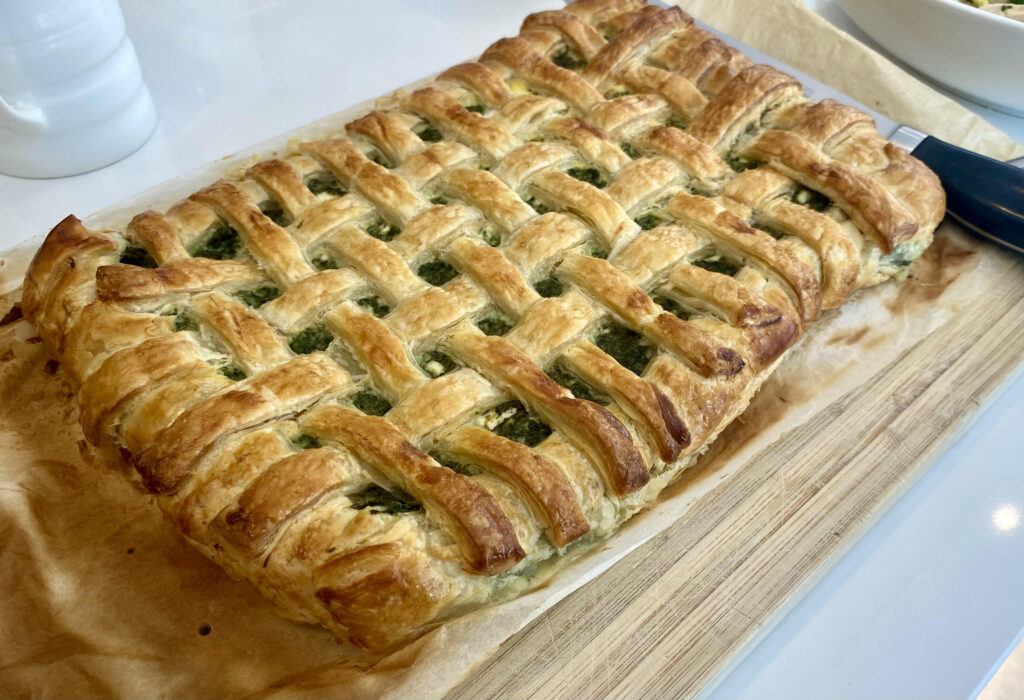
One of my favourite things to make with puff pastry is a lattice. Once again, you need time and patience for this recipe, so a mid-week rush is probably not the time to attempt it.
I fill mine with a ricotta or cream cheese base mixed with flavour pops like sun-dried tomatoes, olives or roasted onions. The trick is not to let the filling get too wet, so drain away any excess oil or your lattice will be more of a puddle.
Adding a second, saltier cheese is also a great way to inject flavour – feta, parmesan or a good vintage gouda all work really well. You want to chill your mixture before using it, ideally, so that the temperature of the puff pastry you then spread it onto remains as low as possible, otherwise the fat content of the pastry will start leaking out of its layers and inhibit a good rise during baking.
You’ll need two packs of ready-rolled puff pastry – one as a base and the other to cut into strips for latticing. A pizza cutter does the job well and remember that it doesn’t matter if they’re not all exactly the same width – pastry is all the more appetising when it looks homemade.
Once your strips are sliced, pop them in the fridge to keep cool while you roll out your second pack of puff. Spread the cheese mixture over it, leaving a border of two or three centimetres. Fold the pastry border over the mixture (making cuts at the corners helps), then lay your strips across the short length of the rectangle,
long edge to long edge, in other words. Let them overhang the sides loosely and if you leave a slight gap between strips, you’ll ensure any steam can escape as it bakes.
Next comes the tricky part: fold alternate strips back to the centre of the pastry (you’ll work in two halves to avoid over-stretching your strips) and lay perpendicular strips of pastry down. Replace the original strips as they were, then take the in-between strips and repeat.
Once you’ve completed that half, do the same with the other half. If you’re methodical and concentrate hard for a few minutes, it’s easier that it sounds, I promise, and well worth the frown lines.
If you’re looking for something a little less challenging for your weekend kitchen dalliance, however, how about cheese straws?
These couldn’t be simpler and are effortlessly jazzed up with a sprinkling of sumac or some pink peppercorns on top.
And for a comfortable middle ground, try making palmiers. Open out your rectangle of puff pastry and smear it generously with pesto, olive tapenade or any other salty and spreadable filling. Start rolling up the short edges swiss-roll style until they meet in the middle. Pop it in the freezer for 20 minutes to harden up, because slicing it will be far neater this way. Lay your slices (about half a centimetre thick) onto a lined baking sheet and use greaseproof paper to cover the palmiers as you flatten them slightly with a rolling pin. Or you can flatten the palmiers one by one with the bottom of a mug.
Brush with beaten egg and sprinkle with cheese if desired, then bake for about 12 minutes in a hot oven. Let them cool on a wire rack, but eat as soon as the risk of scalding passes for maximum flakiness.
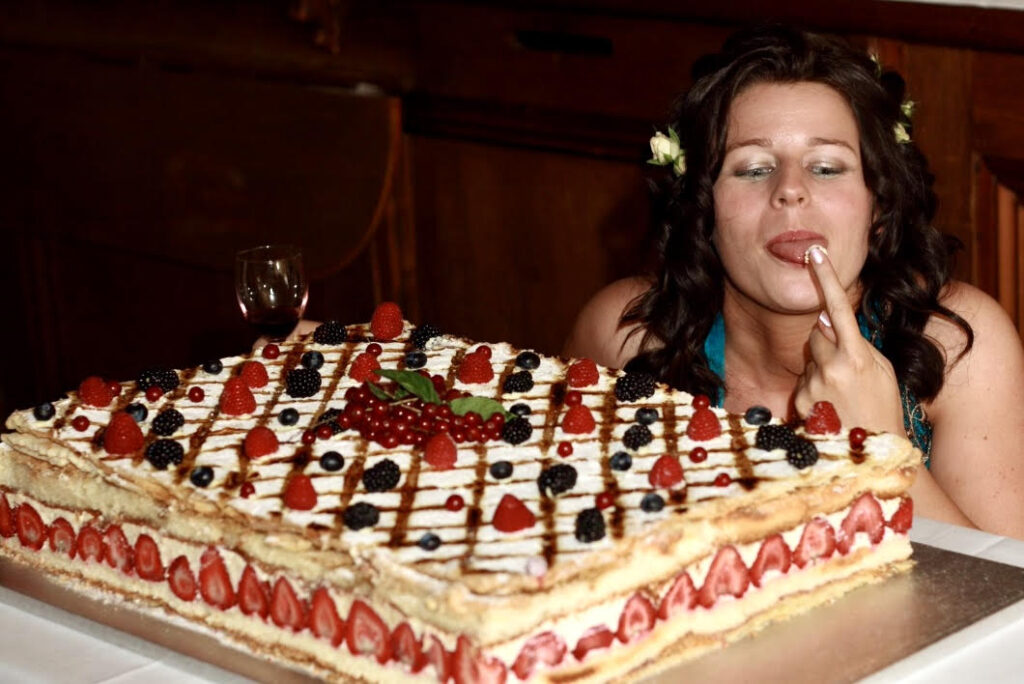
Finally, so as not to neglect the sweet side of life, puff pastry can of course be used for desserts, too. From fiddly tarte tatins to the more rustic turnover, puff pastry is the perfect purveyor of custardy, fruity deliciousness. I’m reminded instantly of my (sorry, our) wedding cake which, like most other things about our nuptials, was far from the traditional tiered fruit cake. It was a millefeuille cake made by the pastry chef at Café du Marché off Smithfields Market in London, which was round the corner from where we lived at the time. We’d hired out the upstairs of the restaurant and the cake was intended to deliver on flavour rather than aesthetics, but it really did both.
Layers of puff pastry filled with silky crème pâtissière and strawberries, then topped with a layer of icing sugar that had a diamond criss-cross pattern scorched onto it, and little berries in the middle of each diamond. It probably says a lot about me that I still remember the snap of the pastry layers as my fork sank into them. Who says marriage is dead?