07 Aug 2024
Elena Hogg, founder of local culinary company FOOD by Elena, revisits the food of her native Italy.
I have just returned from four days in Italy, where I went with my choir on a tour of northern Tuscany. Aside from the fact that Italy is blisteringly hot by this point in the summer, it was a very rewarding experience.
They say that hot weather diminishes the appetite, but that was far from the case among the 180-strong choir I was travelling with. The first meal we ate together at our hotel (which was a fabulous harkening back to the Italy of my youth, with its dark wood furniture and cool marble floors, plus a lift with two sets of doors you need to close before it’ll clunk its way into movement) began with traditional antipasti, referred to by one or two as antipasta, as in ‘eaten before the pasta course’, which I thought was pretty logical, despite being wrong.
“Pasto” means meal, not pasta.
The antipasti included olives, sun-dried tomatoes, crusty local bread and a selection of salami and prosciutto. I’m convinced we were all in need of the extra salt to help replace our electrolytes, sweating as we were in 39 degrees. There were also bocconcini, which many of you will know are small balls of mozzarella adorably named “little mouthfuls”.
We had very similar fayre at the vineyard, Il Poggio, the following night, along with some delicious wines to try and some locally-produced extra virgin olive oil and treacle-like balsamic vinegar, which we poured onto our plates and mopped up with bread. In Italian, this is called “fare la scarpetta”, or “do the little shoe” – endearingly nonsensical.
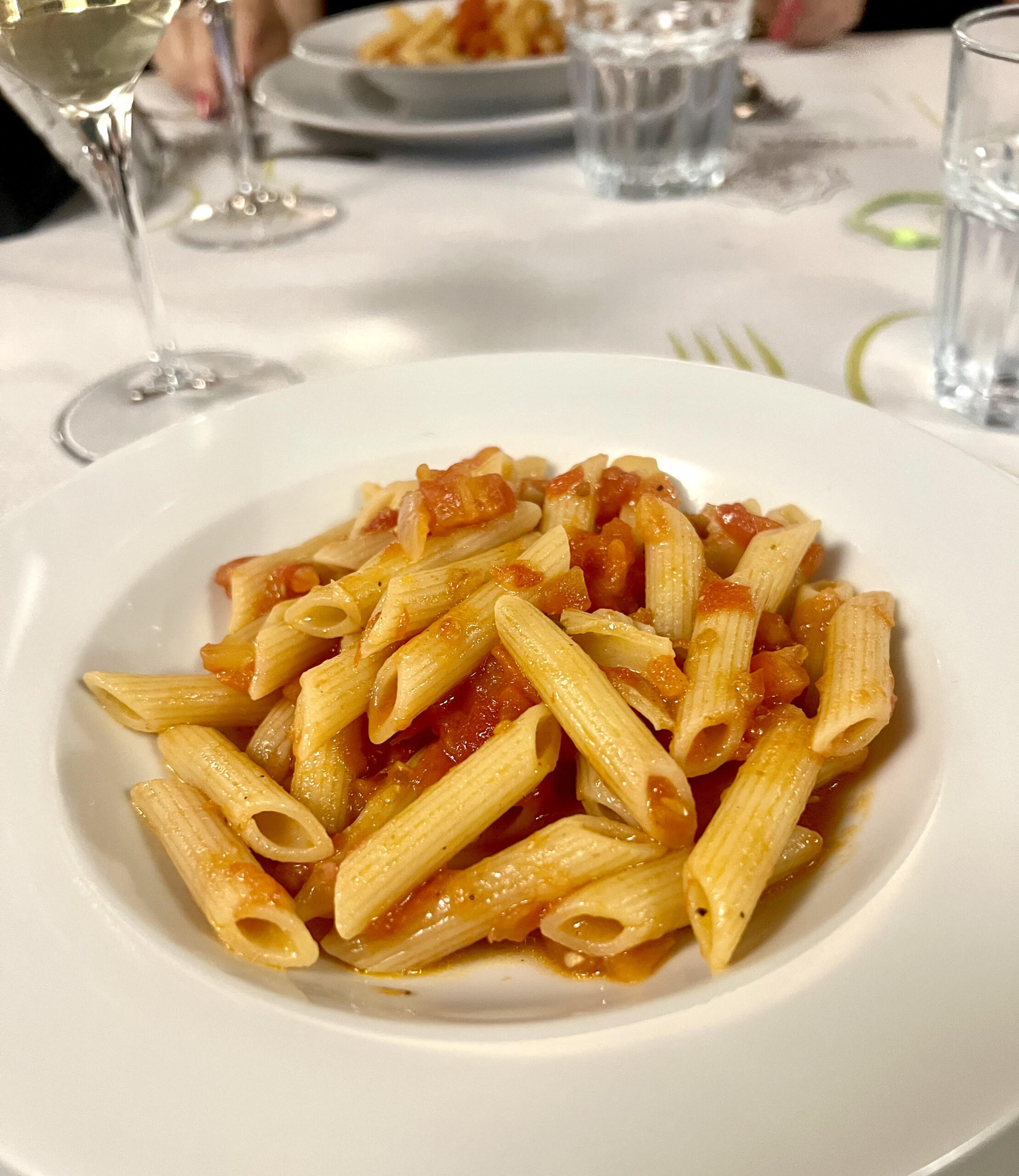
Also served up was a plate of simple but extremely tasty penne. I think it might have been the best plate of pasta I’ve ever had, and that really is saying something. The tubes of pasta were perfectly cooked: not so al dente that they were chalky, but neither overcooked. The sauce was made with the sweetest uncooked tomatoes, and little pots of grated parmesan were dotted along the tables for us to help ourselves. I cannot fathom how they managed to make 180 bowls taste so good, as though each one had been individually and lovingly tended to.
One of the places we performed was Lucca, a beautiful walled town famed for being the birthplace of composer Giacomo Puccini, who wrote Madame Butterfly (among many other triumphs). Where could be more apt for a choir to visit?
While there, we spent some time searching out a place for lunch, the sun so hot we were almost cooked ourselves by the time we found somewhere. We happened upon a kiosk offering “pizza al taglio”, or “pizza by the slice”: effectively, take-away pizza.
I remember summers spent in Rome as a child, my nonna buying my brother and me pizza al taglio most days en route to the market to buy the daily bread and whatever looked good for lunch and dinner.
Although we usually think of take-away pizza as triangular slices, in Italy, pizza al taglio is sold in squares. Large rectangular trays of pizza sit with geometric cuts made into it where portions have been sliced away.
They’re then wrapped in greaseproof paper or, in my and my brother’s cases, half-wrapped so some was left exposed to make a start on.
There were only two types of pizza on offer at the regular haunt my nonna took us to: margherita, and bianca (white), with no tomato or cheese, but plenty of salt, olive oil and rosemary. Essentially, a slice of focaccia as we might know it, but thinner. The pizza place in Lucca, however, had a wide variety, and nothing like your standard pepperoni or grilled vegetables toppings.
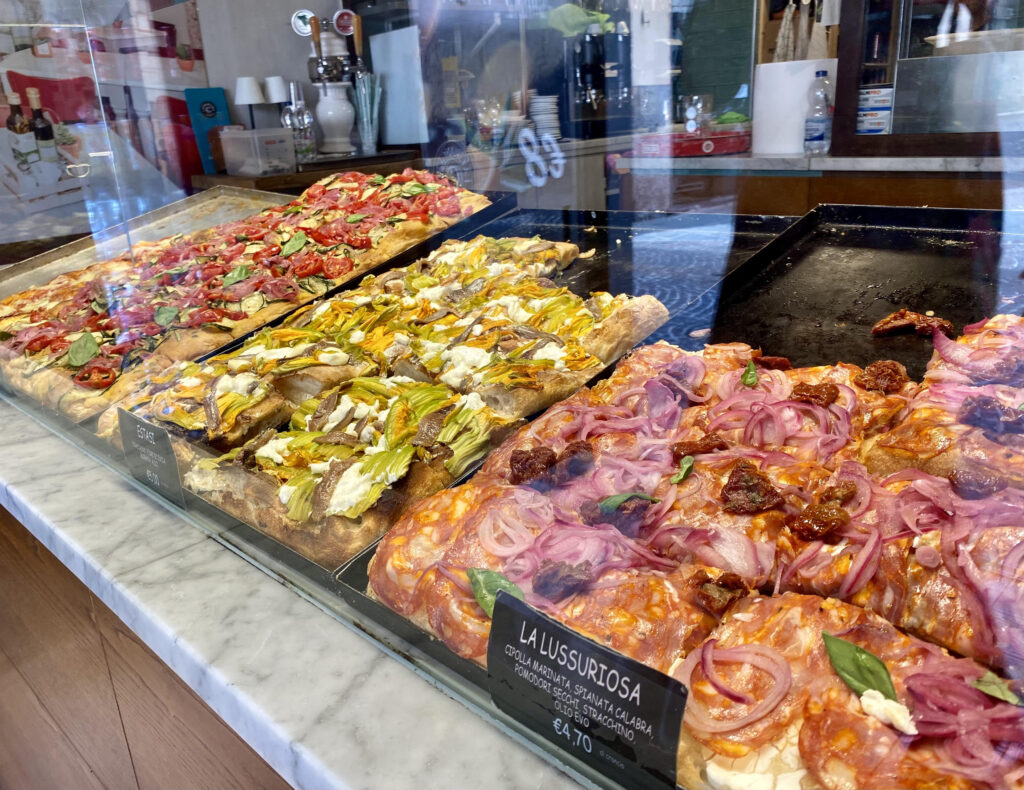
I was captured by a pizza festooned with bright orange courgette flowers, temptingly soft burrata and anchovies.
The pizza base itself was high, but not at all doughy or stodgy. They told me how they use the hardest types of flour and yeast from beer to make their bases light and crispy. And they really were.
Then there was a loose take on a hotdog with onions, but in a far less ‘late-night munchies’ kind of way. In place of a saveloy was slightly spicy Calabrian salami called spianata, and fried onions were swapped with pickled ones, strewn in neon-purple abandon, all held together with stracchino, a soft, mild cheese from northern Italy.
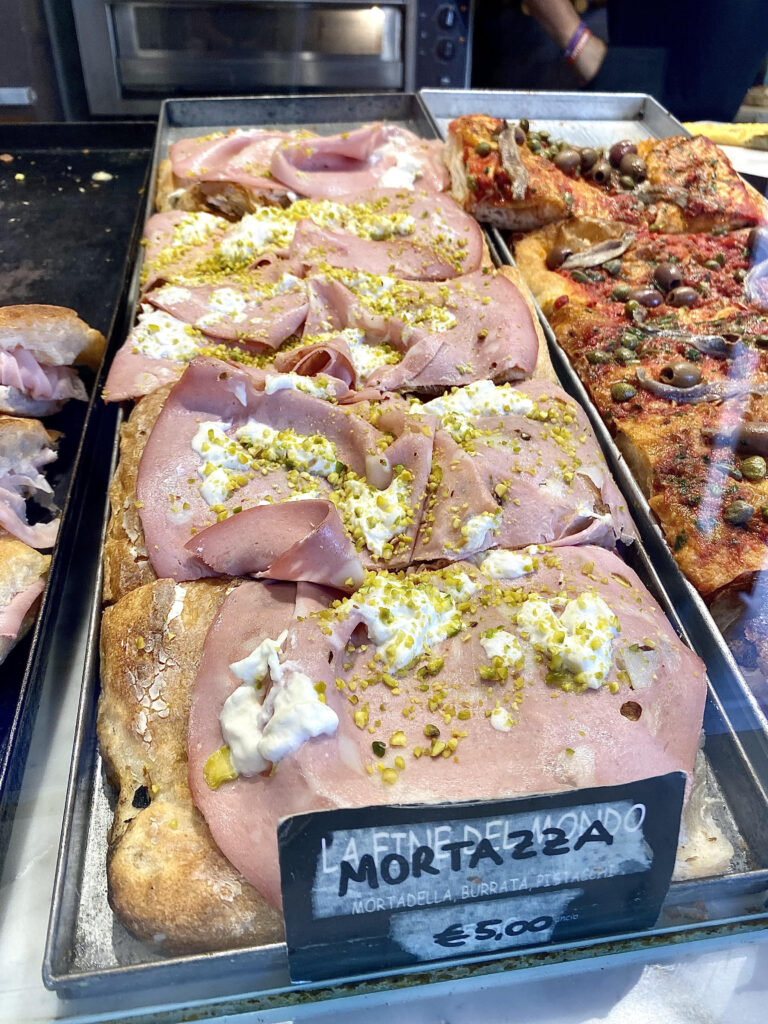
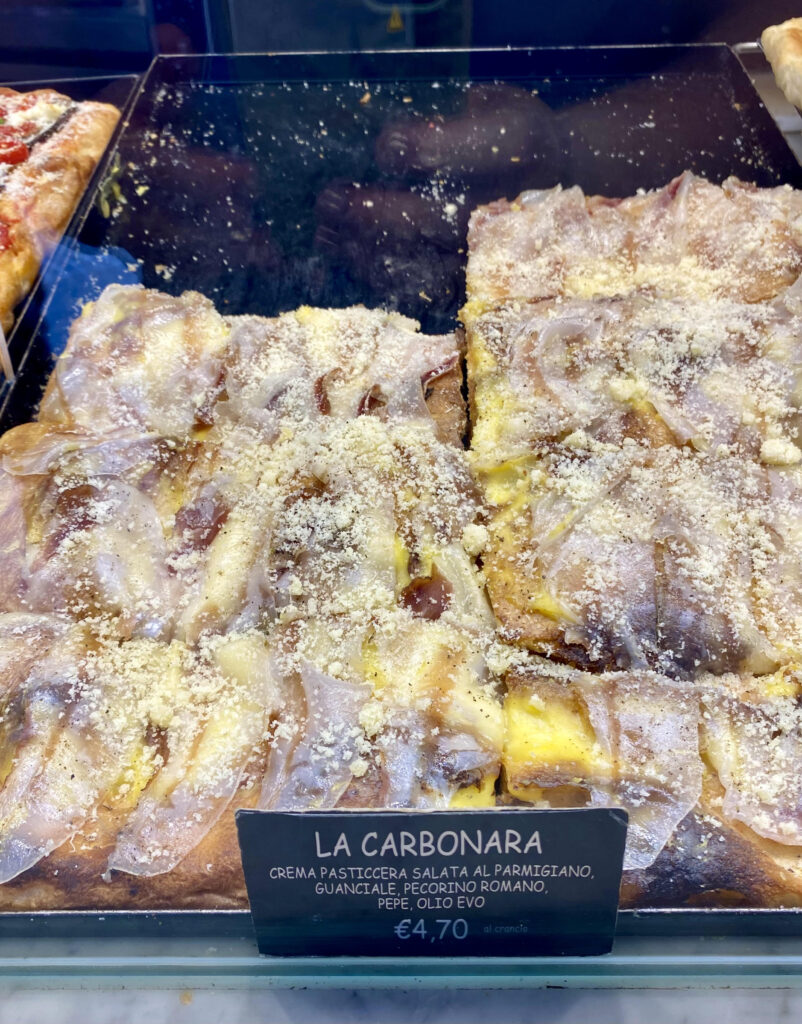
There was also a pizza that celebrated mortadella – a huge sausage made from pork neck and usually speckled with peppercorns (though sometimes pistachios as well). In fact, this pizza was sprinkled liberally with roughly chopped pistachios, their jewel-green colour set off prettily against the pale pink of the mortadella slices. The only nuts I’ve ever had on pizza are pine nuts with pesto, or walnuts with gorgonzola, so it was wonderful to witness this departure from the classics. They even had on offer the culinary love-child of pasta and pizza – a ‘carbonara‘ pizza that involved a roux sauce made with parmesan over the base, topped with guanciale (salt-cured morsels of pork from the pig’s jowls) and crumbled pecorino, a hard sheep’s cheese famed for its umami punch.
But I can’t finish without mentioning the glorious gelato for which Italy is famed – so many kinds of creamy deliciousness that it becomes anxiety-inducing to have to choose.
One gelateria in particular stood out this trip, offering ice cream made with the tartest of blackberries that was almost sorbet-like in its fruitiness, but still unctuous and rich.
I watched the server carefully press the glistening ball of gelato into a buttery waffle cone, then top it with my second choice: white chocolate and hazelnut, which resulted in the most dizzying contrast in flavours.
And, because of those soaring temperatures, it was medically advisable to consume ice cream in large quantities. Right?