13 Nov 2023
In 1684, the first ever Duke of St Albans received his title by being dangled upside down outside a window. By his mother. Or so the story goes.
But given that the young Duke’s mother was Nell Gwynn and his father was Charles II, it could well be true. Pretty much anything used to go at Charles’ court, known for its unbridled decadence and debauchery. Apparently “pretty, witty Nell”, one of Charles’ 13 mistresses, was incensed that the king had neglected to give their illegitimate son a title or even a surname. Hence the drastic threat. And despite the fact that this title came with no ducal estate or land in St Albans, Nell was apparently mollified.
In 1603, the Tudor era had ended with the death of Elizabeth I. Now, with the newly crowned James I (James VI of Scotland), the time of the Stuarts had begun. It was a turbulent period of conspiracies, religious turmoil, destructive civil war, a king’s execution, a short-lived republic and the court in exile.
Then, in 1660, the Stuart monarchy was restored in the extravagant form of 30-year-old Charles II. It was a new time. And fittingly, there were new fashions, imported from Europe where the royal court had been exiled.
The early years of the Stuarts had meant, for women, wide lace collars, full flowing skirts, short-waisted bodices and wide-brimmed hats. Men’s doublets were also short-waisted with breeches to the knee.
Even during the years of the Interregnum, 1642-59, when the country was without a monarchy, colours and rich fabrics were still worn. Puritans and conservatives may have stuck to sombre colours, despising ostentation, but even Oliver Cromwell, the Lord Protector ruling England was known to wear lace and silver braid.
Charles II arrived on the English throne fresh from European exile, gloriously swathed in sumptuous fabrics and dressed from top to bottom in French fashions. Apart from the nobility, this didn’t go down well. Many disapproved of foreign styles and fabrics.
Realising the need to create an “English” style, Charles began wearing only English cloth (except linen and calicoes).
Charles also brought another French fashion to England. Seriously big hair.
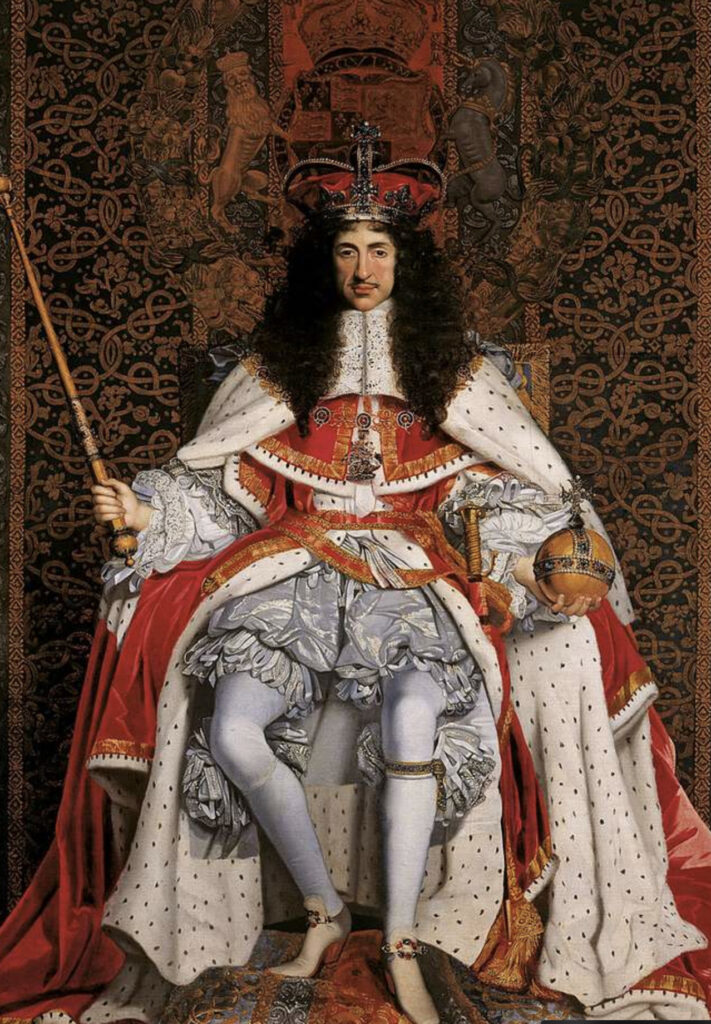
Despite still having his own hair, he began to go grey around 1663, so wigs arrived at court and the fashion filtered down through society.
Wigs had become fashionable at the French court around 30 years previously when Louis XIII had begun to go bald.
He started wearing a wig so the rest of the French court had to follow suit. Known as periwigs and perukes, it seems the larger, the better, and perfumed perukes grew to ludicrous sizes.
And as well as the cost of buying and maintaining a wig, you still had to pay a barber to cut your own perfectly decent hair hidden underneath.
Wigs weren’t universally admired, however. The disapproving public assumed that debauched courtiers used them to hide ulcers, sores and other signs of the pox.
Women’s hairstyles became equally elaborate, although a simple early fashion was for a long ‘lovelock’ of hair draped fetchingly over a bare shoulder. But by the end of the Stuart monarchy, things got rather silly.
The Fontage had arrived. This was a wire frame covered with lace and linen attached to a close-fitting linen cap. Hair was built up in front over the frame. On top of all this would be more lace and decorative ribbons, so the whole structure could be up to a foot above the head. Not a hairstyle for the shy.
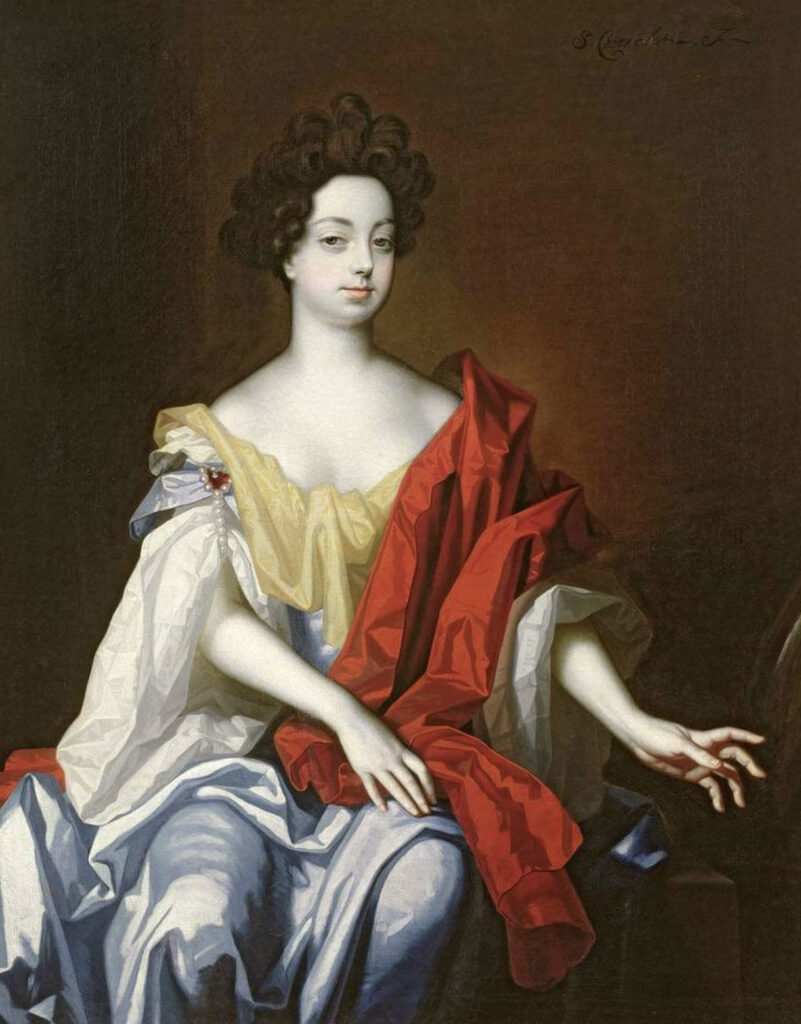
Women had previously worn separate bodices and skirts but these now evolved into gowns with whalebone inserted to strengthen bodices. When tightened, this narrowed waists and enhanced cleavages. And cleavages were definitely on show. Very low cut dresses became popular at court although modesty could be maintained by scarves or short capes.
During the 1680s, bustles were added to make the bottom look bigger. Bright stockings were popular as were pointed leather shoes with high heels, although iron pattens (protective overshoes) were essential to keep out of the mud.
And men? Well, they were resplendent in petticoat breeches – loose trousers frivolously covered with tassels and ribbons. Gradually breeches became cut closer to the leg and fastened below the knee.
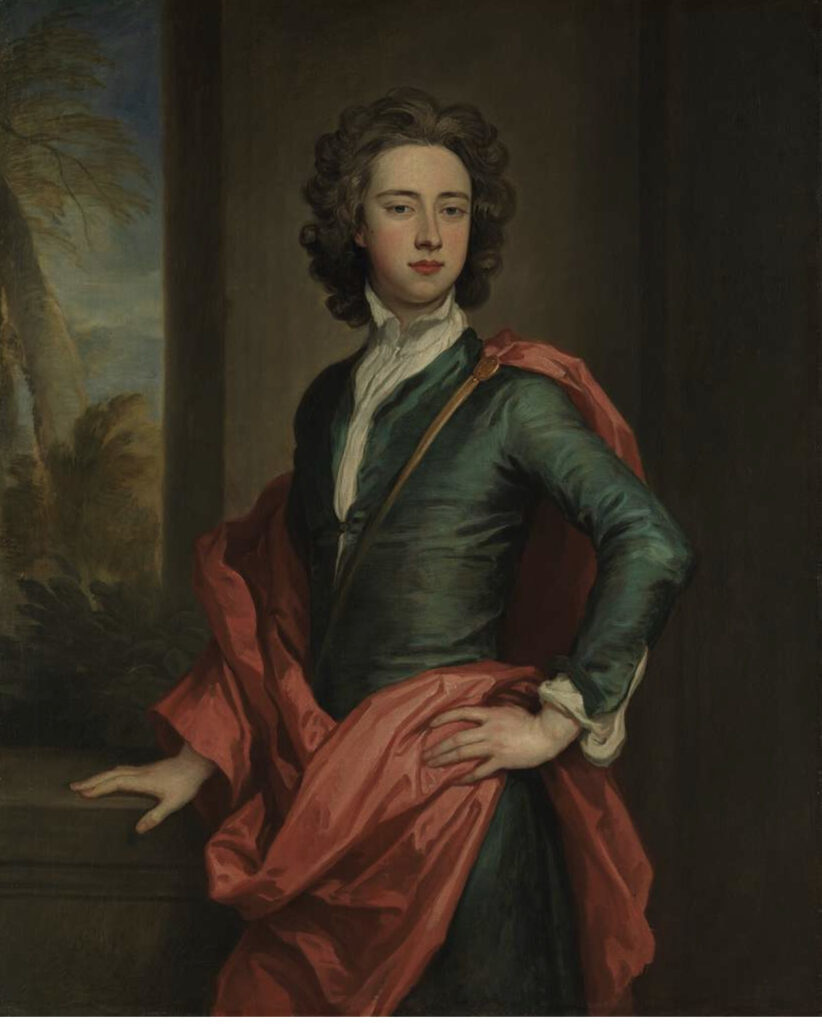
But it wasn’t just men who wore breeches. During Charles’ first year as king, audiences of the newly re-opened theatres could watch English actresses on stage. Female roles had traditionally been played by male actors, but now, for the first time, women could be seen both in female roles and also “breeches’ roles”, playing men. Not only did these allow them them to show off their figures in male clothing but women were able to use confident ‘manly’ dialogue and actions. This resulted in actresses being seen as loose and promiscuous.
Another change was signalled by shops selling ready-made clothing instead of all clothes being homemade or made to measure from tailors. The wealthy were quick to follow the latest trends and any items seen as old fashioned were passed down to servants and so on down the social ladder.
Nothing was wasted. Even clothes worn by the dead were reused. Second hand clothes markets flourished in the same way that St Albans’ vintage market does today, although back then an unpleasant side-effect of the profitable turnover of this clothing meant that street robbers not only stripped their victims of their purse and jewels, but also of their garments.
What of St Albans in the 17th century? It’s unlikely that you would have seen the frills, flounces and silks of the Stuart court in our Market Place, unless an aristocrat was passing through. Clothing for ordinary folk was plainer and in more muted colours: grey, white or mouse-coloured. Fabrics were coarse woven wool or fustian, a mix of fibres including hemp. During the Civil War of the 1640s, St Albans supported the Parliamentarian side and clothing reflected this with a lack of ostentation and sombre colours.
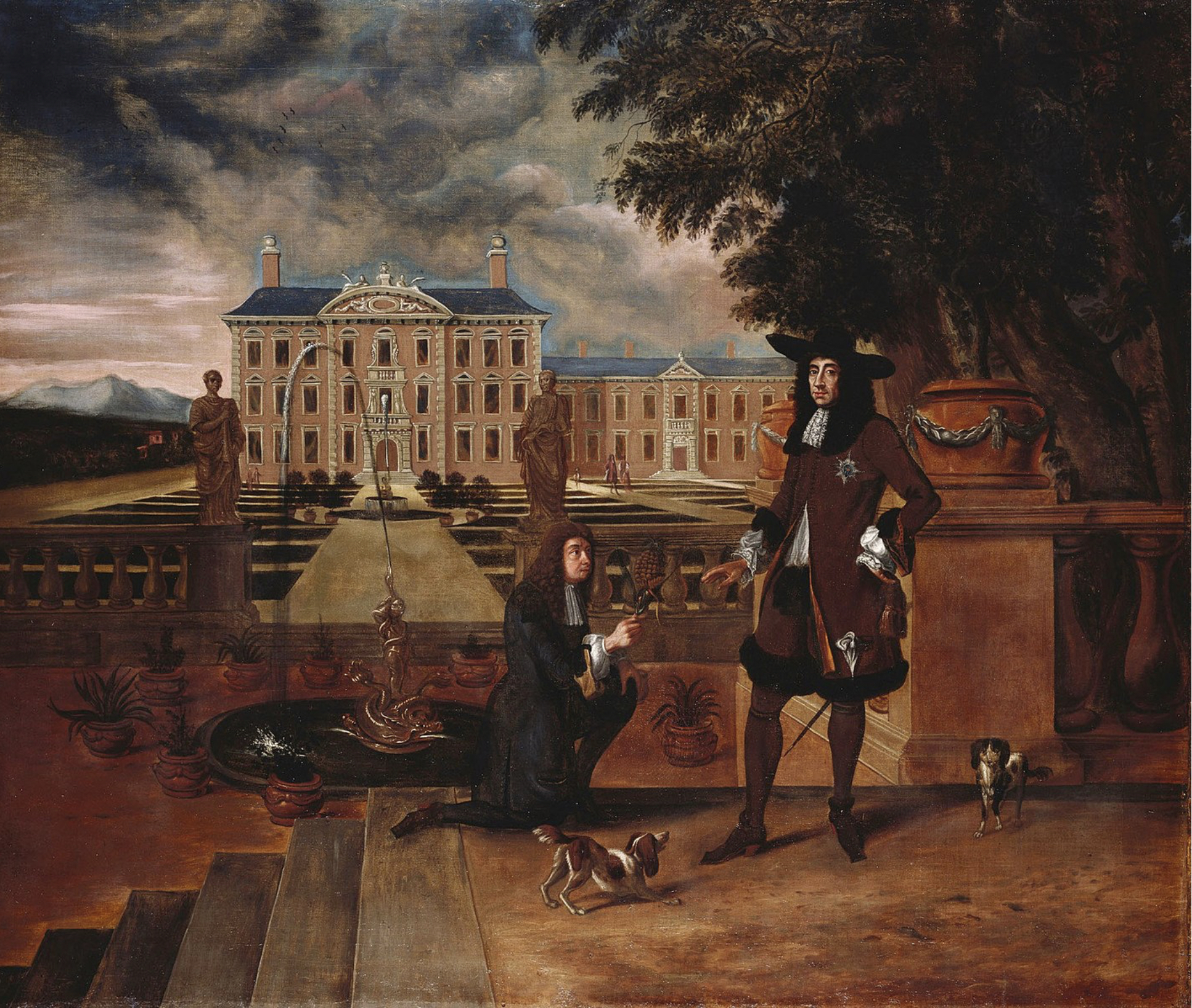
Charles II’s reign included plague, the Great Fire of London and, in 1675, the first pineapple grown in England.
Continuing religious unrest inspired over 21,000 of the self-proclaimed godly – Puritans – to leave for New England. His court was extravagant, immoral and outrageous but science and theatres flourished. And there is one fashion for which Charles can be thanked – the three-piece suit, comprising waistcoat, coat and breeches. This pretty much set male fashion for future centuries.
Charles II didn’t leave a secure kingdom. His death in 1685 led to years of religious upheaval and bloodshed. In 1714, the last Stuart monarch, his niece Queen Anne, died and a new era was to begin. The Georgians.
History in colour, from the Romans to Ghosts & Ghouls; www.stalbanstourguides.co.uk