05 Oct 2024
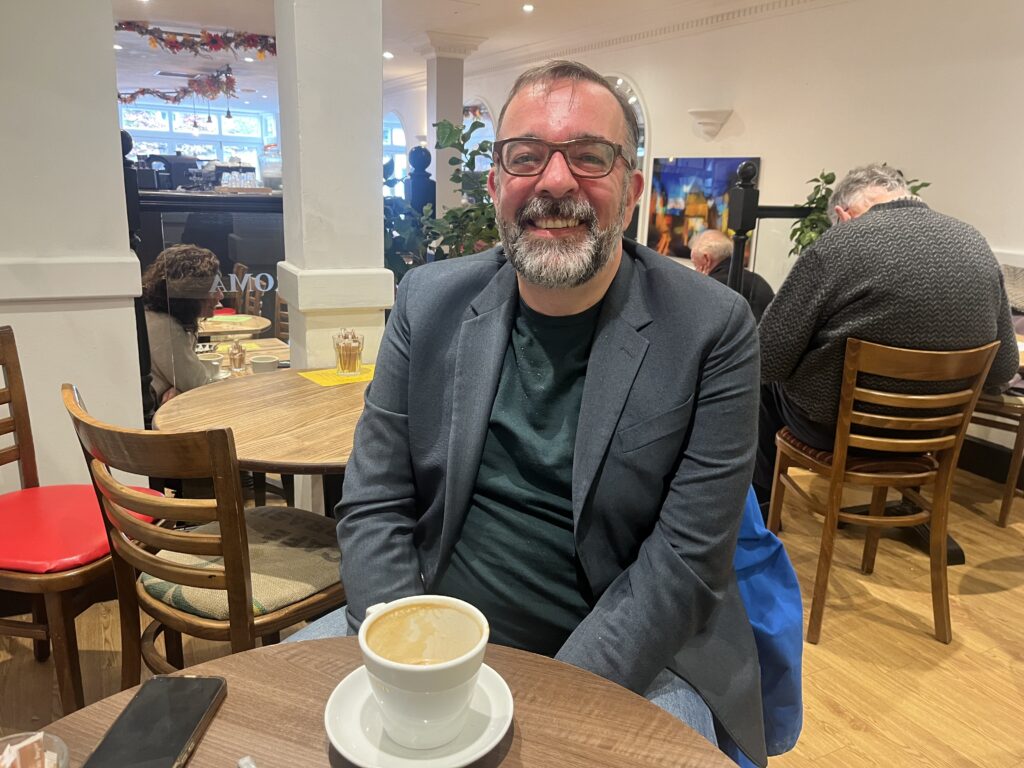
Things certainly aren’t standing still for OVO’s founder and artistic director Adam Nichols. No sooner has the curtain fallen on this year’s Roman Theatre Festival than he faces a more practical challenge in having to secure planning permission for their new theatre site.
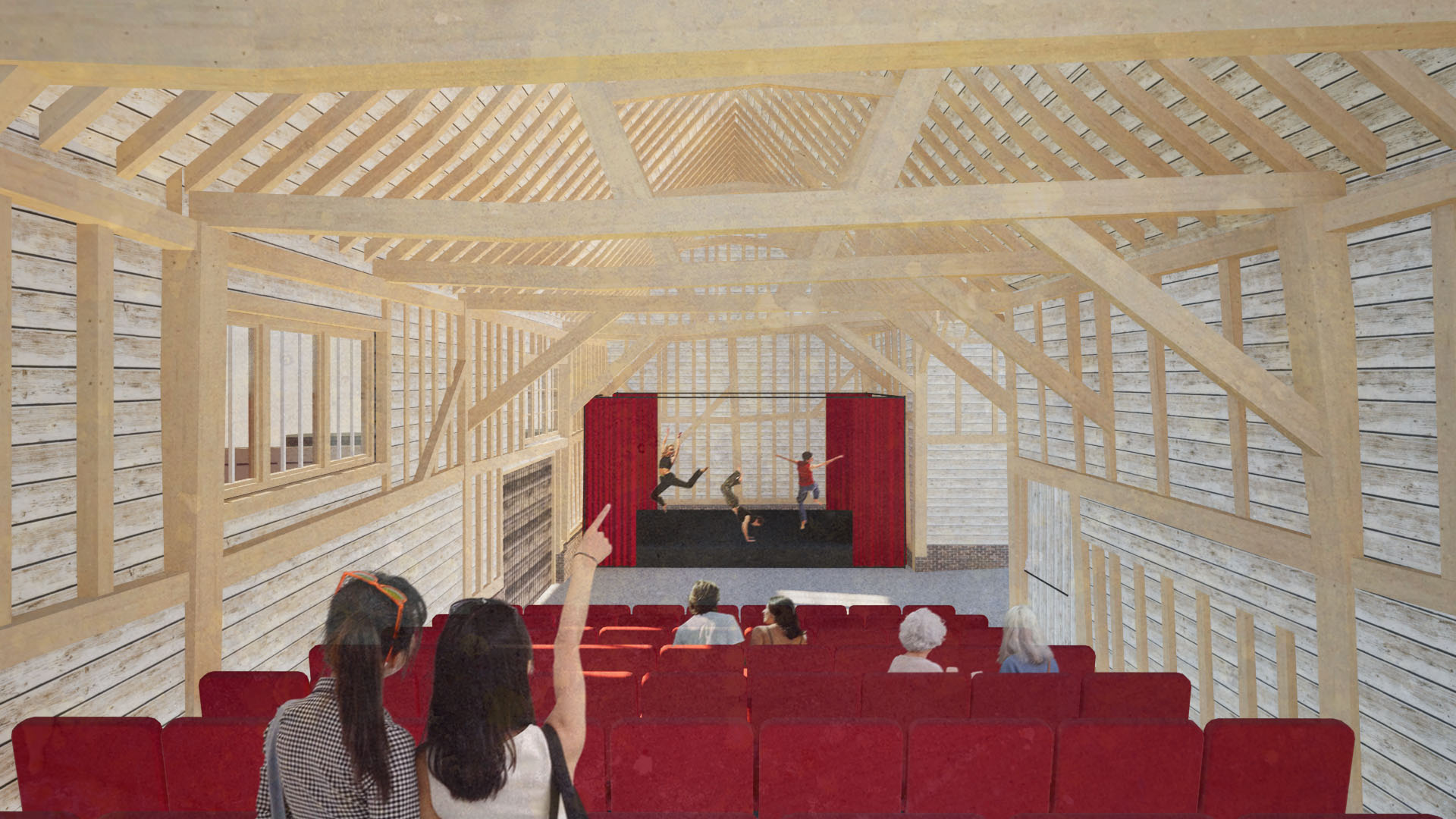
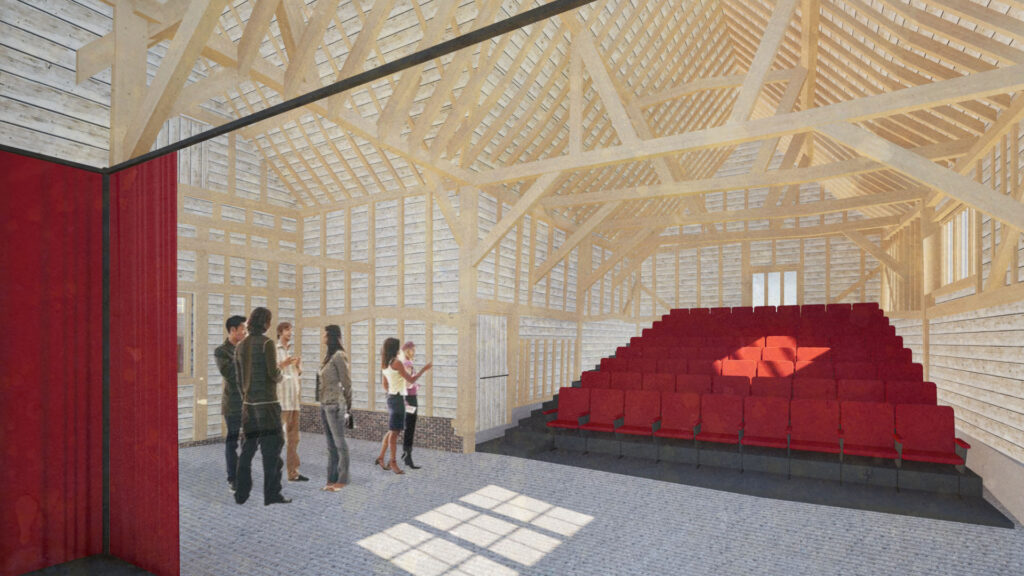
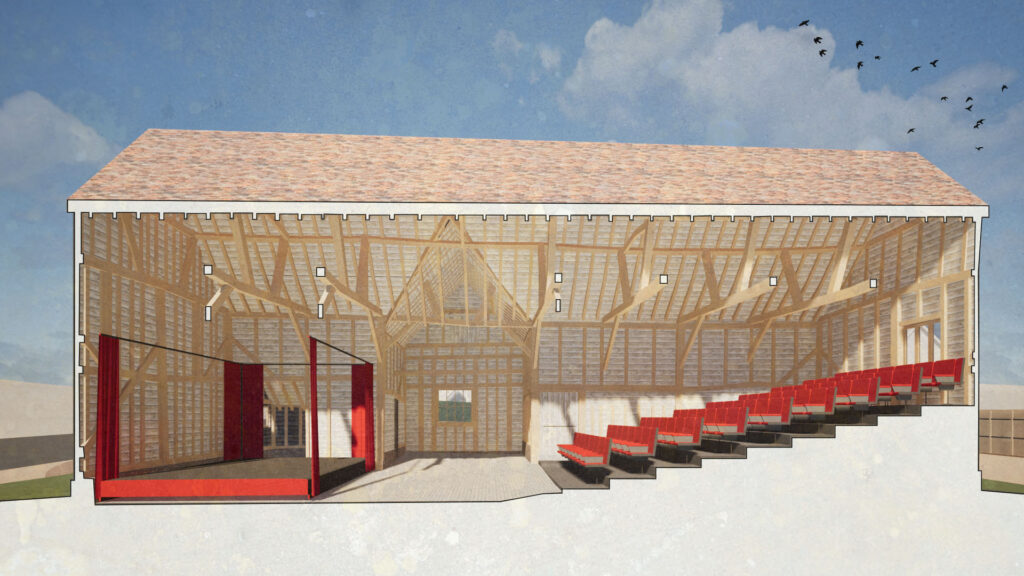
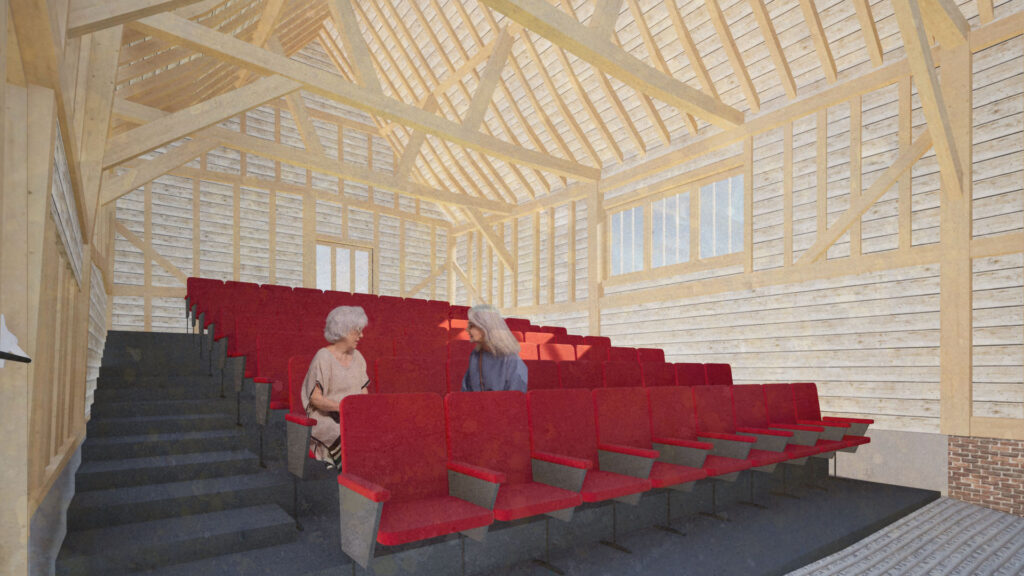
The company is bidding to transform the Grade II listed St Germain’s Barn – next to Verulamium Museum – into a new performance venue after being awarded £300,000 from the Government’s Community Ownership Fund.
Although an internal partition will be removed, there are no structural alterations to the building, which will feature a new courtyard, stage, and stackable seating.
“I’m hoping it should be relatively uncontroversial. We’ve slightly changed the original plan, and massively simplified it, because we were quoted in the region of £3.5m for the work, so all we’re really doing now with the barn is effectively refurbishing.”
Unfortunately the revised design means losing a structure connecting the barn with the adjacent pavilion, and a significant refurbishment to create a bar and café, although Adam hopes to be able to complete these modifications in time.
The building is currently on Historic England’s At Risk Register as SADC has failed to maintain it adequately, something Adam hopes will encourage councillors to agree the plans so the work can get underway.
“For us, the ancillary revenue is quite important. That’s one of the challenges we’ve got at The Maltings Arts Theatre [OVO’s other home], which is not really somewhere that people want to come and have a drink beforehand and stay afterwards. So that’s what we need.
“We also decided that actually getting it open was the most important thing. Get it open, get it established, start generating some revenue, and then that will hopefully enable us to do the next stage.”
He is hoping for planning approval at the start of November, with a view to starting the conversion work in the spring, when the weather is more favourable, and lasting six months, with the new venue opening in the autumn.
“The long-term plan is to have almost a semi-permanent rep company, so we’ll do a season and employ one group of actors to do all the shows. That’s the model we want to go for, with shows running straight through for three weeks, with the actors doing show one in the evening, while show two’s being rehearsed in the daytime.
“The main thing for us as well is that it costs a huge amount of money just to operate the Roman Theatre site, and we’re effectively concentrating most of our organisational costs into that four-month period.
“So having a proper year-round operation, is really, really important, especially in terms of things like the ancillary staff, the duty managers, the front-of-house staff, as it means we can have much more continuity as they work across both sites.”
The Maltings Arts Theatre will become more of a community asset, hired out use by various local groups, although it will still be used for some rehearsals, as well as a venue for external performances.
“I think it works well as a space, given the location in the centre of town. The challenge for us has just been how do you make it commercially viable because we need the bar, basically, and there isn’t really the space.
“Before we started looking into other places, we did do some feasibility studies, but when you sort of look at how much you’d end up spending compared to what you’d actually get, it’s not really worth it.”
This year’s Roman Theatre Festival received extensive coverage in the St Albans Times, with theatre correspondent Deborah Heath attending every show, and she’ll be pleased to hear that comments in her reviews help shape the creative process behind the scenes.
“When you get an accumulation of reviews, like with The Highwaymen, which was the last show of the season, we’ve had probably 10 or 12 reviews for that which have been quite consistent, both in terms of the positive stuff they’ve said and the criticism. Particularly because that show is still very much in the development phase, you absolutely do take it on board, because actually it’s really helpful to have that kind of perspective. You don’t necessarily always respond to every point as a review is subjective to a certain extent, but where you get consistent feedback about a particular show or a particular element of a show, that’s really helpful.”
Unfortunately inclement weather at the start of this year’s Roman Theatre season meant overall the audience was down around 5 per cent year-on-year.
“We sell about over 50 percent of our tickets a month or more in advance, which is great for an outdoor event, but all of those pre-sales didn’t really happen because if you remember, in March, April, May, it was bloody awful all the way through.
“And then the first six weeks that we were actually on was bad as well, and it was the first time ever that Wimbledon had spare tickets, but the second half was really good and really turned around. We’ve been very lucky since COVID. We’ve had three really good summers.
“I always thought there’s going to be a bad summer. We’re quite well equipped to deal with it now, operationally, but, it did affect audiences in the first half.
“I think the quality of the output was generally very good. What we’re now thinking is that next year that it will be more focused on the OVO shows and less visiting companies, and I think we’re potentially going to make it slightly shorter by just a couple of weeks.
“It costs us £180,000 to run that site. The biggest cost is £25,000 on the generators, but we’re hoping to get permanent power in there at some stage, we’re in discussions with the [Gorhambury] estate on that.
“It’s a magical, wonderful place, but it’s not an easy site to operate in, and we’re looking at how we can make it more commercially viable. Concentrating all the output into a slightly shorter amount of time helps to reduce our overheads, and we’re going to really try and significantly expand the number of people buying season tickets, which means we’ve got predictability around income, and that’s really helpful as we don’t get any external funding.
“We also ended up doing lots of in-house shows that had quite short runs, which isn’t a very good model because it doesn’t really give the audience a chance to build. So shows will be on for three weeks, with seven or eight performances a week, and then the next one comes on.”
So what can we expect next year? It doesn’t take much pushing for Adam to provide some exclusive revelations about the shows coming up in 2025.
“We are going to have the Pantaloons back, and I think that’ll be their fifth year they’ve been with us. They’re going to do Hamlet, which will be interesting.
“We’re looking to do a youth-focused community show as well. This year we did the Secret Garden, which was unfortunately right near the beginning, with terrible weather and we had to cancel one performance.
“But from a community engagement perspective, and for talent development and giving those young people the opportunity to work in a professional environment, it was really, really, really successful, and they were brilliant.
“We’re doing A Midsummer Night’s Dream, which will be a refreshed version of the production we did in 2022, and that’s going to the Minack Theatre in Cornwall as well. It’s a 1970s, disco-themed version.
“We’re going to do a version of Les Mis, but it’s an adaptation of the Victor Hugo novel, and although it’s got music in it, it’s not the West End version. We’re still deciding what the third show is going to be, maybe The Great Gatsby.
“The other thing we’re going to do with all the shows is to try and expand the music, and I’m talking to [Pioneer Club CEO] Danny [Clare] about it, because he’s really quite keen on doing some outdoor stuff.
“We’re also working on a couple of other new adaptations, which are probably for autumn next year in the new theatre or maybe the following summer. I really want to do something that’s got a real local focus, as we’ve never really done that apart from our very first show about Boudicca back in 2014. I’m talking to a few people about doing something about Francis Bacon, so that’s a possibility.
“There’s a couple of other classics that I’m looking at that are at quite an early stage of development. If we do Gatsby next year, that’ll be a new adaptation.
“I think Sense and Sensibility this year was a really, really positive experience for me from an adaptation perspective in terms of working with a writer who I haven’t worked with before but hope to work with again, taking a very popular classic novel and turning it into something different.
“Audience-wise, alongside the Shakespearean stuff that we do a lot, that sort of literary adaptation is quite popular, and we obviously had a lot of that in the programme this year, not just our stuff, but from the visiting companies as well.”
Returning to The Highwayman, which was unquestionably one of the stand-out shows of this year’s season, could he see the potential for it to be a hit from the very beginning?
“I was introduced to the writer Kitty Morgan by someone’s whose done quite of work with us, and she came to The Maltings and we had a chat. Then she sat down at the grand piano and played the opening song, and I was like ‘Wow, OK, this is really something’.
“We then worked on it together over the next 18 months, developing it, and there’s still a lot more work to do, but to answer your question, my gut instinct was yes. I feel we’ve got quite a good understanding of what the audience we’ve now built up want to see, but I really do feel this is something quite special.”
Does having that familiarity with their audience allow them to push the boundaries in terms of content?
“I think the audience are quite open to a range of different things, and although you don’t want to push them too far, equally you want to challenge them a little bit. That’s why the season pass is good, because people end up coming to see things that they wouldn’t normally have booked.
“Ultimately it’s as much about the experience and the venue and having a nice evening as it is about the theatre. The theatre’s got to be good, obviously, but we’re always conscious of the fact that people are there for an evening out, and the atmosphere and the ambience, although they are quite up for the more challenging content, and so yes, we’re keen to keep pushing the boundaries.”
He added that OVO are also hoping to bring back their production of A Christmas Carol to the Roman Theatre this year, and are just waiting for the nod from the Gorhambury estate.
“They are incredibly supportive, you know, they’re amazing. The Christmas thing has been really successful for the last couple of years, and we think there’s still a lot of appetite for it. People are now saying to us that it’s part of their Christmas ritual, and once we’ve got the barn I’d like to do something in there as well.”
To view OVO’s plans for St Germain’s Barn in full go to https://planningapplications.stalbans.gov.uk/planning and search 5/2024/1478