28 Nov 2025
It’s just one small road tucked away in the heart of St Albans, but thanks to meticulous research by a local resident, it now provides a fascinating insight into local life during a 50-year period in the middle of the 20th century.
‘Down Our Way, Life in King’s Road, St Albans 1920-1960s’, is a labour of love by Judy Sutton, following her previous work researching the backstories to the residents who lost their lives in the First World War.
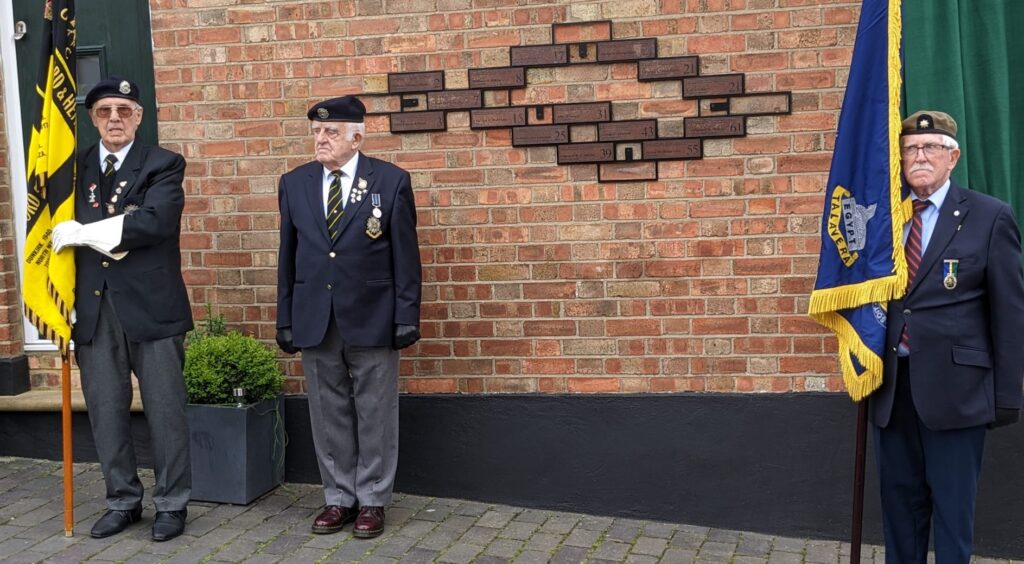
She explained how it came about: “In 2023 our community erected a street memorial to the 15 men from King’s Road who had lost their lives in the Great War. Out of this project came the book ‘King’s Road: for King and Country’ written by Helen Little and myself telling these men’s stories and a micro history of the earliest days of our street.
“Our memorial and book attracted a lot of interest from ex King’s Road residents, many of whom were keen to share their memories. This has led to me writing part two of our street’s history spanning four decades during which both World Wars cast their shadow.
“‘Down Our Way’ tells the story of a close-knit community where children had freedom to play out of doors unsupervised, deliveries were made by horse and cart and a week’s holiday at the seaside was a real luxury. Without these shared memories all trace of the King’s Road Orchestra, Harry Chedd’s Rolls-Royces and the endless fun to be had viewing the bottling process through the Kingsbury Dairy window would have been lost forever. Also contained in this book is an analysis of the 1921 census of King’s Road residents, providing a microcosm of life as it would have been in streets all over St Albans and beyond.”
The book is a remarkably focused piece of research, but despite covering just one small road, Judy was not surprised by the large amount of history she unearthed: “I have lived in my street for 40 years and have been absorbing King’s Road’s social history like a sponge during that time! I just love imagining the past. This is a project that has been evolving in my head for a long time and I am glad to have been able to share so many untold stories with my community. Many people today, like me, love to imagine how life was in times gone by.”
Having access to primary evidence made a huge difference to the book, and included the diaries of her old next door neighbour Cyril Pollock, who never threw anything away.
“Cyril’s granddaughter Heather Clark got in touch and shared her grandfather’s diaries with me, fragments of which are included in the book.
“He wrote of walking up Victoria Street to the station in 1943 having be called up to serve in the RAF and wrote ‘I was praying that it would not be my duty to kill anyone but if it should be that I would have the strength to do so’.
“Around the time of our memorial unveiling I met several people who had grown up in King’s Road many years ago who were keen to share their memories with me. I recorded interviews with three people who had grown up in the street in the 1930s/40s/50s who are now very elderly.
“I think their different personalities sing out through their words.
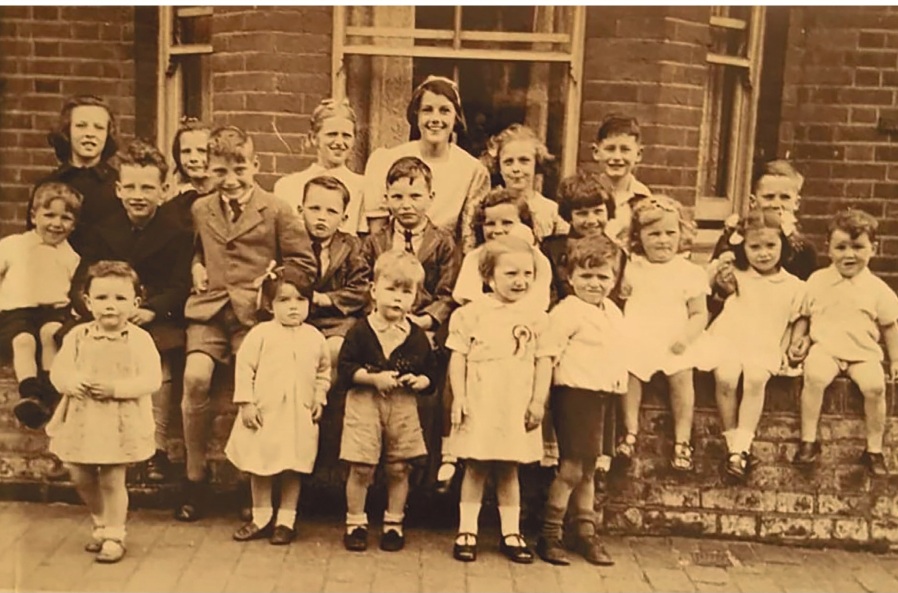
“I could hardly keep up with Bernie Smith when I interviewed him. He was a real live wire! His memories poured out of him like a waterfall. He is almost jumping off the page in the image on the front cover of the book (third from left middle row).
“Sadly since interviewing him three years ago his memory is failing but he still remembers his childhood in King’s Road! Talking about that picture, Gladys (back row first left) who is now 91 years old can still remember every child’s name in that picture and where they lived!“An article in the local press and in social media about our project reached others from as far afield as France and Australia who had also spent their childhood in King’s Road in the 1950s and 60s. They emailed me their memories which are included in the book.
“Our street still has one Windrush family who had headed the call from Great Britain to the people of the Caribbean after WWII to come to Britain to help get the country back on its feet. Included in the book is a little of their story as told to me by their daughter Yvette. “I also used online genealogy sites, the Kelly’s Directories and newspaper archives to glean information. Also helping me with the research side of things were two amazing people: Helen Little with whom I had written my last book, and Cyril’s granddaughter Heather.”
The 1920s to 1960s were a period of massive social change across the country, and King’s Road was no different from any working class street in much of Britain during these decades, but Judy has tried to pull out themes from the accounts she has used and fit them into a wider context.
“It really does feel like the story of ordinary people is a forgotten history,” Judy says.
“At the time the 1921 census was taken WWI was a very recent memory.
“Many of the men had served in the war and survived. Some had been wounded, such as Cyril Pollock’s brother Val who had been gassed and had never recovered. He died in 1930 aged 38 years. Cyril buried his war medals in their back garden when they may remain today.
“The welfare state was more than two decades away and there was no state pension or national health service. The elderly had no means of income once they stopped work, so some households were multigenerational.
“Having said that in 1921 only 12 residents (out of a street containing 323 people) were over 64 years old. By 1921 standards, these people had lived long lives already, as life expectancy at this time was 56 years for males and 59 years for females.”
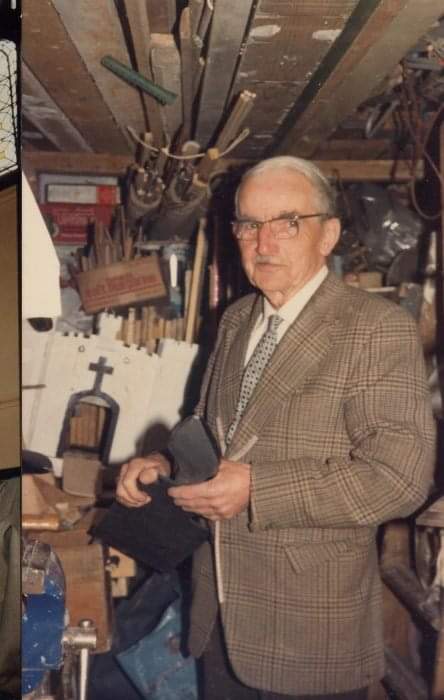
During this period the horse was gradually being replaced by the motor car and in 1921 there was just one coachman left living in the street, down from three in 1911.
“He was working for HJ Toulmin esq, age 83, of Kingsbury Lodge Branch Road St Albans, previously of Childwickbury and the Prae and four times mayor of St Albans.
“Toulmin’s butler was also a King’s Road resident, but post-WWI many of these big houses were being divided up or demolished.
“King’s Road had five residents in 1921 who were in the employ of the motor car industry. There was just one on the King’s Road 1911 census, a bus driver.”
In 1921 legislation was passed which reduced the working day to eight hours and the working week to five and a half days, which resulted in an increase in leisure time.
“King’s Roaders were enjoying radio, cinema, keeping chickens and rabbits, allotment gardening, fish and chips, the pub and making things in garden sheds.
“There was a chippie just around the corner on Mount Pleasant and a meal from there was a real treat for King’s Roaders. Of course these were the days before international cuisine! Offal was popular in those days and there is a nice wartime recipe on how to cook a calf’s head in the book.”
Football was a huge pastime during these years, with virtually all boys and men involved in the game, either playing in local teams, kicking a ball around or attending St Albans City, Watford and Luton matches.
“All the boys played football out in the street before cars came along. In fact huge groups of children played out in the street and beyond. They seemed to have total freedom to roam and would come home at meal times. Playing out was part of everybody’s recollections from the 1930s through to the ‘60s. Children’s lives today are very different.”
In 1938 the Government passed the Holidays and Pay Act, which entitled workers to one week’s paid holiday, where previously a day trip to the coast was the norm, and by the 1950s a week at the seaside was becoming more usual.
“Back in those days people seemed to join together to make their own fun much more than now. I guess as money was tight this was a way of enjoying yourself that would not cost anything.”
Bernie remembers sitting in his back garden in the summer listening to the radio with neighbours. Fences were low in those days and back gardens were not the private places that they are now.”
Bernie recalls memories from this period in the book: “Alf Roberts, [from 10 King’s Road] he used to like boxing so we would all be out the back in the gardens listening to the fights in them days. Bruce Woodcock [British boxing champion in the 1940s] and all them. We all congregated and everybody got on with each other.”
Judy said she was surprised to learn that King’s Road even had a short-lived children’s orchestra, which was conducted outdoors in the back garden.
Also included in the book are many memories of the Second World World War, including details of the evacuees who spent the duration in the street, many of whom came from the Channel Islands, and the surprising revelation that there was a prisoner of war camp on the doorstep at Gorhambury.
Contributed Gladys remembers German bombers flying low overhead at night: “We had outside toilets. We couldn’t put candles or lights on and we only had gas lighting inside with blackout curtains. No cracks.
“We used to stand there [outside] and see, ooh, hundreds and hundreds of bombers all in line, going over in a straight line, you know, just in front of us. They never bombed St Albans much. We had the stray bomb that fell… The Abbey, they never bombed that, because that was the guide that they were near to London.”
It is surprising how quickly life moves on and the tragic loss of previous neighbours is forgotten. Arthur Thrussell’s granddaughter Linda Chubb shared sad details of her grandfather’s fatal accident in Maygrove’s Silk Mill in Abbey Mill Lane in the days before health and safety.
“Arthur was a maintenance man and on Tuesday 18th November 1941 while fixing a moving driving belt at the mill his clothing got caught, he was pulled into the machinery and he sustained multiple injuries. He died at St Albans City Hospital the next day.”
It was also important to remember the one man from the street who died in WWII. Arthur Jennings’ sacrifice in the Fourth Battle for Monte Cassino in 1944 had been all but forgotten, but Gladys was ten years old when she saw the telegram being delivered to his widow.
She recalled: “Joan Jennings, opposite [number 37] she was a girl whose father was the only one in the street that died in the Second World War, Albert Jennings, he died in 1944.
“I actually saw the telegram boy come. I was in my gran’s garden doing some gardening for her and I saw the telegram. Well we knew what that meant, you know. So he knocked at 37 … yes, he was killed, Albert Jennings. He’s on the cenotaph with my husband’s uncle, right next to it up by St Peter’s Church. But he was the only one who died. There was several of them that was in the forces, but nobody else died. Well I don’t think so anyway. So that was a terrible shock. She was ten, I was ten.”
So what does Judy think makes King’s Road special, and have the books and memorial increased the sense of community in the street?
“King’s Road has always been a close knit community and is still so today. I think we live in quite a special street as it is a tucked away cul de sac that people don’t pass through unless they have a reason. Although we all live more self contained lives today, neighbours do still look out for each other.”
With her second book reaching the 1960s, is Judy now working on a third to bring the story up to the present day? “This is the last King’s Road book I will write. I am handing on the baton to the next generation to write Volume 3!”
Down Our Way will be officially launched at the Lower Red Lion in Fishpool Street this Saturday (November 29) between 1-3pm, with local jazz band Cornelia’s Friends helping the afternoon go with a swing. Books will also be available for sale at The Portland Arms Christmas Fair the following day (1-4m) or by emailing kingsroadbook@gmail.com