25 Aug 2026
It’s been a while since we last suggested to take a look above your heads and take in some of the quirky architectural features found scattered across the district. But with the summer holidays still stretching inexorably into the distance, what better time to take a moment of contemplation and appreciation for these unusual additions to buildings?
As with our previous articles, we are grateful for the prior research carried out by various individuals and organisations, whose background information has made this feature possible.
Starting off at Harpenden’s West Common, a rather modest plaque marks the construction of 16 terraced cottages forming Pimlico Place, built in 1822 by the Benefit and Annuitant Society of St Albans, and possibly let to farm labourers.

Dating back just 12 years’ earlier, the society was formed in 1810 and met in the Blue Boar Inn, a long-lost pub in Market Place, St Albans, but no further information is available on its history.
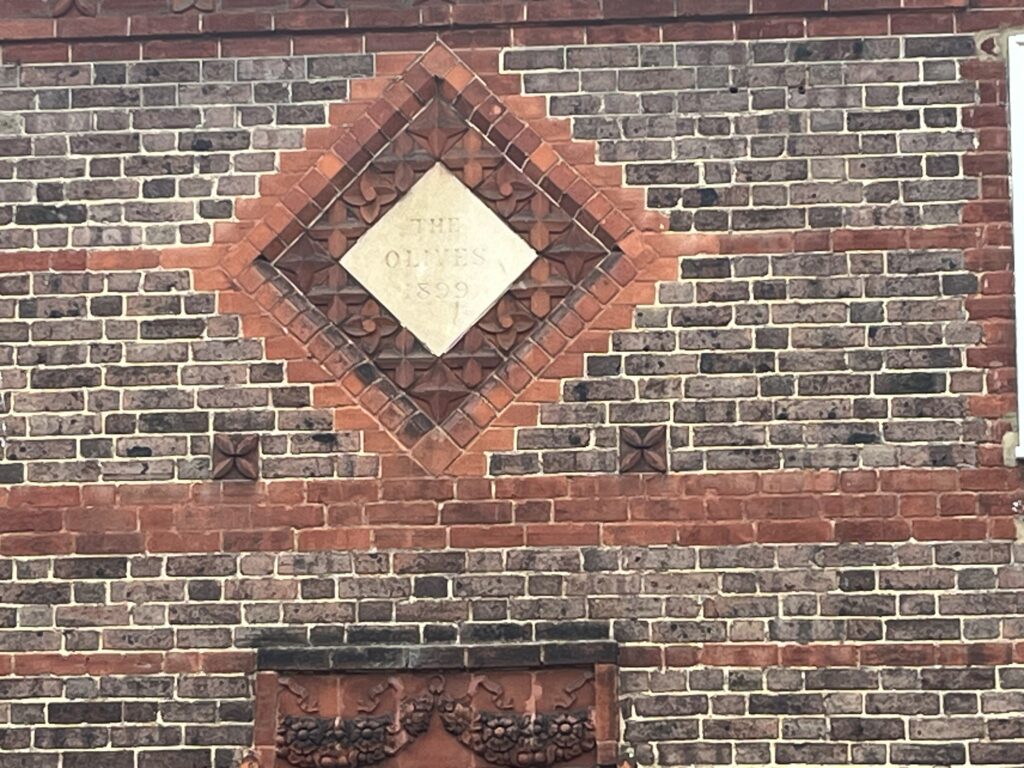
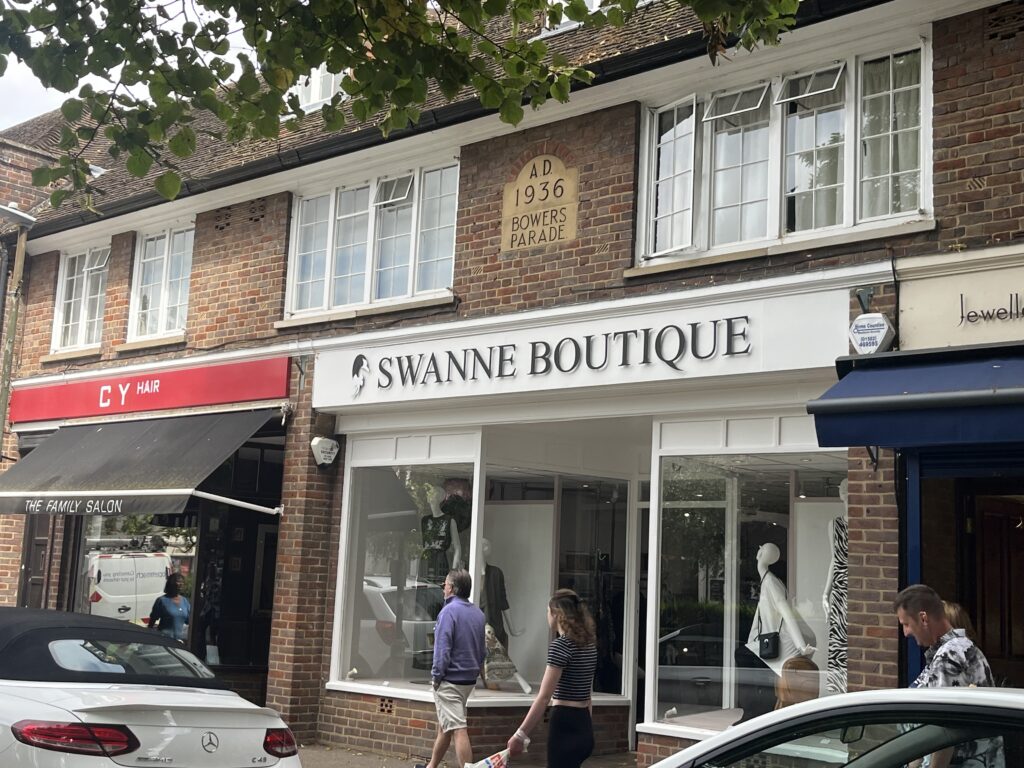
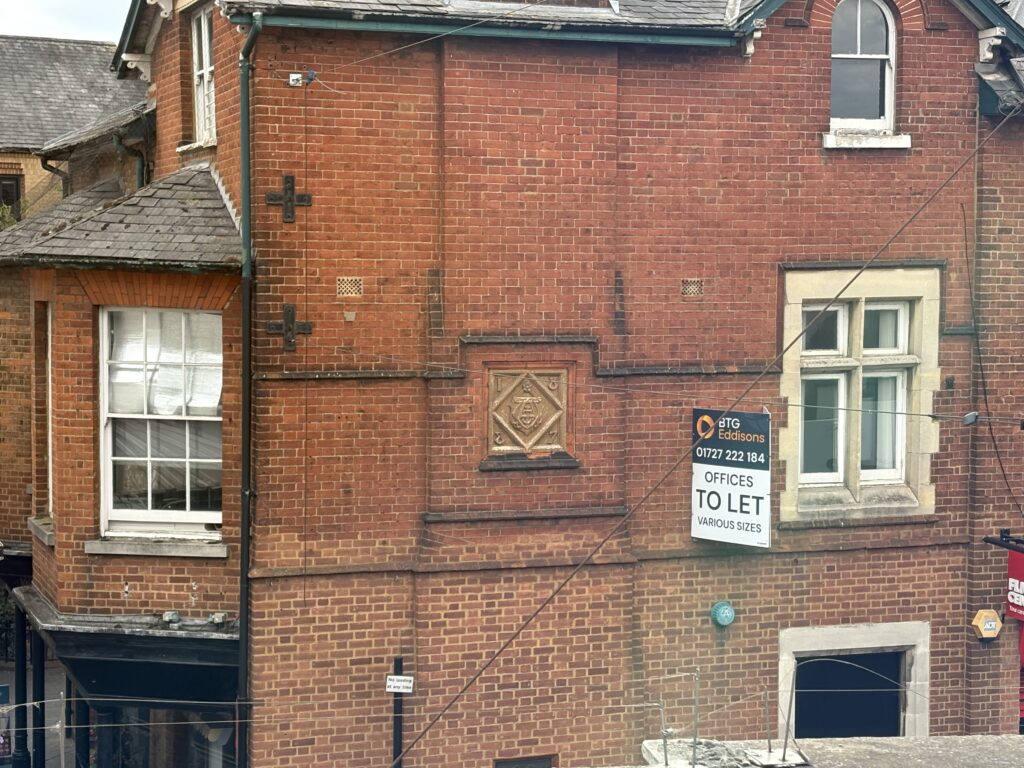
There are quite a few other dated plaques on houses and buildings across the district, recognising the year they were erected and occasionally their original names. These include The Olives in Normandy Road, which date back to 1899, Harpenden’s Bowers Parade (1936), and the cartouche of one of the firms that owned the brewery Adey and White, showing the date 1887 on the building at the front of The Maltings Shopping Centre which formed part of the brewmaster’s house.
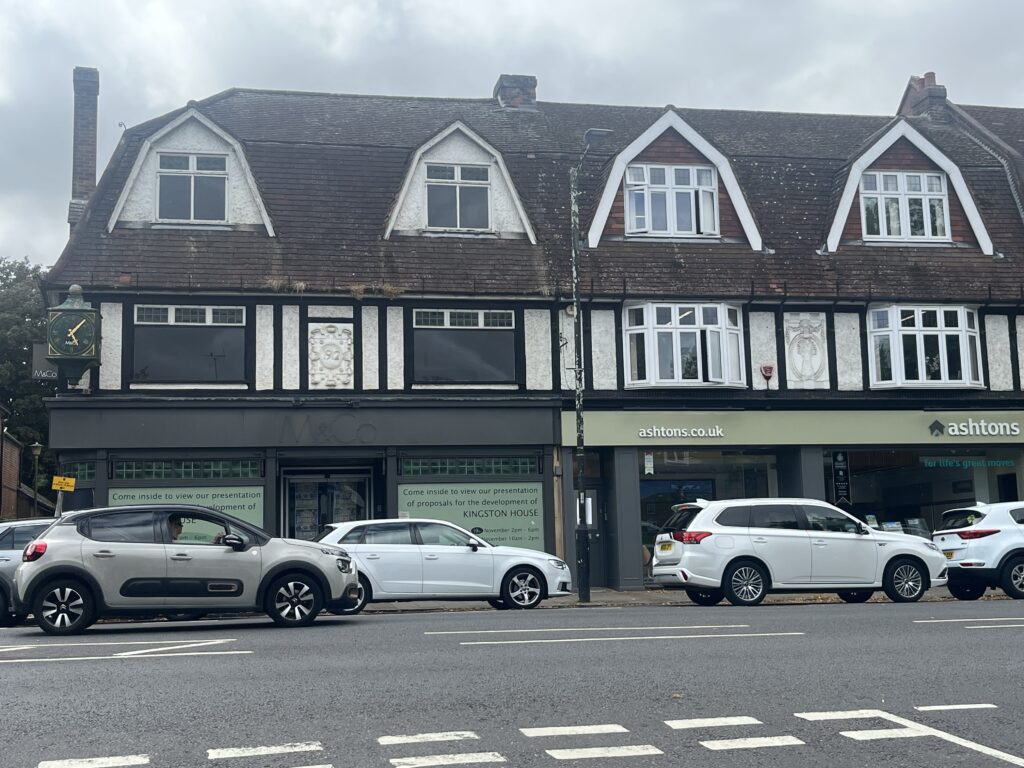
At 6 Harpenden High Street is Kingston House, built in 1912 by Henry Salisbury after he tore down the 19th century home of local GP Dr Francis Kingston.
This date can be seen on the frontage of the building, which also features distinct decorative plasterwork between the first-floor windows and an integrated wheatsheaf motif, still visible today.
The building operated as a hardware and department store for many years before becoming an M&Co fashion shop. It is currently unoccupied following a failed attempt to relaunch it as a pub and restaurant.
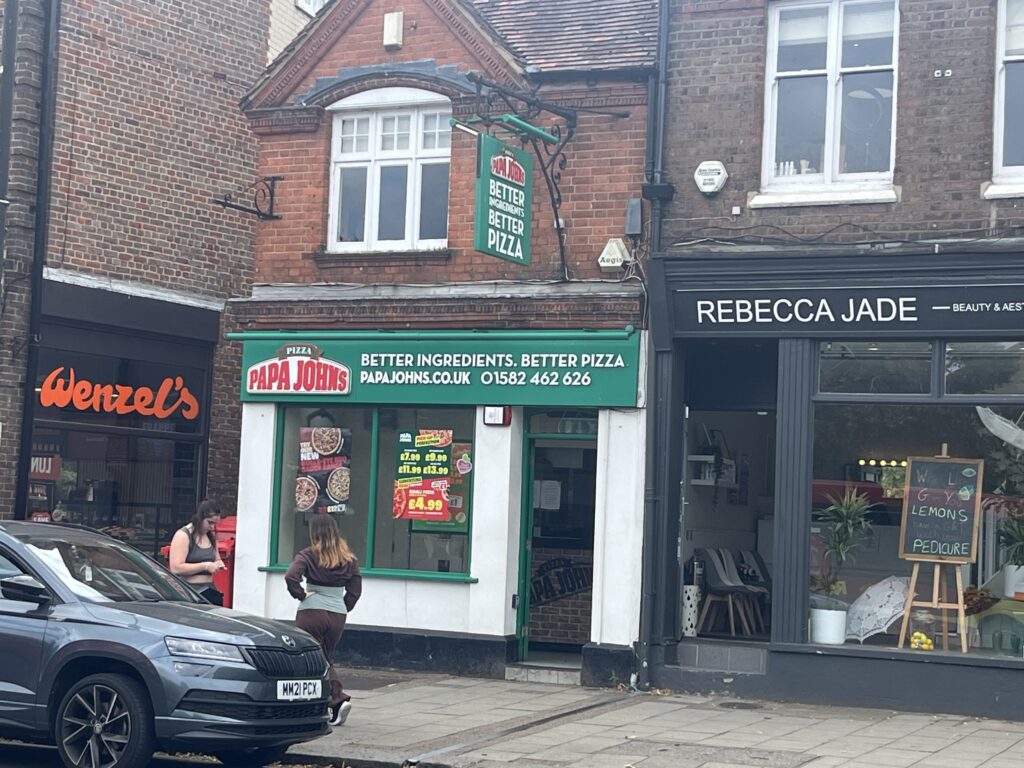
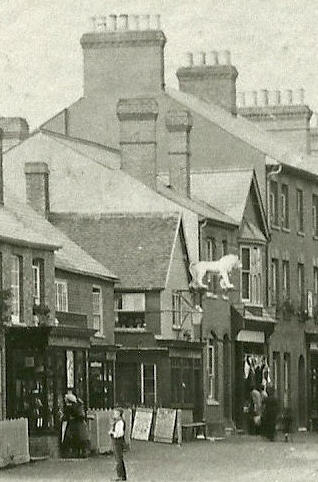
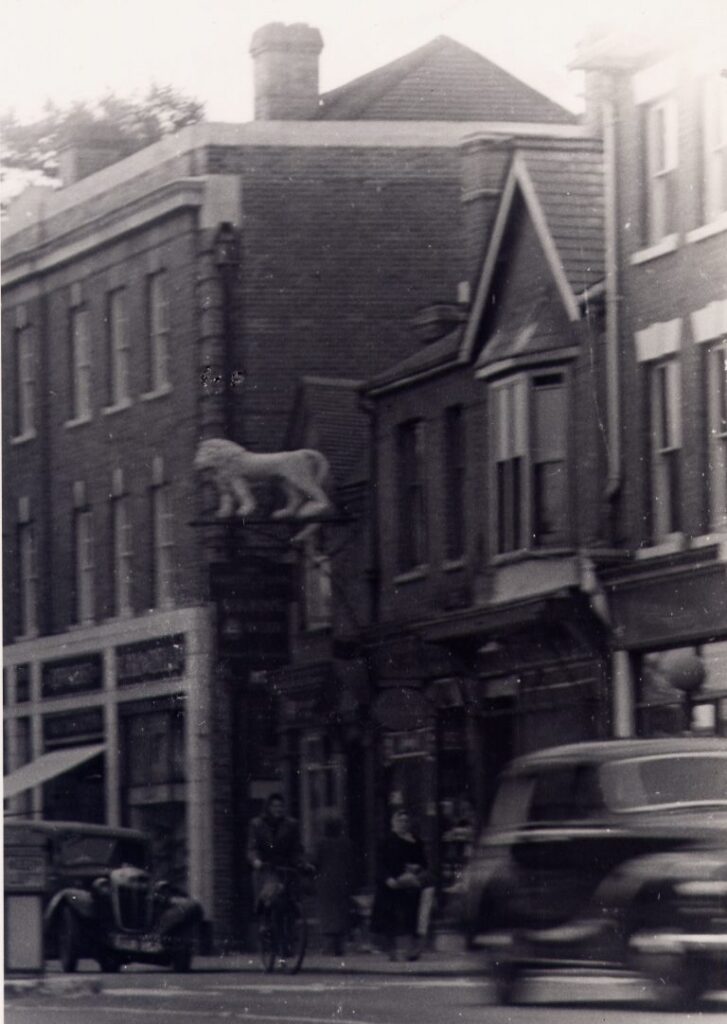
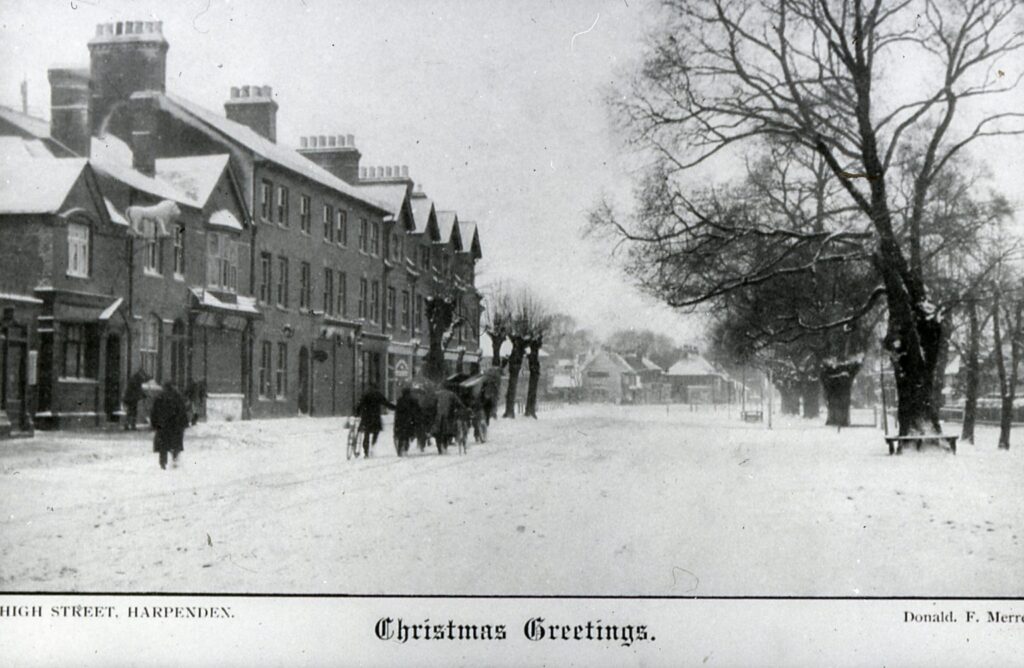
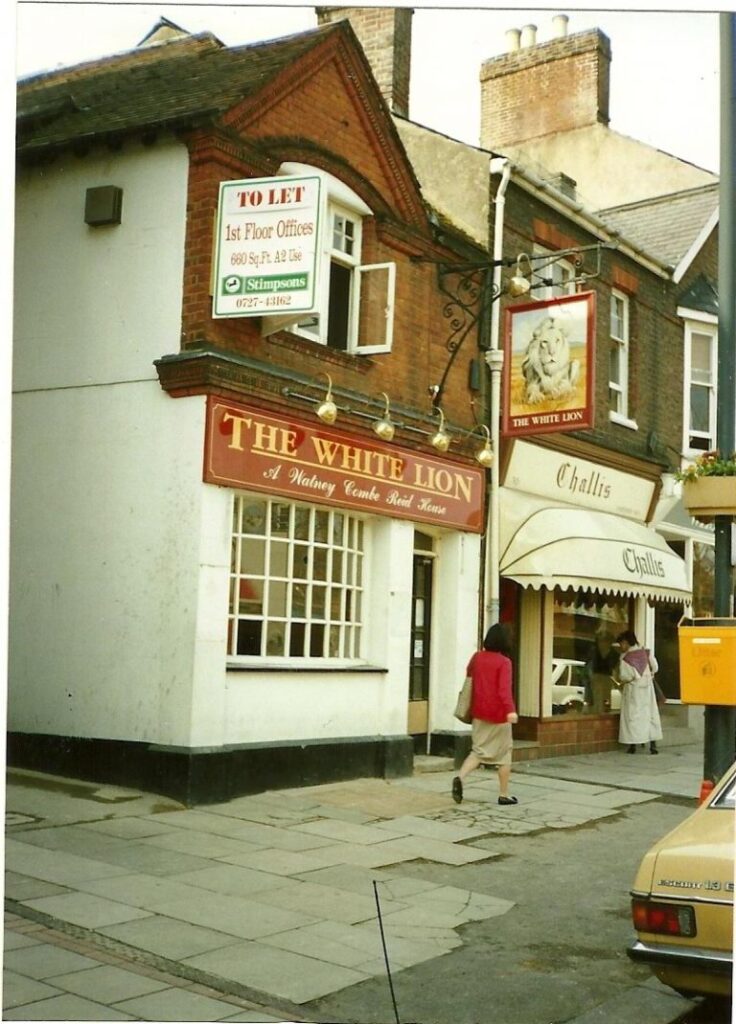
Further down the road, an ornate metal bracket on the side of 28 High Street might currently display a sign for Papa John’s pizza takeaway, but in the 19th and early 20th centuries it used to support a large model of a white lion.
A small Victorian pub, The White Lion survived until the 1990s, although the original lion statue had disappeared by the 1950s. It can be seen in this selection of images kindly provided by Harpenden History Society.
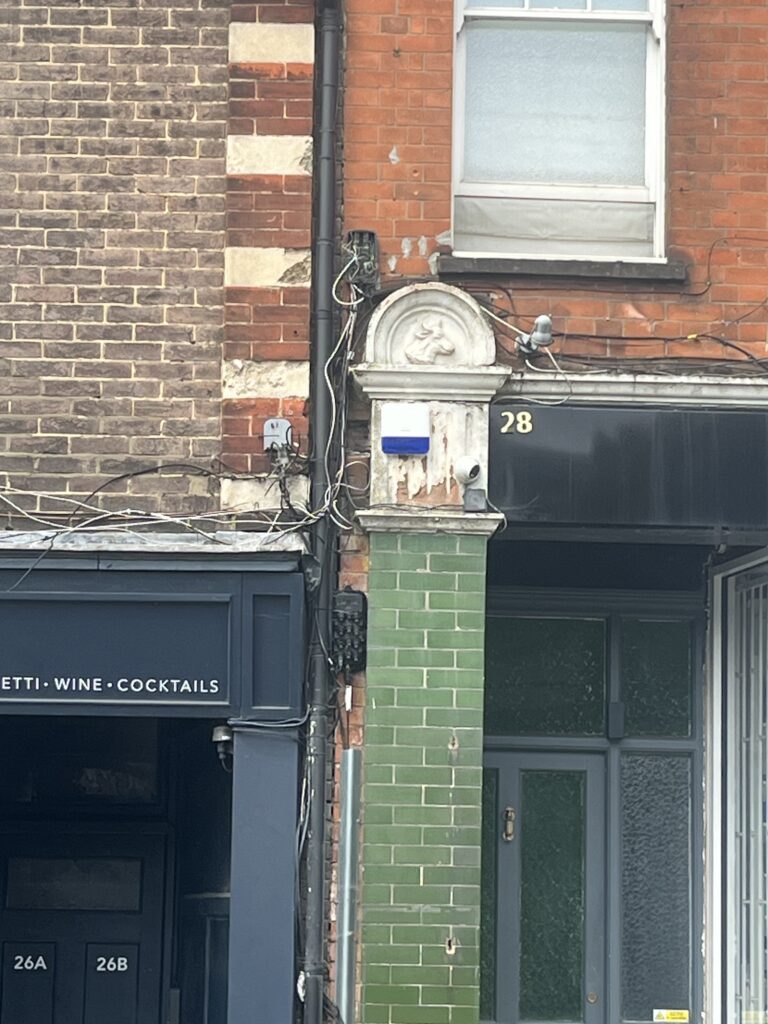
From 1953 until the 2000s, 28 Station Road in Harpenden was occupied by long-running family business Park’s the Chemist. James “Jimmy” Park was a familiar face in the town’s trading community alongside his wife Marjorie, who lived with their family in the flat upstairs. So why, then, does the shop front feature a carved relief of a cow on either side? Did it have a previous occupier who was a butcher?
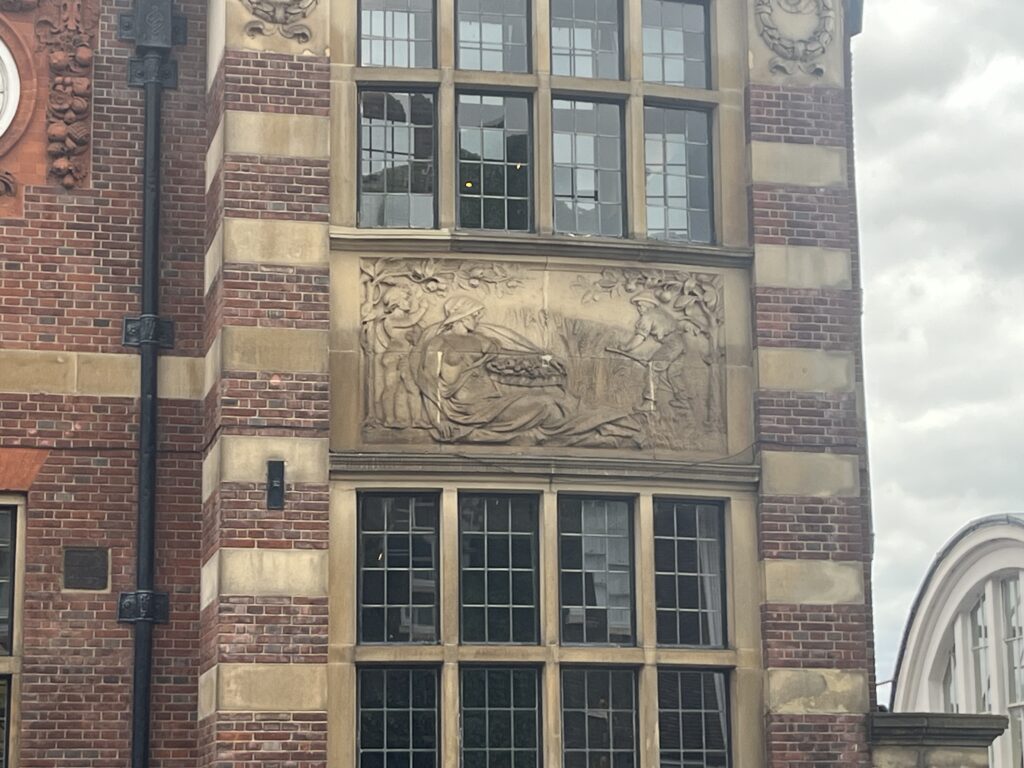
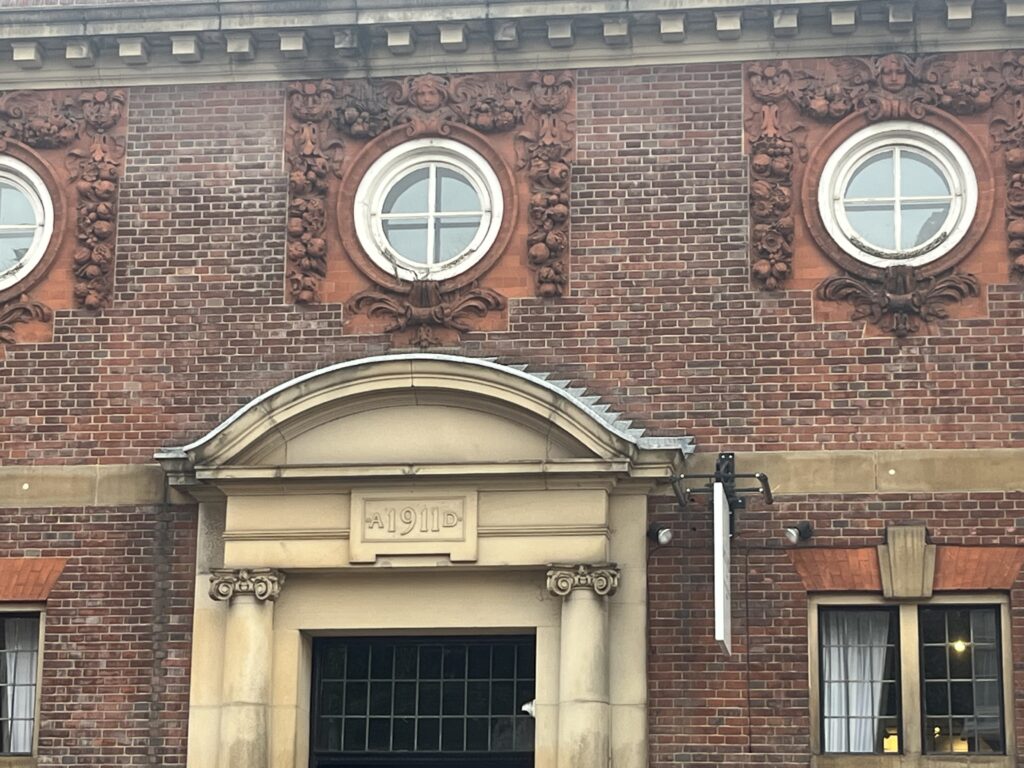
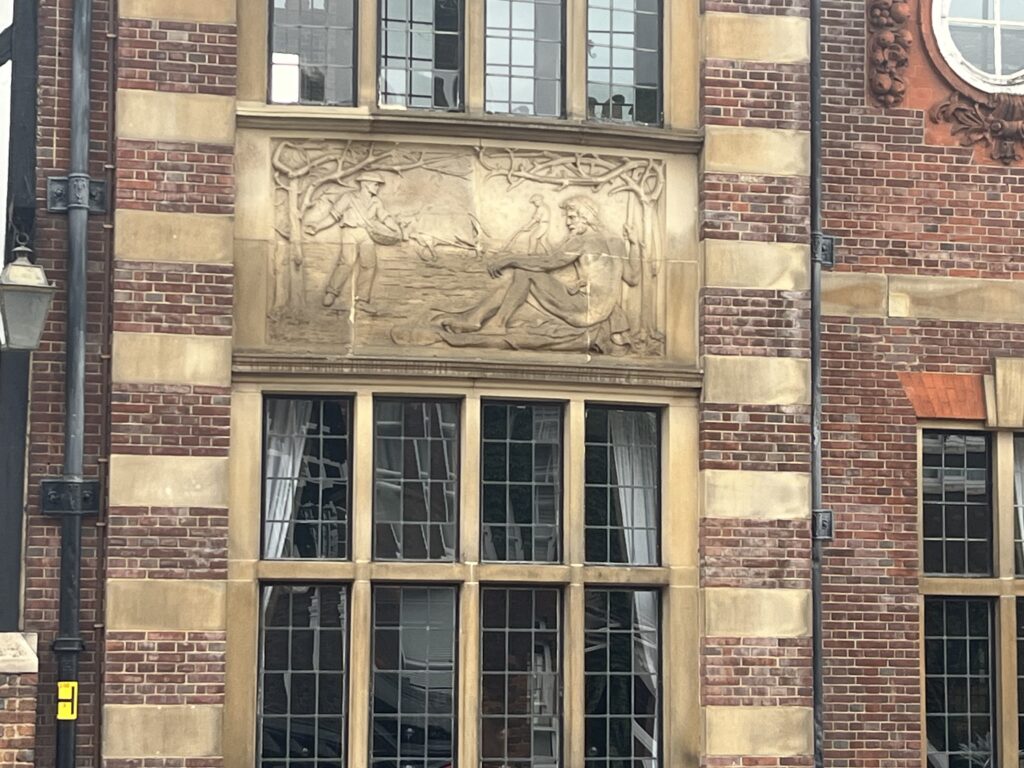
Back in St Albans, the former offices of celebrated citizen Samuel Ryder at 27-29 Holywell Hill feature a Georgian-style red brick facade designed by Percival Cherry Blow, including decorative carvings of agricultural scenes.
Blow was a renowned architect of the arts and crafts era who designed many properties across St Albans and Harpenden, including the art deco building now occupied by The Odyssey cinema, Ryder’s Exhibition Hall (now Moka restaurant), the Sutton Road corner of the Rats’ Castle (The Old Tollhouse) and the hall for St Paul’s Church. He is buried in Hatfield Road cemetery.
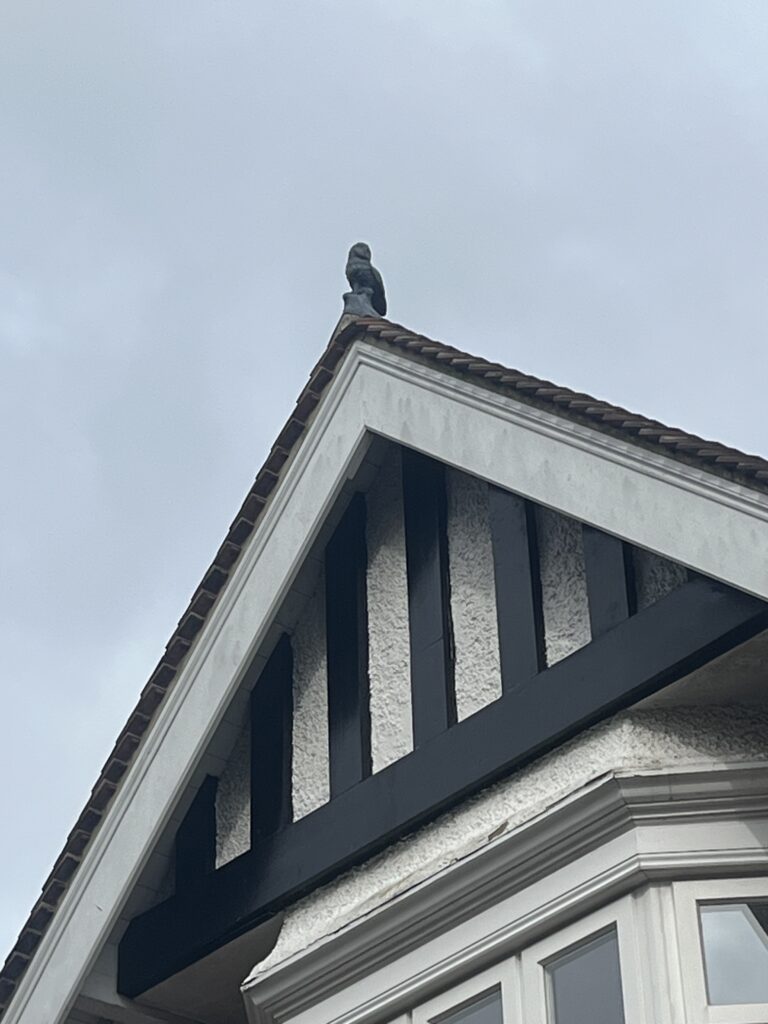
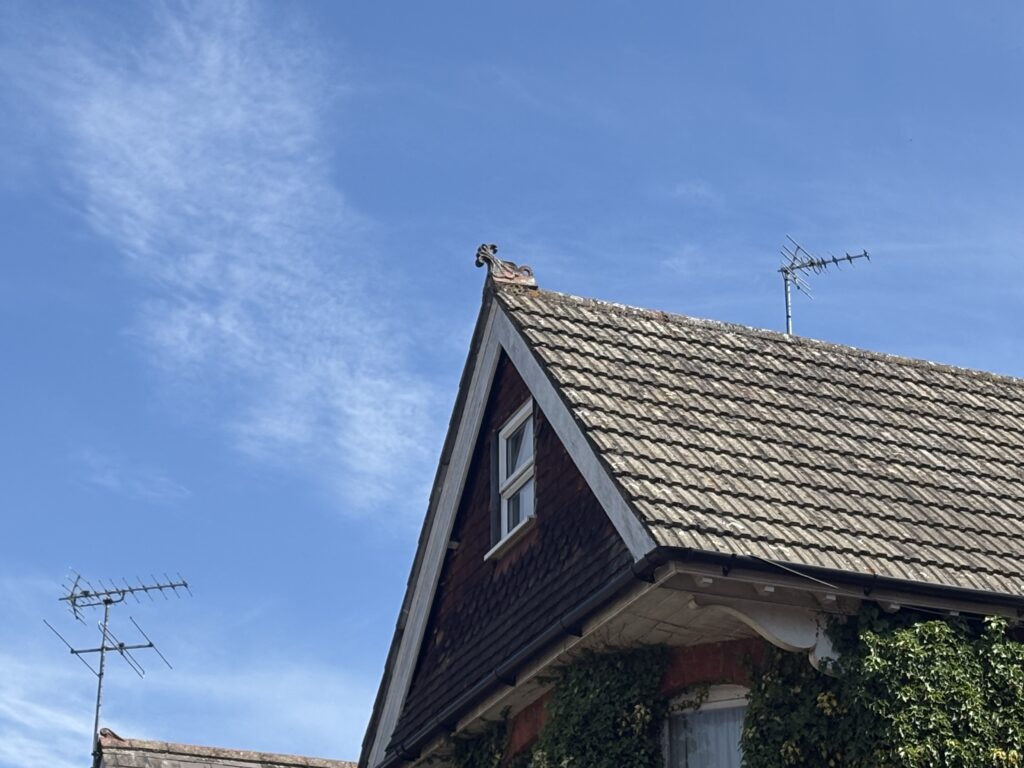
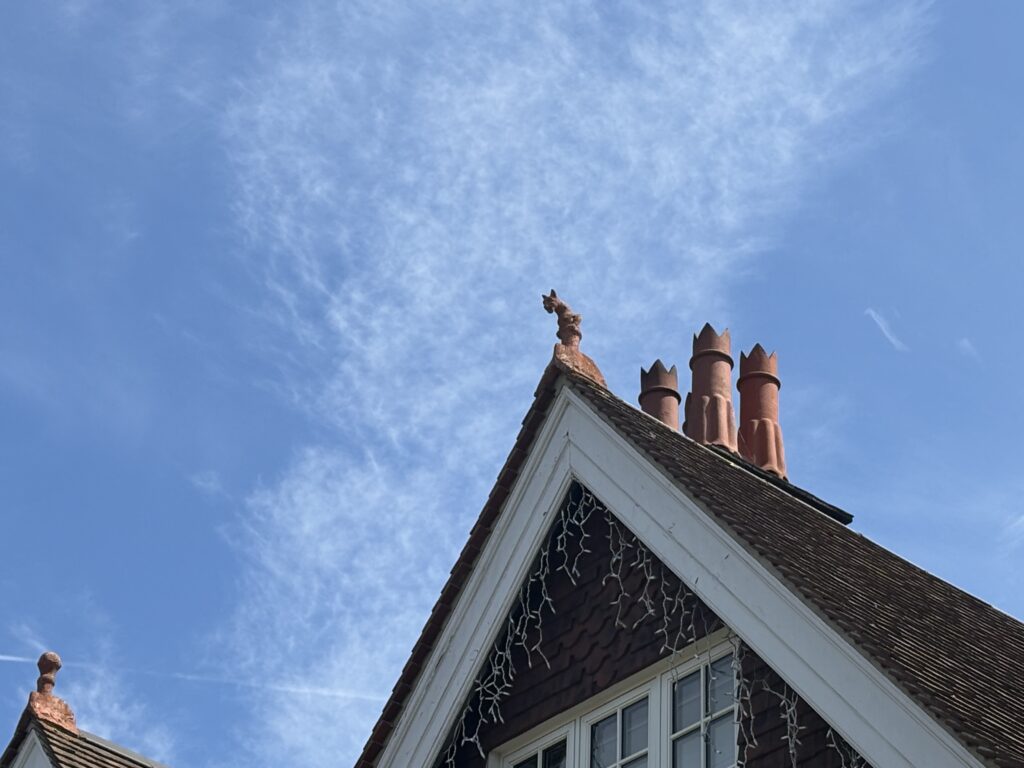
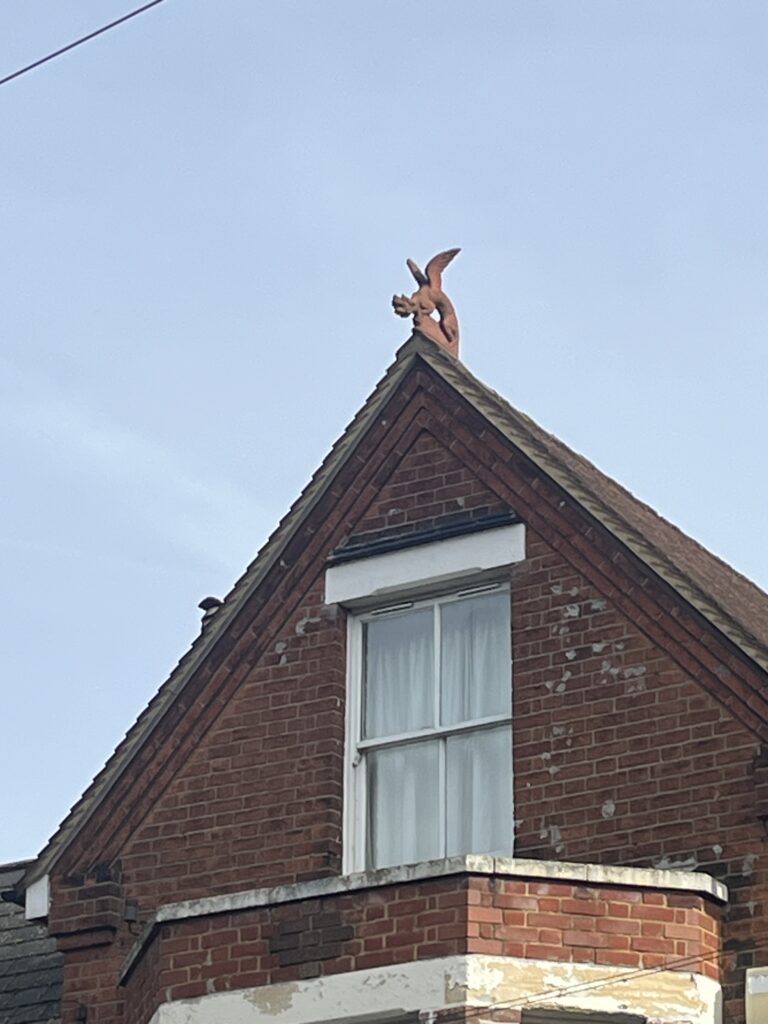
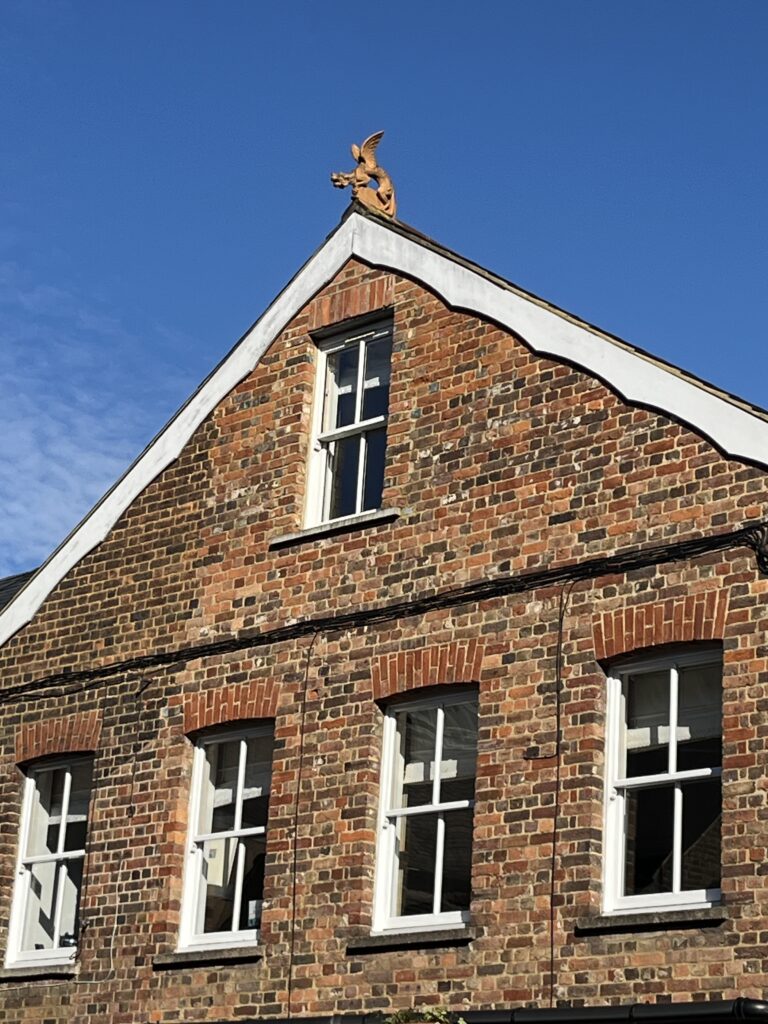
Originally known as the Marlborough House Estate, the late Victorian and early Edwardian buildings of Beaconsfield Road and Lemsford Road are remarkable by virtue of the interesting statues adorning the apex of many of their roofs.
Roof apex statues, also known as roof finials or crestings, are decorative ornaments placed at the highest peak or ridge of a roof. The ones in these streets include an owl, a dragon, what looks like a wave or wheatsheaf, and a snarling dog.
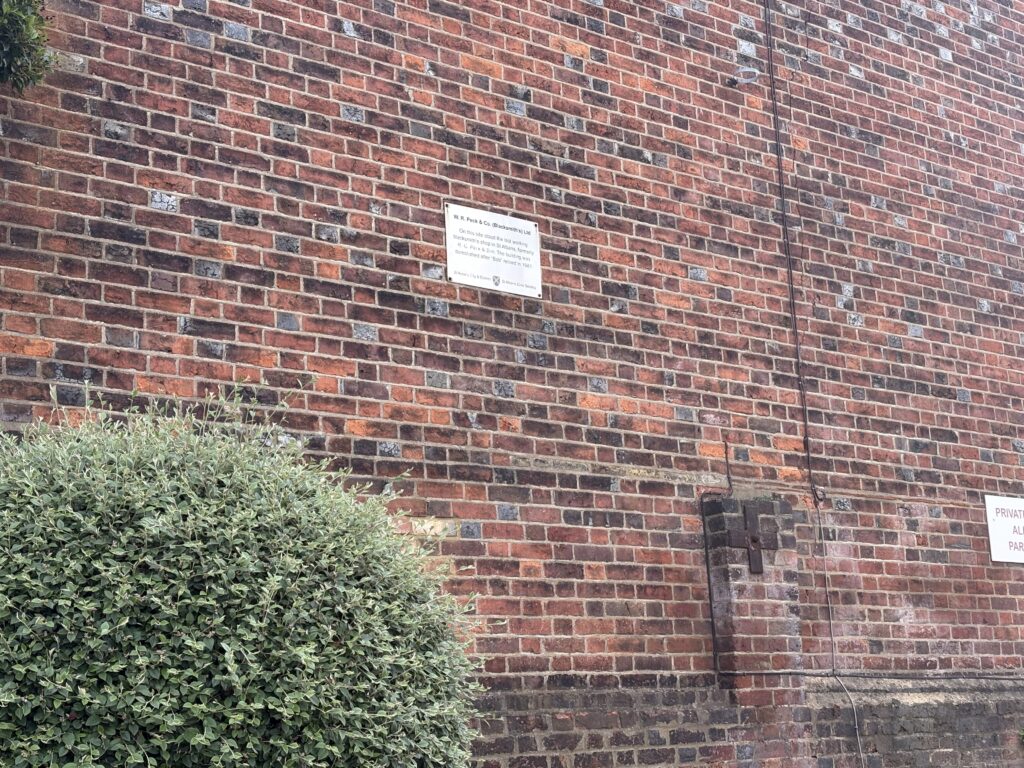
A small plaque erected by SADC and St Albans Civic Society recognises the location of the last working blacksmith’s ship in St Albans, along Lower Dagnall Street. WR Peck and Co Ltd was demolished after Bob Peck retired in 1981.
Outside Greggs near the Post Office in St Peter’s Street can be found a depiction of the Divine Mercy image of Jesus Christ. This particular icon is well-known in the Roman Catholic tradition and is associated with the apparitions and messages received by Saint Faustina Kowalska, a Polish nun, in the 1930s. This is a standard image of Jesus having one hand raised in blessing and the other pointing to His heart. From His heart emanate two rays: one red, representing His blood, and one pale/white, representing water. The inscription at the bottom reads: “Jesus, I trust in You”, which is the central message of the Divine Mercy devotion.
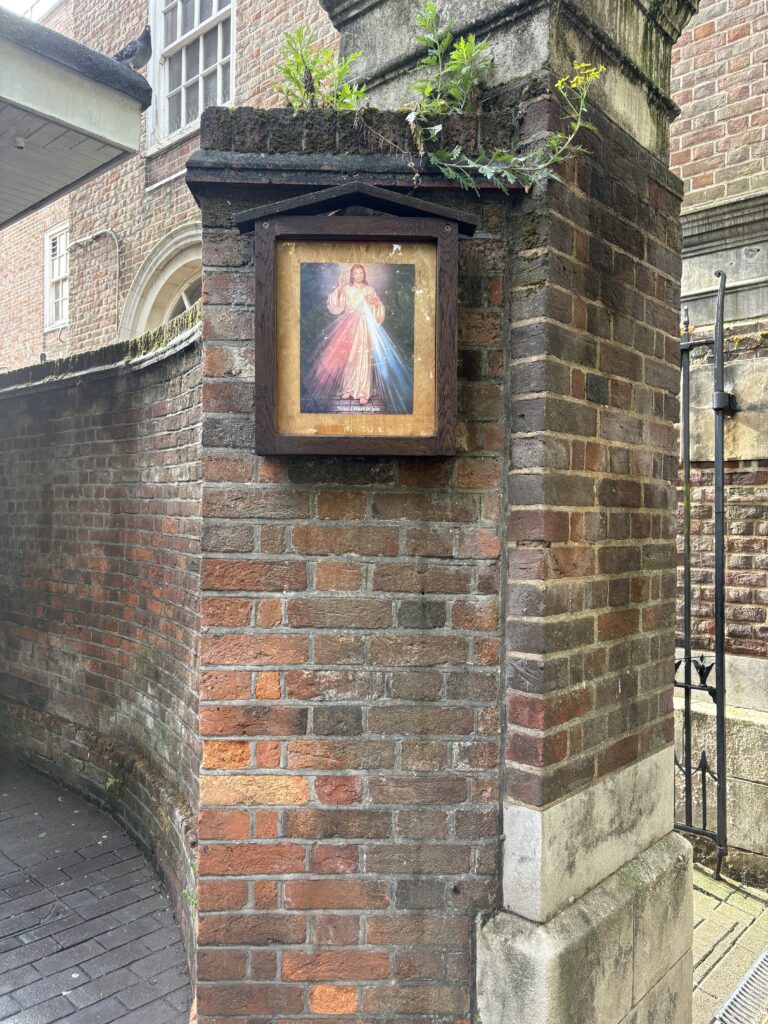
It has been located outside the Post Office for many years. The frame and the semi-roof above the image are designed to protect it from the weather and suggest a permanent devotional placement, but does anyone know anything about its origins?
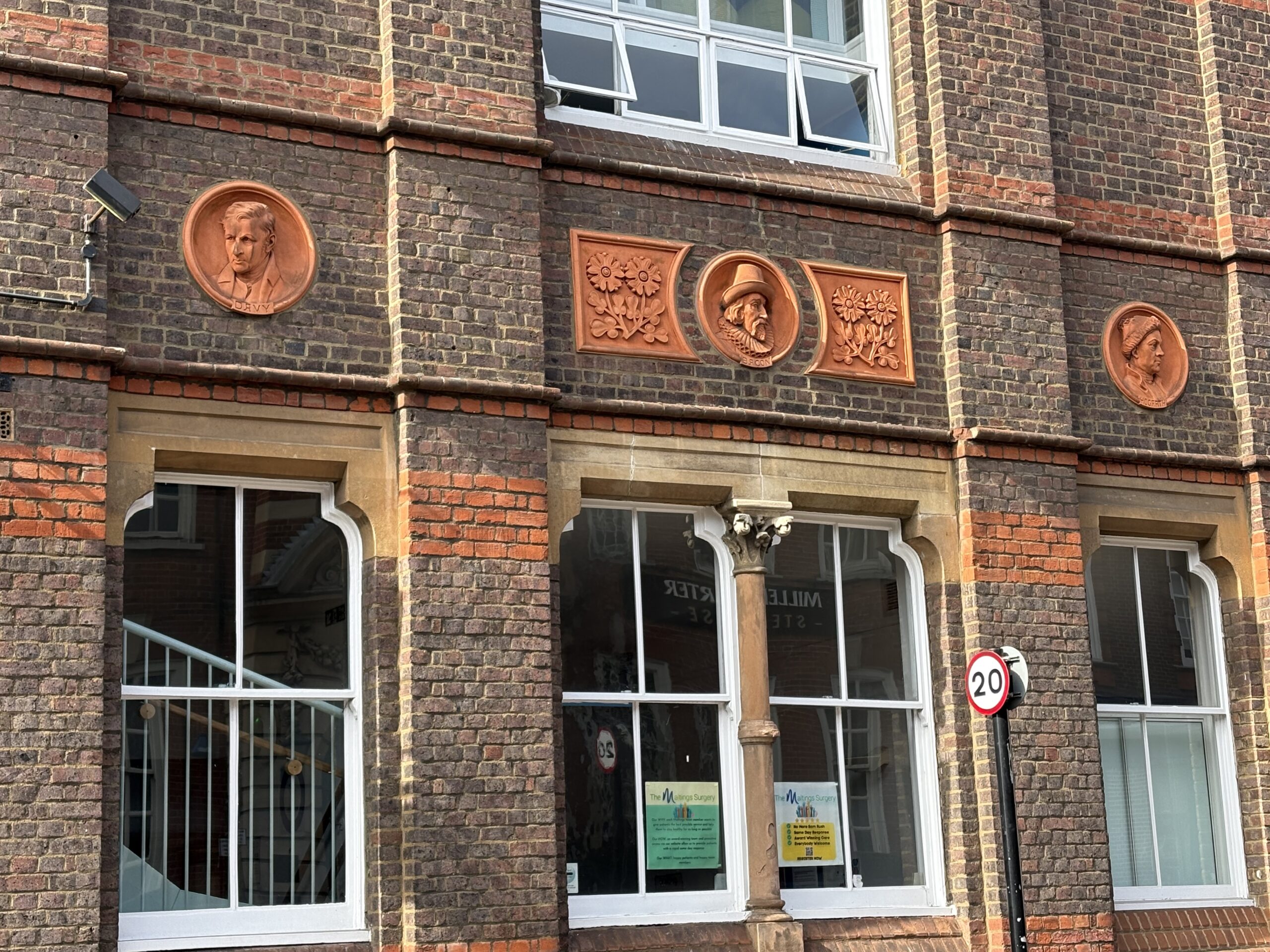
The Maltings surgery at 8-14 Victoria Street occupies a building which previously housed St Albans School of Art, with three ceramic inset relief portraits on the exterior honouring historical figures connected to the fields of science, art and literature. These are Sir Francis Bacon, the renowned philosopher, essayist and statesman who was a pioneer of modern scientific thought. He lived at nearby Gorhambury and is buried at St Michael’s Church.
Sir Humphry Davy was the foremost chemist of the 19th century, invented the miner’s safety lamp which took his name, and first isolated the elements sodium and potassium. Davy also wrote poetry throughout his life and was a friend of many Romantic poets, including Coleridge and Wordsworth. His experiments with nitrous oxide – “laughing gas” – led him to suggest its potential as an anaesthetic during surgery.
The final terracotta relief is that of the prominent painter, writer, printmaker, satirist and cartoonist William Hogarth. His various series of ‘modern moral subjects’ included A Harlot’s Progress, A Rake’s Progress and Marriage A-la-Mode.
And finally for this latest Look Up! feature, we wind up in the heart of the city centre.
What is now Caffé Nero in Market Place was originally a butchers’ shop and slaughter house, built in the 1660s in an area of the town devoted to selling meat and slaughtering livestock.
Finally, if you peer up when walking down Sovereign Way you’ll be able to see some clues to its true origins: two north-facing windows which were designed to let the light in but keep the interior of the building cool. The room on the other side was used for hanging carcasses before they were cut up, so the windows probably helped with easing the smell as well…