


15 Dec 2025
Instability and uncertainty surrounds the Government’s proposed Local Government Reorganisation plans, with the district council in a state of limbo until at least the spring, says SADC leader Cllr Paul de Kort.
The replacement of the current two-tier system of local government with new unitary authorities has prompted heated debate since it was first announced this time last year.
Since then all 10 district/borough councils and the county council have reviewed the options for a preferred model, with initial studies looking at either two, three or four UAs for Herts.
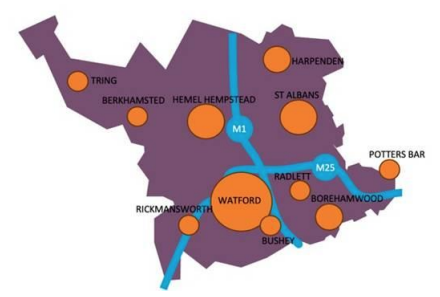
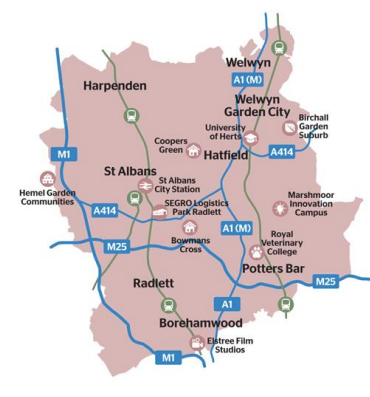
Now SADC has selected a two unitary model as their preferred approach, which would divide the county into West Herts (Dacorum, Hertsmere, St Albans, Three Rivers, Watford) and East Herts (Broxbourne, East Herts, North Herts, Stevenage, Welwyn Hatfield).
Cllr de Kort says the Lib Dem administration believes this model is the most financially stable and will allow the greatest continuity of vital services, while also maintaining the current level of discretionary provision beyond their statutory responsibilities.
But surely this conflicts with the Liberal Democrats’ view of localism, which would prefer more UAs and therefore greater local representation?
Paul agrees: “As I’ve said from the start, this isn’t devolution. For the first two or three weeks, the Government talked about strategic mayors, devolution and joined-up planning, which is what people want locally, but required some local government reform. It quickly became all about cost savings.
“We Lib Dems don’t think it goes anywhere far enough – there should have been a fiscal devolution where local authorities can retain a portion of taxes to pay for things we know our residents want following a political debate. They do this in America and they do this in Europe.
“That’s proper localism, and in our view we don’t see any difference with the unitary model from what we have now, it’s still too big to be dealing with local things.”
An off-shoot of the reorganisation of local government in the district is the campaign to create a city parish council for central St Albans, covering 28,000 households in Batchwood, Bernards Heath, Clarence, Cunningham, Hill End, Marshalswick West, Sopwell, St Peter’s and Verulam wards.
“It’s uncontentious across all the parties locally about the parishing of central St Albans rather than the notion that some uber-authority should be deciding where the park benches go, what happens to the St Albans lido, and things like that. That’s proper devolution.”
The issue of a parish council for central St Albans has been bubbling along for decades, with the creation of the city neighbourhoods committee – made up of co-opted representatives from various residents’ associations as well as local ward councillors – going some way towards filling the power vacuum, but still nowhere near far enough.
“I have to be careful how I say this, but the key thing is that they’re not democratically represented, they haven’t stood up for a vote. I’m not saying they don’t represent their residents, but it’s always the case that some do more than others.
“It’s served as a useful kind of advisory or sounding board, and they were very quickly proactive about funding the Community Governance Review.”
It’s also fair to say that the issue of strategic mayors has largely vanished off the agenda, with no talk of whether this remains an option for Hertfordshire.
“There was a complication for a while in that when the Conservatives were in control over County Hall they wanted to keep a single unitary authority, and the Government was insistent that you couldn’t have a strategic mayor on top of one authority, so we would have had to find a ‘dance partner’ with another council, which nobody wanted.
“With the two UAs model, and the three or four, we do have the opportunity to get a strategic mayor in place.”
As one might expect from central government these days, cash-strapped local authorities are being given very little financial support to facilitate the transition to unitaries, suggesting the costs will be recouped further down the line.
“This council is not in a position to borrow money, and Herts county council got to a position in this year’s budget where they’re in their minimum reserves and their most senior financial officer said they don’t know what they’re going to do next year.
“We’ve been in that position for the last couple of years, and although there are one or two other authorities who might have reserves, as you can imagine I don’t think there’s going to be a conversation where they agree to help us out.
“So we’ve made a provision in the budgets that are circling around at the moment for our share of the work that’s got to happen. At the moment we don’t quite know what the work is because we don’t know if it’s two, three or four unitaries. It’s less work for two, and the most work for three because in very simplistic terms how the county council currently works.
“We’re very concerned about keeping our discretionary services. It we go to a unitary and there’s a greater squeeze on children’s services, adult social care, even fixing the potholes, we don’t want it to be the case where questions are asked about why we’re keeping a leisure centre open or investing in a new service – we’re in an absolute crisis and when you’re in this position people ask, ‘What have we got to spend money on and what can we get rid of?’
“It’s my strong belief that the two unitary authority model is clearly the most financially viable of the three. I’ve had a strong argument come to me from a couple of opposition numbers that nobody really knows the numbers yet, it’s just a forecast.
“That’s like saying, well sometimes the weather forecast is wrong, it’s not every day I go out and get wet when it says it’s raining, but that doesn’t mean you don’t look at the weather forecast.
“If we want to focus on our own district-delivered local services, then the best hope of having that provision retained for as much as possible is with two UAs.
“The reason I don’t like the three UAs model, particularly for St Albans, is it splits us from Dacorum, and we currently work together on issues like housing, business development and the proposed garden community [around Hemel], and I think it jeopardises that if we’re put into different authorities.
“The four-model is the least viable overall, but particularly for North Herts, which would be Stevenage, Welwyn and Hatfield, which effectively goes bust. All the others would pay back over time, but this would just get worse and worse and worse. The tax base is low, the needs are high, and the benefits they get from the savings would never match.”
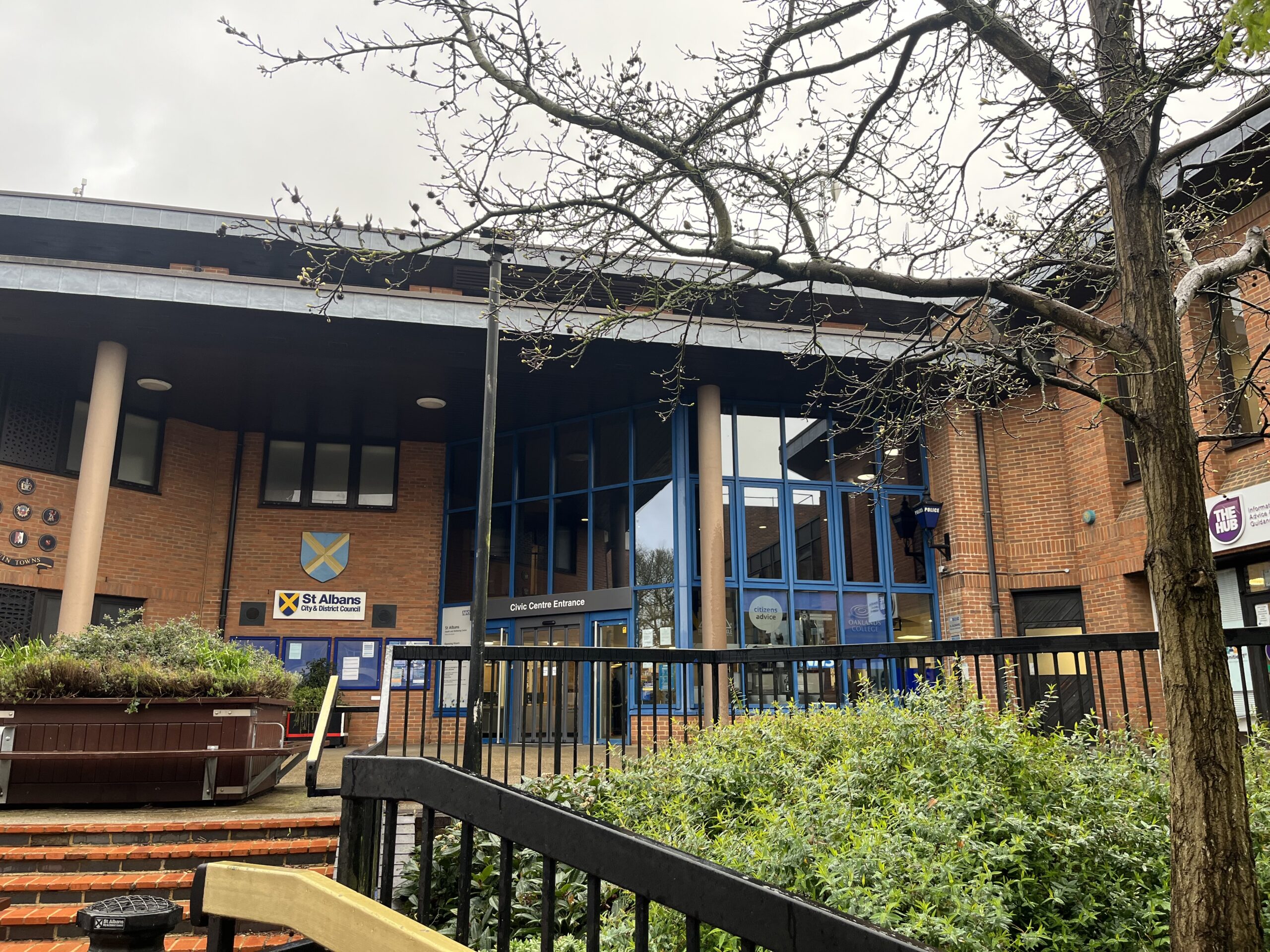
In the meantime it’s the waiting game which is taking its biggest toll on the district. Not only is there the risk of losing talented members of staff during the current period of uncertainty, but it’s impossible for SADC to properly plan for the future, including what happens to buildings like the Civic Centre.
“The first time it can even start to be properly looked at is after May 2027. There will have to be some exploratory work once the Government says which unitary model they’e going for in summer ’26, but that’s the first time really any work can be done.
“I guess the big departments like children’s services, highways etc could start from that point and determine how they’re going to allocate resources, but things like offices and actual staff names come much later.
“The first thing that happens is in May 2027 the Government might say there will be four statutory posts – perhaps a chief executive, a Section 151 officer for finance, a monitoring officer to make sure everything’s OK, maybe an IT manager – and those have to be in post immediately. And really from then on they can start looking to backfill.
“But we and the other nine districts and boroughs are still working day-to-day until April 1 2028, so you could lose a lot of your most senior officers to the new authority in the meantime.
“And going back to the two model, an important part of me supporting it is that it has the least potential out of all the models for there to be a meltdown in services just before, or immediately afterwards.”
Aside from the staffing issues, there’s also a question mark hanging over the future of many existing district councillors, and where they see themselves in a post-LGR world.
“It’s a big shift if you take on responsibility in the new unitary, because it will be much harder to fit around your day job, family and care responsibilities, and I think all parties will struggle with that. Diversity does bother me – at the moment the district council includes younger people, those with children of school age, others with caring responsibilities, and there’s more of an ethnic diversity than you currently see at county council – but I don’t know what the answer will be until 2027.
“I think some district councillors will put themselves forward to become the new unitary councillors, but will enough of them do it? Will enough go for the parish council as well? You can’t find time for both. So it’s another uncertainty.”
And that brings us back to the flaw at the heart of this process. Councils are expected to carry on regardless with long-term strategies that might unravel in the years to come, and can’t do anything about planning ahead until they at the very least have some perception about the number of UAs the Government will decide upon.
Even hopes of a multi-year local government settlement appear to have been dashed, with councils not knowing how much money they are going to receive from on high until the latter half of December, prompting SADC to have already commenced looking at next year’s budget proposals to ensure it has time to consider all options before making any decisions in the new year.
“This is why the long-term vision of a multi-year settlement is the right way to go, as all councils would know three years in advance what the numbers are going to look like, so they could plan their own council tax increases and decide what things they can think about doing or not doing with the money available.
“But this isn’t in place because the Government is always desperate for money, and they want the flexibility when there’s a political crisis to throw money at different things or not make that tax increase, and if they’ve already made three-year promises to us then they can’t take it away from local government.”
So now we wait, and time will tell which model of unitary authorities the Government decides is right for Hertfordshire, including SADC’s own two model proposal.
“That’s the position I’ve taken, and my group totally support me. Daisy Cooper gets her own information as MP, and she’s drawn her own conclusion, and will be writing to the Government telling them she wants the fastest possible move to a strategic mayor, because we deserve it and it’s one of the upsides to this process.”
In the meantime, the next phase of the Community Governance Review is getting underway, with residents invited to have their say on proposed changes.
A recent meeting of SADC’s strategy and resources committee agreed a raft of proposals, including polling residents in the central unparished part of St Albans to seek their views on whether a new parish council of 25 councillors should be adopted, and asking households in the Harpenden Rural Parish Council area to approve a merger with the town council.
At the meeting, councillors also voted for a poll to be conducted amongst residents living in the Highfield area of St Albans to seek their views on setting up a new parish council there.
It was also recommended that London Colney Parish Council should increase councillor numbers from nine to 15 , with residents’ opinions sought on suggested changes to the parish warding arrangements.
The second consultation launched on December 8 and will run until February 23.
Cllr de Kort urged people to get involved: “This review is about making sure local governance arrangements work for everyone. We want to hear from residents about these proposals before any final decisions are made.”
