18 Jun 2025
It’s the summer of 1914. The city of St Albans is a thriving market town. The people work in horticulture, printing, and garment making, plus construction and domestic service. Although some of these jobs are poorly paid and there is plenty of poverty around, there is also plenty of work.
Many live in small overcrowded terraced houses in the city centre, near to the factories. There’s also a growing commuter population, travelling to London every day by train. They live in the spacious red brick villas which have sprung up in recent years on land near the station.
The people spend their leisure time watching football, enjoying the theatre, the silent movies at Arthur Melbourne Cooper’s new cinema, or going to the pub. And, of course, on Sunday morning everyone goes to church.
Everything is fine…
Then on 28th July, Archduke Franz Ferdinand of Austria is assassinated in Sarajevo, and by 4th August, Britain is at war with Germany. Life is about to change for ever.
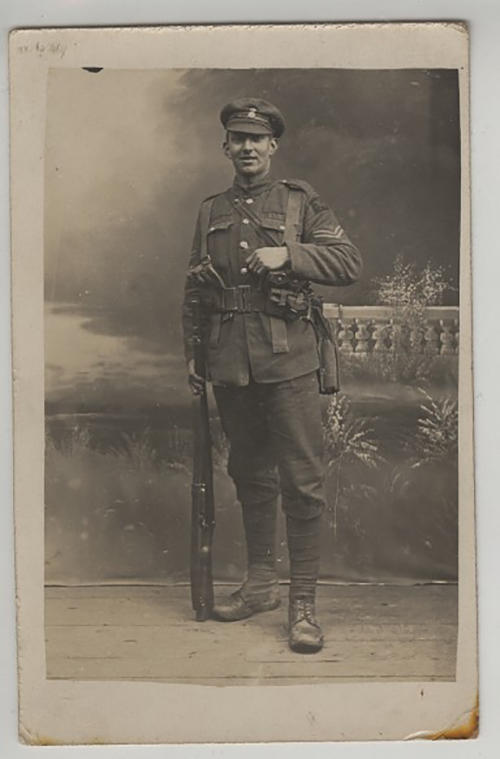
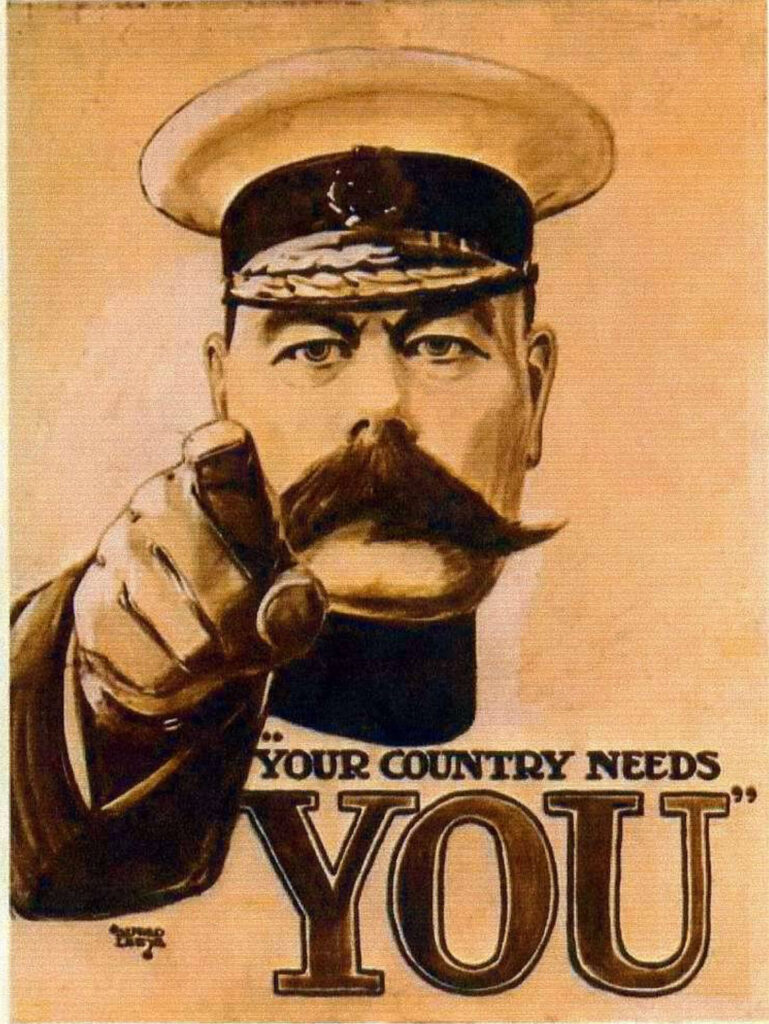
With plenty of secure jobs available in St Albans, initially very few men turned up at the recruitment office in St Peter’s Street to sign up as poorly paid soldiers, despite a national campaign to encourage enlisting (Your Country Needs You) and exhortations from local pulpits.
In spite of this, the effect on the city was huge and almost instantaneous. 7,000 soldiers were billeted in the town for training, increasing the population by almost a third and changing the streets into a sea of khaki uniforms.
Hundreds of horses were stabled on Bernard’s Heath and the Army Veterinary Corps took over the land opposite the Abbey Station. A firing range was set up on the Gorhambury Estate, stopping traffic on Bluehouse Hill when it was in use, and bringing a premature end to two sows and a heifer which couldn’t read the warning notices.
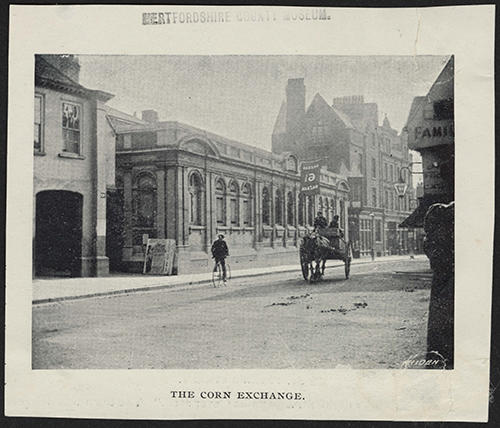
It required a huge logistical operation to look after the troops. They slept crammed into schools, hotels (officers only) and private houses, wherever space could be found. Catering was provided by hastily established field kitchens and cook houses, including the Corn Exchange in the Market Place and the stables of St Michael’s Manor in Fishpool Street.
There were no facilities for washing clothes, providing an opportunity for local entrepreneurs. And as for the lack of sewage disposal facilities.

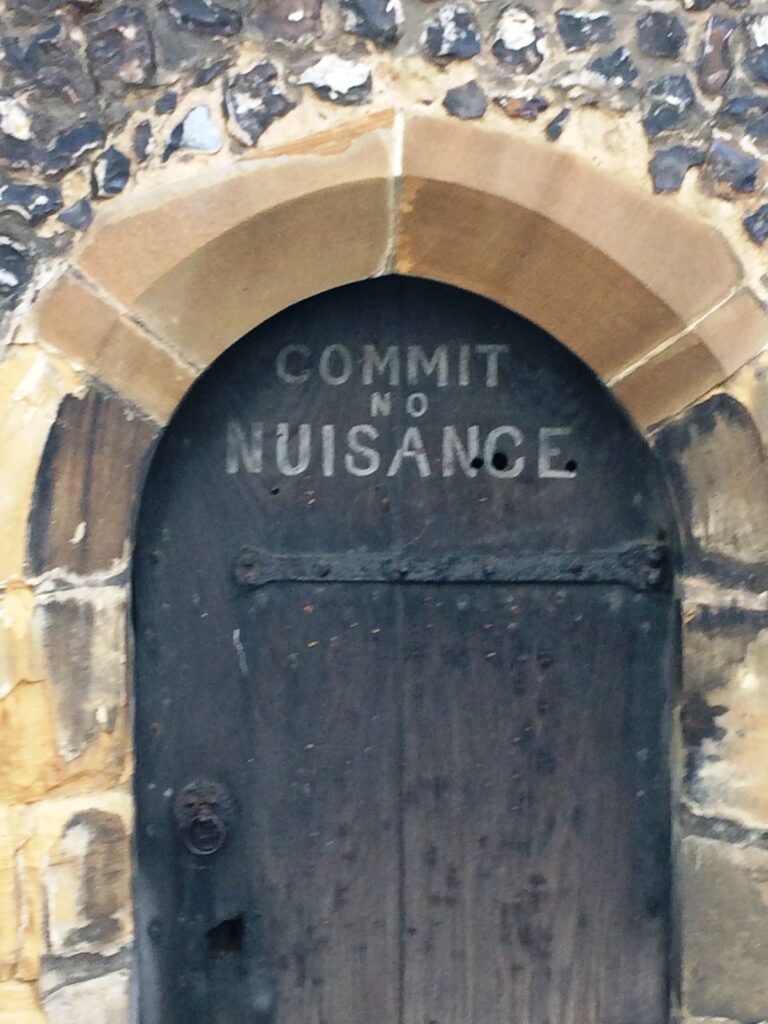
The local pubs didn’t complain about this influx of new customers, although some residents were not so happy. Maybe not just down to the soldiers, but a problem arose in French Row, where a corner beside the Clock Tower became a much-used improvised privy after closing time. The instruction ‘Commit No Nuisance’ was hurriedly painted on the Clock Tower door, where it remains to this day.
Less profitable for the local publicans was the imposition of the Defence of the Realm Act (DORA) Regulations, which restricted licensing hours (and reduced the strength of the beer) to encourage more work for the war effort and less drinking, and resulted in the closure of 11 of the city’s pubs, including four in Fishpool Street alone. Names such as the Crow and the Blockers’ Arms were lost for good.
To help entertain the soldiers off duty, recreation rooms were set up in local churches and half price golf was offered at Verulam Golf Club (again, for officers only). It was also reported that business boomed for the local prostitutes and the illegitimacy rate increased.
For the local people life changed in all sorts of other ways. Under the DORA Regulations a blackout was imposed at night, disrupting businesses and leading to an increase in road accidents. An air raid siren was installed on the top of the Clock Tower (but was never needed).
Food prices shot up due to a combination of shortages and panic buying, leading to regular calls for rationing to ensure fair shares, but nothing was done until 1918.
With the scale of casualties from the front, conscription was introduced in 1916, with a system in place for those who wished to apply for exemption. The cases of over 1,000 men were heard at tribunals held in the Town Hall (now the Museum + Gallery).
However, in some cases the outcome of the tribunal seemed to rest on who you knew, not what you did. Edwin Lee, a major shoe manufacturer in the city, former Mayor and a member of the panel, applied for exemption for 20 of his workers, including his two sons – this in spite of the fact that his factory wasn’t producing boots for the military. He argued the case that women and children still needed shoes, and that his production capacity was already reduced by loss of workers to the front. Of course he won his case.
And what about women? They were now well and truly out there in the workplace. In the forces. In munition factories. In offices. On the farms.
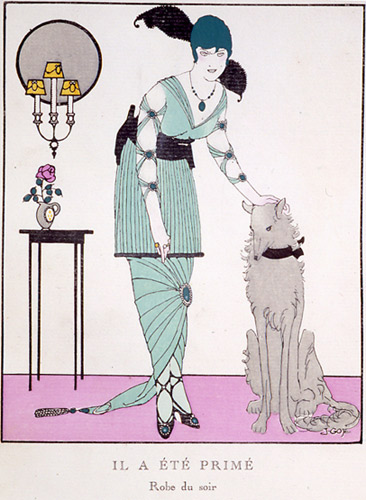
So their clothing adapted and became fit for the purpose required. The fashionable but constricting ‘hobble skirts’ – full length and tight around the ankle so walking was reduced to a slow shuffle – they were out. Instead, practical trousers and looser fits were worn and skirts became shorter by around six to 10 inches.
Many women were in uniform, as military auxiliaries or nurses caring for casualties from the front. A temporary hospital was set up in Bricket Road, staffed mainly by VADs, members of the Voluntary Aid Detachment, including members of some of the most prominent families in the city. The daughter of the Countess of Verulam volunteered there, alongside all three daughters of Cathedral Canon Glossop.
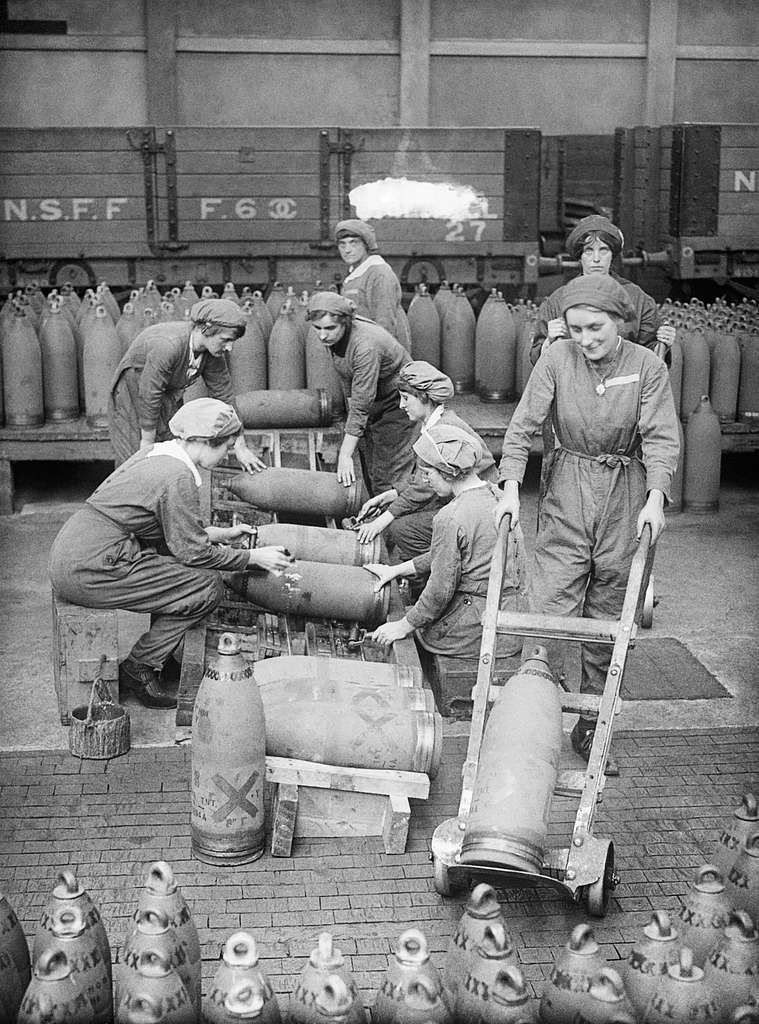
This meant that many women were earning money. Their own money. Some were able to spend it on ways to make themselves feel good. This often meant make-up. Wearing mascara, kohl eye-liner and powder became more socially acceptable.
However, new jewellery during wartime was seen as frivolous, except for ‘sweetheart’ jewellery – rings and bracelets made from shell or ammunition fragments and given to one’s betrothed. However, corsets were still very much part of most women’s wardrobe. It would take a few more years before women could finally throw them aside.
St Albans, like many towns and cities became dominated by one colour. Khaki. A word derived from Persian influences in the Hindustani language. Its use as military camouflage is said to have begun in the mid-1800s when white cotton cloth was soaked in water and rubbed with mud. The hope was that this would make the soldiers of the Corps of Guides invisible in a “land of dust”.
But there was a shortage of khaki for military uniforms, for the very simple reason that most khaki dye at that time was produced in the last place in the world the military would have chosen. Germany.
At first, the khaki dye was secretly imported from Germany despite the war. But it wasn’t long before the khaki dye ran out so a replacement uniform was needed quickly.
And thanks to half a million blue serge uniforms from the Post Office, many troops now found themselves wearing uniforms of what had been quickly re-christened as Kitchener Blue. By late
1914, the system of supplying uniforms had been re-organised to cope with the growing numbers required and khaki came to dominate.
But there was something else which apparently needed to be regulated. ‘Rogue knitters’. Women at home threw themselves into knitting for the boys at the front. Known as ‘comforts’, these included everything from gloves to jumpers to balaclavas in all colours of the rainbow and many different styles.
It was a knitting frenzy, which meant that the soldiers were often sporting a widely varied, non-uniform look. This didn’t go down well with the top brass. So women were asked to limit the range of garments knitted and to only use khaki wool. Yes, more khaki.
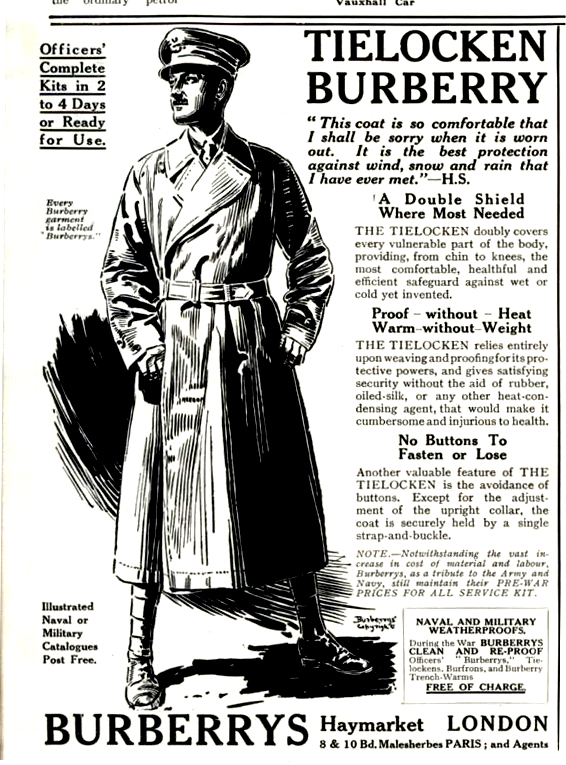
Officers, if they could afford it, would be able to enjoy the protection of a weatherproof sports coat. It proved so suited to those enduring muddy trenches, it became known as the trench coat.
After four long, devastating years, the war finally drew to a close at 11am on 11th November, 1918. Bit by bit, soldiers began to return home to St Albans and the surrounding area. They were not allowed to keep wearing their uniform more than 28 days after discharge but many had little else by this point.
So something had to be done, which meant that more than one million civilian suits in brown, blue or grey, of questionable quality, were handed out to discharged soldiers. Alternatively, they could take a clothing allowance. This came with a certificate of employment, a railway ticket to get home, a pay advance and a fortnight’s ration book.
But many didn’t come home.
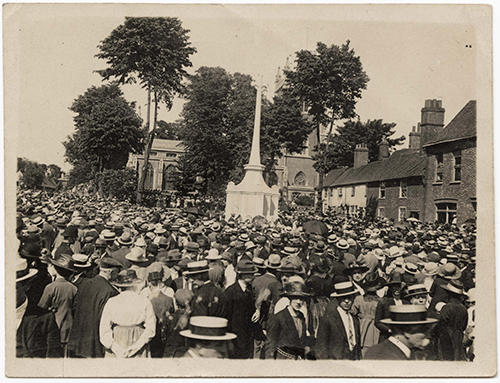
The people of St Albans, in common with everyone stunned by the scale of the casualties, mourned their dead. 640 men from St Albans had been killed. There was a need to remember them. Straight away a temporary cenotaph was erected in front of the Clock Tower and plans were put in place for a permanent memorial at the top of St Peter’s Street. Designed by local artist and architect Sir Edgar Wigram, this was dedicated in front of a huge crowd in May 1921.
It includes the name of Private Edward Warner, who was awarded the Victoria Cross for gallantry in 1915.
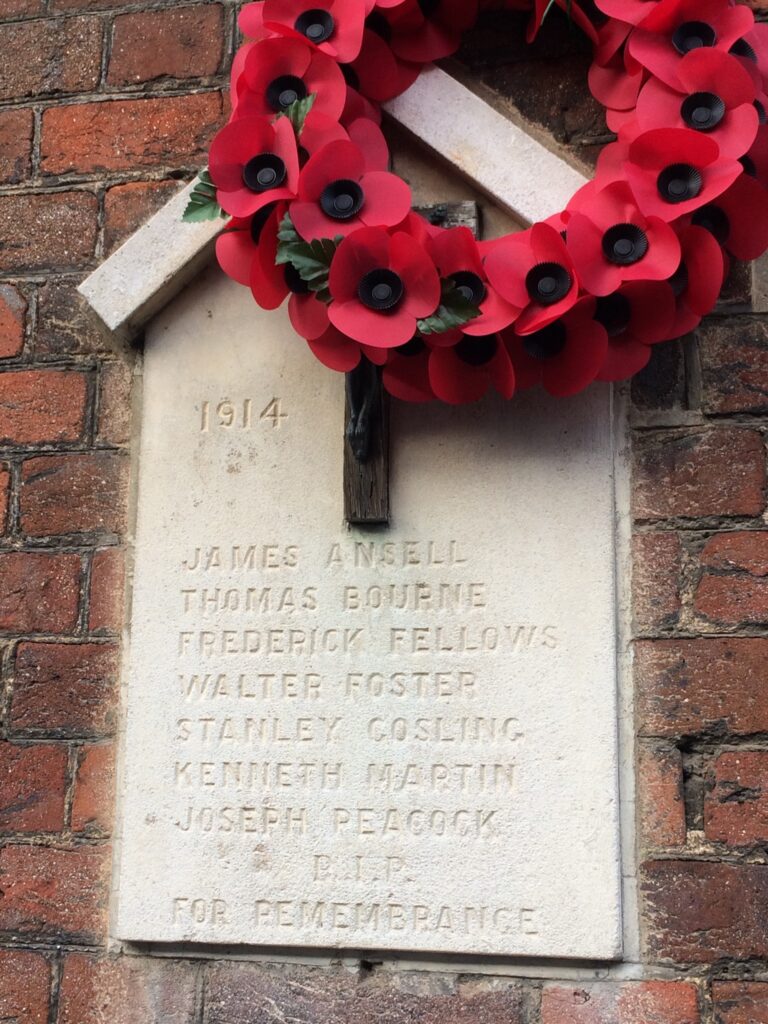
In the poor and close-knit Abbey Parish another campaign was underway to remember the fallen on the streets where they had lived. It was led by Cathedral Canon George Glossop who had lost two of his sons in the war, so understood his parishioners’ loss. Ten simple stone plaques were installed on the streets of the parish, listing a total of 110 names. They are unique to St Albans.
Men returning post war to St Albans expecting ‘a land fit for heroes’ were to be disappointed.
The cost of the war hit the national economy. Jobs were scarce and unemployment high.
Women had become used to earning their own living, and many were unwilling to give that up.
Women were also beginning to flex their political muscles. The pre-war campaign for women’s suffrage was resurrected, resulting in the granting of the vote to some women in 1918, with the rest gaining voting rights in 1928. In 1919 St Albans had elected its first female councillor, Margaret Wix, who went on to be elected Mayor in 1924, and is remembered in the name of one of our local primary schools.
For the men and women of Britain and St Albans, much had changed. Life would never return to how it was. And yet more change was on its way.
History in colour: www.stalbanstourguides.co.uk.