04 May 2025
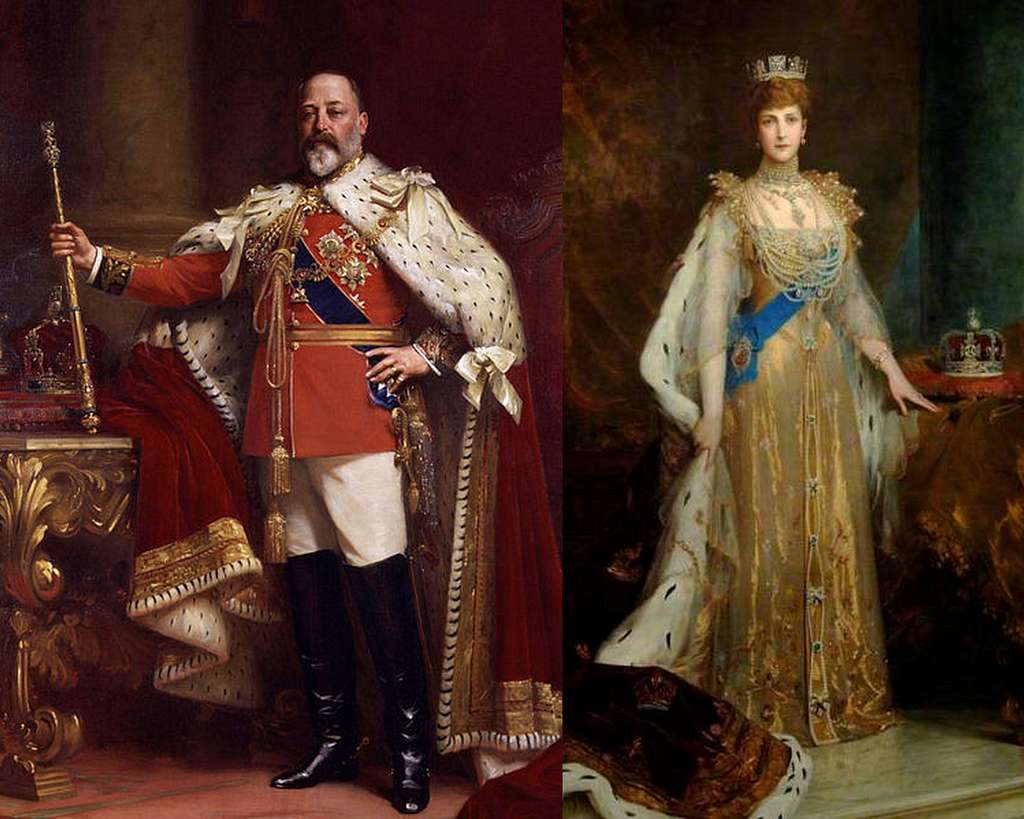
Out of the smog from the coal fires of Victorian St Albans, rose a new look and a new sense of change. It was 1901, Queen Victoria was dead and Edward VII, known as Bertie, had succeeded to the throne.
Lampooned as Edward the Caresser by novelist Henry James, Bertie was notorious for his love of gambling and horse racing and his self-indulgence in fine wines, food and women. Especially women. Glamour and style returned to the court.
Unlike his mother, Queen Victoria, Edward VII made no official visits to St Albans, although he did once end up in Harpenden by accident. In February, 1907, his car broke down on the way to Luton Hoo and he spent a couple of hours by the Common awaiting a relief car.
Bertie’s reign was short. He died in 1910. However, the Edwardian era is generally accepted to extend to 1914.
There is often a nostalgic, rose-tinted view of Edwardian England. The calm before the storm which was to come. The writer, Saki, wrote in 1913 that England was “a land where it seemed that it must always be summer”. Victorian inventions of telephones, photographs, typewriters, the penny post, bicycles, motor cars, underground railways and electric trams became familiar sights in Edwardian England and helped to spread job opportunities and prosperity.
It was a time of the unstoppable rise of Progress with a capital P. The Wright Brothers took to the skies for the first time and the largest ship in the world, RMS Titanic, was under construction.
Although we know how that ended.
There was real hope for greater equality. Unrest amongst working people demanding a more powerful voice in government and better working conditions helped push a ‘new liberalism’.
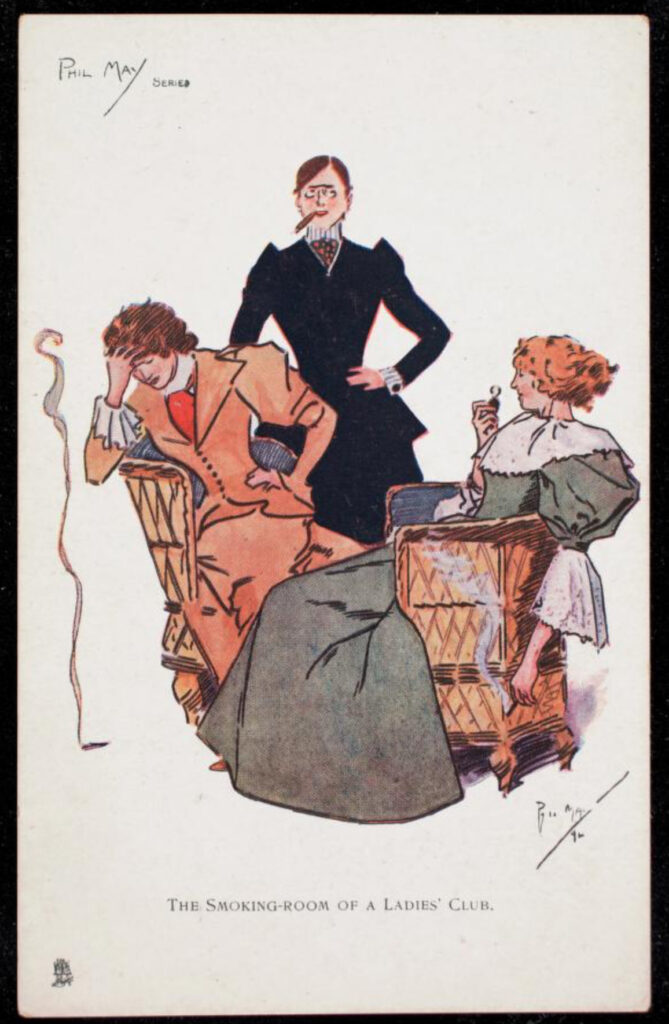
More women could access education and thus new ideas and information. Their demands for a political voice grew stronger. In 1908, the Women’s Social and Political Union, inspired by a Salvation Army fundraising practice, held their first Self-Denial Week, raising £7,000. The WSPU branch led by Emmeline Pankhurst adopted more controversial tactics. But then they were fighting against the attitude that “you may as well give votes to dogs as to women” (said by the husband of the writer, Edith Nesbit).
But times were changing. Society was definitely turned on its head when in Folkestone in 1907 a Beauty Show for Gentlemen was held. Tickets sold like hot cakes, there was standing room only and over a thousand spectators were turned away. Female audience members were the judges and the mood, as you can imagine, was ‘boisterous’. The winner was awarded a bicycle and a silver watch. By the 3rd annual competition, a thirty-year-old “tall and handsome widow” offered herself as a prize saying she would marry the winner, so long as he was good looking and earned £100 a year. A potentially romantic story if only the winner hadn’t already been engaged.
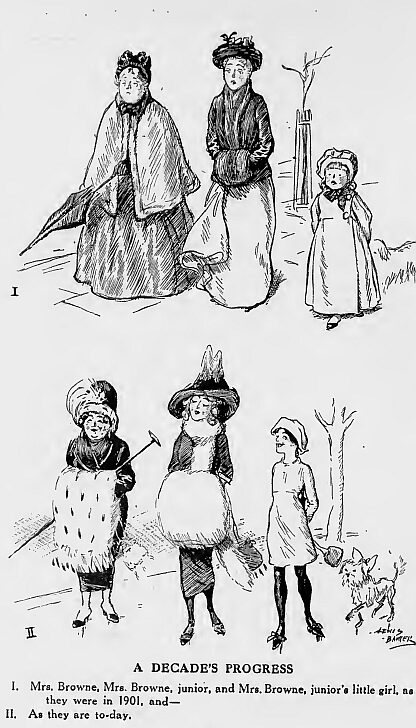
These changes gradually became reflected in fashion.
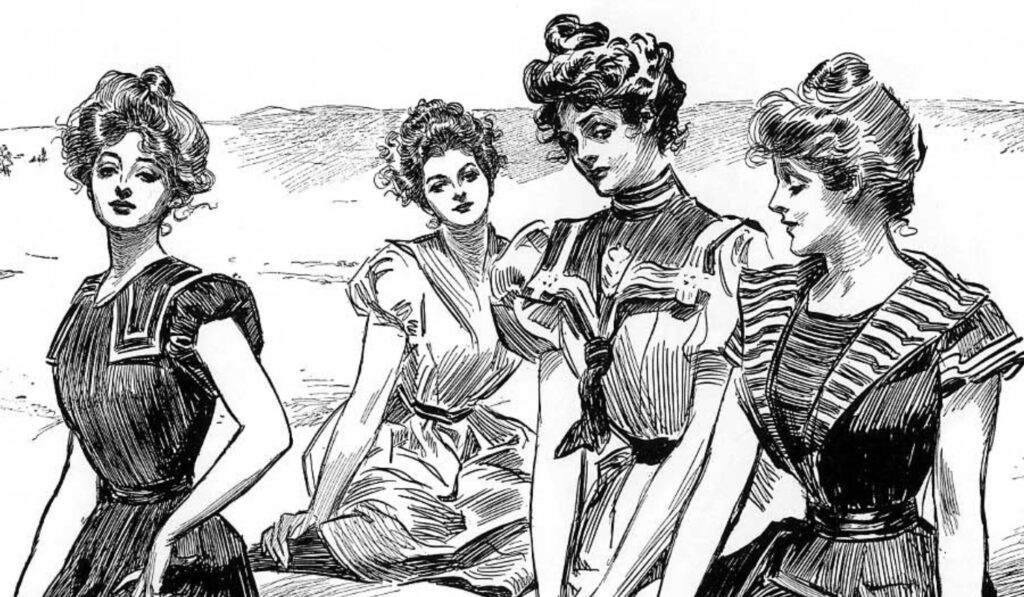
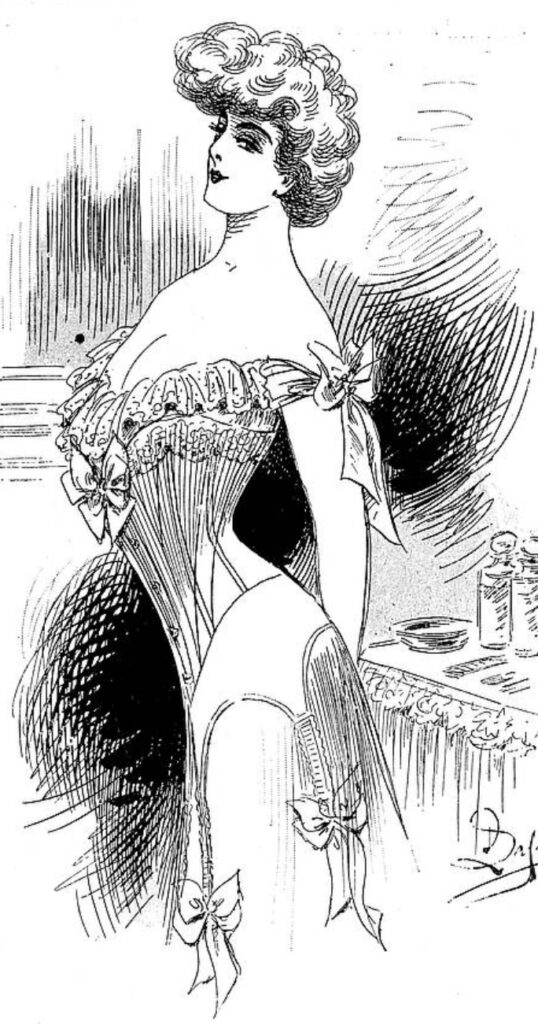
From America came the ideal of female perfection, personified by the “Gibson Girl”. This image was created by artist, Charles Gibson, who drew luscious looking women with S-shaped silhouettes and seriously big hairstyles.
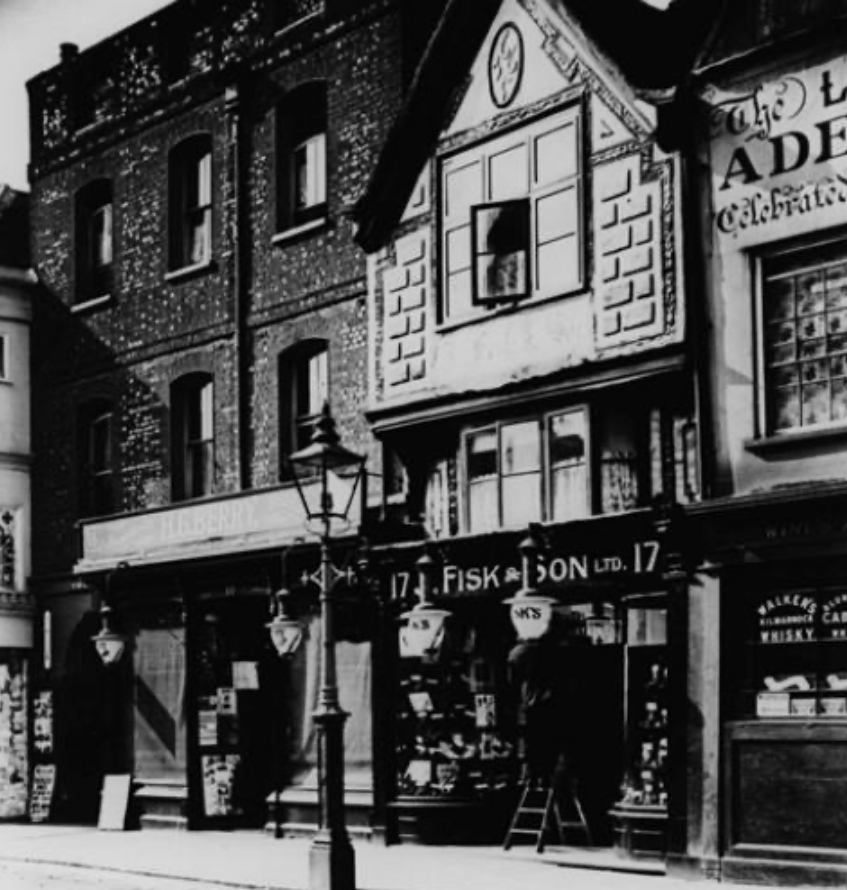
The all-important S-shape had to start with the appropriate lingerie. By now, underwear and general clothing was mass produced in factories and available by mail order or in department stores, like Fisks of St Albans. Established in 1834, Fisks spread over four buildings in the High Street selling everything from general drapery and clothing to carpets and furnishings. In 1908 the Fisks bought 17 High Street and this became its footwear department.
Three years later, the Little Red Lion pub next door lost its licence and the Fisks bought this as well. Business was obviously booming.
William Fisk wanted to knock down the medieval shops at 17, 19 and 21 High Street in order to replace them with something more modern, but thanks to protests, number 17 survived.
So, if a female resident of St Albans wanted to buy lingerie, she would have headed to Fisks.
There, she could choose a chemise, often highly decorated with lace and satin ribbons, a pair of drawers and a corset to go over these. Edwardian corsets were described as ‘health’ corsets as they were less restrictive than the Victorian corsets of the previous century, which were all about creating a tiny waist.
But now the focus was on the S-shaped silhouette. This could be enhanced by bust improvers.
By 1912 ‘combinations’ had become popular with younger women, combining the chemise and drawers into one piece to which garters could be attached to hold your stockings.
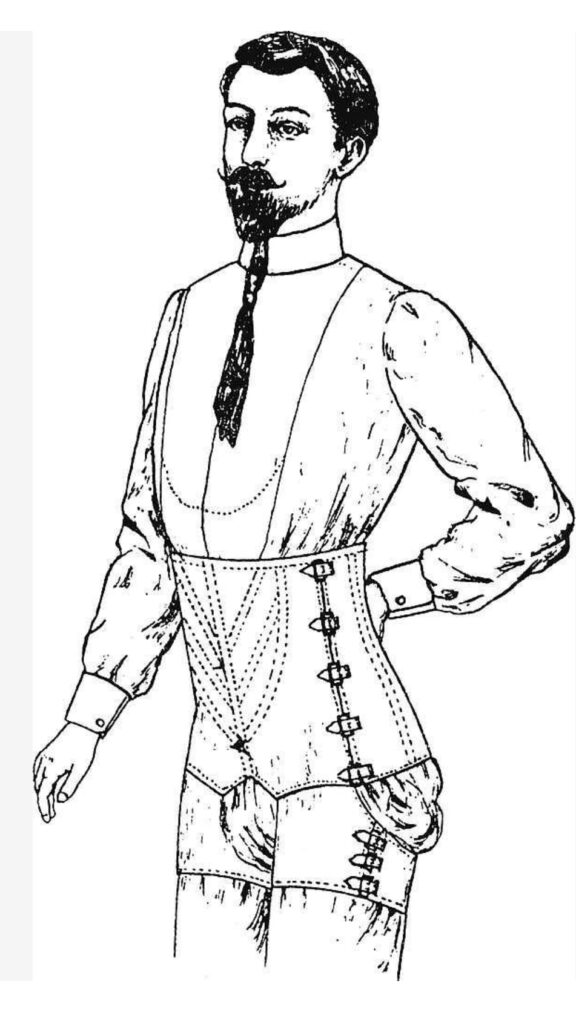
And if you’re quietly laughing to yourself at the contraptions into which women strapped themselves for the sake of fashion and vanity, just bear in mind that corsets were recommended for men too. “Stout” men. These were much simpler, just a strip or belt of fabric.
It was suggested that they could be explained as helpful for bad backs.
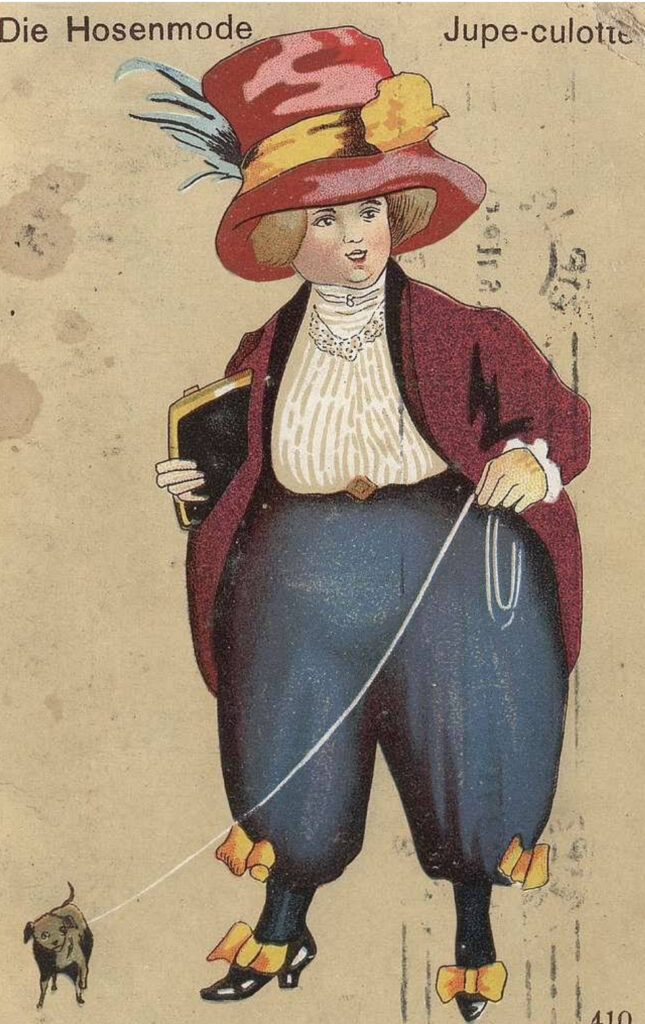
With these looser corsets, or sometimes no corsets at all, and with the very daring wearing culottes, came the freedom for women to play sports like golf or tennis and participate in motoring or cycling.
Outfits became adapted to work for both sport and daywear. Lace was very much on view. Wealthy women wore evening or tea dresses of silk, satin, damask or chiffon, often festooned with lace. For those on smaller budgets, Irish crochet was substituted. Two-piece outfits became popular with decorated tops blousing loosely from skirts.
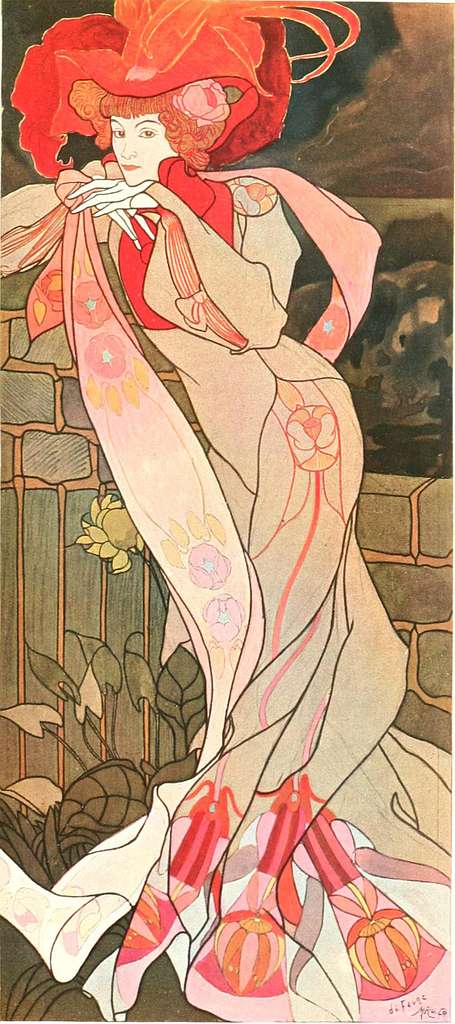
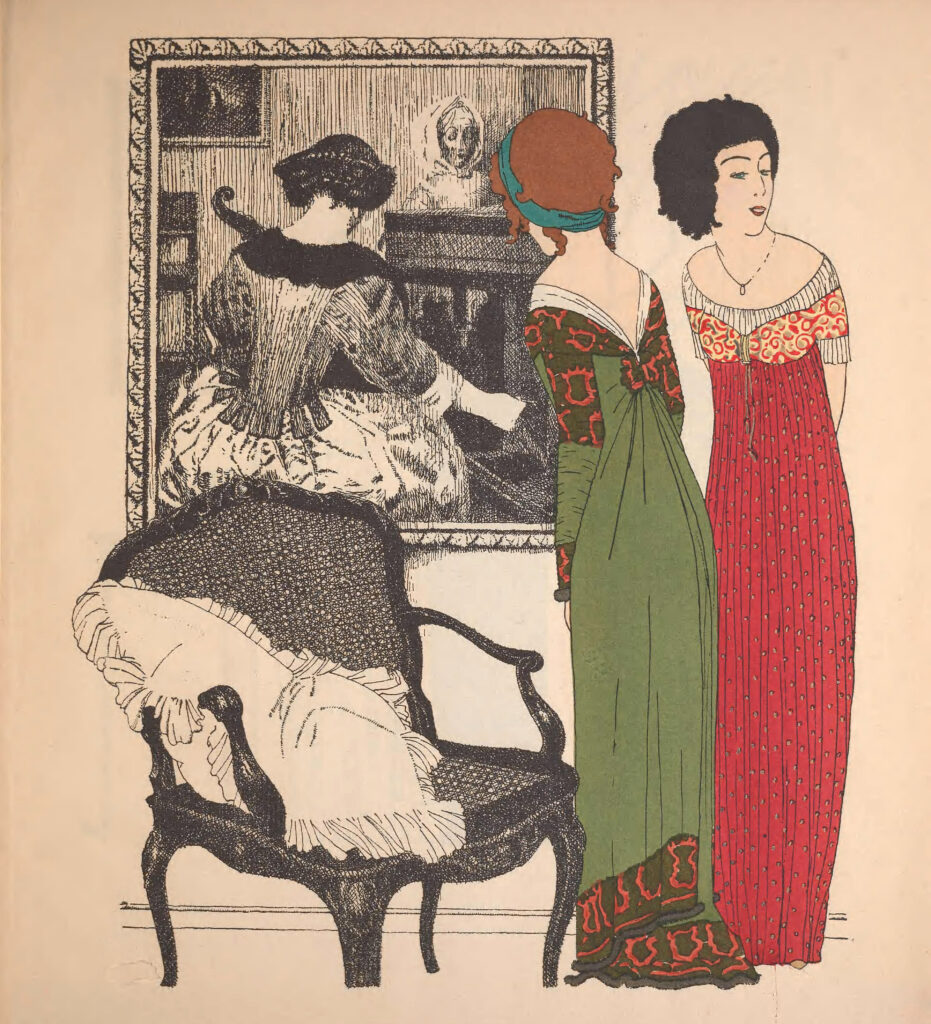
As the century wore on, French designer Paul Poiret led the way in creating long loose dresses shockingly free of corsets. By 1910, influences from the East, the Art and Crafts movement, as well as Art Nouveau, created a move away from the S shaped silhouette. A narrower, slimmed down look came into being, decorated with natural, sinuous patterns and simple ‘handmade’ designs.
The seriously big hairstyles of long hair swept up into buns or coils needed big hats, which became known, for obvious reasons, as cartwheels. But sailor hats and boaters were also popular.
Men gradually moved away from frock coats. The more daring started wearing tuxedos at evening events, although these were first seen as disgracefully informal.
For daytime, three-piece suits were still worn, with starched shirt fronts and neckties. Then ‘sack suits’ started to come into fashion, a suit style familiar to most men today.
Linen suits for summer were topped by a straw boater or Panama hat – often made in St Albans. Bushy moustaches were lovingly cultivated.
The Edwardian period not only brought change to the appearance of the people of St Albans but added more variety to St Albans’ hotchpotch of historical styles. There was a surge in demand for larger houses close to the railway station for commuters to London.
New Edwardian villas of red brick with tidy front gardens began to be built, many with mock-Tudor cladding, porches with wooden frames and parquet flooring.
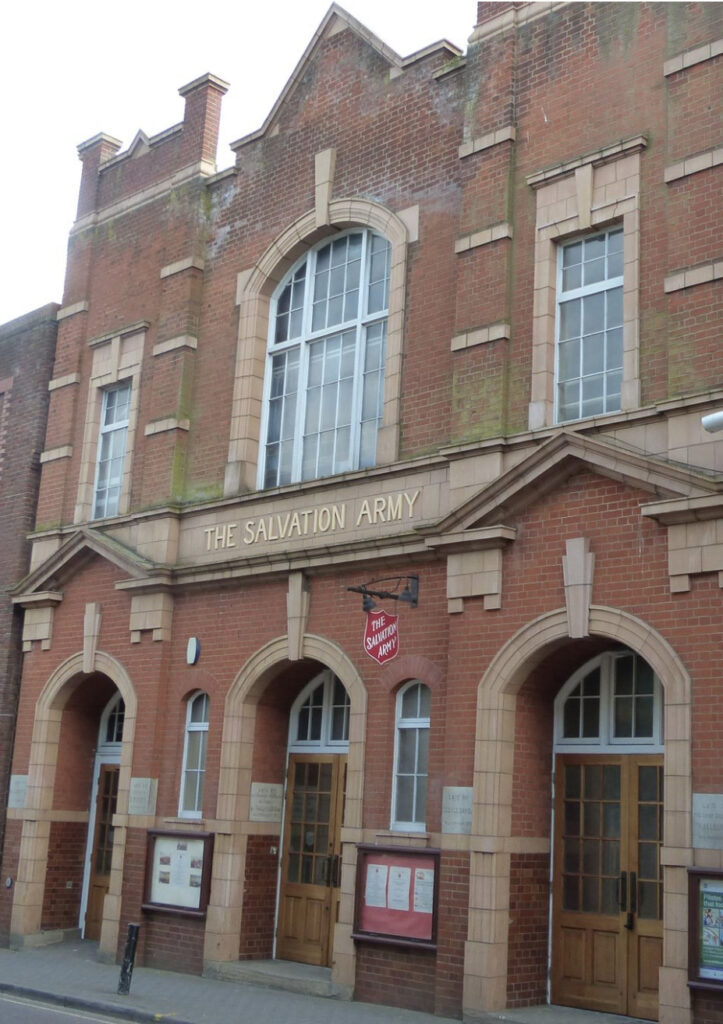
Red brick was also used in the new larger buildings, such as the Salvation Army Citadel in Victoria Street. It was decorated with terracotta ‘dressings’ and its roof crenellated like a fortress. The Salvation Army was a significant part of St Albans life with its Campfield Press print works employing over 350 people.
Just opposite the Salvation Army Citadel was the Carnegie Public library, its foundation stone laid in 1910. Previously, the St Peter’s Brewery had stood here. But where once beer had fermented, the people of St Albans could now browse amongst the shelves and borrow books for free. All thanks to philanthropist Andrew Carnegie’s generosity.
Another striking building was constructed where once stood the Bull Inn on Holywell Hill, a popular pub since Tudor times. In 1911, when there seems to have been an awful lot of building going on, architect Percival Blow was commissioned by Samuel Ryder to design a new head office for his mail order seed business.
Built by Miskins & Sons, it was of red brick, naturally, dressed with carvings of bath stone. A stained-glass dome on the first floor flooded the interior
with light. It is now the Samuel Ryder Hotel.
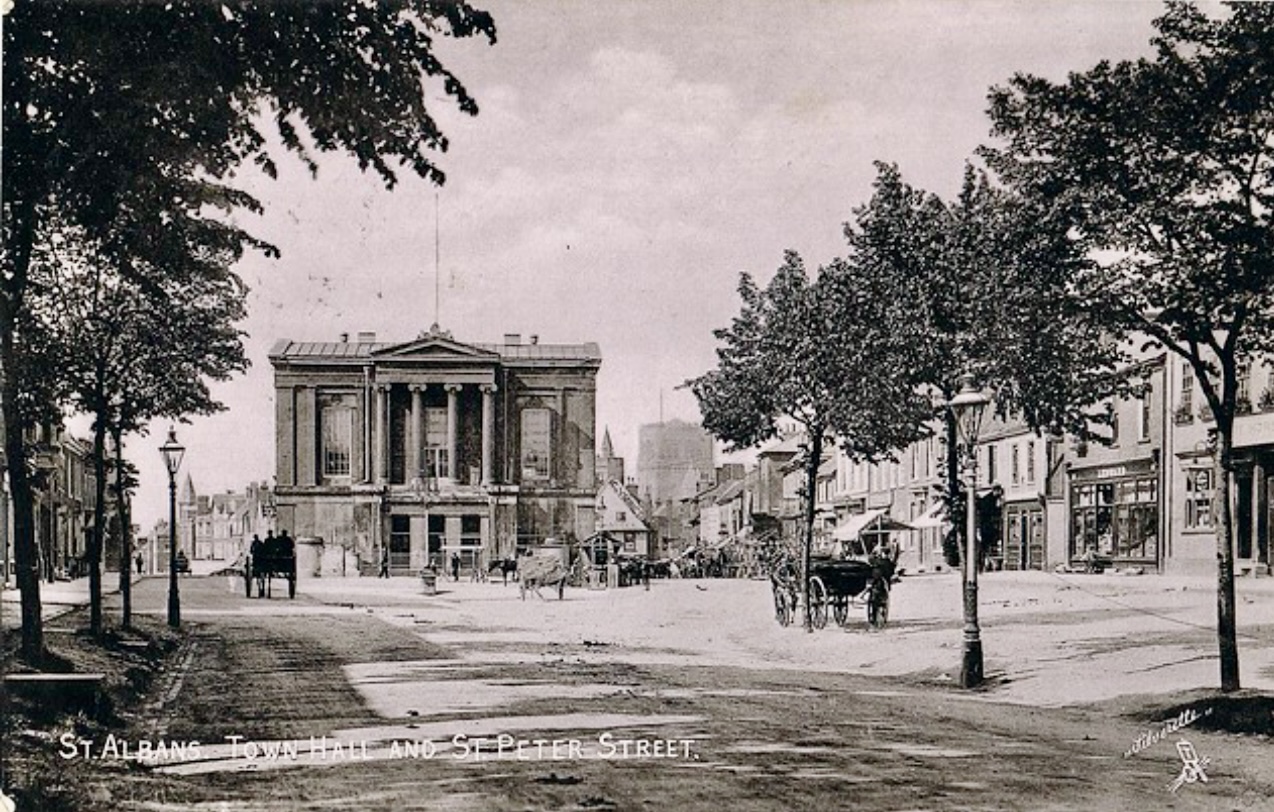
Samuel Ryder was a significant influence on Edwardian St Albans, not just as a major employer, but also serving as a councillor and mayor. In 1906, while he was mayor, he led the protest against the Postmaster General’s plans to erect telegraph poles along St Peter’s Street.
The complaints were so vociferous that the Post Office backed down. And that’s why we now have trees lining the street, not telegraph wires.
As life became easier for many, there was a bit more ready cash to spend on just having fun.
There were weekend sporting events and racing.
And in the evenings, it had to be a trip to the music hall. These were massively popular.
Vesta Victoria, a popular English performer who crossed the Atlantic to become a star in America, had a huge hit with the song, “Daddy Wouldn’t Buy me a Bow Wow”.
Her other hit song, “It Ain’t All Honey and It Ain’t All Jam”, proved an appropriate description of the end of the Edwardian era.
Dark undercurrents were stirring in Europe. This short period of peace and prosperity ended with an assassin’s bullet in Sarajevo, kicking off world-shattering events which changed England for ever. It definitely wasn’t all honey and jam.
History in colour: www.stalbanstourguides.co.uk. Offering public walks and private walks and talks.