


18 Sep 2023
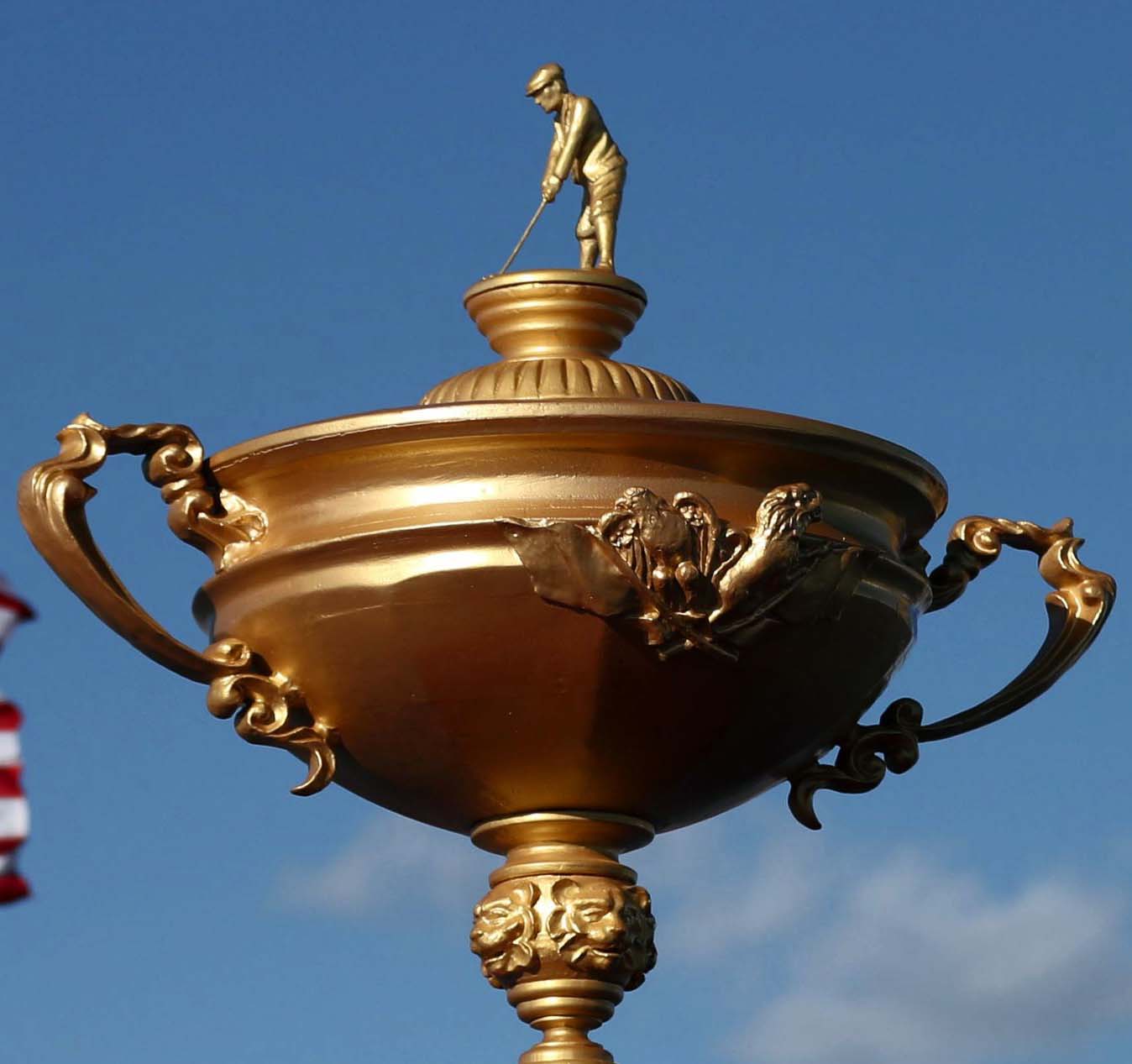
Later this month the 44th Ryder Cup will be held at the Marco Simone Golf Club near Rome. This bi-annual golf tournament between Europe and the United States will attract millions of golf fans the world over – but did you know that it all started here in St Albans?
The cup is named after Samuel Ryder, a prominent citizen of the city in the late 19th and early 20th centuries.
Sam Ryder was born in 1858 near Preston, the fourth of eight children. The family moved to Manchester, where at school he was a keen rugby player and cricketer. He was a studious pupil, excelling in maths, and wanted to be a teacher, but ill health intervened and instead he joined his father’s horticultural business.
With a perfect grounding in gardening, Sam decided to set up his own company selling packets of seeds to the working man at a price they could afford – one (old) penny.
In 1895, with his wife Helen and their two daughters, Marjorie and Kathleen (a third daughter Joan arriving 10 years later), he moved to St Albans. At the time, St Albans had three railway stations and an excellent postal service – needed for his mail order business – and initially he worked from the garden shed of his house, a semi in Folly Lane.

The business took off quickly and soon moved to larger premises in Dagnall Street. Then in 1911 he commissioned local architect, Percival Blow, to design a new Arts and Crafts=style building in Holywell Hill – now the Samuel Ryder Hotel. This became the office and warehouse for his now very successful business. Later, in 1931, he again asked Percival Blow to design a new building. This was his Exhibition Hall next door, designed in Art Deco style – most recently housing Café Rouge.

Whilst building up his own business, Sam also helped his brother James to start another enterprise. In 1920 they set up Heath and Heather, a retail herbal business. The range included ointments and soothing teas providing simple remedies, mainly for skin and digestive problems. Rapid success meant larger storage facilities were needed and in 1924 the firm transferred to a warehouse on Ridgmont Road. It was the largest warehouse in the city and was described as the largest retail herb warehouse in the world. They employed over 120 staff and their motto was “Nothing less than the best”.
Sam was brought up as a Wesleyan Methodist. He attended the Independent Chapel in Spicer Street, just round the corner from his Dagnall Street office, and became an important member of the congregation.
He was one of its elders, with particular interest in religious education, supervising 18 teachers. At the end of the 19th century the congregation outgrew the chapel and, with Sam’s support, the larger Trinity church was built on the corner of Beaconsfield Road and Victoria Street. The Ryder family lived nearby at Marlborough House, a large house with extensive gardens.
Having witnessed great poverty in his native Lancashire, Sam was always aware of his philanthropic and civic duties. He made sure his business premises had pleasant working environments and he offered sick pay, almost unheard of at the time. He employed mainly young women and they were happy to work for him.
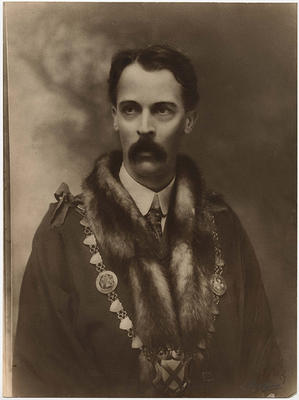
But he wanted to do more and, although extremely busy with his business and religious activities, he entered politics and joined the Liberal Party. He was a gifted speaker and stood for election to the city council. Unsuccessful at first, he topped the poll at his second attempt in 1903, and served on the council until 1916.
In 1905 Sam became Mayor of St Albans. As Mayor he was also chief magistrate and sat in judgement on the less reputable citizens of the city, but always with a reputation for being fair minded.
During his mayoral year, he had the embarrassment of having his wife before him in the dock! She was fined 10 shillings for non-payment of the Poor Rate.
Outside his business and civic duties, Sam was also involved with charitable work, particularly connected with his religious beliefs. He supported all denominations of non
conformity and endorsed them both morally and financially.
At the age of 50, Sam embarked on the activity that led him to global immortality. Never a strong man, his busy life took its toll on his health and, following advice to seek fresh air and exercise, he took up golf. As usual he put in 100% effort. With lessons from club professional, John Hill, and daily practice at Marlborough House (but never on a Sunday), he quickly became a competent player.
Only a year later, with an unofficial handicap of 6, Sam became a member at Verulam Golf Club where, with his brother James and their Heath and Heather Company, they sponsored professional golf tournaments. They put up prize and appearance money in amounts that stunned everyone.
In 1911 Sam was elected captain, a post he held again in 1926 and 1927. He got to know the professional players and hired one of them – Abe Mitchell – as his professional tutor at the princely sum of £500 per annum. (Later, after Sam Ryder’s death, Abe Mitchell was made Club Professional at £120 per annum). He also paid Abe’s tournament expenses bringing his total payment close to £1,000. Sam’s great ambition was for Abe to win The Open Championship, but sadly he never did.
Always eager to promote the game and to improve the status and opportunities for golf professionals, Sam proposed a challenge match between the USA and GB &
Ireland. He commissioned a magnificent gold chalice from Mappin & Webb, the famous London silversmiths, which he presented as a trophy for the international competition.
Weighing 4 pounds, the cup stands 17 inches high and measures 9 inches from handle to handle. The golfer on top of the cup is not Sam Ryder – it’s Abe Mitchell.
Sam Ryder lived to see two Ryder Cup encounters on his home soil. While celebrating the Christmas holidays with his family, he died of a massive haemorrhage on 2nd January, 1936. He was 77. His funeral was held at Trinity Church – the first civic funeral not to be held in the Cathedral. His daughter Marjorie sent her father’s favourite mashie (5 iron) to be placed in his coffin.
Sam Ryder is buried in the Hatfield Road Cemetery. He is remembered as one of St Albans’ most notable citizens, a successful and caring businessman, a profound churchman and philanthropist, a progressive politician – and maybe just a little for a 17 inch gold cup!
Join the St Albans Tour Guides for a talk on the life of Sam Ryder on 20th September at the Museum + Gallery. For more information, visit www.stalbansmuseums.org.uk/whats-on. Or join their guided walk A Round with Sam Ryder on 24th September. For more information and to book, visit stalbanstourguides.co.uk

