25 Jun 2025
Elena Hogg, founder of local culinary company FOOD by Elena, celebrates the cooking opportunities from her best frond…
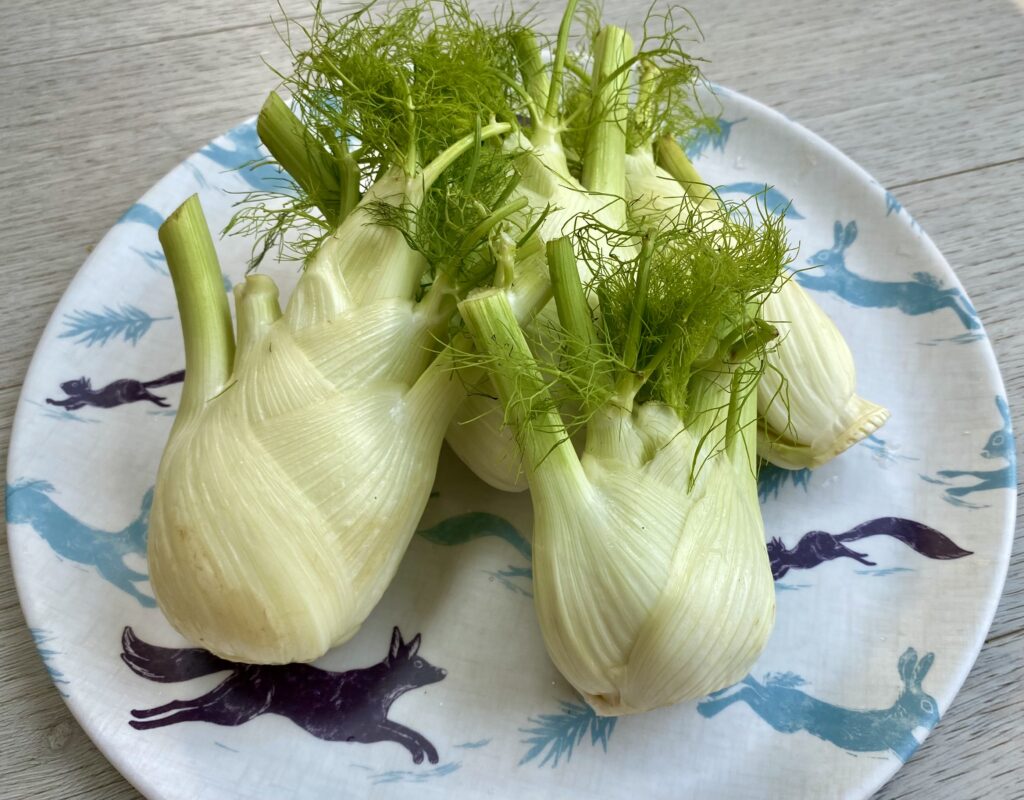
It’s a joyous time for me: the grocers’ market stalls and supermarket vegetable shelves are teeming with fennel. You can sometimes find fennel through the winter and early spring months too, but early summer is when this ridged, bulbous vegetable is in season.
Fennel is part of the carrot family, and indeed its fronds are very like carrot tops.
Celery is another vegetable which belongs to the carrot family and which also shares characteristics with fennel: its overlapping, wrap-around base and the firm, green stalks.
In terms of its flavour, though, fennel could be in its very own family. I don’t know of any other vegetable so strongly reminiscent of a liquorice all sort. And I love liquorice all sorts – the fact I can get that hit of resinous, salty sweetness for next to no calories in fennel form firmly ticks my box. And I have been known to wedge up an entire bulb and gorge on it as though it were my last day on Earth.
I was reading a bit about fennel online and one food blogger wrote that she’d conducted a poll among her followers and a whopping 80 per cent of them admitted to having no clue what to do with fennel and therefore never buy it.
I can understand their point; I remember feeling the same way about kohlrabi which, much like fennel, has an inaccessible, knife-defying shape that seems to belong in the Eden Project rather than on our kitchen chopping boards.
A good balance of abandon and precision is required, much as that sounds oxymoronic.
The abandon is needed for just making that initial cut through the centre. The various stalks sprouting off unevenly might feel prohibitive, but just cut and have faith.
The precision comes next: there’s a central spine emanating from the bulb’s base that binds all the layers together, a little like an onion. As long as you have some part of that central spine under your knife, you can make fairly sturdy wedges, which can then be braised or roasted as you please.
Some cheeky shards fall away no matter how you cut, of course, and they always will until fennel is 3D-printed. What a thought. For now, embrace this awkward, uncooperative food for all its quirks, just as I did this week, when I sliced up a couple of bulbs as best I could, and as long as most of it was thinly sliced enough to eat raw without causing jaw-ache, I was happy.
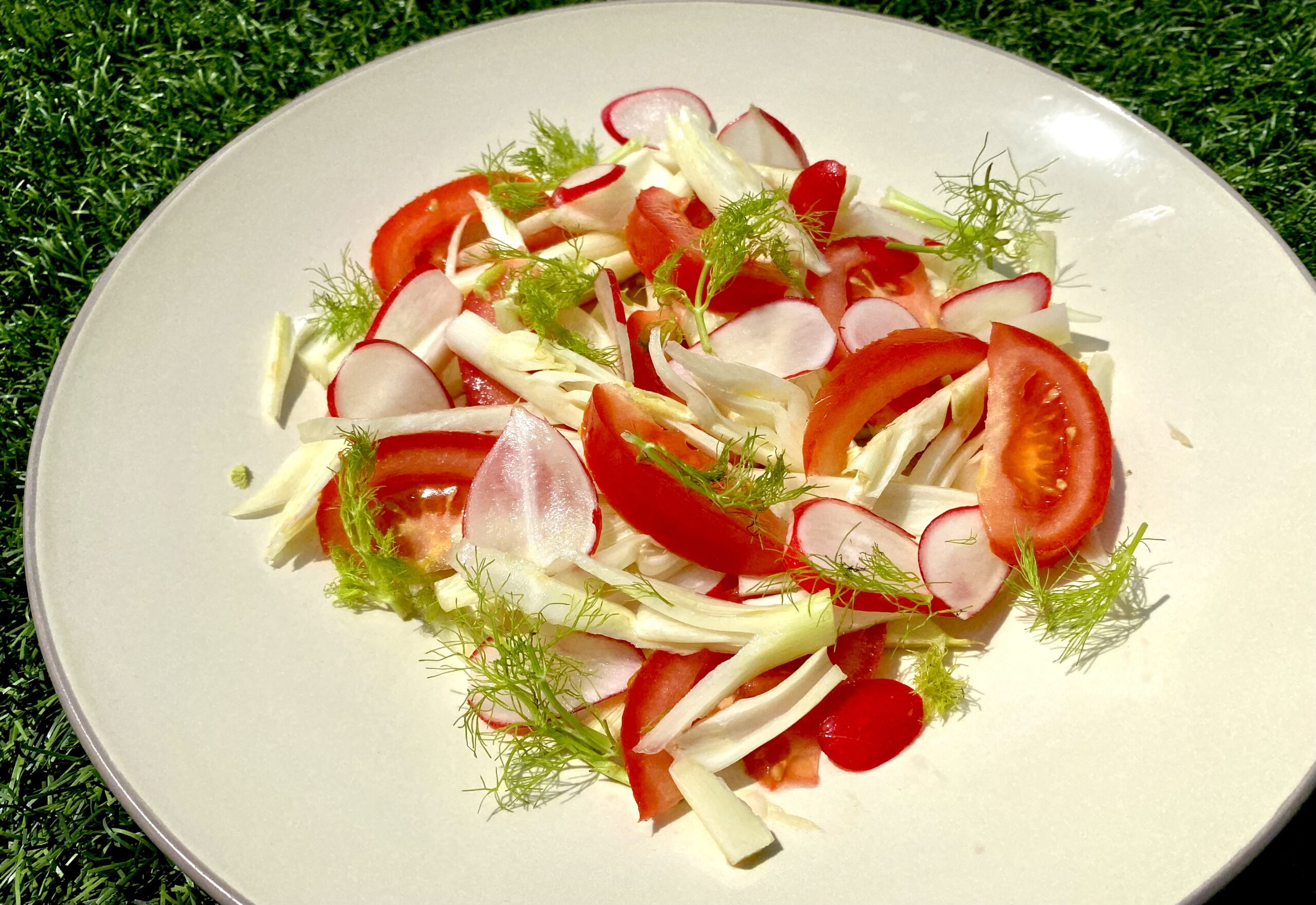
I was making a fennel and tomato salad, refreshingly crisp and perfect for warm days. I had initially wanted to combine fennel with oranges for my lunchtime salad, being a fan of including fruit in just about any recipe and knowing that fennel and orange are a well-known match, especially with some black olives or capers thrown in.
But I had also recently purchased some excellent vine-ripened tomatoes, which are also readily available this time of year. Something about the smell of the vine itself made me want to match fennel and tomatoes – the earthiness, perhaps, and the immediate association with warm climes.
So with the decision made, I sliced up the tomatoes and added them to my fennel shards, along with the fronds for colour, tickly texture and fragrance, as well as some radish, whose shocking pink clashed fabulously with the tomato-red. All that was needed by way of dressing was some good olive oil, salt and some white wine vinegar, just to eek out the sweetness of the ingredients. I particularly enjoyed the contrast of the soft, yielding tomatoes against the crunchy snap of the fennel.
Lacking any kind of snap at all was my second recipe of the week: braised fennel.
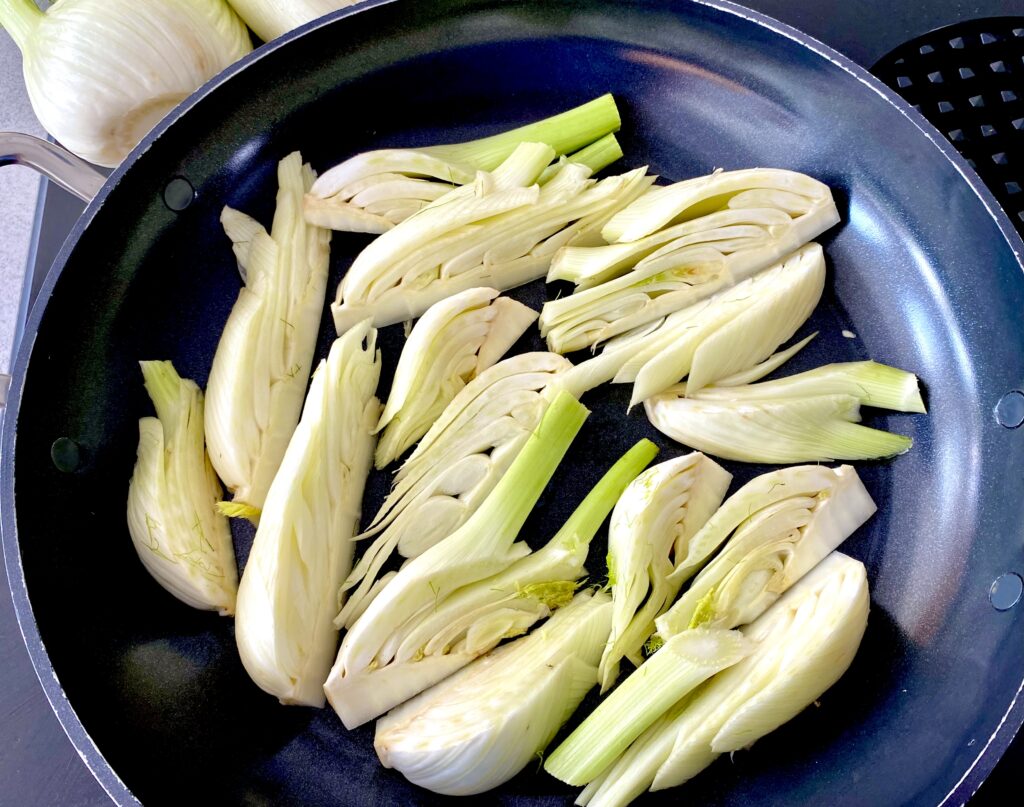
Now, I have photographed my wedges only pre-braise, for fear of putting you off, because there’s almost no way under the sun to make cooked fennel look pretty.
I think it’s largely down to the slightly translucent, murky hue fennel takes on when cooked.
Perhaps aim to serve it always with something vibrant, like a piece of pink trout or some stuffed bell peppers. Rest assured, though, that whatever fennel lacks in appearance, it makes up for in taste, with the soft vegetable delivering a mild but very distinctive flavour.
Pop your chopped up fennel in a pan on the stove. Add enough stock (any kind you fancy) and white wine (if you have some open, otherwise just stock will do) to come about a third of the way up the wedges of fennel.
Don’t submerge them or the remaining liquid will take too long to reduce down later – it makes the most delicious, liquorice-infused jus to pour over your fennel and whatever else you’re serving at plating-up time.
I usually add some soy to the liquid for some umami, and perhaps a bay leaf or two. Some peppercorns or a star anise also work well to accentuate the natural aniseed flavour of the fennel. Depending on how chunky your wedges are, it should only take twenty minutes to cook on a medium heat and, as mentioned, you can tell when they’re done because they’ve largely discoloured to a chewing-gum grey. But don’t despair: beauty is in the mouth of the eater, remember.