18 Feb 2026
Elena Hogg, founder of local culinary company FOOD by Elena, explains how adaptability is a key skill in her business…
Probably one of the things I love most about my job also presents me with the biggest challenges. Typical, really. What I enjoy so much is creating a bespoke service, changing my food offering to suit a client’s specific tastes and the tone of the event they’re hosting, and also the various practical requirements, like location, availability of space, an electricity supply, somewhere to unload, and so on.
It’s really important to me that I tick all those boxes when making food for my clients, but there’s no getting away from the fact it’s very hard work. Luckily, I’m something of a perfectionist by nature, so the extra effort brings me great satisfaction. Cutting corners isn’t for me.
I suppose, then, I’d say it’s the “bespoke-ness” of my catering that presents both the biggest reward and the most difficulty.
Certain jobs are straightforward, but others have certain parameters or logistical particulars that need fulfilling.
Just recently, for example, I attended a leadership course. It was incredibly insightful and I learnt a huge amount. It’s a course that really delves into the nuances of good leadership and how it differs from good management. Possibly the most fascinating thing I discovered is how the various factors that make up good leaders are things you can apply to almost every interaction you have in your life, be it domestic, social or work-based.
From start to finish I was swept away with so many eye-opening nuggets of truth, such as how something as commonplace as listening – but in the right way – can empower the speaker, while the wrong sort of listening can undermine or diminish the speaker.
Take finishing sentences, for example, or making noises of affirmation. You think you’re being encouraging, but you’re risking making the speaker feel rushed or predictable.
There was so much to take in and re-evaluate about how we communicate and think that I’m hoping to develop quite a different mindset as a business owner – and as a parent for that matter. The wonderful person who runs it, Susie Ellis, of Free Mind Development (www.freeminddevelopment.com), told me someone who’d taken the course said that even their marriage had improved as a direct result of the skills they learnt. I can quite believe it.
But what does this have to do with catering challenges and successes? Well, in addition to participating on the course, I was also catering the lunch each day.
While I’m no stranger to providing a tasty lunch for corporate functions, this weekday lunch was different because I didn’t have the morning to prepare. I was in the room learning rather than in my kitchen cooking, so I needed to bring the food along with me first thing in the morning, all prepped and ready. Luckily the venue had ample fridge space.
A further challenge came in the form of kitchen facilities: they were unavailable on the first day, but available the following. So the menu needed to accommodate each day’s food-heating capabilities, or lack thereof.
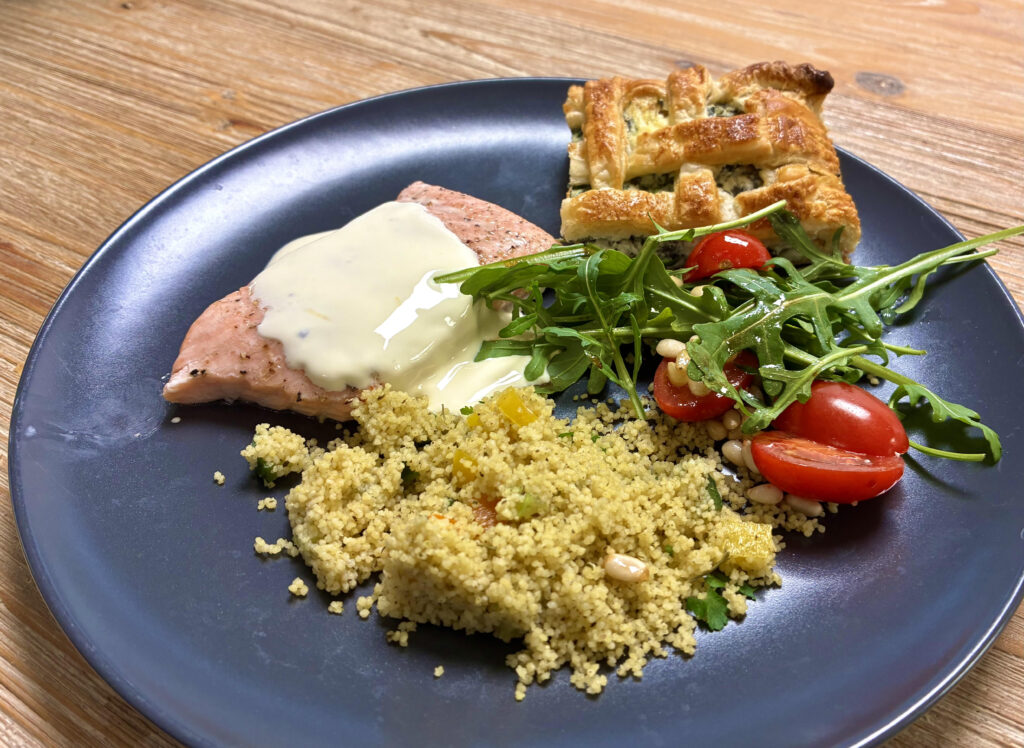
How to present a winter meal that feels nourishing and warming despite having no means to heat the actual food? Enter pastry, which even at room temperature has the ability to feel indulgent, alongside some herby tabbouleh and a portion of salmon that, being an oily fish, hits the spot both in terms of taste and texture despite not being served hot.
Just for extra luxury, I brought along a bowl of crème fraîche infused with lemon zest and black pepper with which to blanket the salmon. Sad cold buffet vibes were suitably banished.
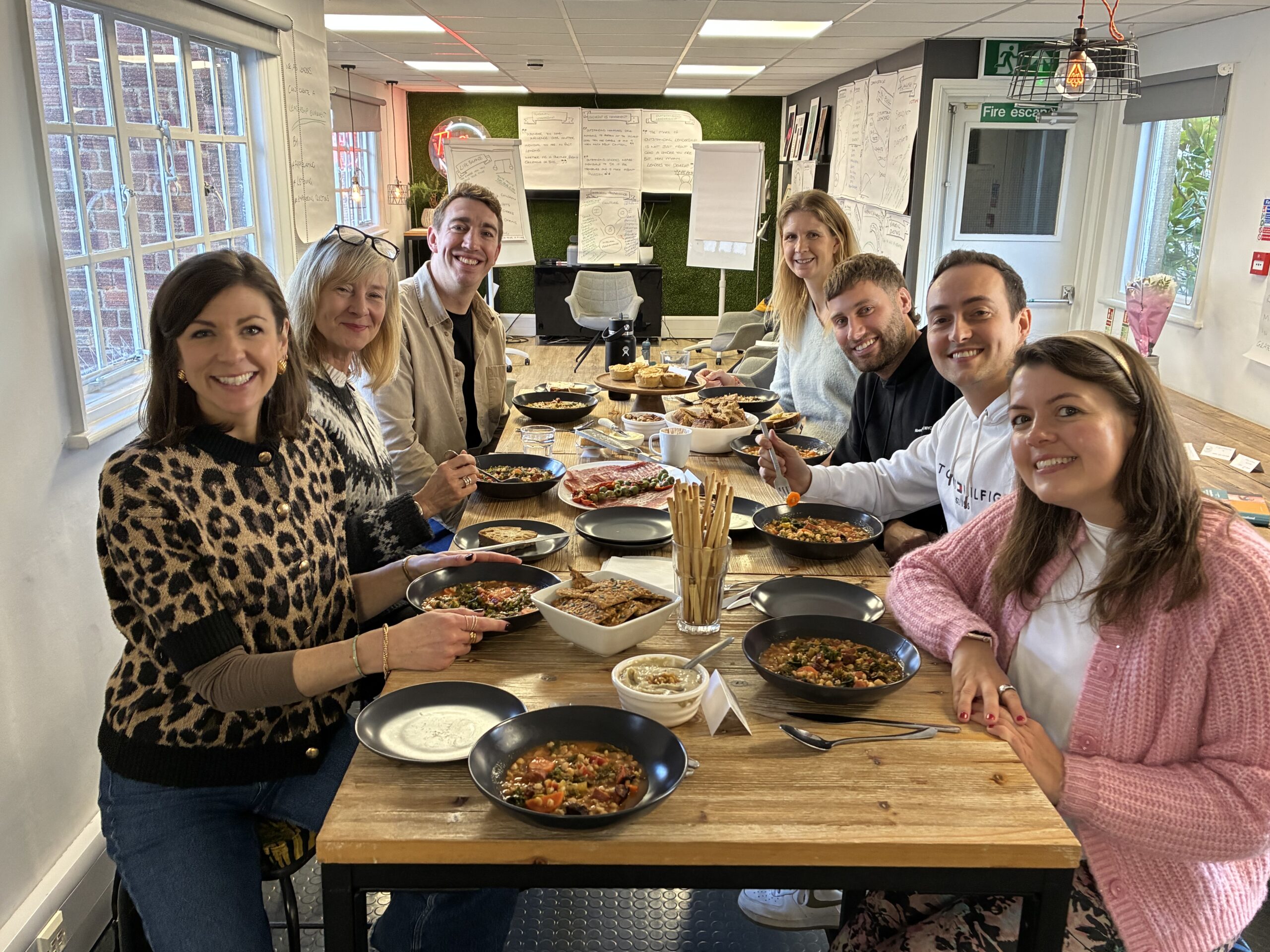
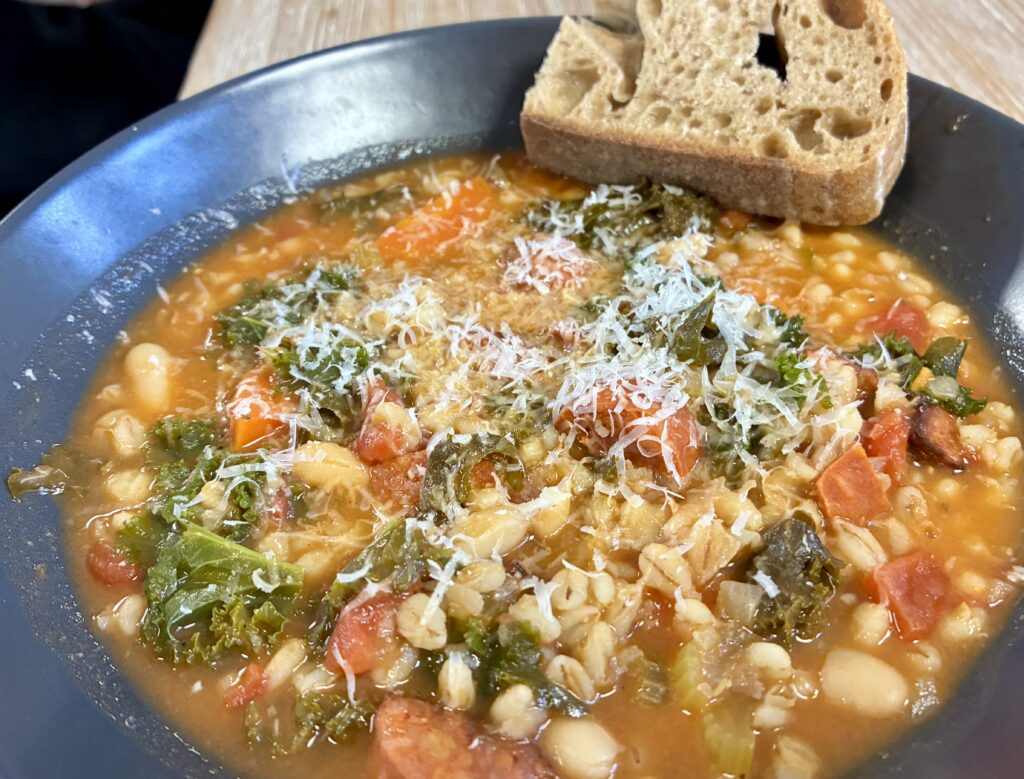
The second day, given I had the use of the excellent kitchen at The White Rooms (in central St Albans, where the course was being held), I decided to warm everyone up with a really robust and hearty soup. The kind that feels almost like a stew. Alongside the classic combo of onions, celery and carrot, slowly sweated to release maximum sweetness, I added good quality plum tomatoes from a tin, crushed up a little, then kale, cannellini beans, pearl barley and chorizo.
Each of these additions had its own job to do, whether it was to add a chewy bite, some creaminess, a savoury smokiness or some nourishing vitamins and minerals. And importantly, is a dish I could prepare the day before and heat on the day just before dishing up.
With some crusty bread and salty butter thrown into the mix, the result was a hug in a bowl.
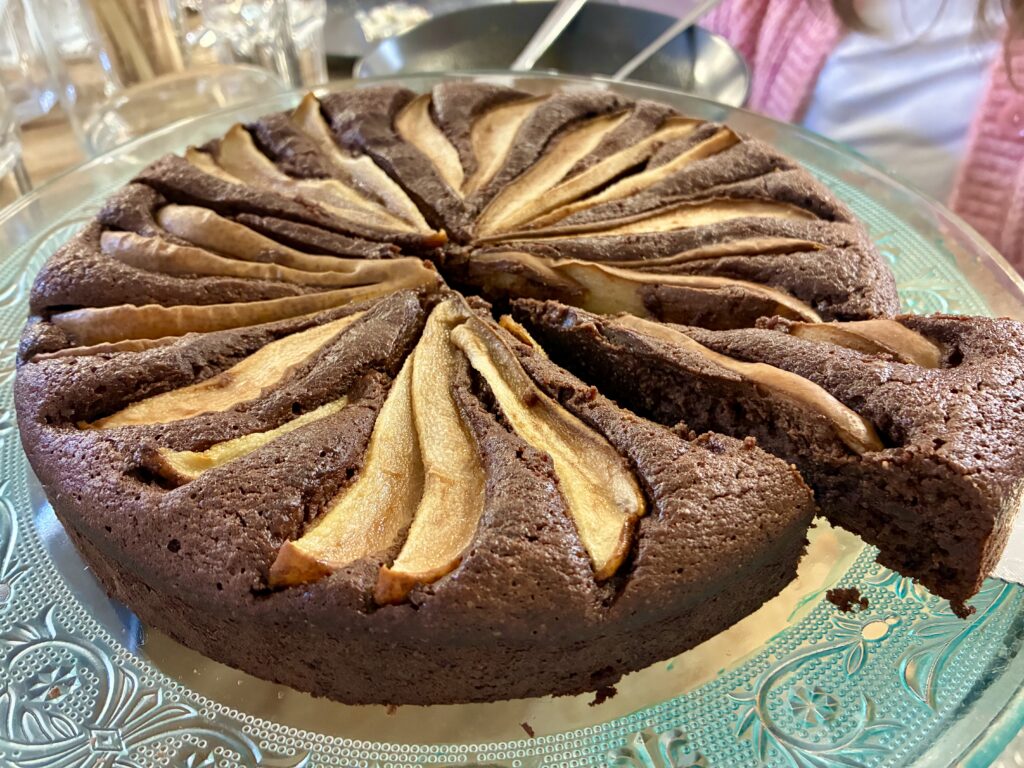
After such a rustic main course, I felt beholden to elevate dessert a little, so served a rich torte of chocolate, almond and pear. The pears looked so elegant fanned out against the dark chocolate background, and had sunk into the batter in places.
This lack of precision – the homemade quality – is what makes food look all the more appetising, if you ask me. Drizzled with some fresh double cream, those noises of affirmation were back again.
It was tricky planning the right menu for the quirks of this particular job, with the kitchen limitations and – mostly – the fact that I couldn’t spend the morning cooking and preparing.
But Susie Ellis said to me when she booked me to cater that the lunch provided at these events is always remembered and directly affects the impression attendees have of their time on the course. Our brains work best when they’re nourished and sated, and who am I to stand in the way of learning?