


04 Mar 2026
Elena Hogg, founder of local culinary company FOOD by Elena, is keeping a place for comfort food on her menu..
It’s a funny old time in terms of food. There’s a slight glimmer of the springtime to come, but also a lingering wintery chill, so I find myself wanting both comforting, warming fare, but also more vibrant and fresh dishes.
So this week, I’ve come up with meal options that encapsulate both ends of the spectrum, with enough hearty starch to deliver the hug-in-a-bowl factor, and also a good dose of colour and freshness, so as to welcome in the notion of spring. I hope I don’t jinx things.
First of all, I rifled through the pulses shelf in my pull-out larder. There are all sorts in there, like red and yellow split peas, dried lentils and mung beans, all of which I keep in stock precisely for times like these when I want nourishment, warmth and zing all at the same time.
Chana dhal, or split chick peas, was the legume of choice this time, though, as they have more bite than split peas or lentils, and I wanted a good bite to my dahl rather a soupy feel.
They do, however, require a good soaking before they’re ready to be cooked, but you can get away with just four hours, so even if you forget to soak them the night before, you still have a shot at making lunch or dinner with them if you remember in the morning. For a non-planner like me (or – let’s call a spade a spade – a scatterbrain like me), this is a bonus.

Finely chop a large onion, season with salt and fry in oil on a low heat, so they soften rather than brown. Add a thumb-sized knob of grated ginger and about four cloves of garlic, then stir. You can add diced chilli at this point, too, if you want a punchier dish. After ten minutes or so, add your spices. There’s no exact specification; I make this differently every time depending on whim or what’s in plentiful supply. This time, I added somewhere between a teaspoon and a tablespoon each of turmeric, cinnamon, garam masala and cumin. You could add or substitute ground coriander, curry powder, nutmeg, mustard seeds – the options are boundless.
Once everything’s starting to smell sublime, add 500mls of good quality stock and then 250g of your soaked chana dhal. Let it all come to the boil, then reduce the heat, partially cover with a lid and let it simmer for about 25 minutes, stirring every now and then.
After the cooking time is up, add some halved cherry tomatoes, or any vegetables you like, really – chopped peppers, courgettes or cauliflower florets, some green beans or a few handfuls of baby spinach leaves. As usual with my favourite recipes, anything goes.
Chuck in a can of coconut milk too and some extra salt if needed, and allow it all to simmer, uncovered, for another 10 to 15 minutes. Serve this glorious, golden dhal with some naan bread or basmati rice (or both), some wedges of lime to cut through the coconut richness, and festoon with some verdant coriander leaf.

My next recipe is actually a side salad that works really well for the chillier parts of the year; again invoking the promise of spring without abandoning our desire for robust sustenance. It’s based on chicory, which to me takes the prize for the most grown-up salad ingredient. Salad is largely summery, but as chicory is bitter and a more substantial leaf than, say, iceberg or frisée, it can be used to make a heartier salad.
I sliced my chicory quite thickly, giving a slaw-like feel, then added walnuts and orange segments, reminiscent of festive mid-winter, but with a crunchy, fresh finish thanks to the chicory. It’s brilliant served with some pan-fried white fish or a herby pork chop. If, however, you reverentially place atop it a soft slice of piquant gorgonzola, and serve with some oven-warmed crusty bread, you have a meal in itself right there.
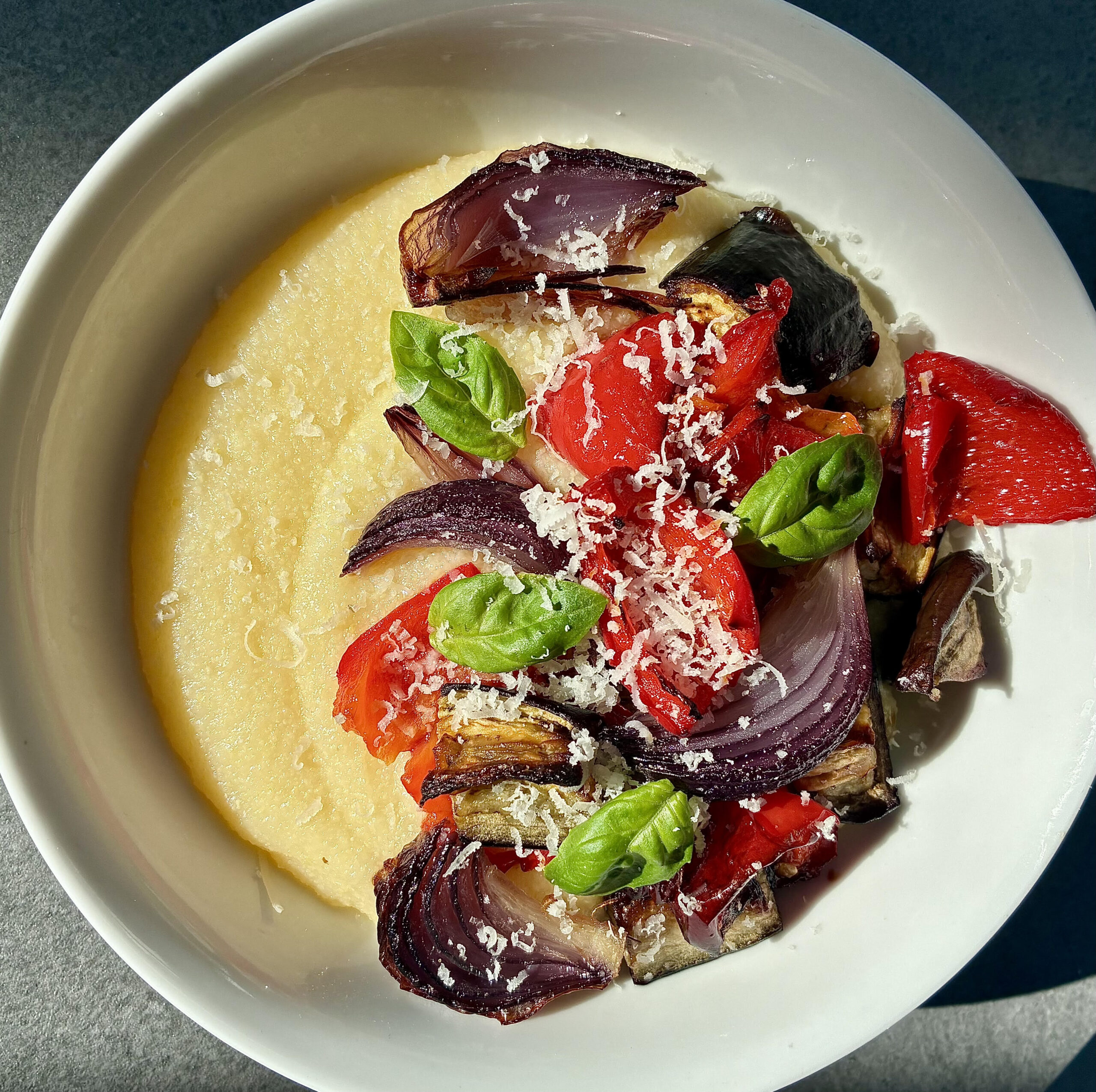
My final recipe is probably the most adept at bridging the winter-spring divide because it is brimming with glistening, roasted Mediterranean vegetables, but they are sitting on a bed of deeply comforting, parmesan-infused polenta.
Now, I accept that polenta has a bad rap, but as far as I can tell, it’s merely because it’s misunderstood. Polenta is admittedly bland, but so is unseasoned rice or pasta. So, like any other starch, polenta requires proper cooking,
seasoning and a little help in the form of butter to really sing. There’s very little in the food world that isn’t improved with lashings of butter, now I think of it.
And if you then add parmesan into the mix, well… you need to try it.
Chop some bell peppers, aubergines and red onions, then roast on a high heat with oil, salt, pepper and some rosemary or thyme sprigs. They’ll take at least half an hour to start to char slightly.
In the meantime, add about a litre of water to a pan and bring to the boil. Add a good tablespoon of salt, then pour in about 150g of polenta. Stir as you add, making sure the grains are all free-flowing. Leave it to simmer on a low heat for about 25 minutes, stirring now and then to keep it from sticking. When it’s cooked through, add about 80g of butter and as much parmesan as you can grate before getting cramp.
Spoon the soft, yielding polenta, which has a mashed potato vibe at this point, into bowls and pile over the roasted veg. Scatter with some drained jarred butterbeans to up the protein if you fancy, then sit and spoon up this nourishing bowl of deliciousness in the knowledge that, even if spring is late arriving this year, there’s always food to look forward to.
