22 Dec 2024
Elena Hogg, founder of local culinary company FOOD by Elena, has been gearing up for her Christmas at home…
I’ve just completed my last catering job this side of New Year and I’m feeling somewhere between elated and exhausted. I’m lucky to have the kind of job where I can set my own cut-off dates, and leave myself time to prepare for our own Christmas rather than cater for everyone else’s.
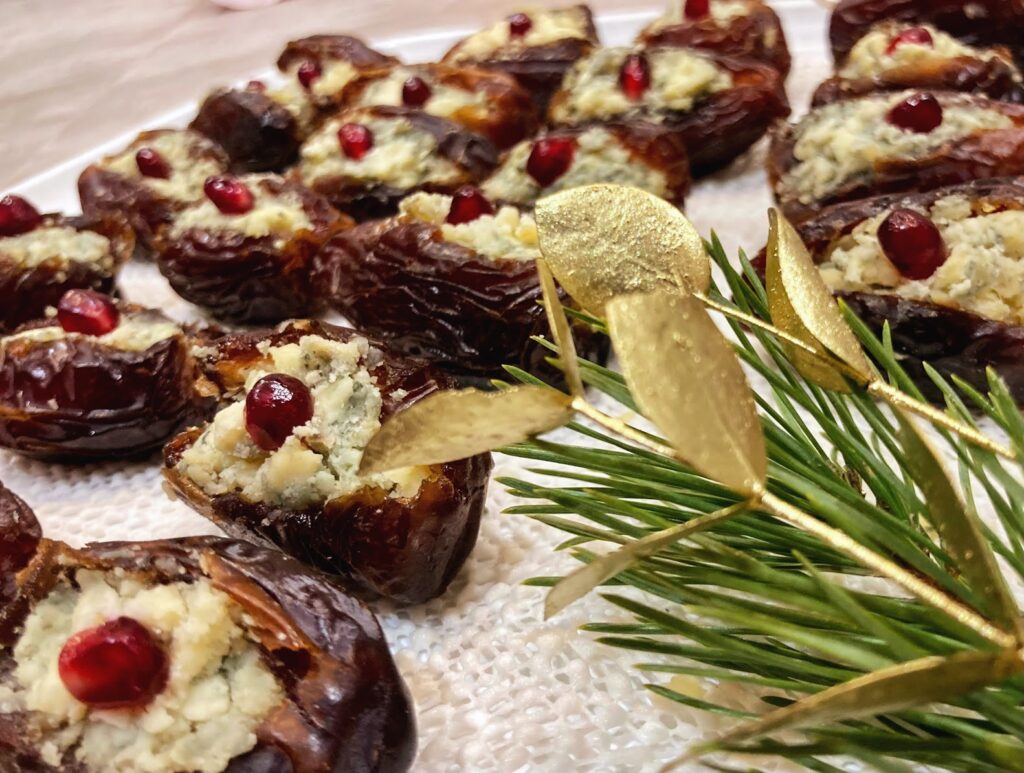
The food I made for this last job was absolutely perfect for bringing our a little seasonal cheer – there’s nothing that says Christmas more than plump, sticky dates stuffed generously with tangy stilton and studded with a little pomegranate seed ‘berry’ for added gaiety. Little nuggets of Christmas in one mouthful.
Surely food is the most talked-about part of Christmas? Gifts feature prominently, too, but because they’re kept a secret and all wrapped up till the big day, I think it’s food that takes centre stage in most conversations about Christmas plans.
Food has a tremendous power to pull people together; to whet the appetite notjust gastronomically, but socially, too. We connect with others over food and take great comfort in it, which is why I think food forms an integral part of festivities like Christmas. Whether it’s a huge gathering you’re hosting, or just a cosy Christmas Eve dinner for two, the food that’s eaten will doubtless weave the fabric of the evening.
For many, food traditions play a big part at this time of year. It’s been almost two hundred years since turkey, for instance, first graced the royal dining table at Christmas, which gave rise to the nationwide tradition. We’ve since added to the list: Brussels sprouts, stuffing, bread sauce… all the trimmings which combine to create the typical festive menu.
As some of you might now know, my mother is Italian. For her, such traditions were meaningless and therefore – because she was (and still is) responsible for food decisions in her house – the Christmas meals of my youth were minus any kind of bacon-wrapped morsel or other such Christmas staples.
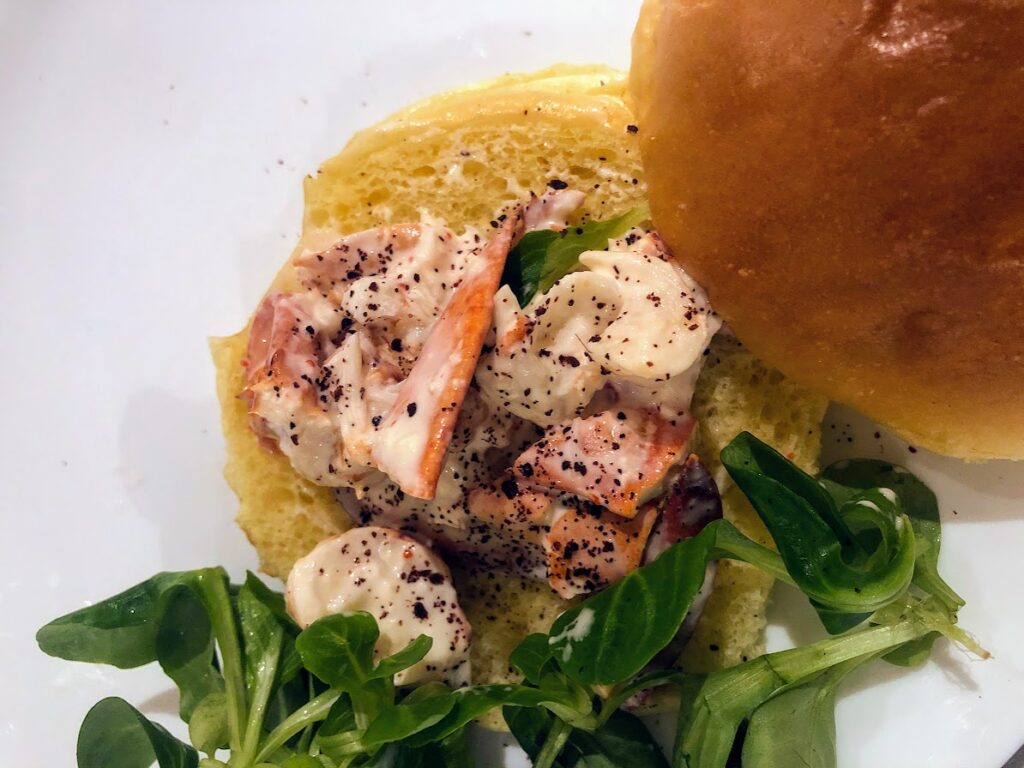
In fact, it was traditional to be untraditional, and that ethos is one I’ve carried forward myself whenever I’m hosting. When I was about ten years old, we had lobster for Christmas, which I remember feeling very excited about. In homage to exactly this sort of abandonment of tradition, I have since made lobster brioche rolls for Christmas lunch with iceberg lettuce and a lemony mayonnaise, and I’m not sure what felt more indulgent – the lobster itself or that fact we cared not a jot that our main Christmas meal was essentially picnic food.
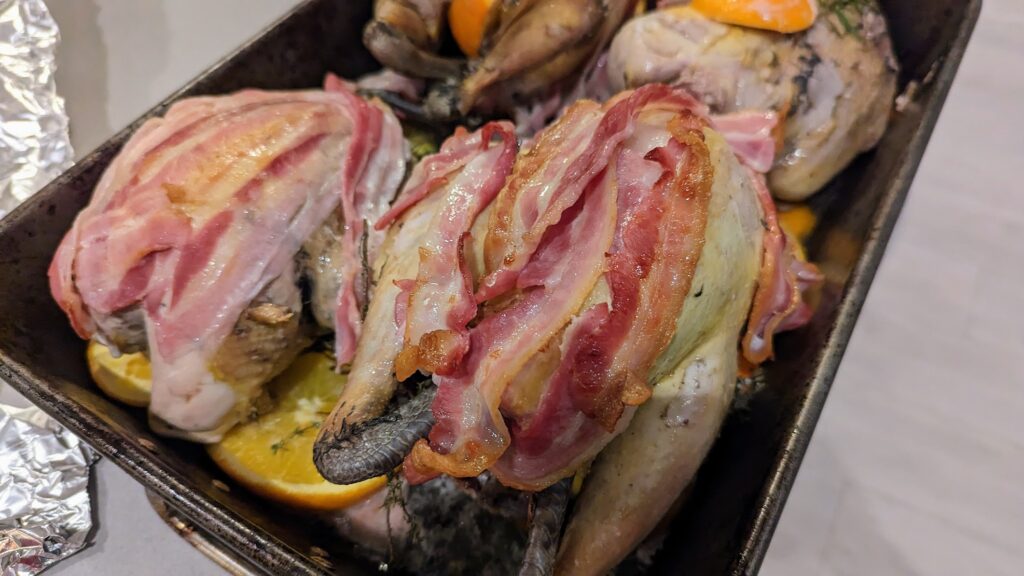
We had a partridge apiece one year when it was only my parents with us and the children were young enough not to be expected to partake in a formal meal. They
were delicious and very pretty, draped in bacon for succulence and roasted with orange and thyme.
Another year we had more people in attendance and I cooked a whole salmon. I remember being delighted that I was finally inaugurating my years-old fish kettle that had been tucked away in some barely-reachable part of the kitchen.
Perhaps most controversially, we had a meat-free Christmas a couple of years ago. It was done out of a sense of defiance, I think, because everywhere I turned there was meat: adverts on television for turkey crowns and the supermarkets stocked to the hilt with enormous joints of beef and bulging gammons.
So I decided to go in an entirely different direction. I recall that the chestnut-based main dish I made was pretty unremarkable, but what did make an impact was how much more effort I put into all the vegetable side dishes, when they weren’t being eclipsed by meat.
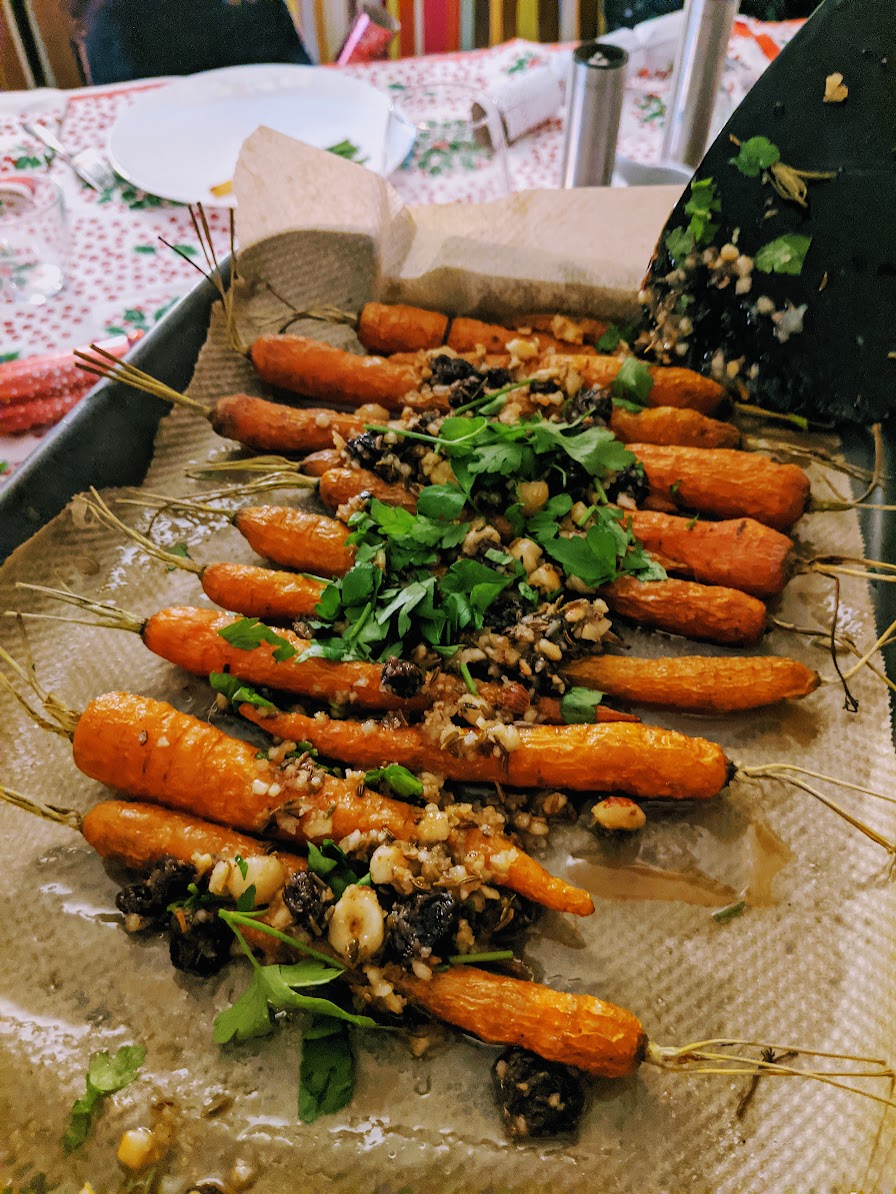
Specifically, I remember some heritage carrots I’d slowly roasted then glazed in a reduction of maple syrup and cider vinegar. With a sprinkling of toasted nuts and some flame raisins, the carrots were the star of the show that year.
Lastly, there’s the question of Christmas pud. Growing up, I shared my mum’s dislike for all things brandy-soaked and made with suet. There’s a level of stodginess in traditional Christmas puddings which was a step too far for my mum’s palate, and mine too.
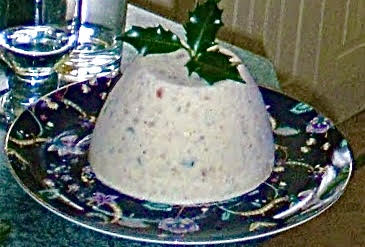
So my mum would make an alternative dessert: a white Christmas pud a little like cassata, made with ricotta, nuts and candied fruit mixed with sugar and some spices then frozen. She’d make it in a pudding-shaped bowl, so it visually resembled the traditional version it was usurping, and it would also get a sprig of holly on top, as you can see from the only photo I can find of it in the albums, hence the low resolution.
We still have it now, even though Christmas puds have changed a lot since I were a lass, and there are some really delicious versions available in every supermarket now.
We have it because it’s our tradition, albeit not traditional. I rather like the idea of Christmas playing host to a multitude of diverse and idiosyncratic practices evolving between generations that all have the ‘feel’ of tradition because they provide that sense of comfort and familiarity. Isn’t that what Christmas is most loved for? That and the Christmas cracker jokes, of course. Have a good one!