15 Mar 2024
It has been said: “That corruption is endemic in all government is practically certain”. Today, it might be fair to suggest that politicians need to win back the trust of citizens because of a steady stream of corruption scandals where money has bought political access, influence and commercial benefits.
Reversing the perception and reality of the corrupting influence of money on UK politics is a crucial for the health of British democracy.
However this will be difficult unless there is greater transparency not only of parliamentarians’ personal gain but also of how political parties are funded. The selling of access and influence in return for money has become a way of fuelling election campaign spending. Many, quite understandably, believe there should be tighter rules to avoid the corrupting influence of big money.
Back in 1851 St Albans was caught up in its own corruption scandal, but this was not about politicians or parties receiving money but rather the blatant bribery of the electorate.
When in 1850 one of the MPs who represented St Albans died, an election took place that was won by the Liberal candidate, Jacob Bell, However, his Conservative opponent charged Bell with bribing the electorate.
In reality bribing the electorate was common practice at that time. Nevertheless, a Commission was established in London to investigate the accusation. When witnesses who had been summoned failed to attend, a Parliamentary Commission came to St Albans in 1851 to find out the truth. It sat in the Courtroom in what is now the Museum + Gallery.
At that time only men of certain monetary status were allowed to vote but, interestingly, some women were called as witnesses when their husbands failed to show. The inquiry revealed that the agents for the parliamentary candidates had, indeed, been bribing the electorate.
A party agent, Henry Edwards, who had been acting for Jacob Bell, was based in Sovereign Way, and from an office there had been bribing the electorate with sovereigns (hence the name of the alley).
After receiving refreshments, voters went upstairs to the first floor where they picked up five sovereigns from a table while the agent turned his back and looked out the window.
When the Commission revealed the widespread corruption in St Albans, the MPs at Westminster were faced with such a public scandal felt compelled to act.
It was decided to make an example of St Albans and the town lost its right to have an MP for over 30 years. The exposure of this standard form of corruption then led to Parliament passing the Corrupt Practice Act of 1852. Entitled ‘An Act to provide for more effectual inquiry into the existence of corrupt Practices at Elections for Members to serve in Parliament’ it was a turning point in British politics, introducing penalties for those accepting or offering bribes and, for the first time, recording the monies spent by election candidates.
Alas, although the Act has generally been successful in stopping such open bribery of the electorate, there is still concern about how Parliament can be discredited by individual politicians pursuing the gravy train of financial gain from political power and influence.
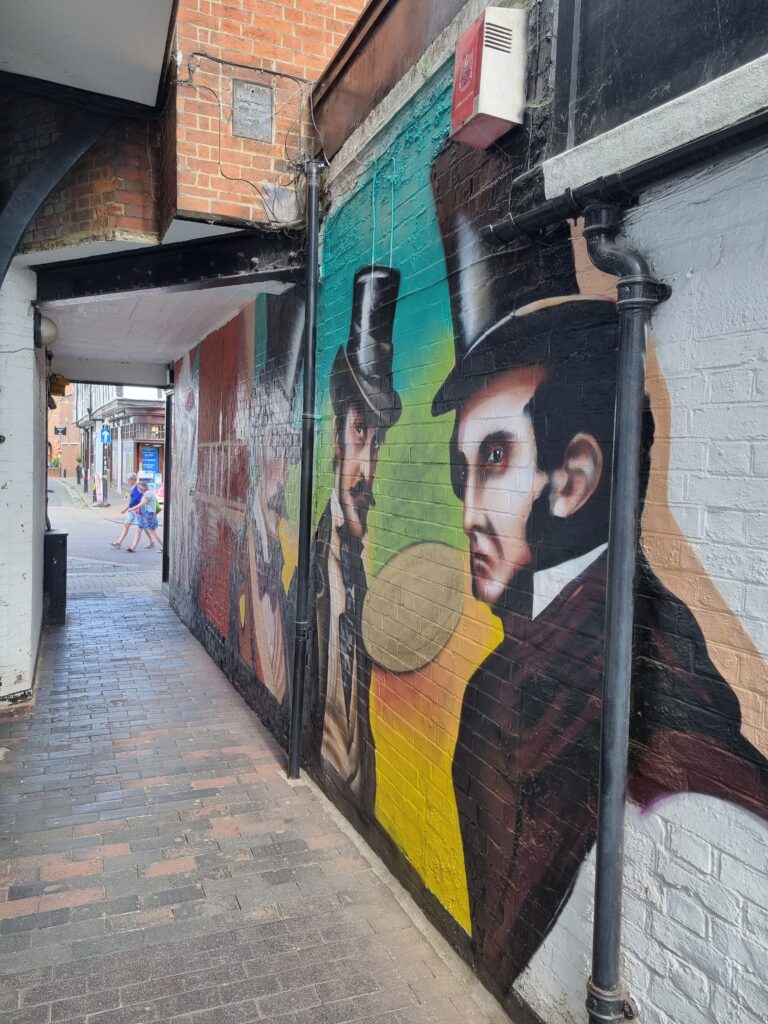
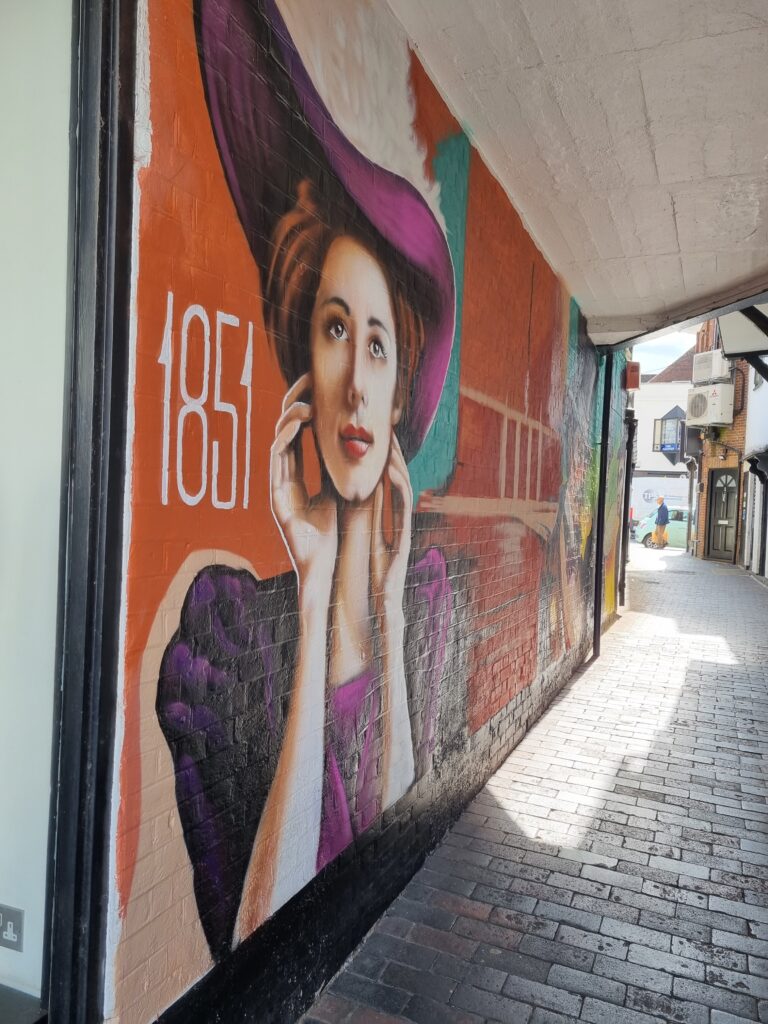
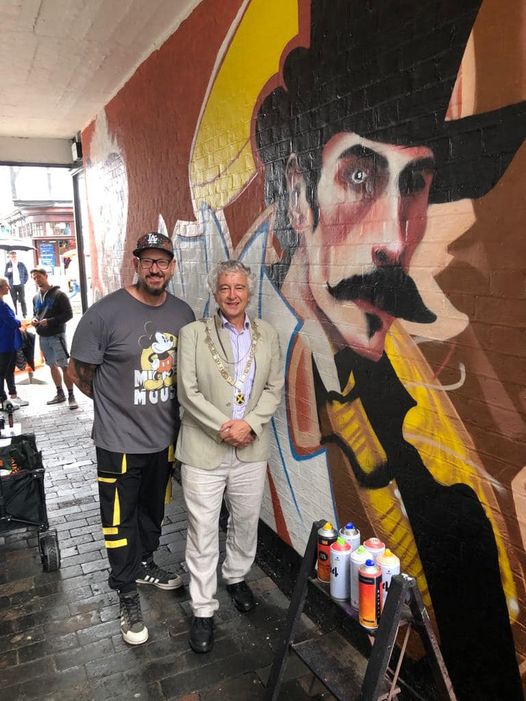
As a footnote: back in August of last year a mural, generously sponsored by Christopher Place, was painted in Sovereign Way in the city centre.
This was a result of a cooperative project between Conservation 50 and St Albans & Hertfordshire Architectural & Archaeological Society (SAHAAS) to revive the historic alleyways of St Albans.
The artist, Ant Steel, who was at that time the Artist in Residence at the Cathedral, was commissioned to recreate images relating to the scandal.
On March 26 at 2pm an information panel designed by Roy Bellamy, explaining the story behind the Election Scandal, will be officially installed in Sovereign Way by Dr John Morewood, President of SAHAAS, who drafted the text. The artist Ant Steel will be a guest of honour and the public is very welcome to attend.
And at 7pm on the same day, a re-enactment of the Parliamentary Commission into the election corruption at St Albans will take place in the Museum + Gallery. The story will be played out in the very courtroom where the inquiry took place.
For further details contact: publicity@stalbanshistory.org