



17 Jan 2026
School-based anxiety, also known as emotionally based school avoidance, is a rising problem among young people.
It is the significant distress or inability to attend school due to emotional factors, although the ‘avoidance’ label creates a problem for many because it implies that the young person just doesn’t want to go to school which is not the case.
Jon Wilson-Coooper, psychotherapist and director of The Albany Centre in St Albans said school-based anxiety is distress that’s closely linked to the experience of school itself: “It’s more than the normal nerves around exams or homework. For some children, school comes to feel overwhelming or unsafe, and anxiety becomes a natural stress response to that environment.”
He added that it often shows up physically as well as emotionally with children complaining of stomach aches, headaches, nausea, poor sleep, or feeling shaky and tense. There can be fear, irritability, tearfulness, or a strong sense of dread about going to school. Some children withdraw and become very quiet, while others may appear angry or oppositional when they’re actually struggling to cope.
Chief executive of young people’s mental health charity Youth Talk David Barker agreed and said school-based anxiety is a very real and often overwhelming response to the school environment.
“School based anxiety can show up both emotionally and physically. Young people may feel panicky, tearful or constantly on edge, and experience headaches, stomach aches, nausea, shaking, poor sleep or racing thoughts. For some, the anxiety becomes so strong that attending school feels impossible.”
He said although anxiety in young people was already a concern before 2020, the pandemic amplified those challenges: “It’s not about a child being difficult, lazy or trying to avoid school. For the young person, the fear and distress feel genuine and intense, even if the cause isn’t always obvious to adults.
Jon believes that one of the most effective ways to reduce anxiety is for a young person to feel safe in their elationships: “Anxiety eases when a child feels noticed, known, and emotionally held by the adults around them.
“Small things really matter, eye contact, using a child’s name, brief check-ins, and listening without immediately trying to fix the problem. Schools are under huge pressure, but where relationships are prioritised alongside learning, anxiety tends to lessen.”
Two St Albans parents revealed the hugely distressing impact school-based anxiety has had on their children.
One mum, who lives in the city centre area, described how after years of school avoidance, her four children are all now electively home educated.
She said: “It was so bad that my mum fell over and broke her arm one terrible morning when we were trying to walk my daughter to the front door. She wasn’t able to attend school and for too long, I tried to get her to go in.
“She was eight and she took cornflour from my cupboard and made pretend sick in the sick bowl so that she could get out of school.
“When my son was six, he would lie naked flat on the floor and scream and cry. Refusing to get up and get clothes on. The stress was unreal.”
She says the primary school family support worker and SENCO were not very helpful, although they were nice. “And the head tried hard but it was still not possible to get them to attend. After one half term of my son going for one afternoon in the whole seven weeks, I decided enough was enough. It is the most stressful thing I have ever been through and while home education has its own challenges, our lives are much calmer and happier.”
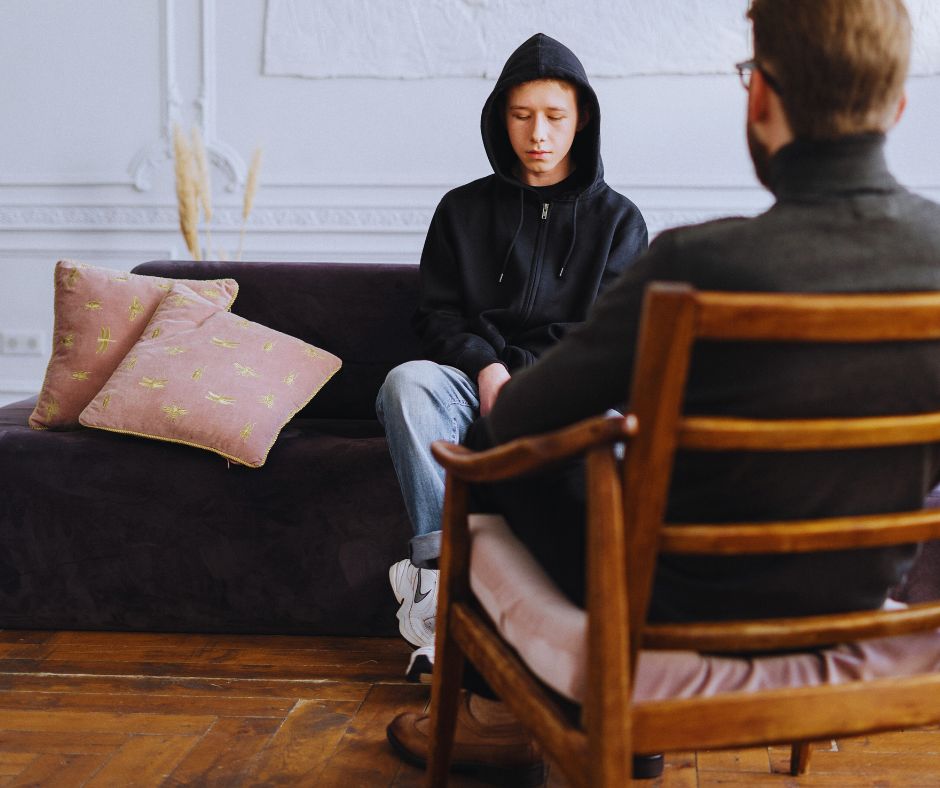
Another parent of a child at a St Albans secondary school gave an insight into their 15-year-old SEN daughter’s feelings: “She said she feels so much lonelier as time has progressed. She doesn’t like talking to people her own age about her problems because she thinks they’ll see her as self-centred and they are judging her. She says that nobody has been there for her apart from her friend.
“She says senior teachers question whether she’s being lazy or just doesn’t want to go to a lesson. She describes feeling trapped at school and says it is as if pressure is building inside of her. Our daughter loves learning and writing but she needs to be able to concentrate and said she often feels stupid as she can’t learn like other people do and is sometimes told she hasn’t been listening.
“They tell her to go to see the pastoral or SEN staff who ask her to sit down for five minutes and then send her back to her lesson.
“She wants to go to school but it’s the environment that she can’t cope with. She feels that teachers talk to her like she’s stupid and give her no support. She wants them to explain things more fully to her but they don’t help.
“She says she feels really sad all the time and like she wants to scream and run out of school and says she has a head full of noise. It would be better if she had more support, could explain how she feels and had someone she feels is listening to her.”
Her parents said it can be very difficult to know what to do each morning because they know how important school attendance is for success, but they feel guilty forcing her to go to a place which makes her so upset. They are now paying for private counselling sessions in the hope they will help.
Both David and Jon said that talking therapies can be very helpful for young people who experience the condition.
David said: “It’s important to have open, calm and non-confrontational conversations about what a young person is finding difficult, remembering that they may not always be able to verbalise this or explain it clearly themselves.”
He believes that listening, taking their feelings seriously, and working together between home and the school can make a real difference and that early support is key.
He advised that talking therapies can play an important role in helping young people experiencing school-based anxiety, as some don’t feel able to talk openly to parents or teachers, even when support is available.
“Having access to a safe, non-judgemental and confidential space locally allows young people to speak honestly, at their own pace, often for the first time – and that can be the turning point in helping their anxiety feel more manageable.”
Jon explained: “Talking therapies can be very helpful when they offer a calm, trusting space for a young person to talk and make sense of what they’re feeling. Therapy isn’t about labelling or fixing a child, but about helping them feel understood and developing ways to manage anxiety that can then carry back into school and everyday life.”
Herts county council was unable to supply any data around school based anxiety which affects attendance.
A spokesperson said: “The DfE provides schools with statutory codes they need to use to classify pupil absence, and there isn’t a specific code for school-based anxiety.
“Schools are responsible for developing their own strategies to improve attendance and make reasonable adjustments so that pupils can access their education.”
He advised that HCC provides schools and families with access to the Education Support for Medical Absence (ESMA) team, a teaching service for students who are unable to attend school for medical reasons.
ESMA works with schools and students to offer additional support alongside the education provided by schools in English, maths and science) and aims to support children in going back into school, as soon as they are well enough to do so.
The support given includes written advice and guidance on reasonable adjustments in school, virtual or face-to-face guidance meeting(s) on reasonable adjustments in school, the use of a robot which sits on the student’s desk and through an app they can see, hear and speak through it as well as live online teaching.
Of course, this does not tell us how successful these measures are with children experiencing school-based anxiety nor do we have any data to show the impact of it.
However, HCC guidance suggests parents take the following steps to help with children experiencing school-based anxiety:
1. Ask for a meeting with someone at your child’s school – this might be their class teacher, form tutor, the SENCo or the pastoral lead.
2. Go prepared and make notes beforehand about the things your child is finding difficult. Talk to the school about whether they’ve noticed any changes in your child, or know of anything they’re finding challenging at school.
3. If you have concerns about bullying, speak to the school about their anti-bullying policy. Ask them to assess your child if you think there may be an unidentified SEND need causing the anxiety. The EBSNA framework has been written for schools and is designed to help them understand and address the emotional factors behind school
non-attendance.
4. Work together to identify things that might help your child and agree a plan for next steps (eg. arriving at school earlier when it’s quieter, identifying a safe space they can go to, linking your child with a buddy). If your child already has an identified SEND, talk to your school about any reasonable adjustments they may be able to put in place.
5. Leave some time to try out the new strategies and then speak to school again to discuss whether these are working, and how they might be adapted.
6. If the strategies are not working, work with the school to identify other services and professionals that might be able to support your child. For example, your SENCo may be able to refer your child to a Mental Health Support Team. They can provide help and advice for children who are struggling to attend school.
We are interested to hear more case studies from the St Albans district or from headteachers in order to understand and help others to work through this increasing and distressing phenomenon. Please do reach out to us at deputy@stalbanstimes.co.uk if you would like to take part.
