10 Dec 2024
A groundbreaking new exhibition promises to cast a light on the Romans’ approach to health and disability and how they compare to modern perceptions.
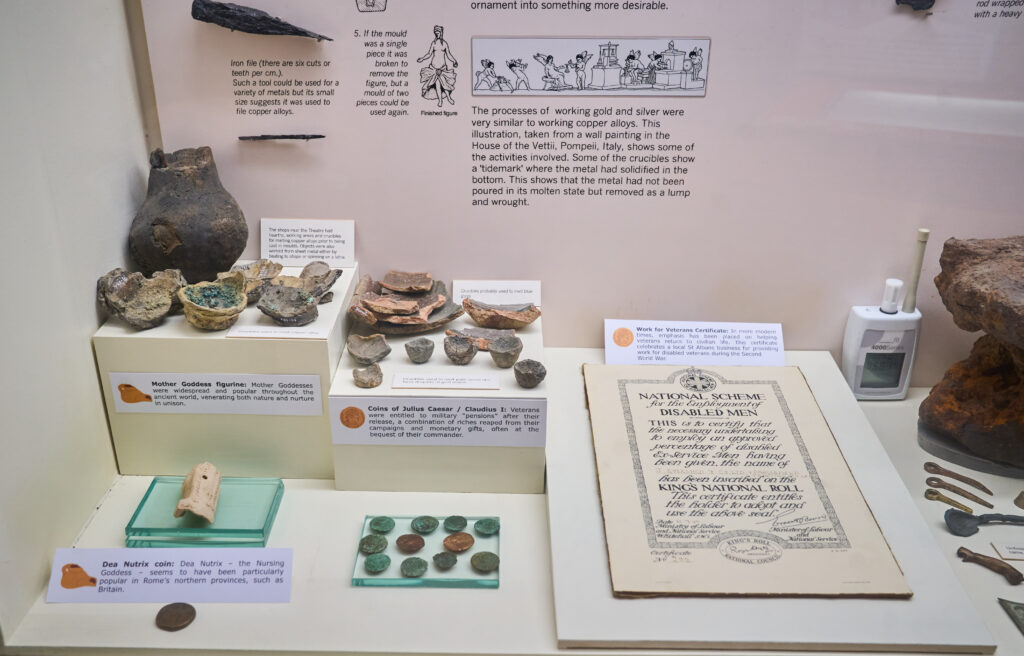
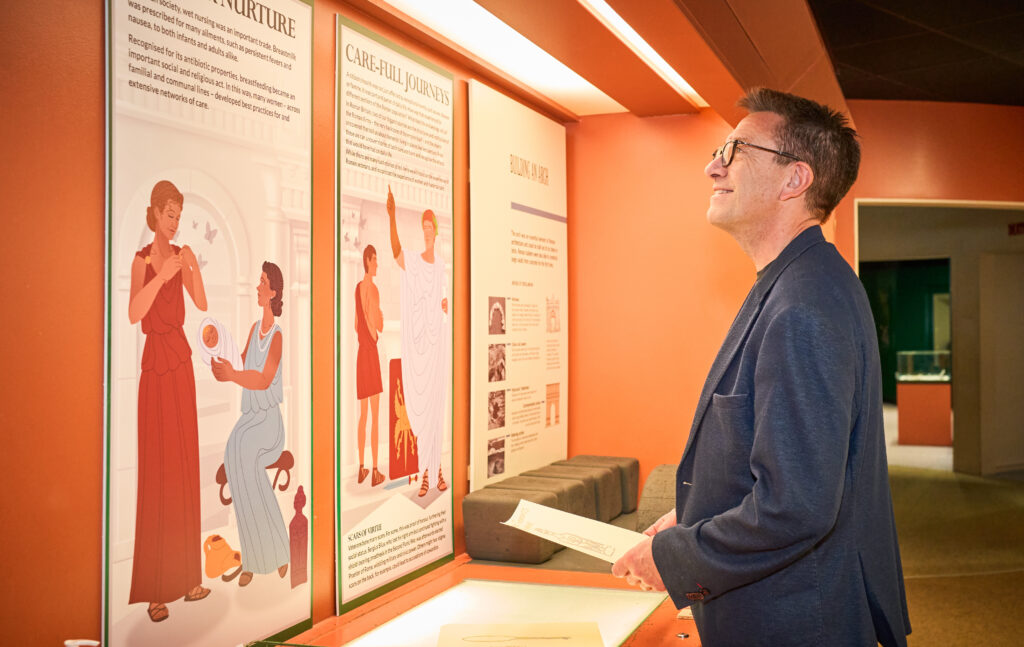
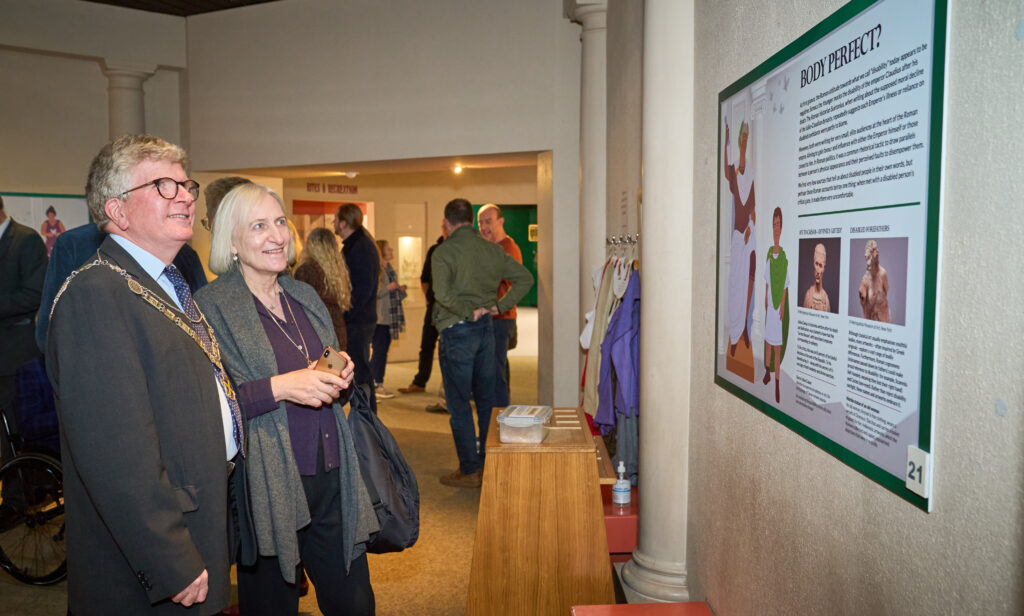
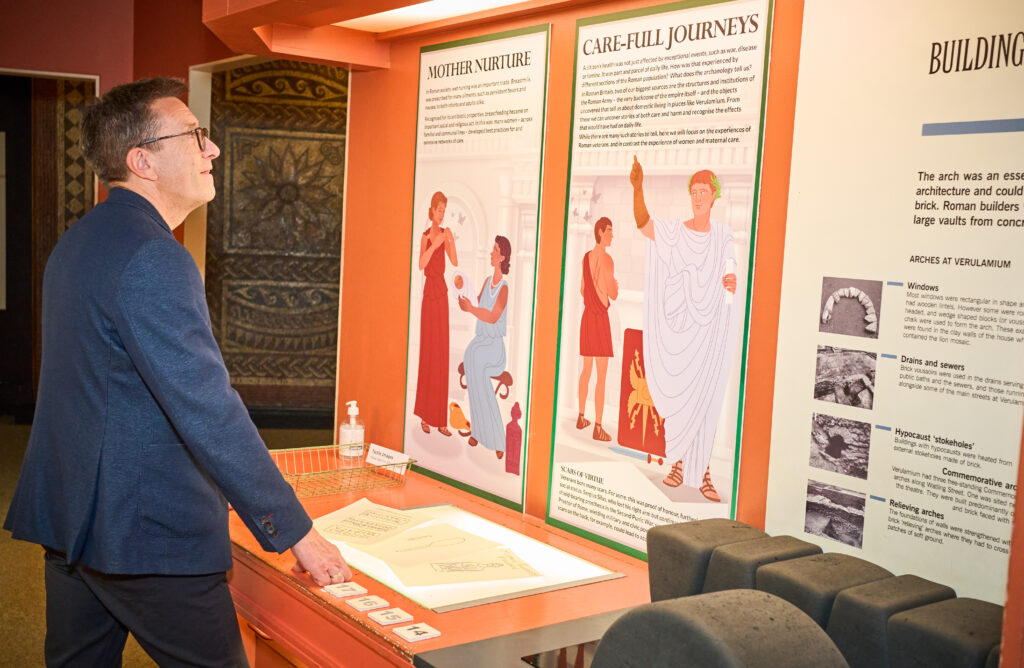
Mapping an Uneven Path at Verulamium Museum explores what good health and healthcare meant to our ancient ancestors, how they understood their bodies and minds, and what the cultural perceptions and experiences of conditions that we recognise as disabilities today.
It launches as part of UK Disability History Month and is guest curated by Kyle Lewis Jordan, a disabled archaeologist and curator who specialises in the study of disability and antiquity.
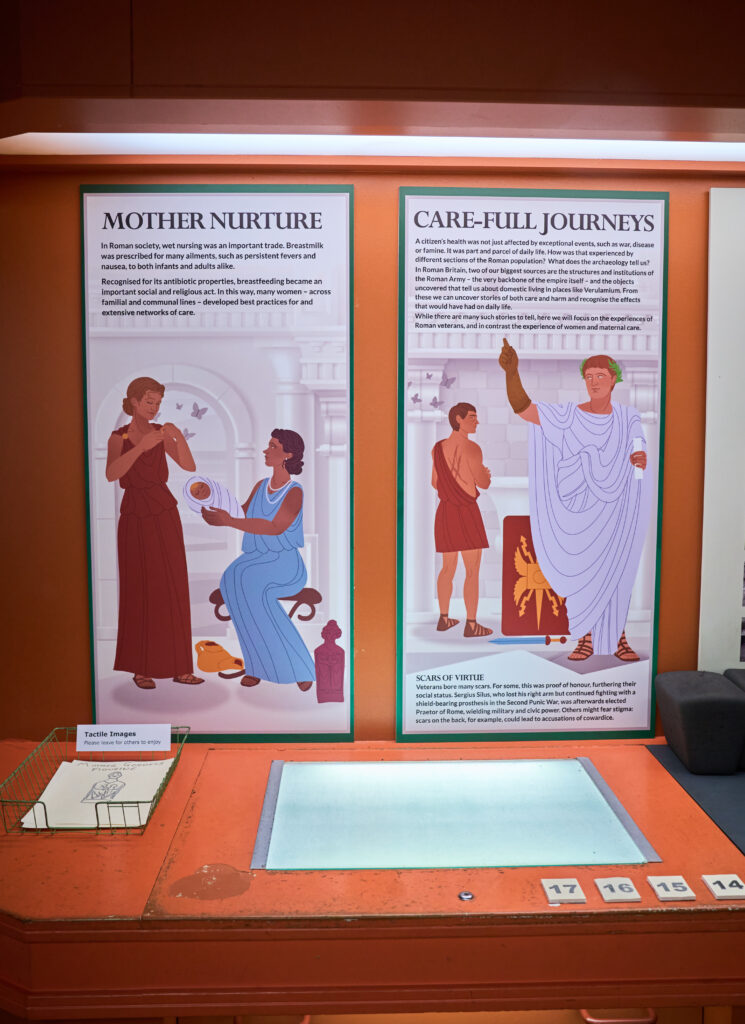
He said: “The Romans’ view of healthcare and disability were different, but we can draw some parallels. For example, breast milk was recognised for its antibiotic properties. War veterans were given ‘pensions’ after their release, a combination of land and monetary compensation.
“But the Romans also believed that the body comprised four essential fluids – blood, phlegm, yellow bile, and black bile – and too much or too little of any of these fluids is what caused a person to become ill. Amazingly, this theory – known as humorism – remained dominant in medicine until the 17th century.
“When it comes to disability, while some Roman authors wrote mean caricatures of disabled people, we must remember that they were themselves writing for members of the Roman elite, not the masses.
“We can be almost certain that there were lots of people with lived experience of disablement in Roman times due to higher rate of accidents, warfare, and such like, so people were more likely to have been disabled.
“We do in fact see evidence for people who were proud of their disabilities, be they wounded veterans or families who took nicknames that refer to an ancestor’s disability. For example, Scaevola means ‘left-handed’ referring to an ancestor who lost their right hand.”
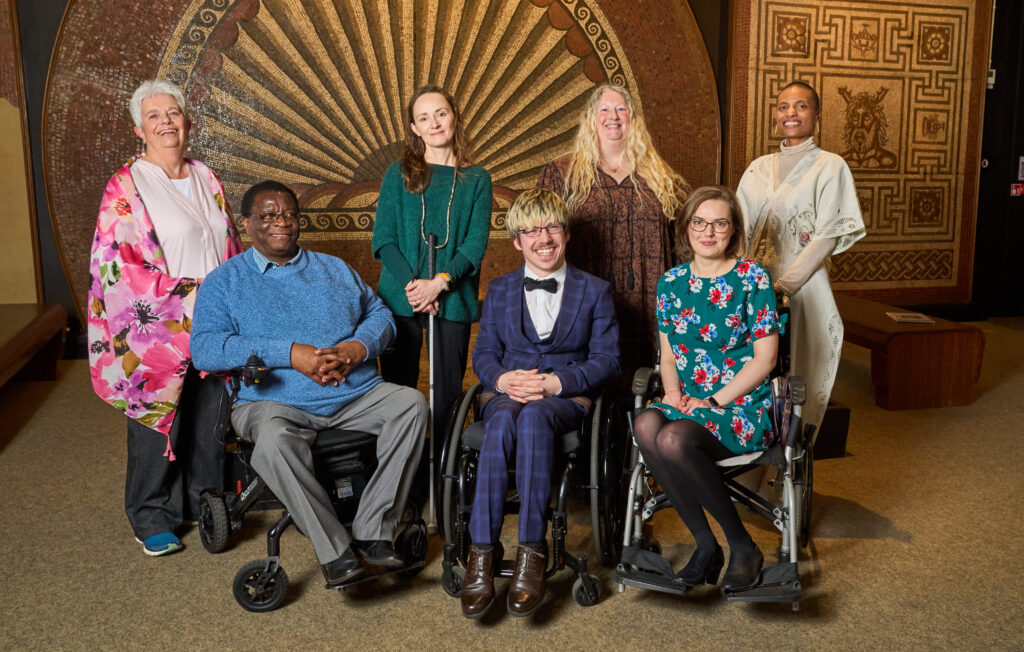
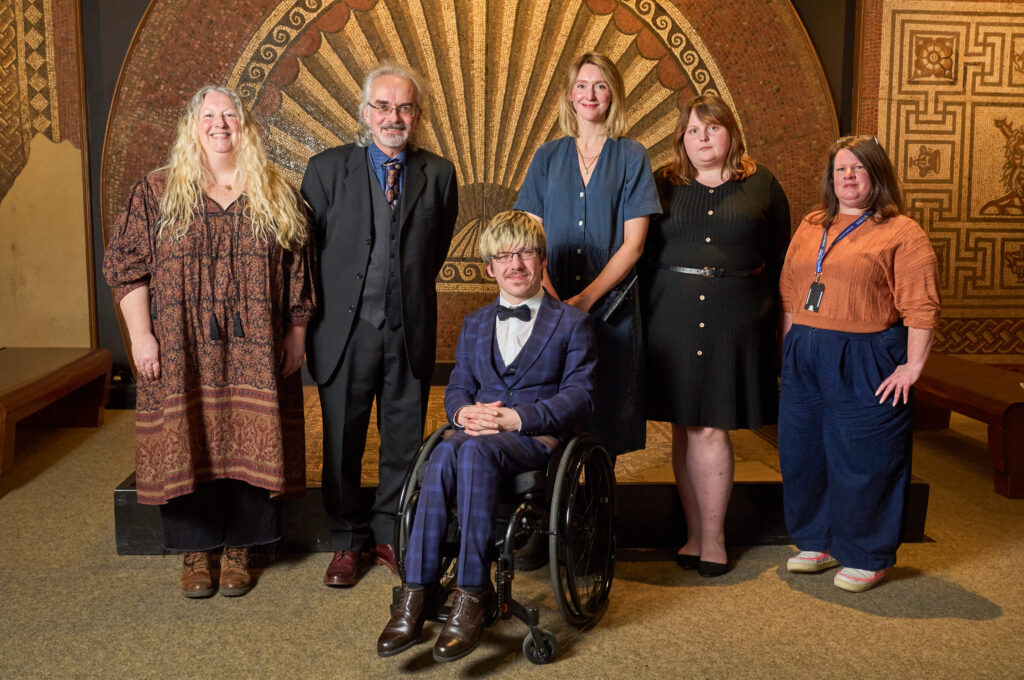
As part of the exhibition, Kyle worked with a group of co-producers from the St Albans community who explored the Roman journey through the lens of varied lived experiences. The group investigated objects from daily life within the museum’s collections to find connections with their own lives as disabled people today.
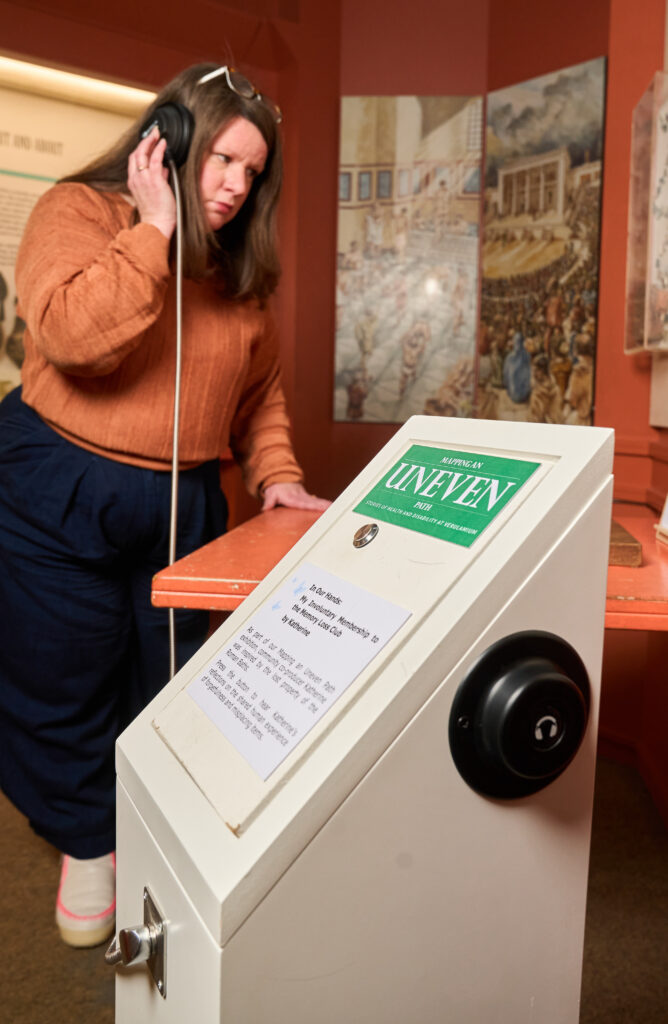
Their historical stories of disability are shared as short films, object interpretations and audio narratives throughout the exhibition.
Kyle added: “We wanted to work with local people with their own lived experience in today’s world, imagining what it would have been like in Roman times by providing historical context- the result is a very good idea of what our ancestors would have experienced.
“My hope is that visitors will reflect on what health and disability means not just in the ancient past, but our own lives today. The life paths we travel are long, winding and at times challenging, but their well-worn steps are an impression of what makes us all human.”
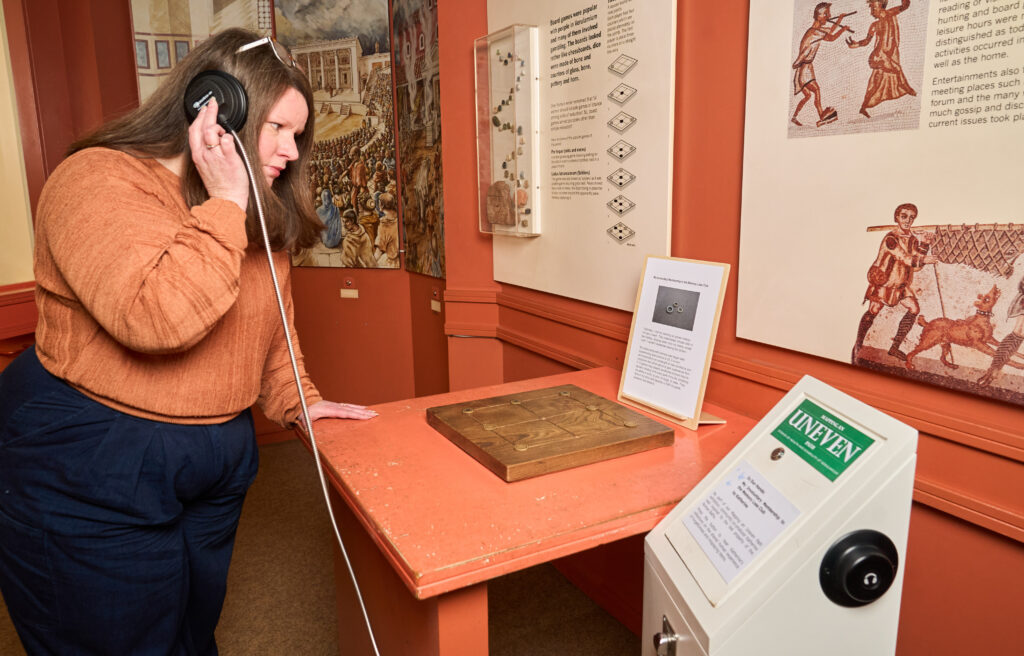
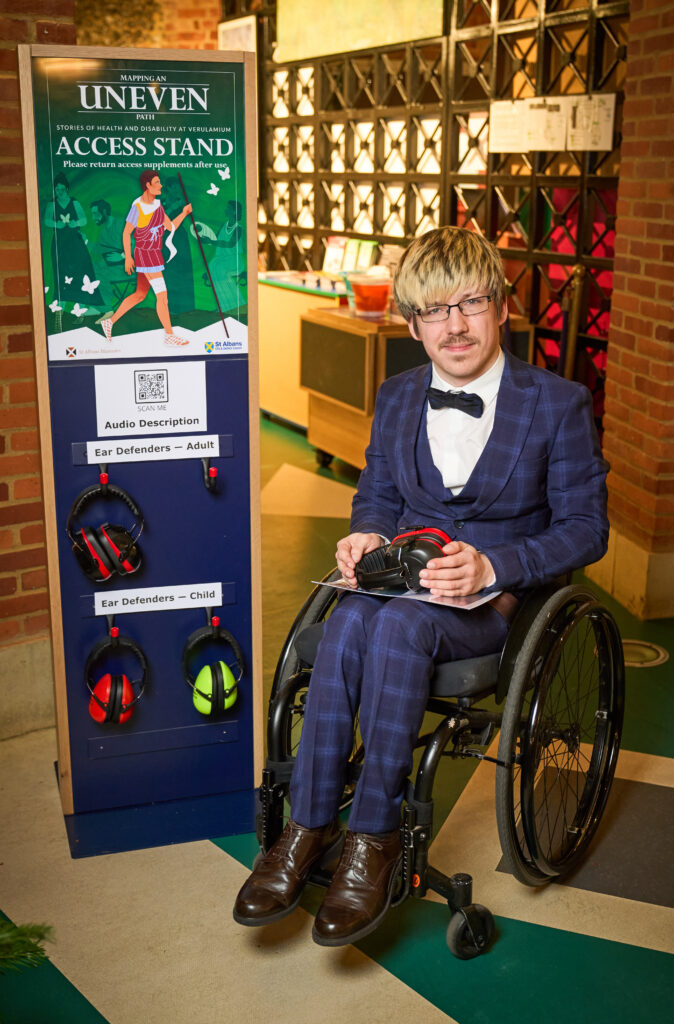
Alongside the exhibition Verulamium Museum has created new accessibility options including tactile maps and images of objects, braille guides, ear defenders, easy read guides, large print guides and audio descriptive guides as well as fictional narratives of Roman characters brought to life by co-producers’ lived experiences and voiced by volunteers.
Audience development manager at St Albans Museums Catherine Newley, said: “This engaging and timely exhibition brings to light objects and experiences used and encountered by our Roman ancestors. It’s been particularly pleasing to audit and expand our accessibility offering so more people can enjoy and become immersed in this and future exhibitions. We would welcome feedback from our visitors as to what we’ve got right and how else we can make Verulamium Museum more accessible in the future.
“We are thoroughly grateful to Kyle and all of the co-producers for highlighting how disabled people in Roman Britain would have lived their lives and drawing comparisons with their own lived experiences today.”
Mapping an Uneven Path runs until February 23.
Mapping an Uneven Path: a co-producer’s view
Over the years, my work as a local writer has made me feel like a valued part of our St Albans community, not least being theatre reviewer for the St Albans Times.
However, what some people may not know is that I have spent the last 20 years of my life registered partially sighted after a very rare retinal disease took away most of my central vision.
I have been involved with the Talking Newspaper since 2016 but wanted to reach out further to the wider disabled community. When St Albans Museums sent a call-out for local disabled history lovers to become co-producers in a new exhibition in which parallels would be drawn between lived experience of disability in Roman times to now, naturally I jumped at the chance to be involved.
A group of six of us, experiencing and celebrating disability in a variety of forms, met regularly with guest curator Kyle Lewis Jordan over the summer to discuss and execute his vision for the exhibition. I have rarely worked with a group of people whom I felt so at ease and inspired by.
Co-producer Katherine explained: “Working with the museum and connecting with others who share similar experiences was rewarding on so many levels; it’s surprising how freeing it can be to voice your innermost thoughts and realise you are not alone!
Under the guidance of Kyle and community engagement officer Elanor Cowland, we gently began to draw parallels between our lives today and how we might have experienced health and disability issues in Roman times.
“Although we think it must have been harder in Roman times without the medical advances we have now,” said co-producer Bethan, “Kyle made me realise that disability would have been more common and possibly more accepted.”
Together we had a hands-on experience of favourite museum exhibits and began to reflect on how they might have been used in Roman times. With the help of Kyle and museum curator David Thorold, we found out more about their history and began to make connections with our own lives today.
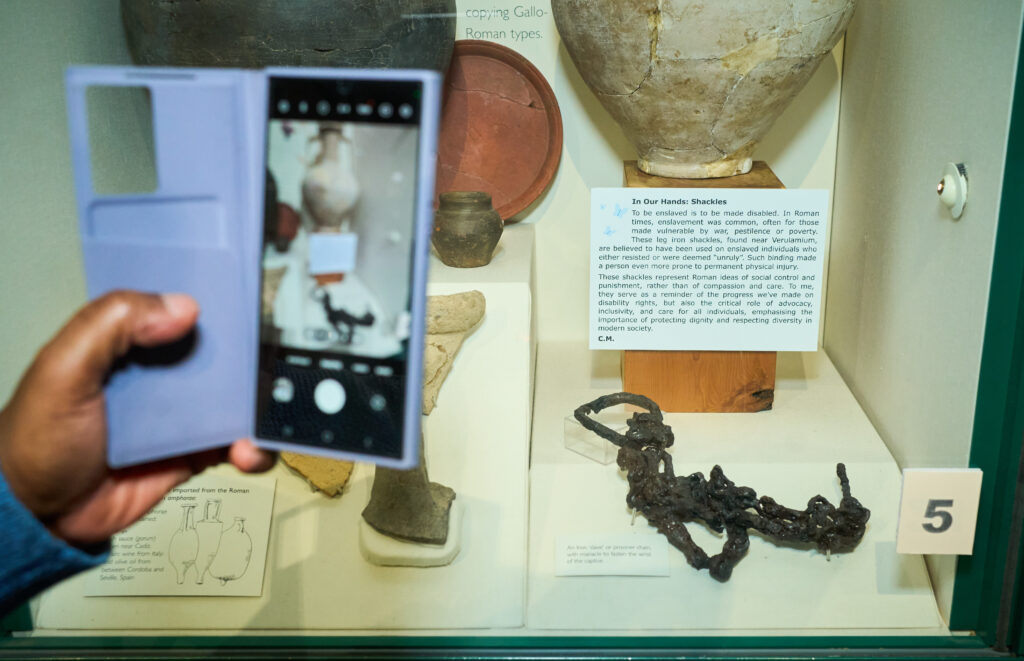
For instance, co-producer Clement made a particularly poignant exploration of a set of lead iron shackles that would have been used to restrain slaves. Personally, I felt quite emotional when David handed me a piece of wall from the Roman Theatre – I wondered how visually impaired theatre lovers would have experienced the space all those years ago.
Katherine chose fragments of a Roman legionnaire’s armour, Freda a shoe and Jo some pieces of votive offering cups. These accounts form a short film I was proud to put together and can be seen at the exhibition.
In addition, Clement and Freda wrote very well-informed stories of fictionalised narratives of disabled people in ancient Verulamium which were based very much of real evidence from archaeology and their own lived experience. These are available to read and listen to, making the exhibition more accessible to all.
Last Friday, we met for the exhibition launch at Verulamium Museum. Not only was it marvellous to see each other again (particularly as some of us had only met via Zoom due to the restrictions our disabilities put on our mobility) but it was a hugely rewarding experience seeing our theoretical discussion put into practise. Curator David was particularly excited by the video which can be found in the circular room housing the mosaics, explaining: “We haven’t had many audio-visual displays before and it gives so much more information than a label.”
Kyle explained to those present: “Histories of health and disability are a history of humankind in its truest form: sentient beings of flesh, blood and bone navigating complex times and geographies, relationships and dynamics, holding ourselves together by a sense of kinship forged in adversity, and given shape by acts of care.”
Kyle’s advice to exhibition visitors is to be reflective and find a point of identification: “Look out for the co-producer’s contributions; the ‘In our Hands’ sections, which are denoted by a butterfly marker.”
Kyle hopes that the whole exhibitions will make visitors “draw comparisons with our predecessors to understand the social norms of the time but also to reflect on the lives of disabled people today and in the future.”
Personally, I feel that this exhibition will get St Albans residents thinking, not just about how life-experience would have been for those in Roman times but in more recent history too. Perhaps it will inspire us to view any museum collection in a different way.
We all hope Mapping the Uneven Path will provoke thoughts about how we all have the power to reach out to and enrich the lives of all others around us who might have an obvious or hidden disability or be experiencing chronic mental/physical health issues. Let’s also focus on ability, not disability; look at what we have all achieved together just in one exhibition!
Every visitor to the exhibition and reader of this paper are human with the capacity for empathy and so much to share. Let’s celebrate this via this fantastic exhibition and take it further into our lives.
Words: Deborah Heath
Photos: Simon Jacobs